The parts that usually wear first
High-frequency and hot-air or hot-wedge PVC welders work hard on coated fabrics, and a few items naturally take the strain first. Heat, pressure, dust and constant loading all affect the life of electrodes, rollers, guides and cutting parts. On busy production floors in Germiston or Johannesburg, these are the parts most likely to be checked before a machine is put back into service.
In practical terms, the workshop should watch for parts that affect seam quality before they create bigger damage. A worn roller can mark the material, a tired electrode can give an uneven weld line, and a misaligned guide can throw off hems or keder channels. If the team waits until the part fails completely, the job queue usually grows faster than expected.
- Electrodes and contact surfaces for radio frequency welding
- Pressure rollers and guide rollers
- Heating elements, nozzles and air delivery parts for hot-air welders
- Knife edges, trim guides and simple cutting parts
- Fuses, relays and other control components that are used often
Keeping the right shelf stock without tying up too much cash
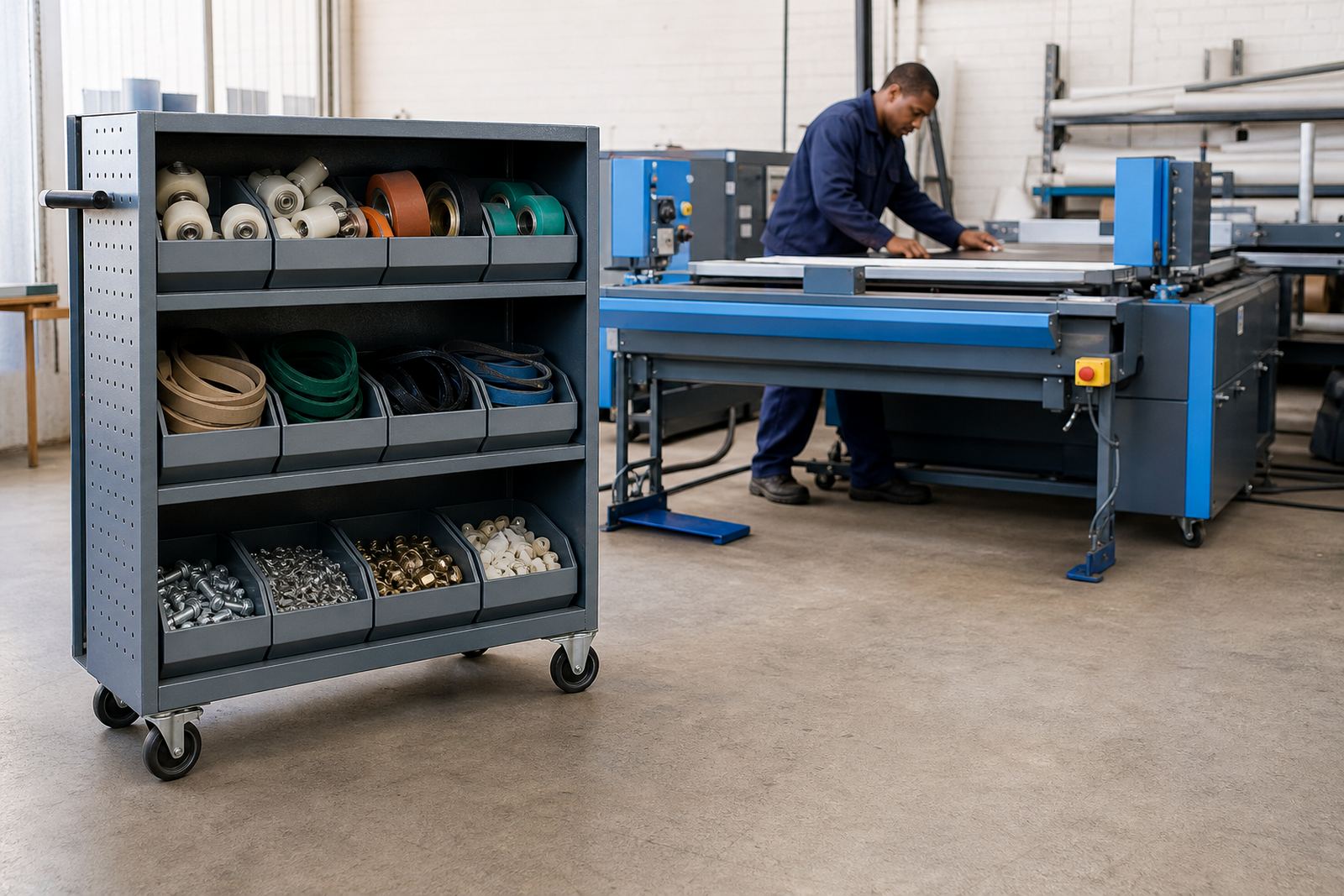
There is no need to fill every shelf with spares, but it helps to carry the items that stop work if they fail. A sensible stock list is usually built from the machine type, the age of the equipment and the work being done. A banner shop in Cape Town that runs many narrow seams may need different wear items from a tent maker in Pretoria doing wide hems, keder inserts and eyelet reinforcement all week.
The best approach is to match the stock to actual use. If a machine runs long shifts, if the material is heavy, or if the workshop handles coastal humidity in Durban, certain parts may need to be replaced more often. Keeping a few spares close by is not about overbuying, it is about making sure a lost roller or damaged electrode does not hold up the whole production line.
- Keep one or two of the highest-wear parts for each main machine
- Store sensitive items in clean, dry containers away from dust and moisture
- Label spares by machine type, size and fitment
- Record replacement dates so repeat failures are easier to spot
What to keep ready for seam work, hems and keder
Different products place different demands on the welders. Straight seams on banners need consistent pressure and clean heat control. Hems call for stable edge control. Keder work needs even feeding so the cord sits properly in the sleeve. Eyelet zones need a neat weld around the reinforcement, with no burning or stretching of the fabric.
That is why spare parts stocking should follow the type of work, not only the machine model. If the workshop handles tarpaulins for trucking, signage panels and marquee panels in the same week, it makes sense to keep the parts that influence seam width, finish and feed control. A small fault in one part can show up as a crooked hem or a weak seam line later on, so the repair should not be left to chance.
- Parts that support seam width and pressure consistency
- Feed components for hems and keder channels
- Eyelet tooling parts where reinforcement work is repeated often
- Spare consumables for trimming and finishing operations
How servicing and spares work together
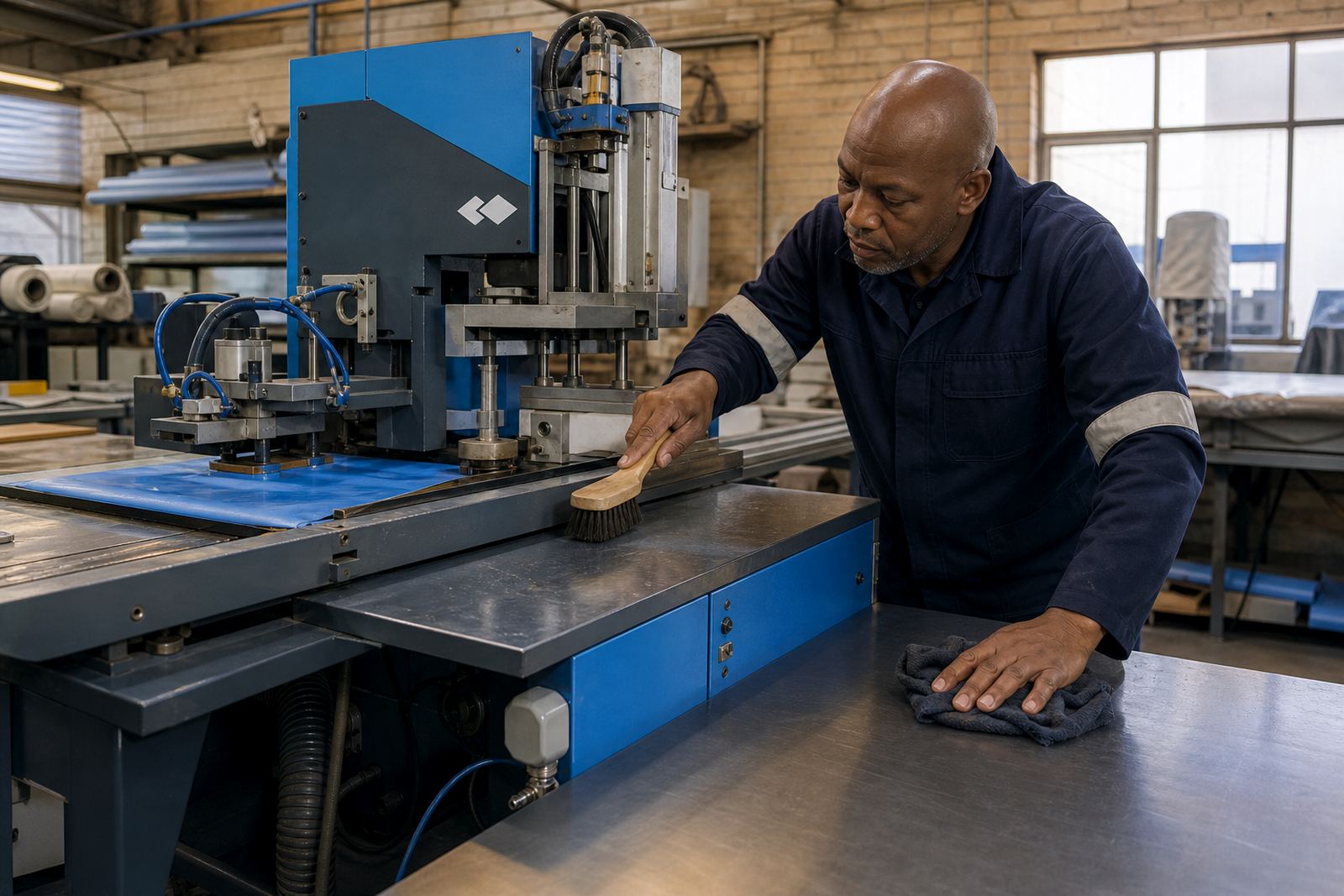
Spare parts stock is only part of the picture. Preventive servicing helps those parts last longer and protects the rest of the machine from extra wear. A machine that is cleaned, aligned and checked regularly is less likely to eat through rollers, electrodes or heating parts at the wrong time. In many workshops the real cost is not the spare part itself, but the downtime while the fault is traced and corrected.
Operators should be trained to notice changes early. A slight change in weld appearance, a repeated burn mark, or a roller that no longer grips evenly can point to a part nearing the end of its life. In Germiston, where workshops often run mixed production for customers across Ekurhuleni and beyond, that early warning can save a full shift from being lost.
- Check alignment before replacing expensive parts
- Clean dust and adhesive residue from moving areas
- Inspect seals, pressure points and electrical connections
- Replace matched components together where wear is uneven
Operator safety and parts handling on the shop floor
Spare parts should be handled with the same care as the machine itself. Heated parts, sharp trimming tools and electrical components all need safe storage and safe fitment. A workshop that keeps loose items in open trays or near weld areas risks more than damage, it risks operator injury and avoidable faults. A clean parts cupboard and a proper issue log may sound basic, but they make a difference on a busy floor.
Before any replacement work, the machine should be isolated and allowed to cool where needed. Some items are light enough to swap quickly, others need proper tooling and a second set of hands. That is especially important on larger machines used for tarpaulins and tent panels, where misfit parts can affect both the weld and the operator position.
- Store sharp and heated components separately
- Use the correct tools for removal and refitment
- Keep a clear record of which spares were used and when
- Check guards and covers are refitted before restarting
A local example from a busy production week
Picture a workshop in Boksburg running a rush order for PVC banners, truck tarpaulins and a set of event sidewalls. The machine is sound, but a pressure roller starts leaving a faint line and the seam begins to wander slightly on longer runs. Because the right roller and a matching guide part are already on the shelf, the repair is done during a short pause instead of waiting for a part to be sourced from outside the workshop.
That sort of stock control is useful across South Africa, from Bloemfontein to Durban and Cape Town, where delivery timing and production pressure do not always line up neatly. A modest spares shelf will not solve every fault, but it can keep the workflow steady while the team handles the real work of welding clean hems, straight seams and tidy keder edges.
In the end, spare parts stock is a production habit, not a storage habit. The workshops that manage it well usually spend less time chasing urgent fixes and more time finishing work properly.