Lay the job out around the weld, not around the roll
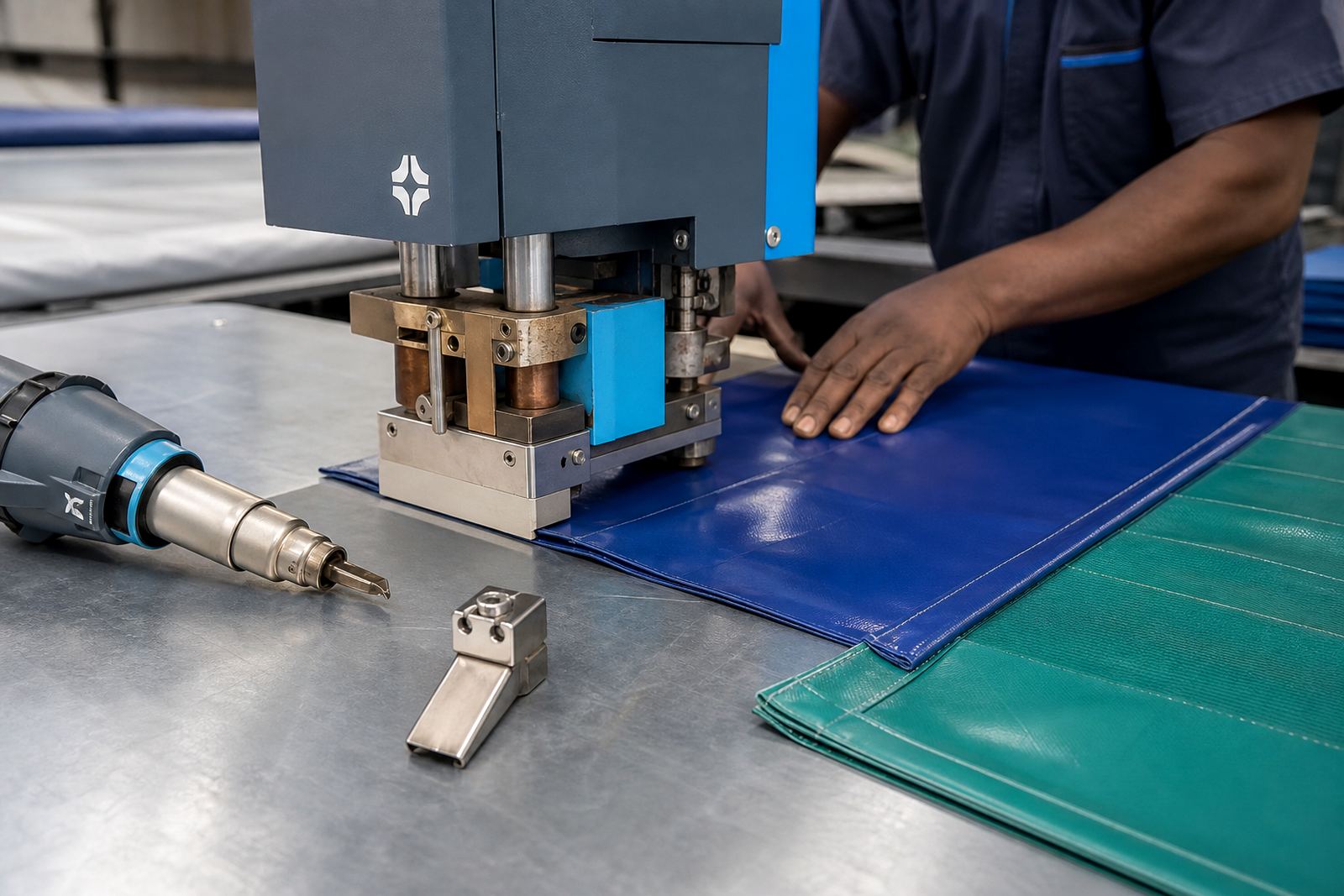
With PVC-coated fabrics, panel layout should follow the way the machine will join the job. High-frequency welding, hot-air welding and hot-wedge welding each need enough allowance for overlap, seam width and handling space at the machine. If the layout is rushed, you end up trimming off usable material or fighting uneven edges during welding.
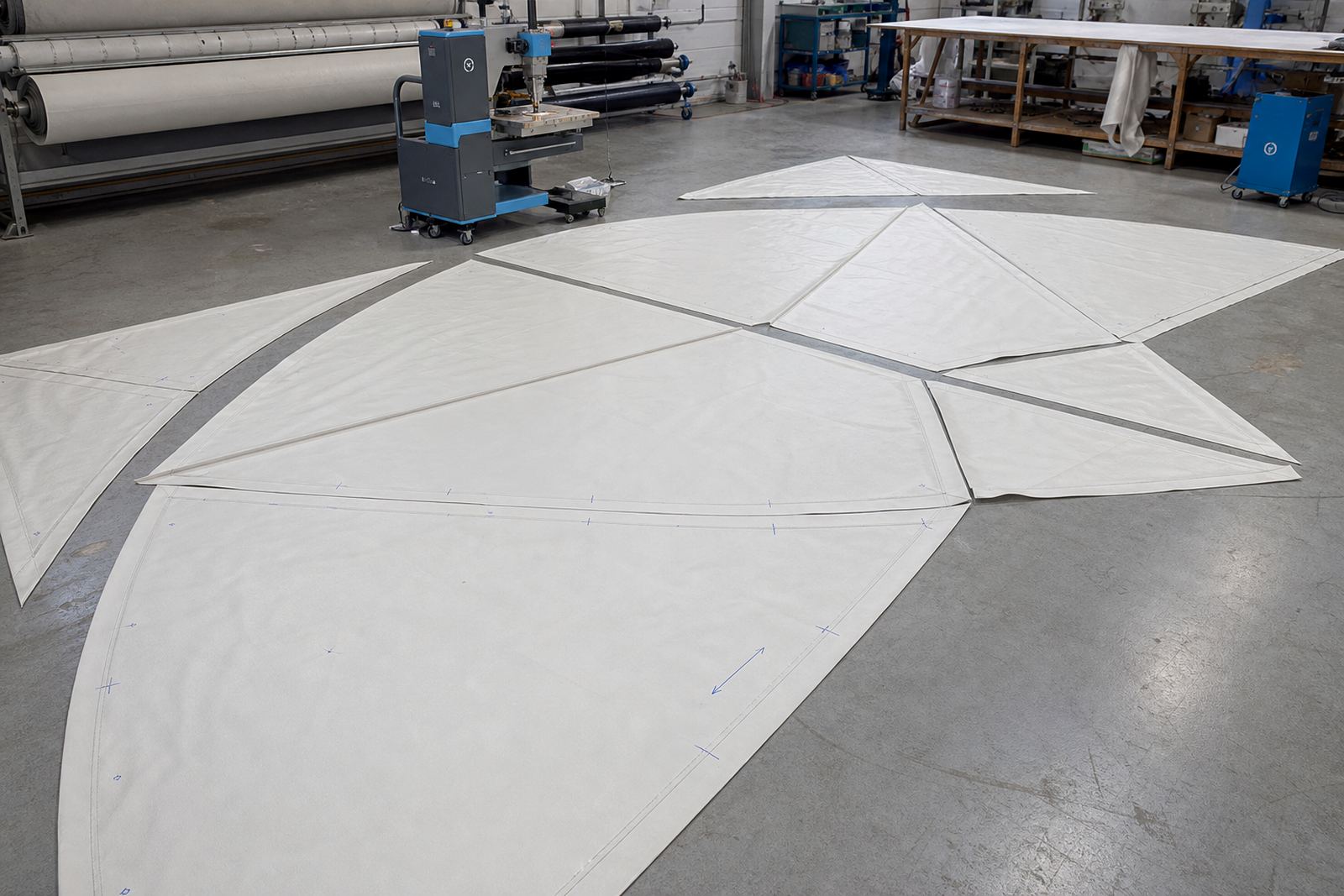
For tarpaulins, banners and tent panels, it helps to mark the final size, the seam line and the waste side before any cutting starts. That simple habit saves time later because the operator can see which edge is for the overlap and which edge must stay clean for a neat seam. In Germiston and across Ekurhuleni, workshops often work with mixed jobs in the same week, so a clear layout sheet cuts down on mistakes when the team is shifting between small repair panels and full-width production runs.
- Mark finished size, seam allowance and fold lines separately
- Keep grain or print direction consistent where appearance matters
- Leave room for clamp areas, rollers and welding heads
- Allow extra material for hem turns, keder pockets and eyelet strips
Plan seam direction before you cut the first panel
Long seams are easier when the layout respects the way the sheet will sit in service. On a banner, that can mean placing seams so the print reads well and water does not pool in the wrong place. On a tarpaulin, it can mean putting the strongest seams where straps, ropes or corner pull points will carry the load. A bad seam route may still weld, but it can create awkward tension lines and more wear at the edges.
For hot-air and hot-wedge work, straight panel edges help the seam keep a steady width. For radio frequency welding, square, consistent edges improve registration and reduce the need for rework. If a job includes curved corners, vents or odd shapes, it is worth breaking the design into simpler panels instead of forcing one large piece to do all the work.
- Run major seams with the final load direction in mind
- Keep corner patches and reinforcement areas in the layout from the start
- Avoid narrow offcuts that cannot be handled properly at the machine
- Place joins where they can be checked easily during seam testing
Build hems, keder and eyelets into the drawing
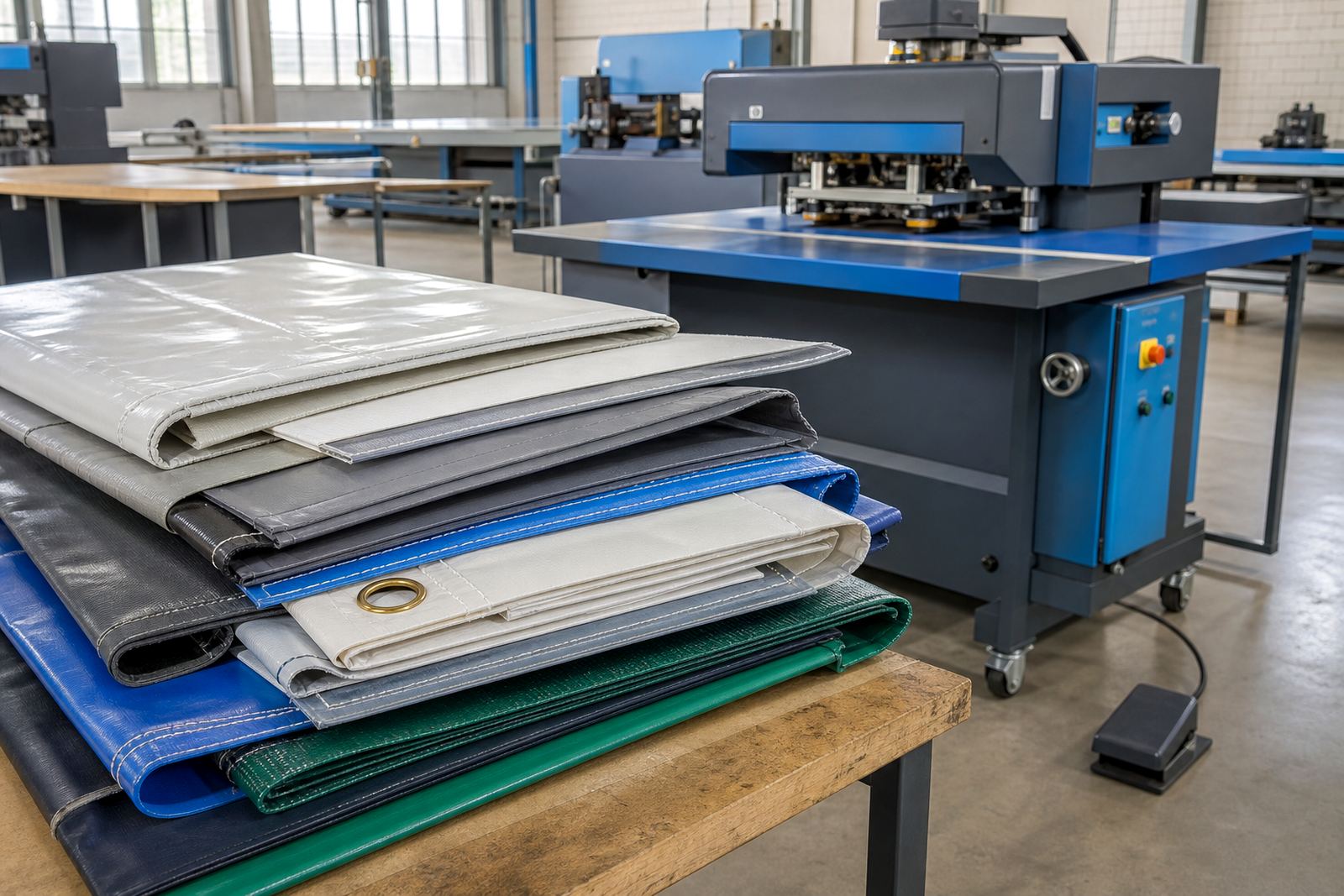
Many layout problems only show up when the team gets to the finishing stage. A hem needs its fold allowance, a keder pocket needs space for the cord or bead, and eyelet strips need enough material so the fixing points do not tear out. If these details are added after cutting, the panel can end up too small and the finish looks cramped.
A practical layout includes the finishing method right on the cutting plan. That way the operator knows whether a panel needs a double fold hem, a single turn hem, a welded pocket or a reinforced strip for eyelets. On coastal jobs in Durban or Cape Town, where humidity and wind exposure can be hard on outdoor products, the finishing area needs special care because a rushed edge will often fail before the main sheet does.
- Allow extra width for folded hems and welded reinforcement strips
- Reserve pocket depth for keder so insertion is clean and even
- Space eyelets to match the load, not only the appearance
- Use corner reinforcements where ropes, poles or frames will pull hardest
Group panels to suit the welding machine on the floor
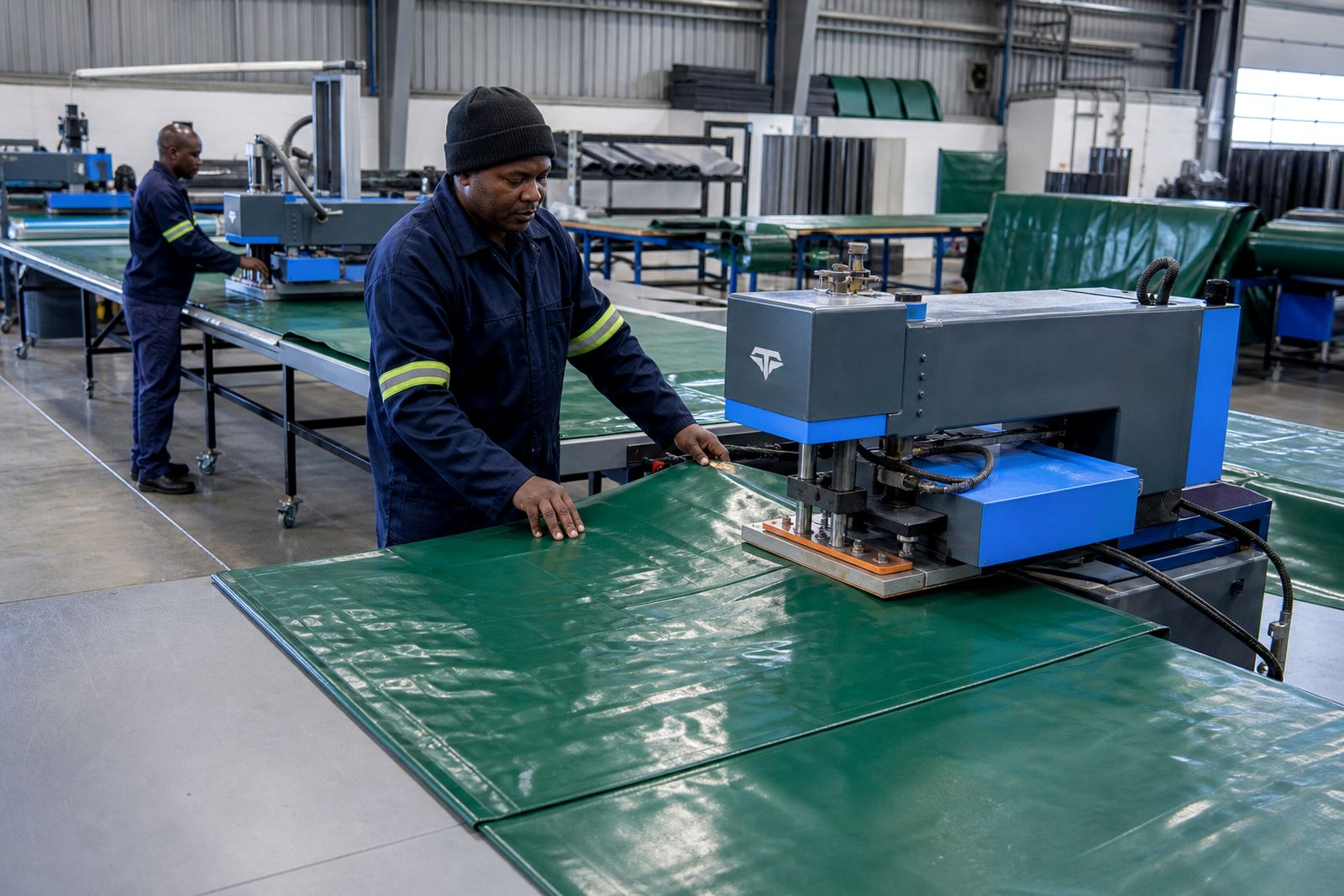
Panel layout should also suit how the machine is fed. Large sheets that are awkward to turn can slow production and make seam alignment difficult. If the layout is arranged so the operator can work in a steady sequence, the machine spends more time welding and less time waiting for panels to be moved or squared up.
In a busy Johannesburg or Pretoria workshop, this matters on matching jobs where several similar panels are being made in a row. The layout can be grouped by size, seam type or finishing type, which makes it easier for the team to keep track of parts and avoid mixing up panels from different jobs. It also helps when one machine is used for more than one material thickness in the same shift.
- Place similar panel sizes together for easier handling
- Separate items that need different seam widths or tooling
- Keep the cut sequence aligned with the welding sequence
- Label each panel group before it moves to the welding table
Watch waste at the offcut level
Good layout is not only about the finished product. It is also about using the roll properly. A clean panel plan can reduce the number of small offcuts left behind, which matters when PVC-coated fabric is expensive and jobs are cut to tight margins. Even a small shift in the nesting of panels can save enough material to make a real difference across a production run.
Offcuts can sometimes be reused for patches, corner pieces or short reinforcement sections, but only if they are kept clean and clearly sorted. Mixed bins of scraps usually lead to confusion and wasted time. On site in places like Bloemfontein or Boksburg, where a workshop may need to deal with both repairs and new builds, it helps to keep a separate area for reusable material and another for true waste.
- Nest rectangular panels tightly where the job allows it
- Keep usable offcuts in one marked stack by thickness and colour
- Plan repeat parts so the roll width is used fully
- Check the cut plan before trimming to final size
Use a test seam before full production
A short test piece can prevent a full batch of bad seams. Before a major run, the team should check how the chosen panel layout behaves at the machine, especially when changing between high-frequency welding and hot-air or hot-wedge work. The test shows whether the seam line is straight, whether the overlap is enough and whether the edge is tracking properly through the rollers.
It also helps the operator see if the panel widths are practical once clamps, electrodes or wedge guides are in place. If a job has several long joins, a small test panel can confirm the seam and fold sequence before the full sheets are committed. That is good workshop practice, and it keeps service work simpler too because a machine that is set correctly is less likely to drift out of line.
For Germiston workshops serving tarpaulin, banner and tent makers across South Africa, from Durban to Cape Town, a careful panel layout is often the difference between a neat job and a pile of rework. The layout may look like a paperwork step, but it is really part of the welding process itself.