Heat at the seam, not just on the machine
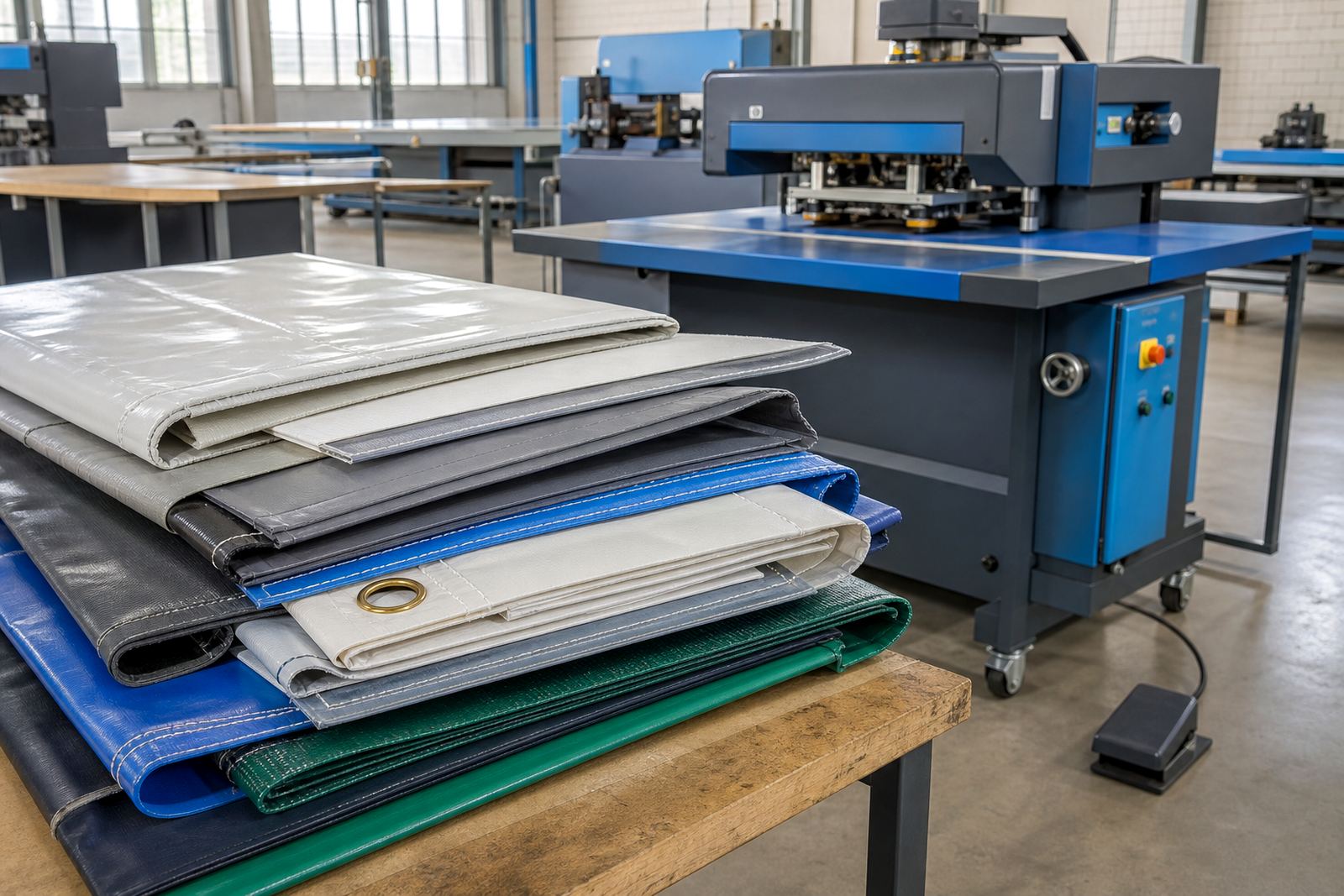
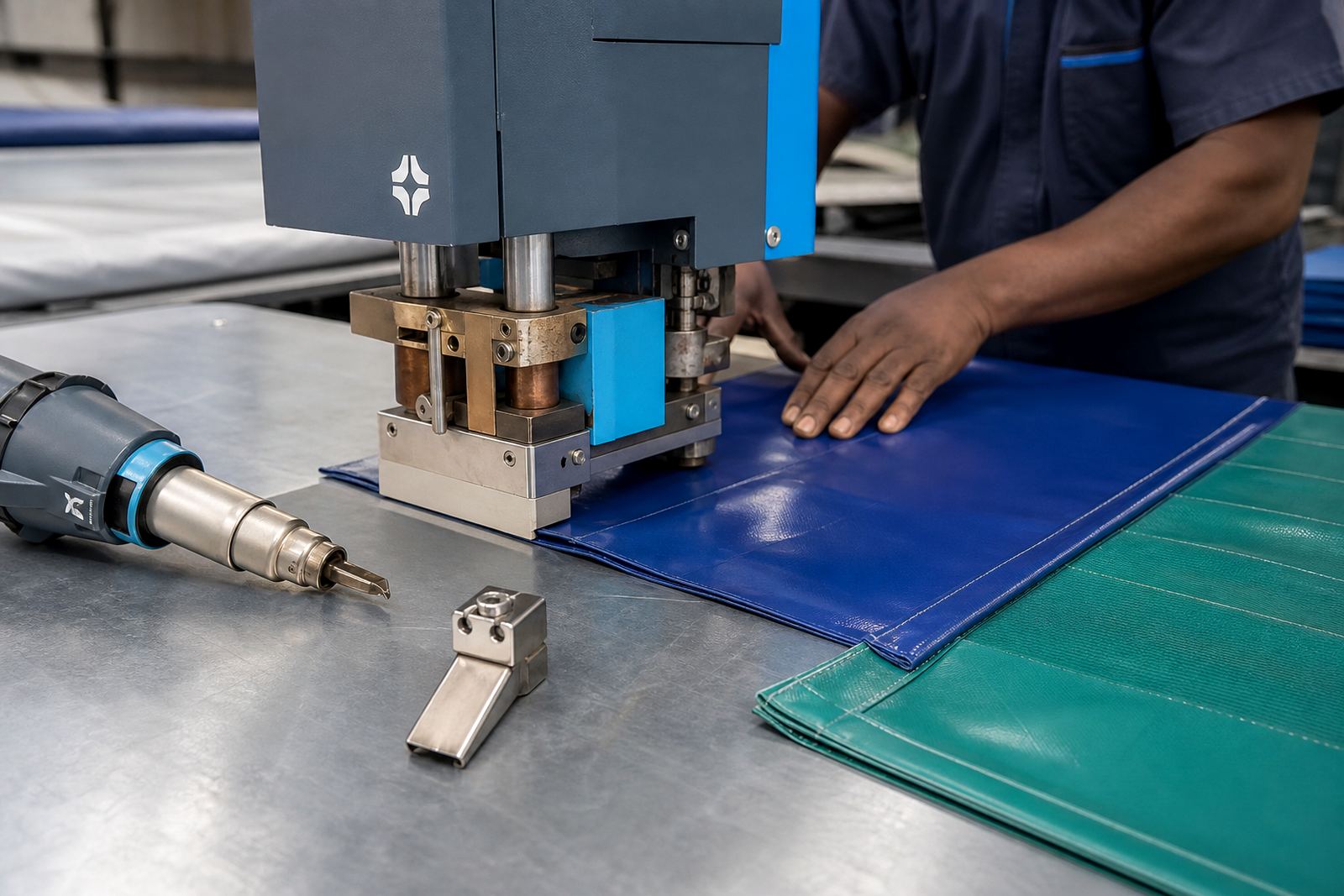
Hot-air welding uses heated air directed into the overlap so the surface layers soften before pressure rollers press them together. Hot-wedge welding places a heated wedge between the plies, so the heat reaches the material by direct contact and the seam forms as the web moves through the machine. Both methods are used on PVC-coated fabrics, but they handle heat a little differently and that changes the seam.
Hot-air units are often preferred where the operator needs more visual control over the melt line, especially on lighter banners and detailed work. Hot-wedge systems are commonly chosen for longer straight seams on tarpaulins and tent panels because the wedge gives consistent contact over a steady run. The key is matching heat, speed and pressure to the fabric weight and coating, not pushing the machine too fast and hoping the weld holds.
When the seam has to look clean as well as stay tight
The seam profile matters. A neat lap seam may be enough for a banner edge, while a wider weld area is safer on a roof cover or truck side curtain. Hot-air welding can be useful where the operator needs to work around corners, reinforcements or irregular shapes. Hot-wedge welding shines on long, straight production runs where the feed stays steady and the seam width must remain consistent.
- Lap seams for joins in tarpaulins and banners
- Hemmed edges to keep fabric flat and tidy
- Keder seams for track-fed tent and marquee work
- Reinforcement patches around stress points
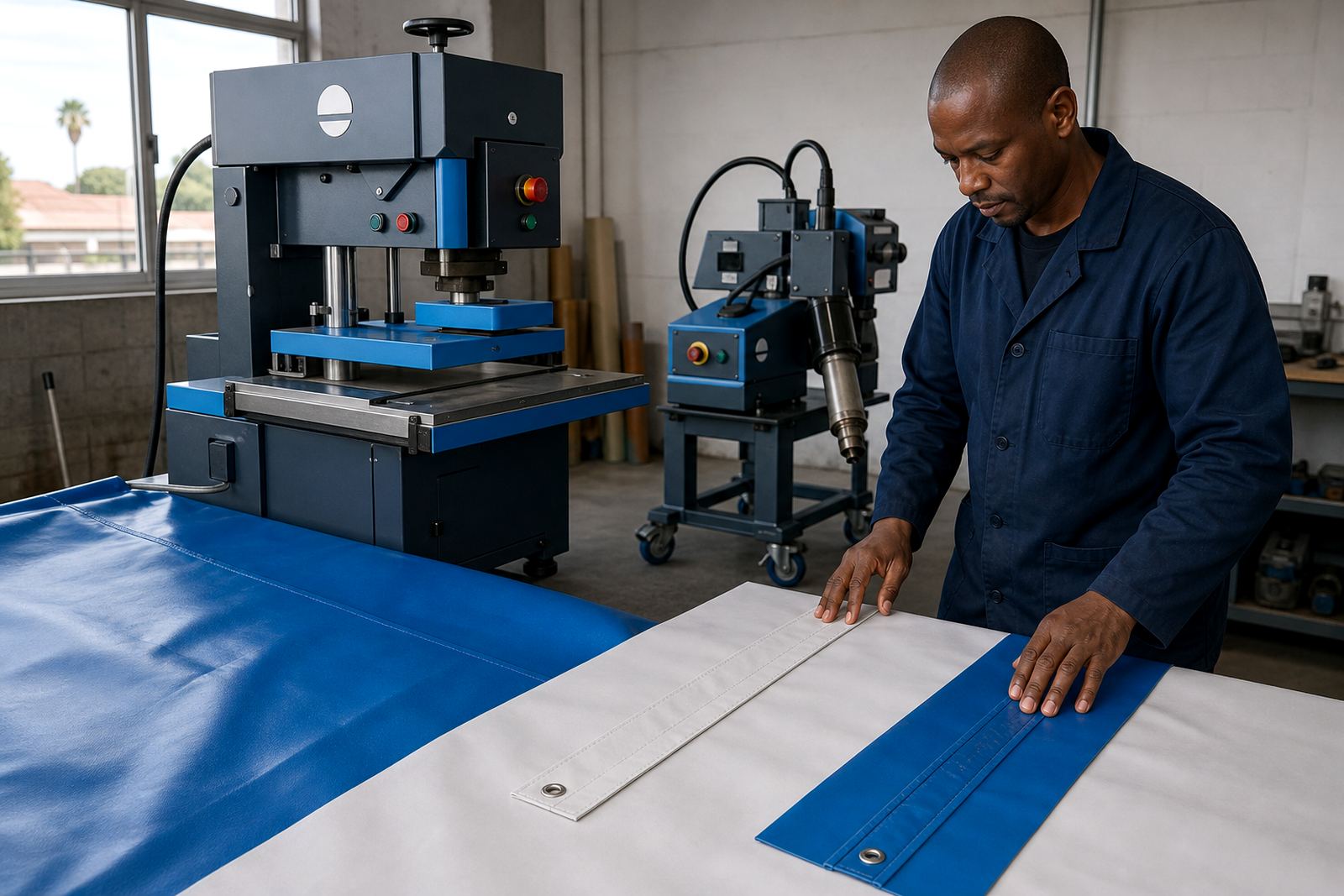
- Eyelet strips and edge strengthening before punching
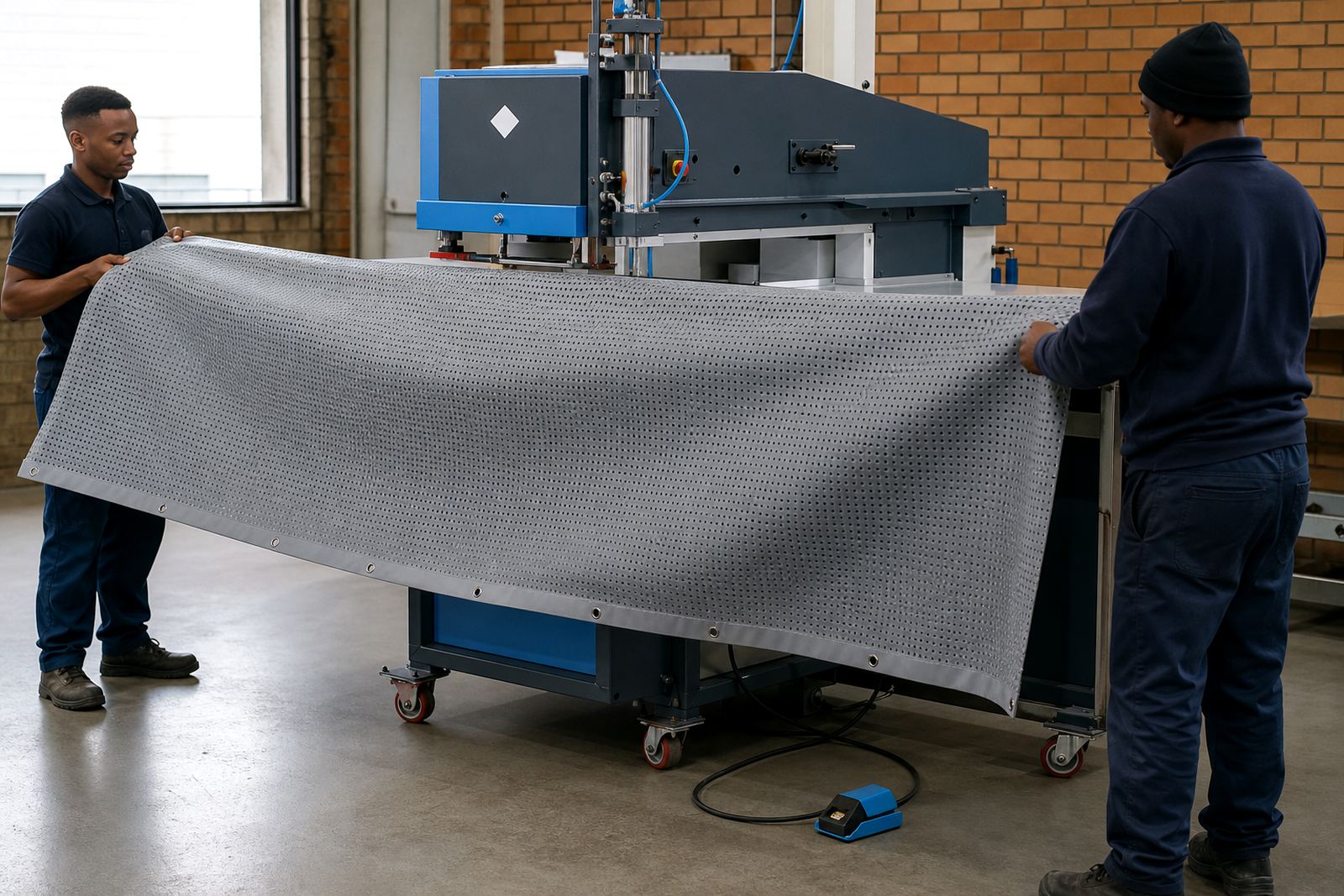
For a sign maker in Germiston producing large banner panels for a Durban event, a hot-air machine may be chosen for tighter layout work and small adjustments. For a tent workshop in Pretoria running long side panels, a hot-wedge machine can give a more even result across repeated lengths.
Set-up differences that change the day’s output
Both systems need proper preparation. Fabric edges must be clean, overlap must be even, and the feed path must stay true from start to finish. If the edge wanders, the weld line wanders too. On hot-air equipment, nozzle condition, airflow and roller pressure all affect how the PVC softens. On hot-wedge machines, wedge temperature, alignment and roller condition are central to seam quality.
Workshop teams often notice the difference most during changeovers. Hot-air machines can suit mixed jobs where seam style changes during the day. Hot-wedge machines are generally better where the same seam is repeated many times, such as production runs for shelter panels, banners or side curtains. In both cases, a trained operator watches for scorching, weak bonding, wrinkling and edge draw-in, because these faults usually show before the seam fails in use.
- Check feed alignment before every run
- Match temperature to coating thickness
- Keep pressure rollers free of build-up
- Test a short sample before full production
- Watch seam edges for gloss change or distortion
Hems, keder and eyelets need different handling
Not every weld is the same. Hems often need a stable fold so the edge does not lift during handling or wind load. Keder seams need consistent pocket formation so the rope or bead feeds properly into the track. Eyelet work needs reinforced edges and careful spacing, because a neat weld around the strip helps the eyelets hold under tension. The welding process has to support the fixing method that follows.
Hot-air welding is useful where the operator must form a controlled edge around shapes, corners or small reinforcement pieces. Hot-wedge welding is better for long hems and straight keder runs where uniform heat gives a smoother line. On heavier PVC-coated fabric, especially in humid coastal conditions, a poor seam can look fine on the table but open up after loading and folding. That is why seam testing matters before the job leaves the workshop.
Operator safety and machine care in a South African workshop
Any welding machine brings heat, moving rollers and pinch points into the work area, so safe handling matters. Guards must stay in place, hands should stay clear of the feed path and loose clothing should not hang near the rollers. A clean floor matters too, especially where offcuts collect around the machine and make movement awkward. In a busy Johannesburg or Durban workshop, these small habits reduce stoppages and injuries.
Servicing is just as important as operator skill. Nozzles, wedges, rollers, electrodes and feed surfaces wear with use. Dust, adhesive build-up and PVC residue affect seam quality, then the machine begins to drift from its setting. Preventive servicing, fault finding, tooling alignment and roller replacement help keep the weld line predictable. That is especially useful for businesses running mixed jobs, where one day is banners and the next is truck tarpaulins or tent sidewalls.
A practical choice for Germiston and beyond
A workshop in Germiston making tarpaulins for stock transport may need hot-wedge output for long, straight seams and hems. A banner maker in Cape Town might prefer hot-air flexibility for detailed panel work and neat edge finishing. In Bloemfontein, where workshops often need equipment that can handle mixed production without fuss, the decision may come down to which process the team can control best day after day.
For installers, service teams and operators, the best machine is the one that matches the fabric, the seam type and the production pace. Hot-air and hot-wedge welding are both dependable methods when they are set correctly and maintained properly. The difference shows in the seam, in the handling of the finished cover and in how much rework the workshop avoids.
PVCWelder supplies and services high-frequency and hot-air PVC welders for tarpaulin, banner and tent makers across South Africa, with support in Germiston, Johannesburg, Pretoria, Durban, Cape Town, Bloemfontein, Boksburg and Benoni.