Where HF welding wins on PVC-coated fabric
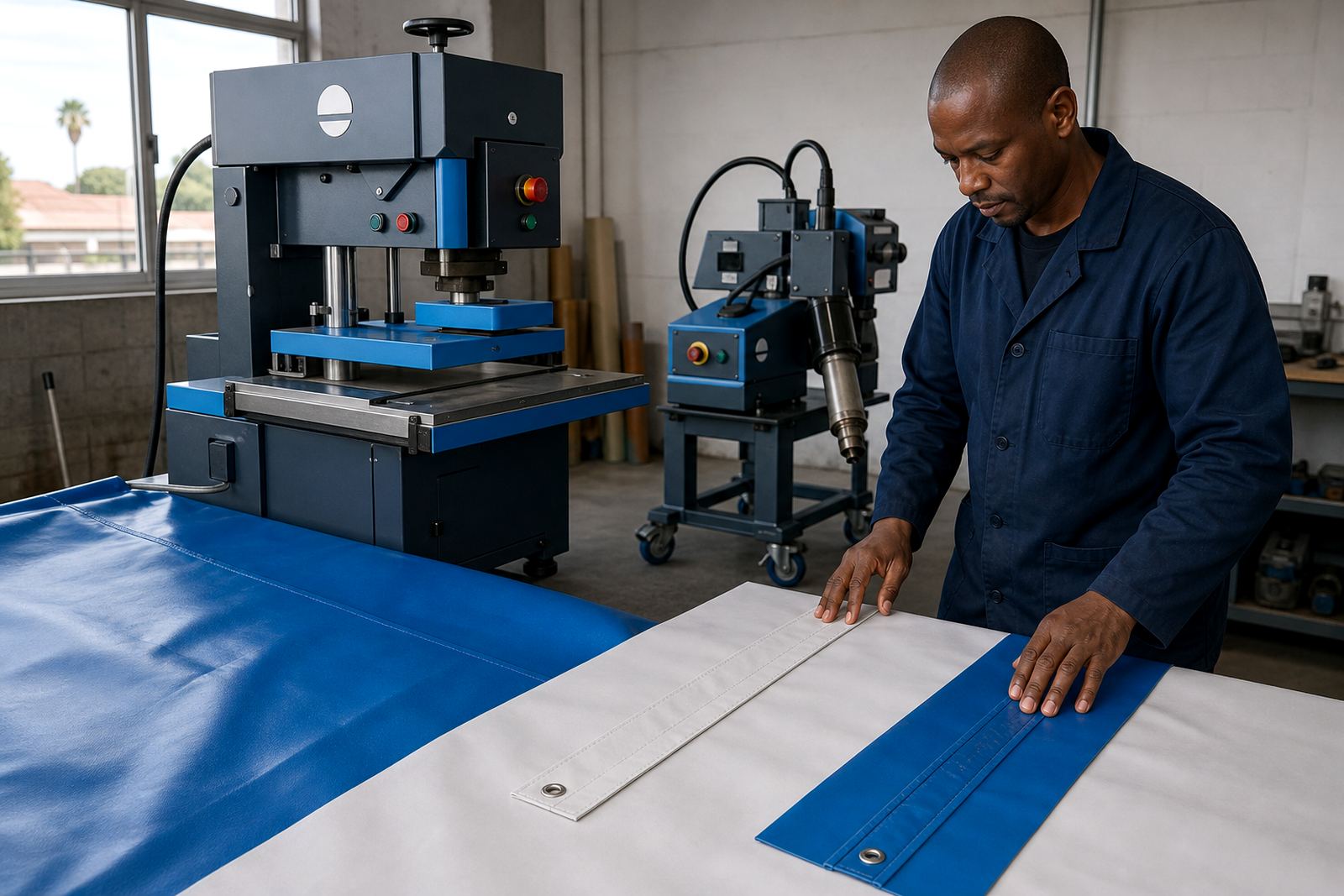
High-frequency welding uses radio frequency energy to heat the PVC layer from within the weld zone, then pressure forms a clean bond. It is often preferred where repeatability matters, especially on straight seams, pocket work, flaps and panel joins that must hold under tension. The finish is neat and controlled, which helps on products that need a tidy edge for retail displays, trailer covers and printed banners.
In a busy Germiston workshop, HF is often chosen when the same seam must be made many times a day. Once the tooling and settings are correct, the operator gets a consistent result across long runs, with less reliance on hand movement. That matters when a job has to match panels cut in Johannesburg one day and assembled in Pretoria the next.
- Best suited to PVC-coated fabrics with stable thickness
- Well matched to straight seams, boxed corners and repeating panel work
- Useful where clean appearance and seam consistency matter most
When hot-air or hot-wedge is the better fit
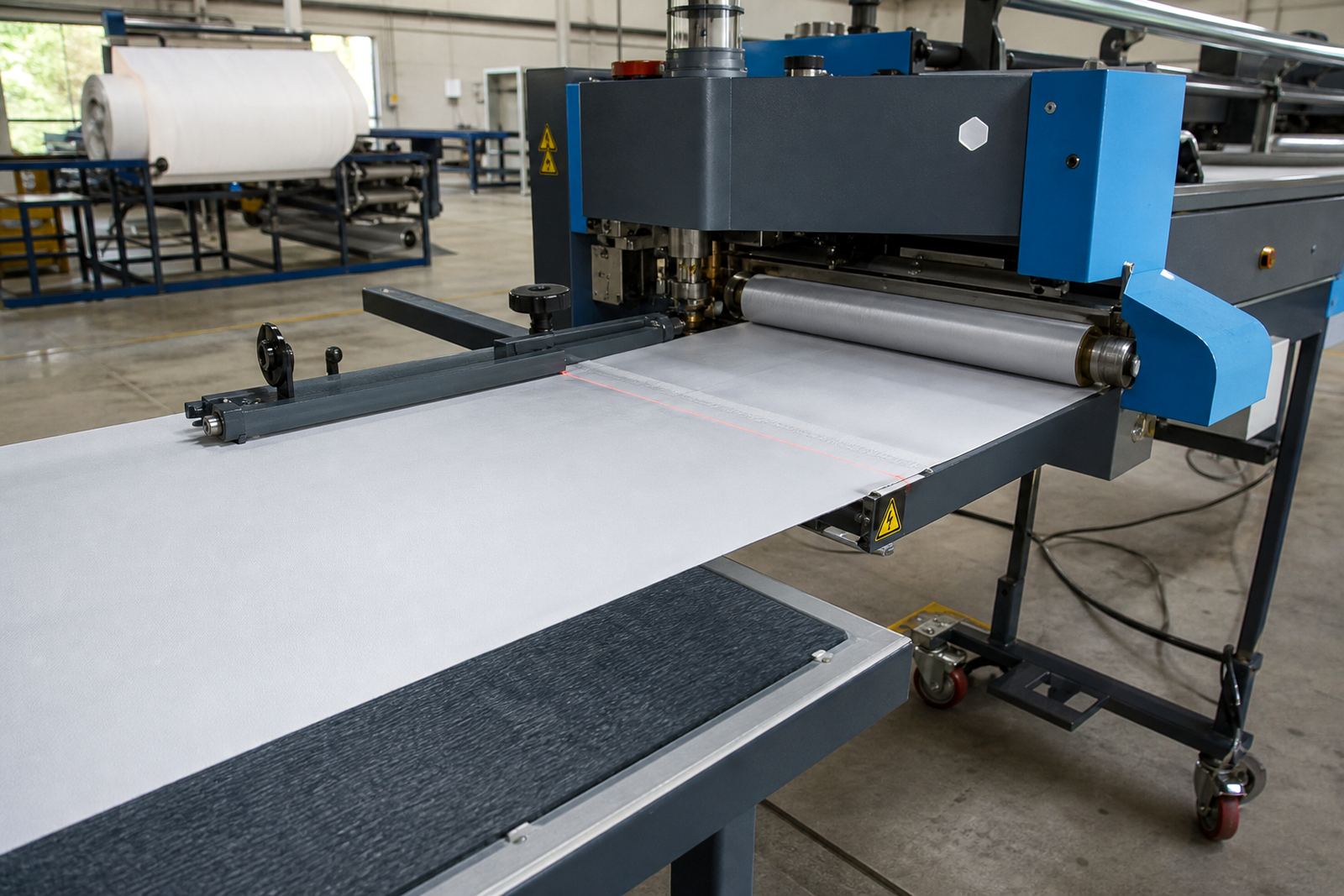
Hot-air and hot-wedge welding are more flexible for site work and for seams that are awkward to clamp in a fixed press. The process heats the overlap from the outside, then rollers press the softened material together. That makes it useful for long tent seams, repairs on installed covers, and jobs where the fabric must be moved around a large table or frame.
For many tarpaulin makers, hot-air welding is the practical choice for hems, reinforcements and quick adjustments. It also suits workshop teams that need a wider range of seam widths without changing tooling for every detail. In coastal Durban, where humidity can affect storage and handling, operators often appreciate the ability to work with fabric that has been staged and moved through the workshop in sections.
- Good for long seams and mixed job sizes
- Useful for repairs, on-site adjustments and awkward shapes
- Suitable for hems, fold-backs and reinforcement strips
Seams, hems, keder and eyelets in real workshop terms
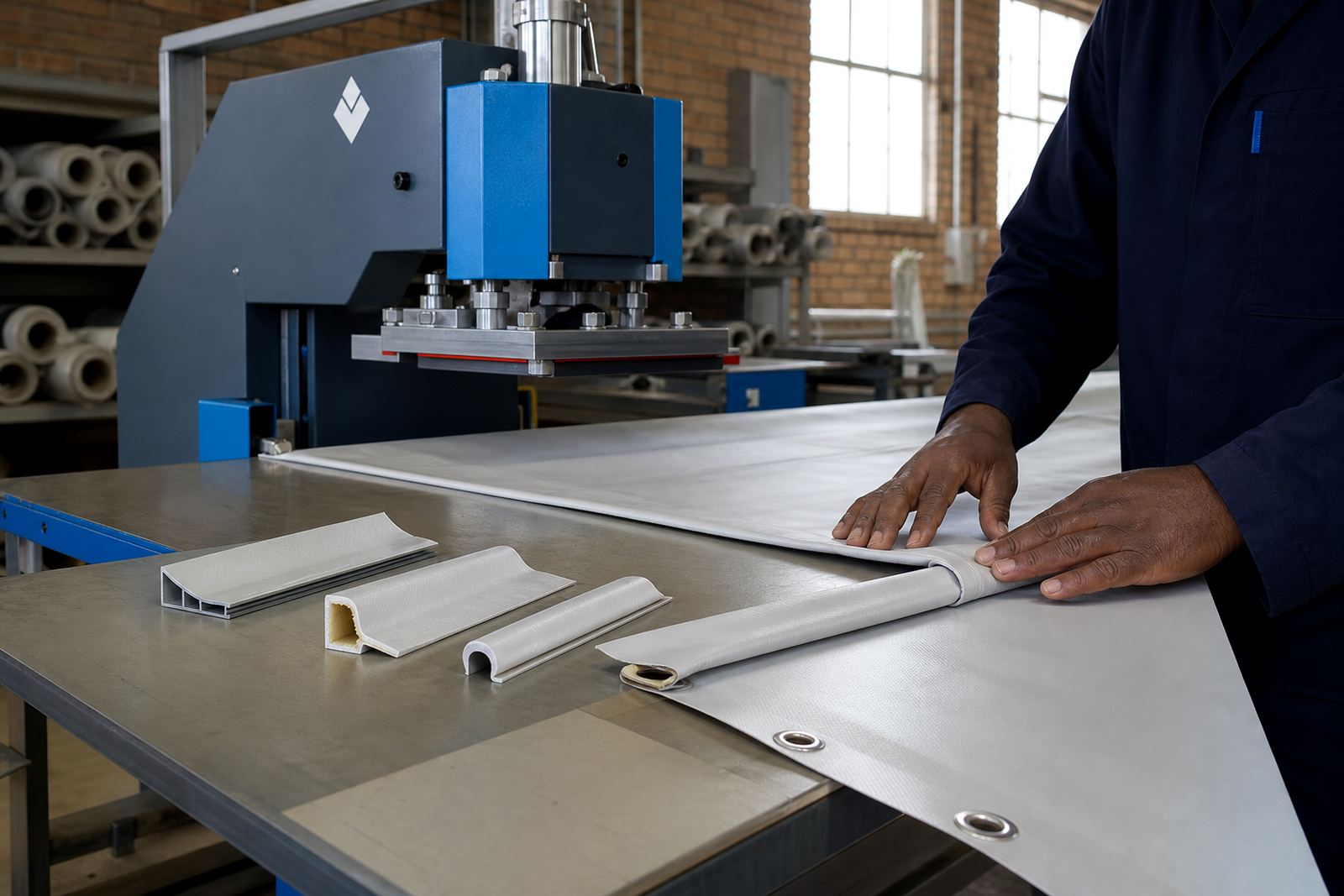
The machine choice should follow the product detail, not the other way round. A simple banner hem may be fast on hot-air equipment, while a keder strip for a tent track needs even pressure and a straight weld line. Eyelet work usually comes after welding, but the edge preparation matters because a weak hem or uneven fold can tear once the banner is hung in wind.
For PVC-coated fabrics, the common seam types are lap seams, hems, reinforced edges and pocket welds. Each one asks for a different balance of heat, pressure and dwell time. A clean seam on a sign panel in Cape Town may look easy from the outside, but if the overlap is too narrow or the edge is scorched, the panel will fail early and the fixing points start to pull out.
- Lap seams for joined panels and covers
- Hems for banners, flags and edge finishing
- Keder for tent tracks and slide-in fixing systems
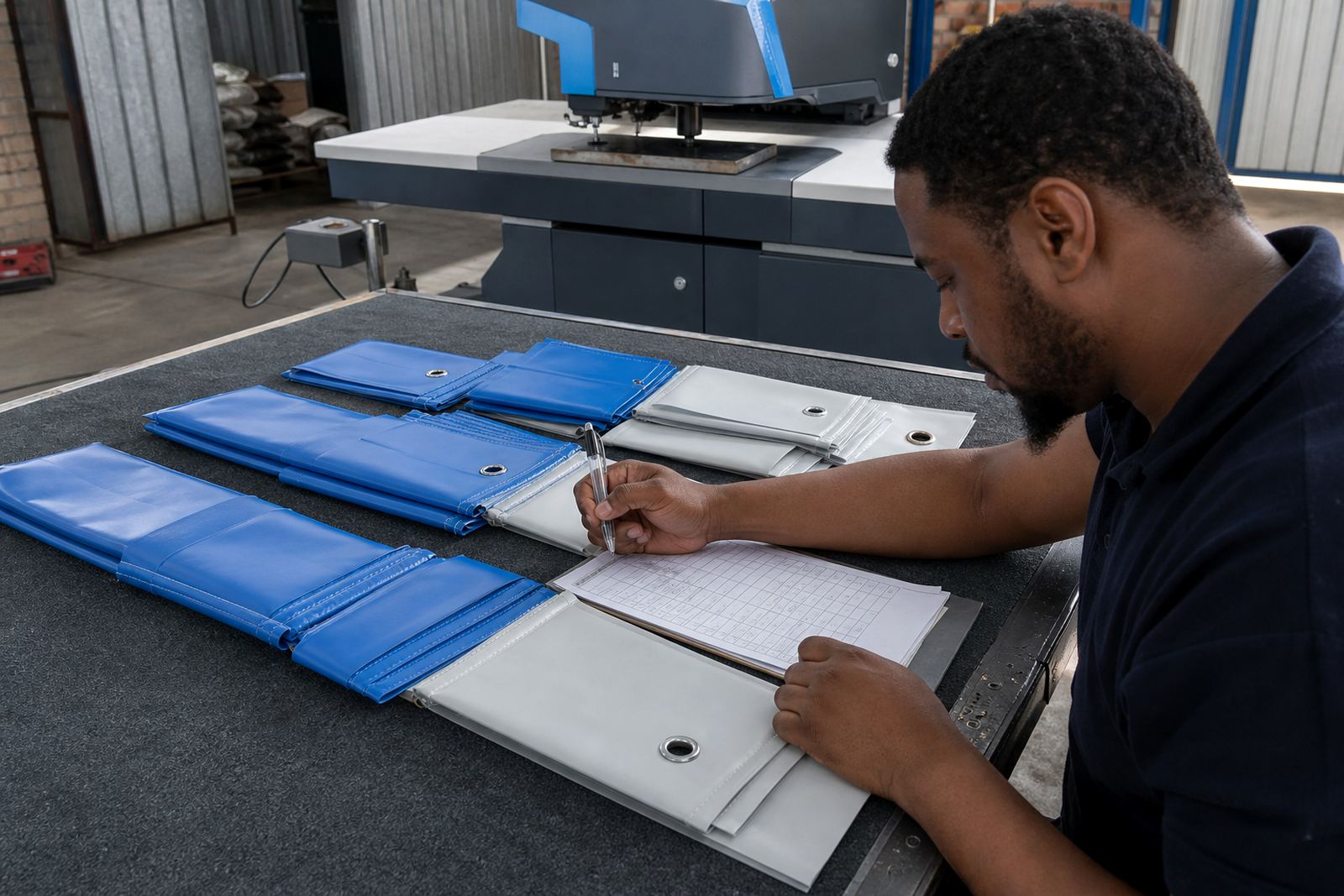
- Eyelet reinforcement where the load sits on the edge
What to check before a machine is installed
Installation is not only about putting a welder in place and switching it on. The floor needs to suit the table size, the electrical supply must match the machine load, and the operator needs enough room to feed fabric safely. In larger Ekurhuleni workshops, service teams also look at airflow, storage for tools and the route material takes from cutting to welding to finishing.
Tooling alignment is a major part of this stage. If the electrode, roller or hot-air nozzle is not set correctly, the seam may wander or thin out at the edge. A careful commissioning check helps avoid wasted PVC, uneven hems and repeated rework. That is especially important where a single machine handles banners in the morning and heavier tent panels later in the day.
- Check table height, access space and operator movement
- Confirm electrical supply and machine settings before production starts
- Set tooling, pressure and guide alignment for the seam type
Safety around heat, pressure and moving material
Both welding methods need proper operator discipline. HF equipment uses high voltage and must be guarded, while hot-air and hot-wedge machines create burn risks at the nozzle and heated contact points. Loose sleeves, rings and clutter near the feed path can cause trouble. A tidy workstation helps keep the operator focused and reduces mistakes when a long strip of PVC-coated fabric is moving through the machine.
Training should cover safe start-up, safe shutdown, cleaning around the weld head and what to do when a seam slips or the fabric twists. Eye protection, hand positioning and clear communication between the person feeding material and the person receiving it are all part of normal workshop practice. On busy jobs in Pretoria or Bloemfontein, that routine saves time and keeps the seam quality steady.
- Keep hands clear of heated parts and pinch points
- Use guarding and correct operator position at all times
- Train staff to stop the machine before correcting a misfeed
Servicing that keeps weld quality steady
Machine servicing is usually about small faults before they become bigger ones. Electrode wear, roller damage, poor alignment and dirt on the weld path can all change the seam. Preventive servicing helps keep the result even, whether the job is a lightweight banner or a heavier tarpaulin cover for truck use. On hot-air machines, nozzle condition and airflow are just as important as heat setting.
A workshop that handles daily production benefits from a simple service plan, spare parts on hand and regular seam testing. If the weld looks good but fails under pull, the problem is often in setup, tooling or a worn contact surface. In Johannesburg and Durban, where many shops run varied jobs in the same week, that kind of check is often the difference between smooth output and costly rework.
- Inspect electrodes, rollers, nozzles and guides regularly
- Test seams after servicing or setting changes
- Replace worn parts before they affect production output
A practical choice for South African workshops
The question is not which method is better in general. It is which method suits the product, the crew and the way the workshop is set up. HF welding is often the better fit for repeatable seams, neat joins and controlled production. Hot-air and hot-wedge welding give more flexibility for larger panels, repairs and jobs that move between workshop and site. Many tarpaulin and tent makers use both, because the work itself changes from one order to the next.
For a fabricator in Germiston supplying a banner run for Pretoria, then a tent repair in Bloemfontein, the choice may shift with the job list. The right machine, correct training and regular servicing are what keep the welds tidy and the material usable for longer.