Why the feed line decides the seam line
In PVC-coated fabric work, the feed path is not just about moving material through the machine. It controls how the two layers meet, how the weld lands on the overlap, and whether the finished seam runs true or starts wandering. With tarpaulins, banners and tent panels, even a small sideways drift can show up as a crooked hem or an off-square finished edge.
High-frequency welding places extra pressure on consistent feed because the material needs to sit flat between the electrodes. Hot-air and hot-wedge machines are just as sensitive, especially on longer runs where a slight angle becomes visible after several metres. In Germiston workshops and on site in Johannesburg or Pretoria, the usual problem is not the weld temperature first, it is the material entering the line unevenly.
Common reasons feed goes off line
Feed issues usually start with how the roll is set up, how the operator guides it and whether the machine is holding the fabric square. PVC-coated cloth can be stiff in cold weather and softer in heat, so a roll that looked fine in the morning may begin to pull differently later in the day. Coastal humidity in Durban can also change how the fabric handles, which is why the same job may need a different touch from a dry inland site.
- Rolls not centred properly on the stand or feed rack
- Guides set too tight, causing drag on the edge
- Uneven tension between top and bottom layers
- Worn rollers that pull more on one side
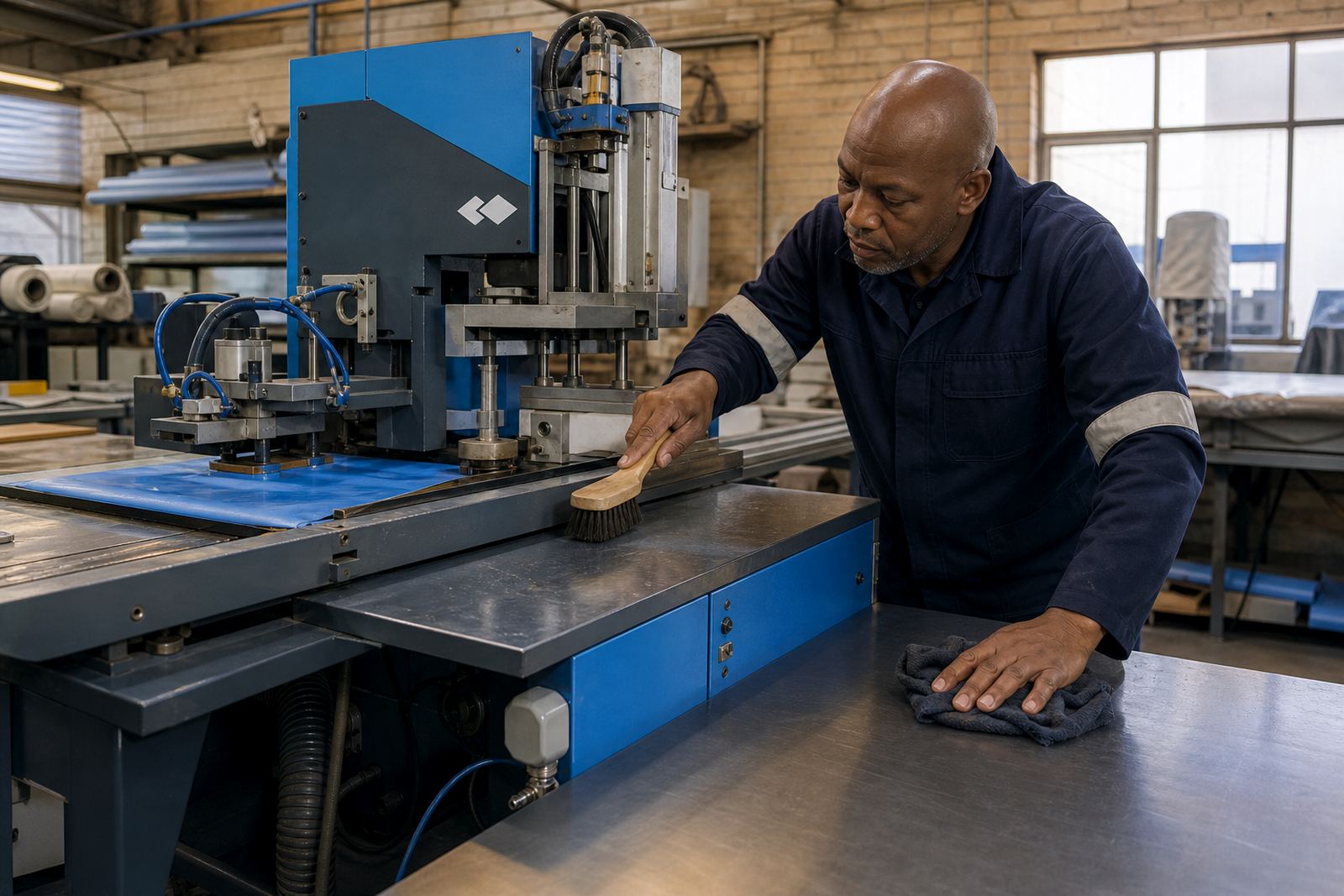
- Dirty feed surfaces where dust, scrap or adhesive residue builds up
- Operators correcting the line too late instead of making small adjustments early
In many cases the machine is blamed first, but a short check of the path from roll to weld head often shows the real cause. A twisted web, a loose core or a badly wound roll can send the seam off line long before the heating cycle begins.
What straight feeding looks like on the shop floor
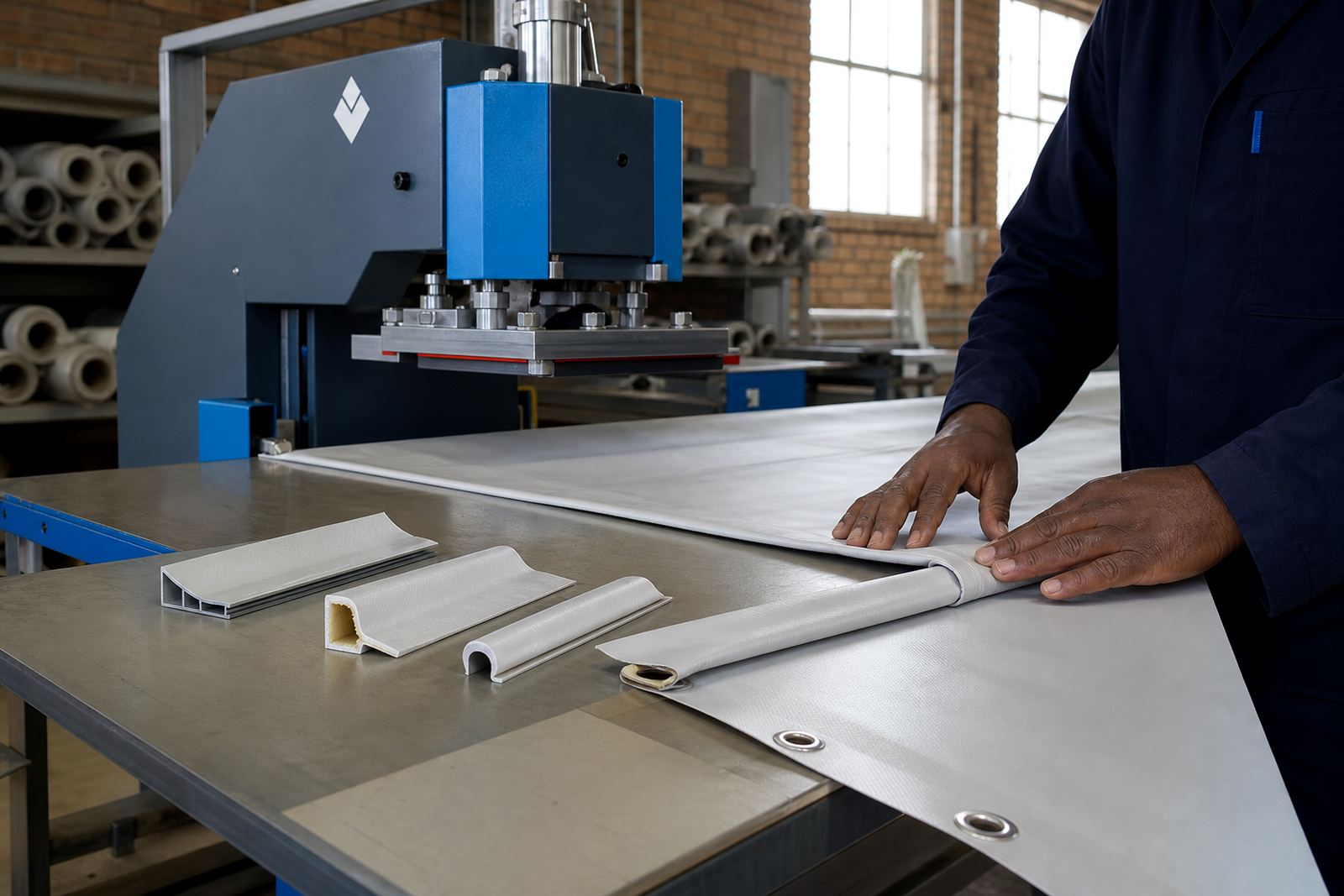
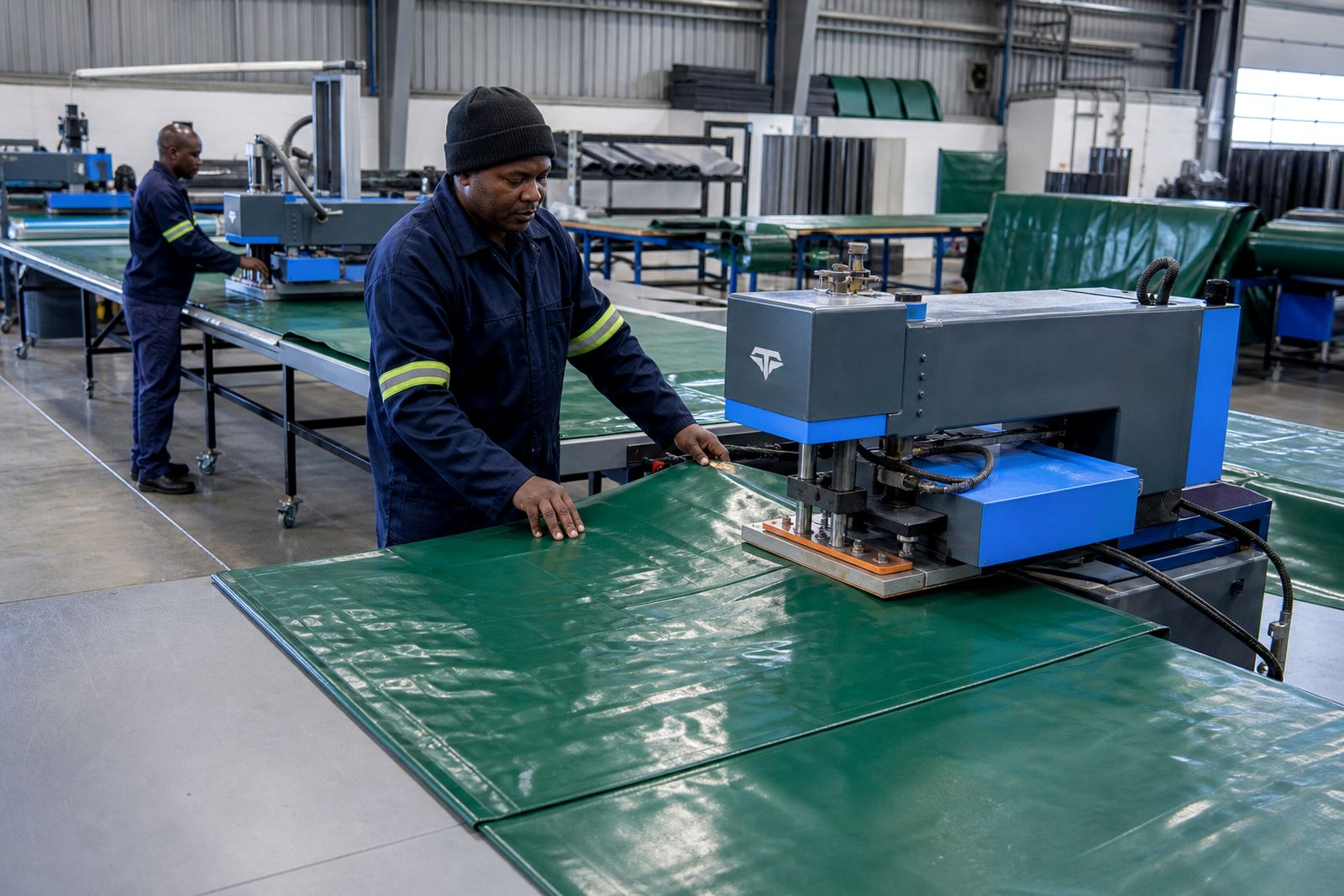
Straight feeding should feel steady, not forced. The fabric moves without hunting from side to side and the seam tracks along the marker or guide with only minor correction. On banner hems, keder strips and eyelet reinforcement work, that steadiness matters because each repeat operation depends on the previous edge being true.
Good operators watch the material before it reaches the welding point, not only after the seam is complete. They check the edge shape, the tension and the way the PVC face is lying against the underside. If the material starts to creep, they slow the feed and correct early. That saves wasted strips, reduces rework and keeps the finished panel closer to size.
- Keep the roll square and centred before starting
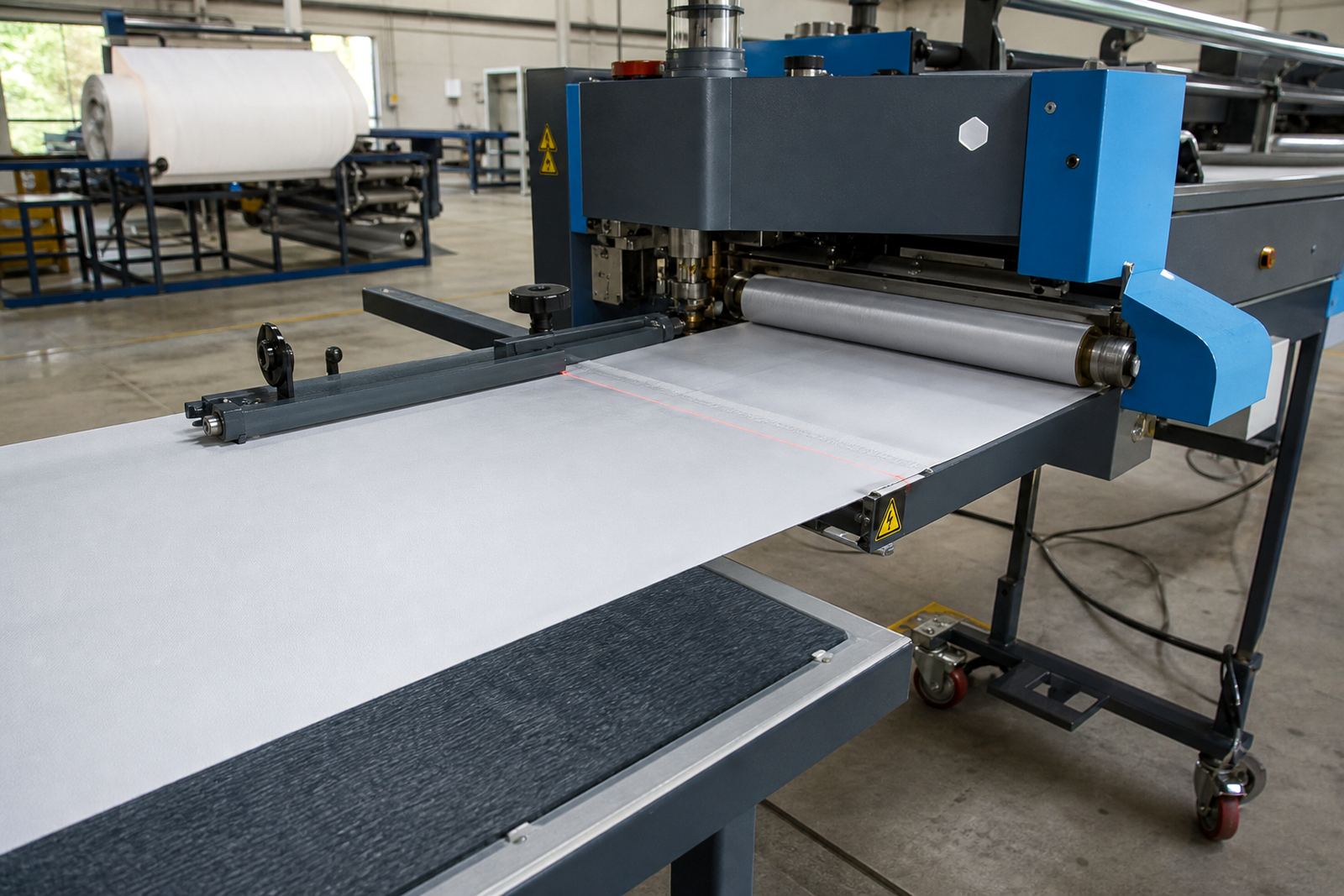
- Mark reference lines clearly on long panels
- Use both hands for light guiding, not pushing hard from one side
- Test a short length before running a full batch
- Stop and reset if the edge begins to curl or drift
Alignment on hems, keder and eyelet reinforcement
Hems, keder pockets and eyelet patches all depend on feed accuracy. A hem that runs off line becomes hard to fold cleanly, and once the fold is wrong the weld can trap the error for the rest of the length. Keder work needs even feed as well, because the strip must sit at a consistent position inside the pocket or the banner will not hang properly in the track.
Eyelet reinforcement is another place where feed discipline matters. If the patch or strip enters at an angle, the spacing between eyelets can vary and the finished curtain or banner may look untidy. On a tent sidewall or event banner, that shows immediately when the piece is fitted on frame.
The best results usually come from matching the feed method to the job size. Long straight hems need a stable guide. Smaller patch work needs lighter handling and close attention to edge registration. In both cases the aim is the same, a clean line from start to finish.
Operator habits that protect the weld
Safe, accurate feed work starts with a calm setup. The operator should keep hands clear of the weld point, avoid loose clothing near moving parts and make sure guards and emergency stops are easy to reach. With radio frequency equipment, there is also a need to respect the machine’s clamping area and keep conductive tools away from the active zone.
Training helps reduce the small mistakes that cause major waste. A good operator learns how to read the fabric, when to ease off and how to spot a developing fault before it becomes a run of bad seams. On hot-air and hot-wedge machines, that also means watching the line for overheating, edge shrinkage and surface gloss changes that can signal the feed has gone out of sync.
- Use the correct guide for the material width
- Keep scrap and offcuts clear of the feed path
- Check clamp pressure before starting a batch
- Never force a panel through if it begins to skew
- Stop for adjustment rather than trying to correct a long error mid-run
Servicing that keeps feed true
Feed alignment is not only an operator issue, it is also a servicing issue. Worn rollers, loose bearings, damaged guides and poor tool alignment all show up as wandering seams. Preventive servicing keeps the machine pulling evenly, which matters for workshops handling repeat tarpaulin orders or mixed banner runs across Johannesburg, Cape Town and Bloemfontein.
Service checks usually focus on roller condition, pressure balance, guide position, electrode condition on RF units and the general condition of moving parts. If a machine has started marking one edge, leaving uneven seam width or pulling the material to one side, those are the early signs that the feed system needs attention. In a busy Germiston shop, fixing that early is far cheaper than scrapping full panels later.
Good servicing also helps with safety. A machine that runs true is easier to control, less tiring for the operator and less likely to need last-minute correction near the weld zone. That is especially useful when the same equipment is used for different fabric weights and different seam widths in the same week.
A Germiston example from a mixed production run
A typical local example is a tarpaulin maker in Ekurhuleni that runs both straight hems and keder edges on the same shift. The first job may be a long trailer cover, then the next job a set of banner panels for an event site in Pretoria. If the feed is not reset between jobs, the machine can hold the wrong tension and the next seam starts to drift.
What works best is a short alignment check before each new batch. The operator centres the roll, confirms the guide position and welds a short test piece. That small routine often prevents wasted material, especially when the fabric width changes or the roll has been stored tightly packed. It is a plain habit, but it saves time and keeps the work looking tidy when the finished item leaves the workshop.
For teams handling PVC-coated fabrics every day, feed alignment is not a minor detail. It is part of the cut, the weld and the final fit. Get the feed right and the rest of the job becomes steadier, cleaner and easier to repeat.