When the seam looks fine but fails later
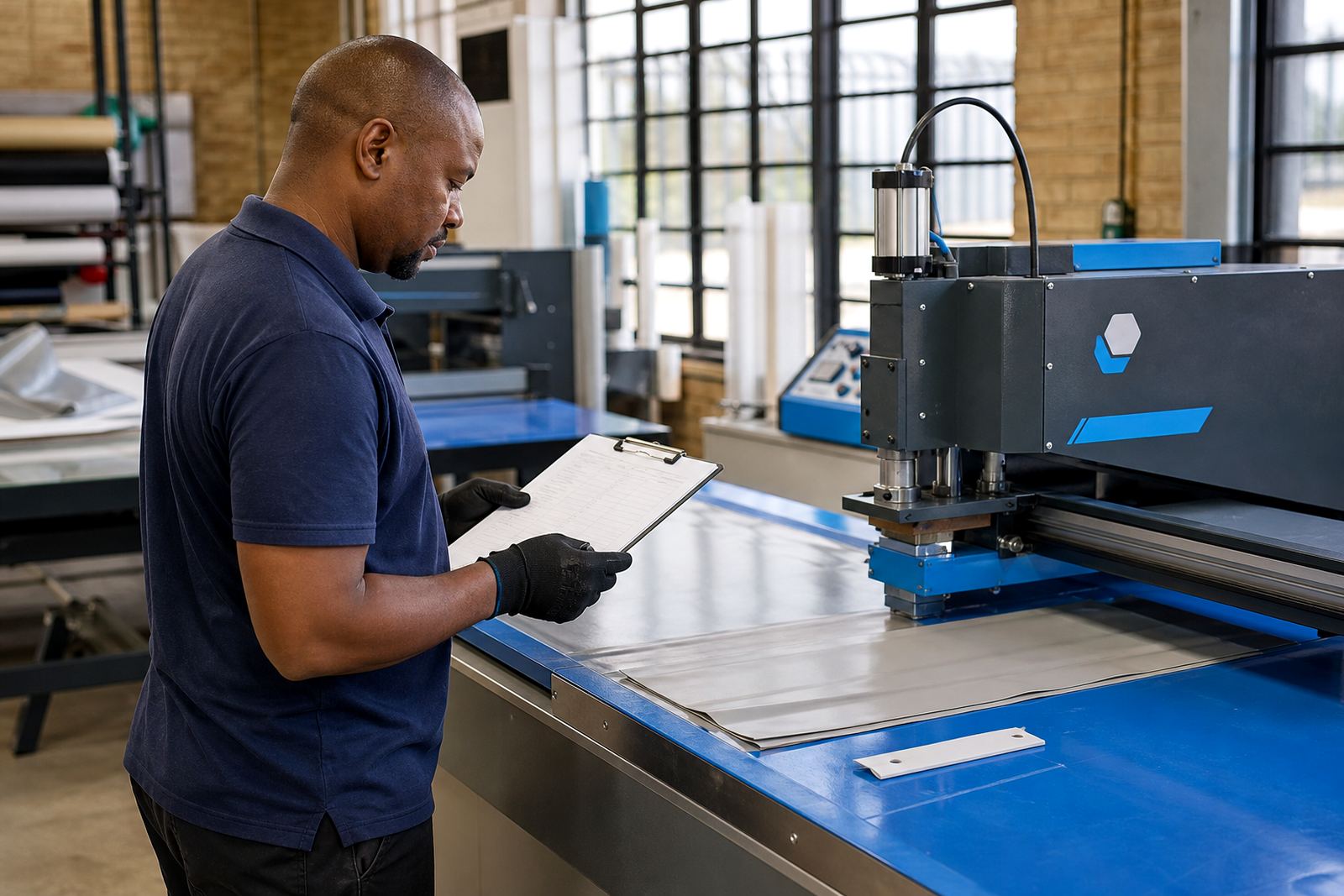
In PVC-coated fabric work, rework is often blamed on the operator when the real issue sits in the material, tooling or machine condition. A seam can look neat at the edge yet open up after folding, eyeletting or a day in the sun if the weld was made with uneven heat or poor pressure. That is common on tarpaulins, tent panels and banner joins where long runs, corners and hems all ask different things from the machine.
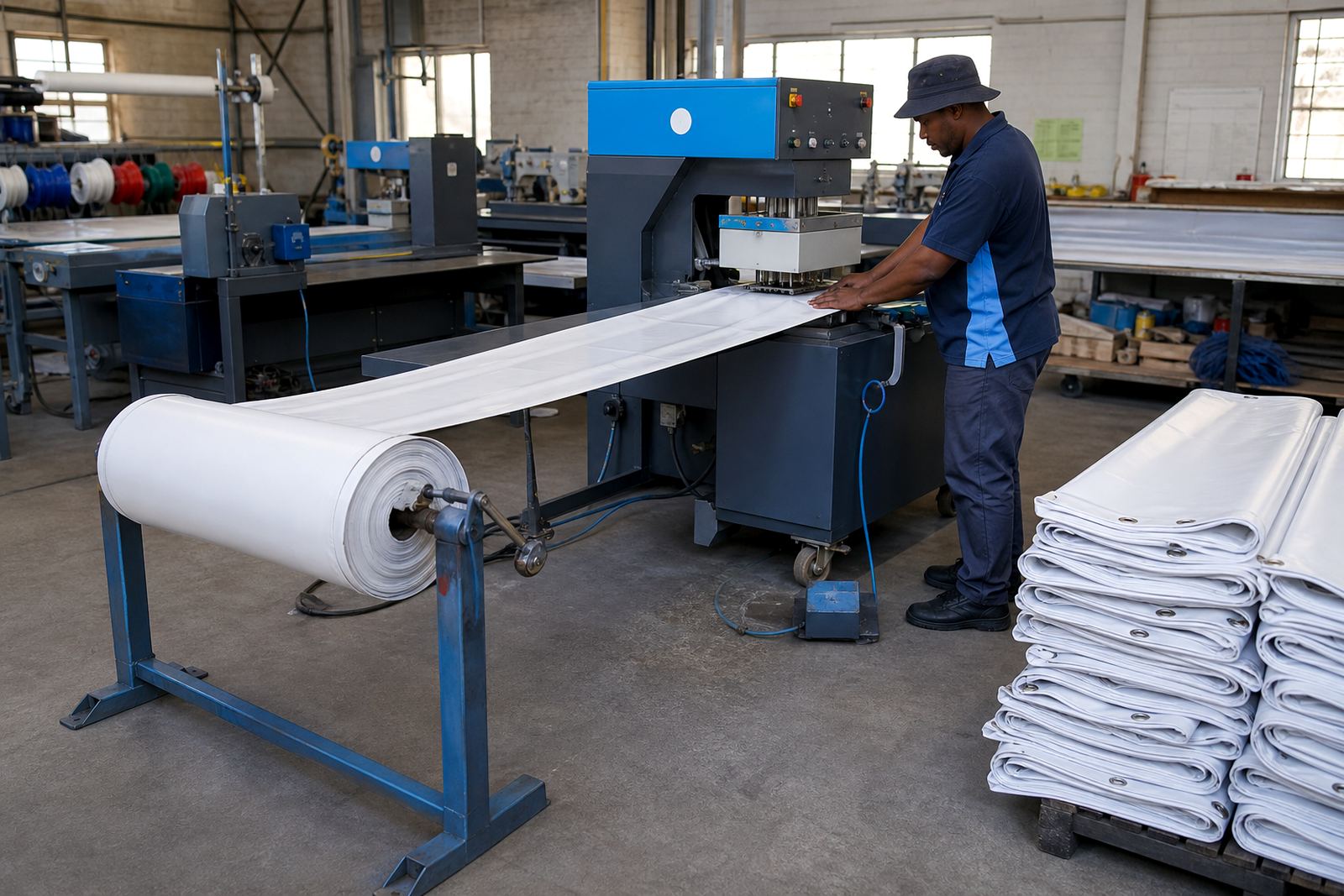
High-frequency welding and hot-air or hot-wedge welding behave differently, but the same basic faults keep turning up. Too much heat can scorch the coating and make the seam brittle. Too little heat gives a soft bond that peels under load. If the feed is uneven, the material drifts and the overlap changes from one side to the other, then the next round of rework starts with trimming and patching.
Material prep faults that cost a second pass
Dirty or badly cut material is one of the quickest ways to create rework. Dust, release residue, oil from handling and moisture from coastal storage all interfere with a clean bond. In Durban, for example, fabric can pick up humidity fast, so stacked rolls and cut panels need enough time to settle before welding. On site, even a small wrinkle at the edge can pull the seam out of line.
- Check that cut edges are square before starting long runs.
- Keep overlap widths even, especially on hems and reinforcement strips.
- Wipe down marked areas where dust or chalk has built up.
- Separate damp stock from dry stock so the weld settings stay consistent.
- Lay out panels flat and avoid tension that stretches one side more than the other.
When prep is rushed, the welder ends up chasing faults that should have been caught at the table. That adds trimming, patching and repeat tests, which slows the whole shop down.
Heat, pressure and speed need to match the job
Most rework on PVC welders traces back to the settings being out of balance. Hot-air and hot-wedge machines need the right temperature, pressure and travel speed working together. If the machine moves too slowly, the seam can blister or shrink. If it moves too quickly, the bond stays weak and the seam may pass a quick visual check but fail in service. High-frequency welding has its own pattern of faults, usually linked to electrode alignment, pressure time and material thickness.
The seam type matters too. A simple overlap may tolerate a little variation, while a hem, keder pocket or reinforced panel needs tighter control. Eyelet work can also expose bad prep because the welding around the fixing point shows where heat has spread unevenly. Operators should watch for ripples, burn marks and shiny spots that point to overheating, not just a bad finish.
- Keep a setting sheet for each fabric weight and seam type.
- Test first on offcuts when changing material thickness.
- Watch the seam edge for consistent gloss and width.
- Adjust pressure before increasing heat when the bond looks soft.
Tooling and alignment problems that keep returning
Even a skilled operator will struggle if the tooling is out of line. On high-frequency welders, worn electrodes or poor alignment can leave one side of the seam stronger than the other. On hot-air and hot-wedge machines, worn rollers, dirty guides and damaged pressure surfaces can pinch the fabric or let it wander. That is when the same panel gets welded, trimmed and welded again.
In Germiston and across the Ekurhuleni industrial areas, many tarpaulin and banner shops run long shifts, so wear builds up faster than people expect. A roller that looks only slightly worn can create a narrow press line, and that can cause a weak seam in a tent valance or a banner hem. Regular tooling checks help stop the cycle before it turns into scrap.
- Inspect rollers, guides and electrodes for flat spots and scoring.
- Confirm the seam path before starting production runs.
- Check that the pressure is even across the full width of the weld.
- Replace worn parts before they start marking the fabric.
Common rework points in hems, keder and eyelets
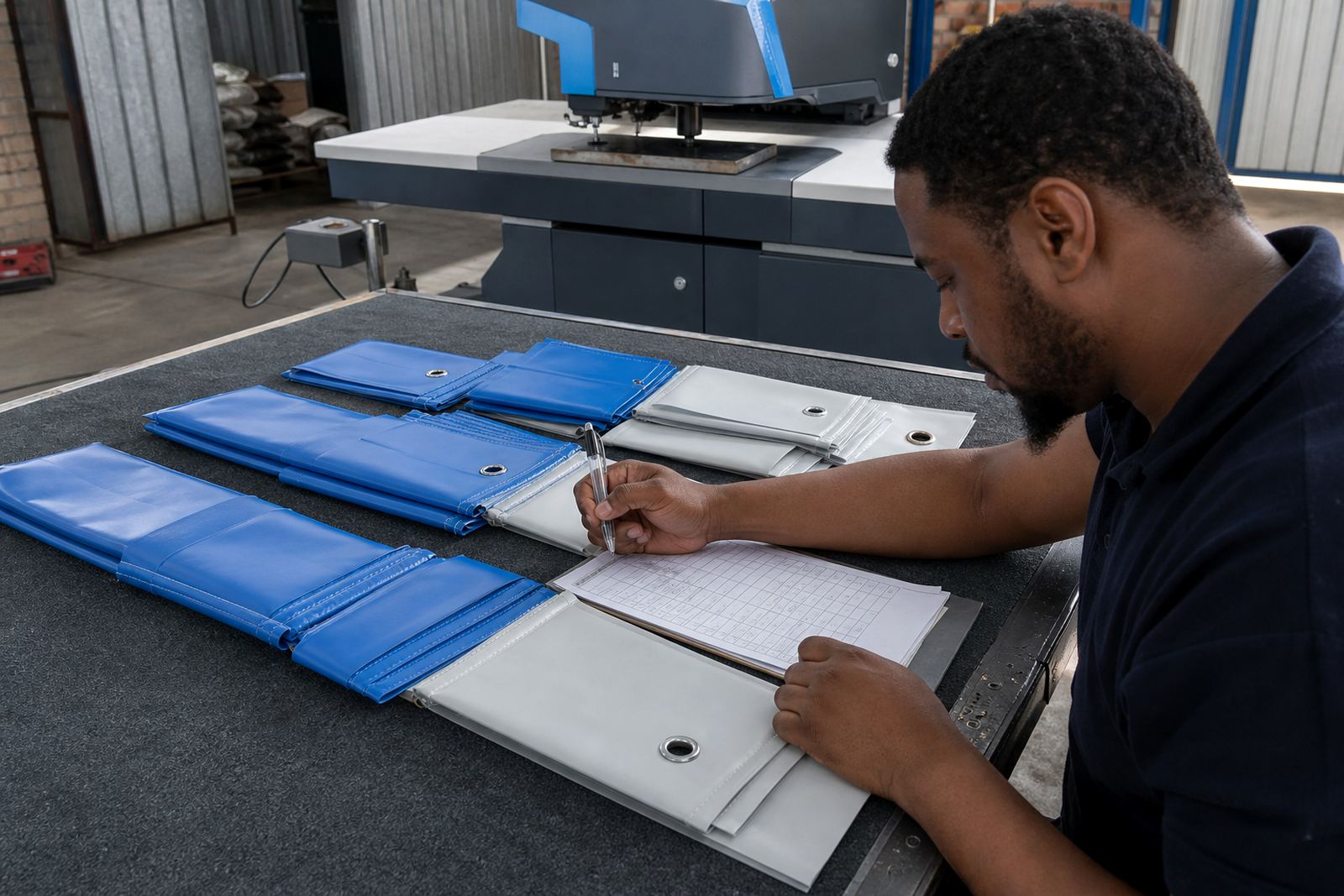
Some jobs need more than a straight seam and that is where rework tends to hide. Hems must be even so the edge sits flat and does not twist. Keder work needs a clean pocket, steady feed and enough strength at the return fold to hold shape. Eyelet reinforcement has to be centred and flat, otherwise the fixing point pulls the material and opens the weld around it.
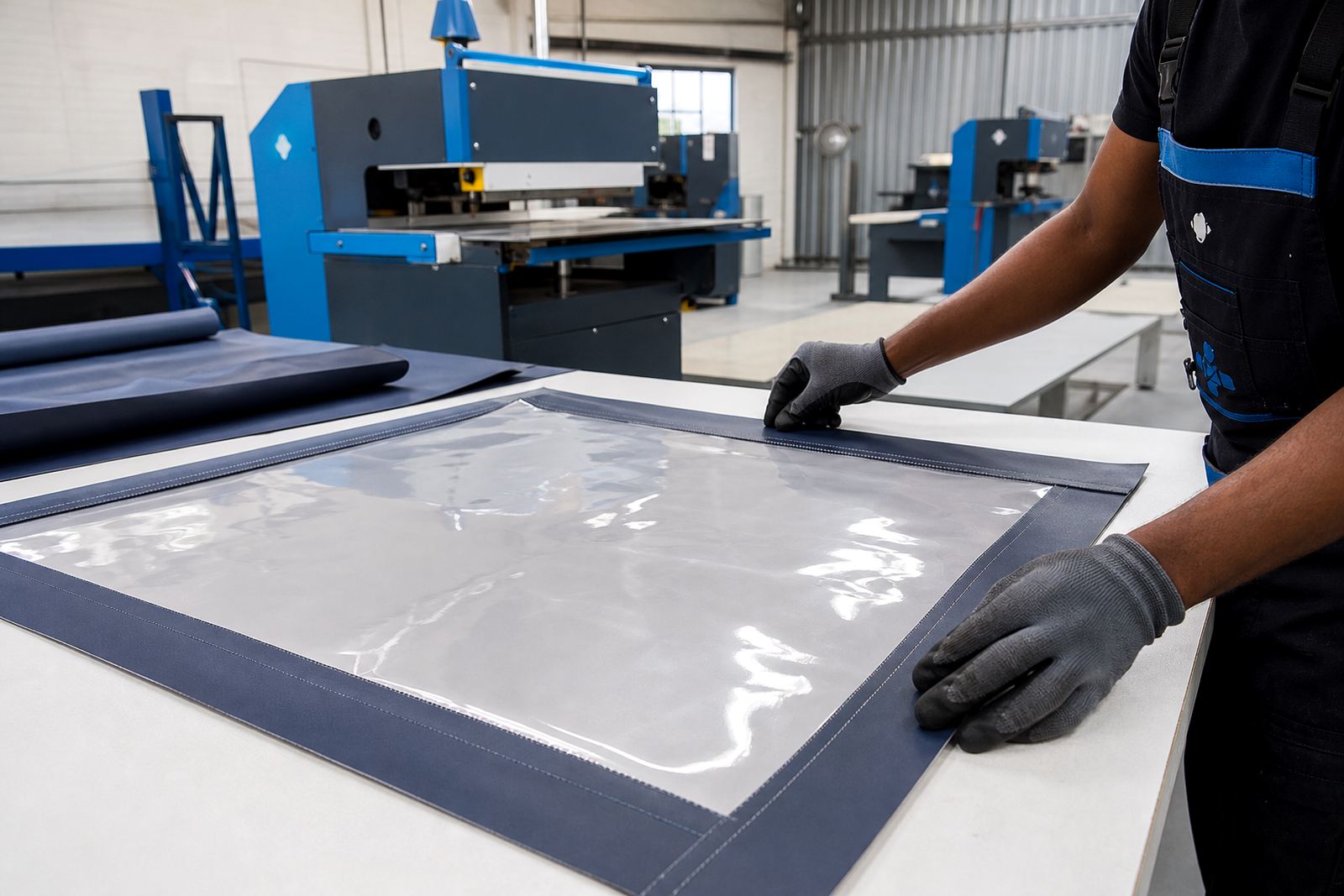
On banner work, rework often starts when the hem width changes along the length or the corners are cut too tight. On tarpaulins, the problem is often a patch that is welded before the panel has settled, so the finished sheet shrinks or bows. For tent makers, a slight fault in a long seam can throw off the fit of adjoining panels and create more correction work later.
These jobs need repeatable handling, not guesswork. A clean, measured process reduces trimming and keeps the final product in line with the drawing.
Safe operation and servicing keep the fault rate down
Operator safety and machine servicing affect rework more than many shops admit. Loose guards, dirty surfaces and skipped checks can lead to poor control and unnecessary faults. Hot-air and hot-wedge equipment also need attention around heated parts, moving rollers and electrical panels. Operators should work with proper hand placement, clear access around the machine and a routine that keeps fingers away from the seam path.
Preventive servicing is not only about avoiding breakdowns. Clean machine faces, sound wiring, aligned tooling and correct calibration all help the weld stay even from start to finish. Fault finding, roller replacement, electrode refurbishment and seam testing are useful when the same defect keeps returning after a normal setting change. In a Johannesburg shop running mixed banner and tarp work, that kind of servicing can be the difference between repeated rework and a stable production line.
When the machine is maintained properly, the operator can focus on seam quality instead of fighting the equipment. That is what cuts rework most effectively.