Why clear sections need a different touch
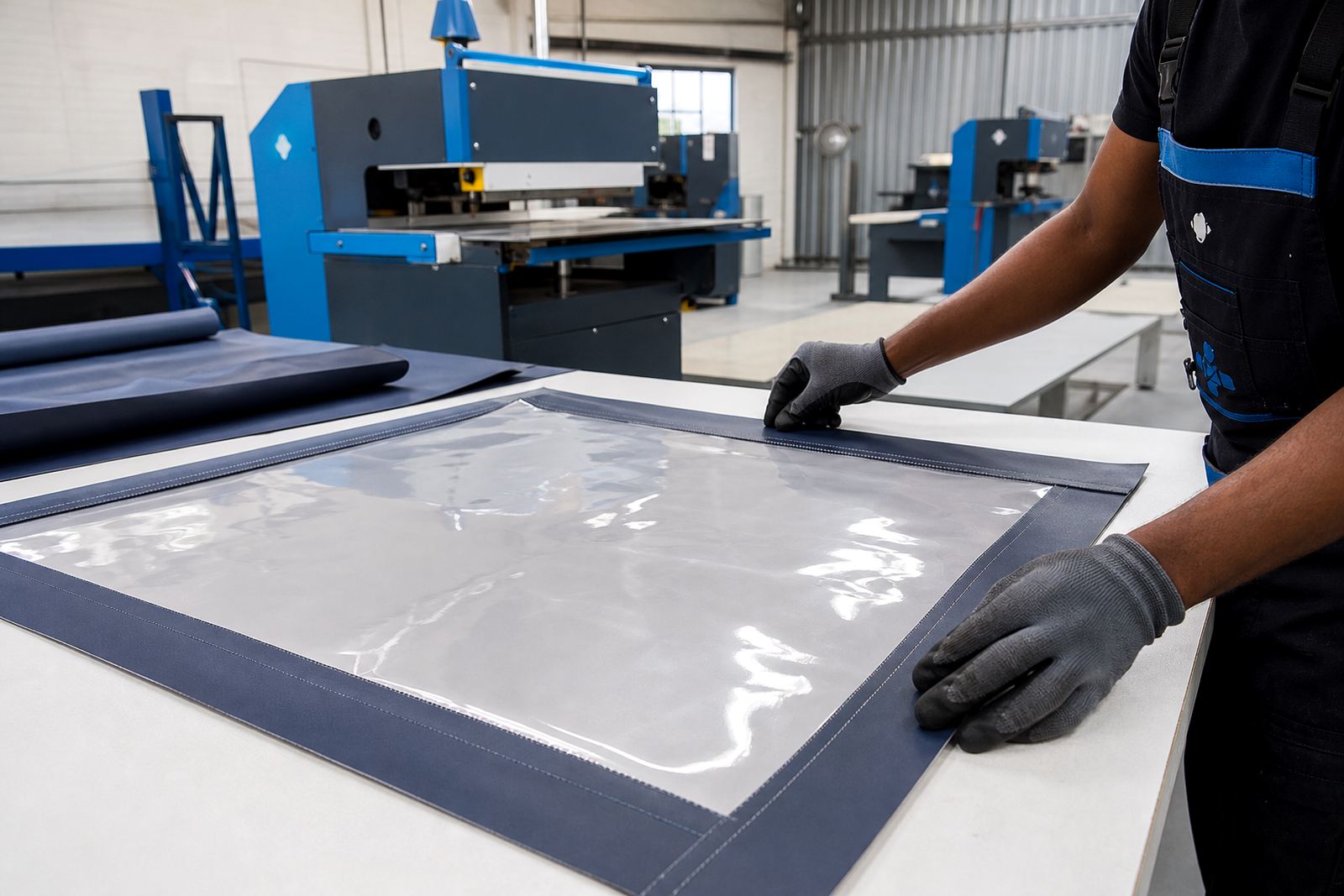
Clear PVC-coated sections are often used in tent walls, weather screens and display covers where visibility matters. A small scuff, trapped dust or crooked overlap can stand out straight away, so the operator has to treat the material with care from the first cut to the final seam.
In practice, the work is less about forcing speed and more about keeping the sheet flat, clean and tensioned. That matters in humid coastal conditions too, where moisture and dust can change how the material sits under the welding head. On jobs around Durban and Cape Town, many shops keep the clear rolls covered until needed and handle them with clean gloves to reduce marks.
Choosing the right weld for a clear finish
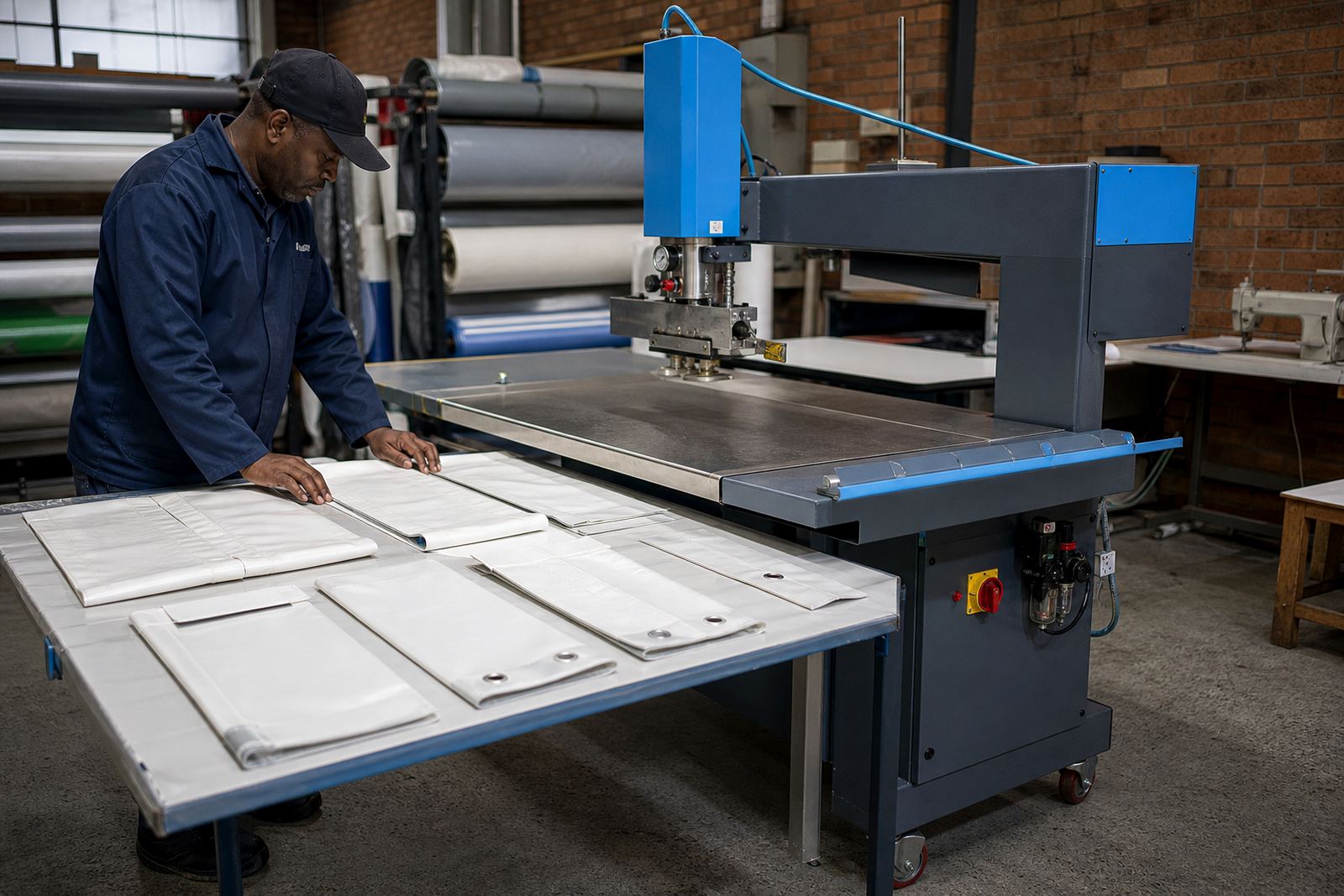
High-frequency welding is commonly used on PVC-coated fabrics when a neat, repeatable seam is needed. It gives strong joins on clear panels, hems and shaped inserts when the machine is set correctly for the material thickness and overlap width.
Hot-air and hot-wedge welding also have their place, especially where long straight seams, repairs or site work are part of the job. The key is matching the weld method to the fabric, the seam type and the final appearance required.
- Lap seams for weather-tight panel joins
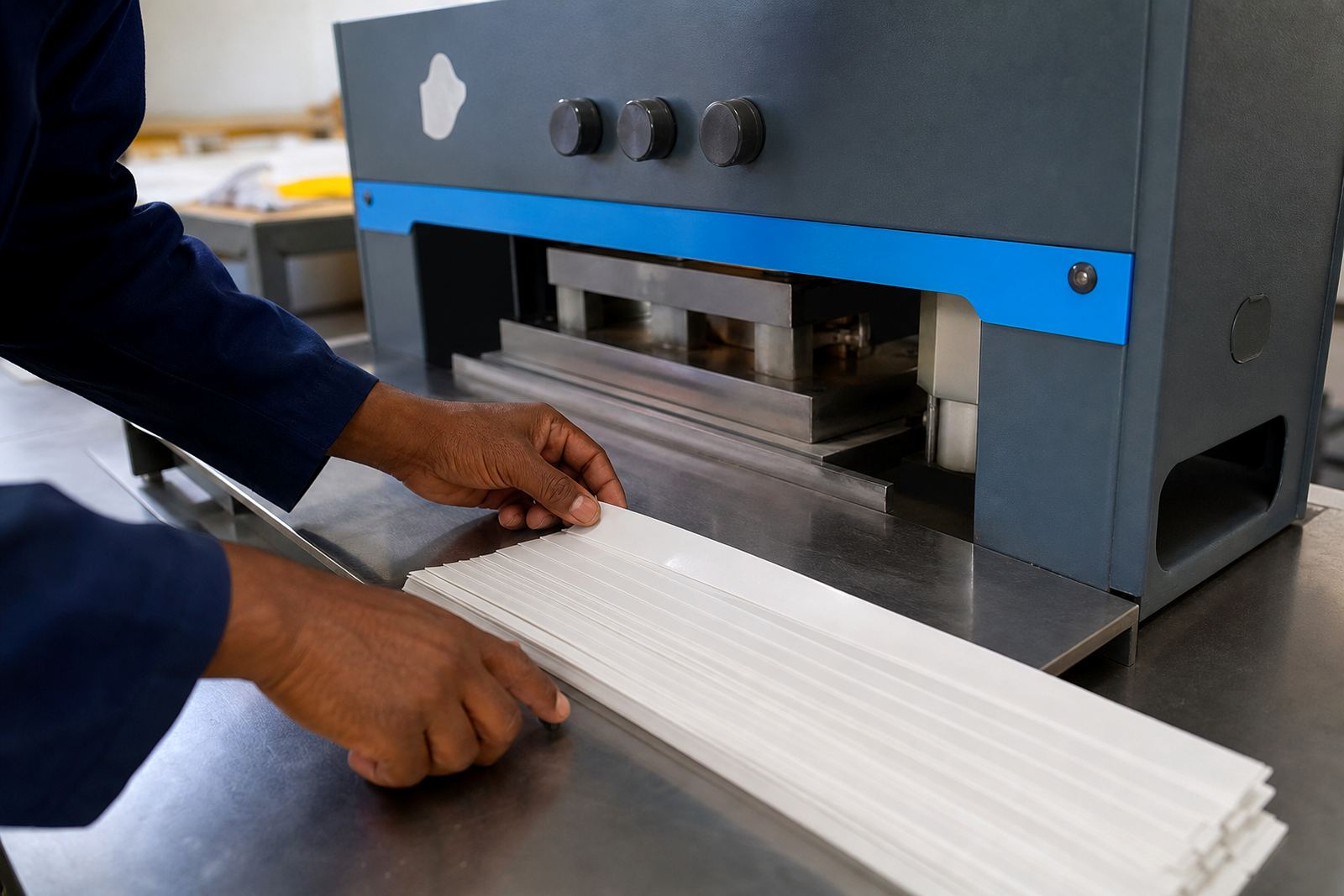
- Hems for edges that need strength and a tidy fold
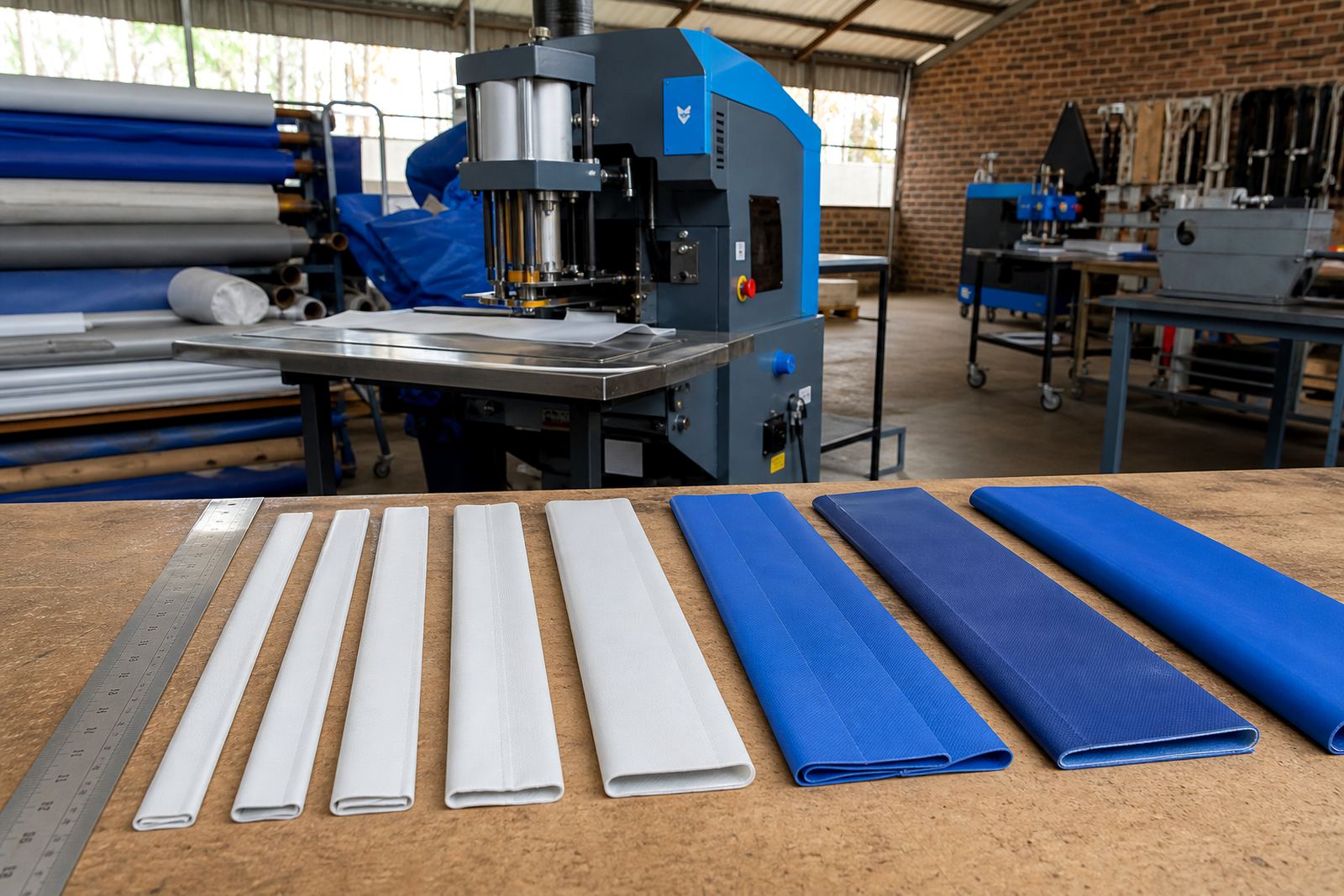
- Keder welds for track-insertion edges on tents and enclosures
- Eyelet reinforcement areas where stress builds up
What a clean seam depends on
A clear panel can look poor even when the weld is strong. A slight offset, uneven pressure or trapped grit can leave a line that catches the eye. That is why tooling alignment, electrode condition and roller pressure need regular checking.
For banner makers and tent shops, the seam should hold under wind, handling and repeated folding. The operator has to keep the overlap even, the heat consistent and the feed steady, especially on long runs where the first metre looks fine but the next few metres start to wander.
- Keep cut edges square and free of loose swarf or dust
- Check guide lines before starting a long weld
- Test on offcuts when changing fabric batch or thickness
- Inspect the seam under light for bubbles, haze or burn marks
Hems, keder and eyelets on clear panels
Clear PVC panels often sit next to opaque sections, so the join has to look balanced from both sides. Hems need an even fold so the edge stays straight, while keder sections must be welded cleanly enough to feed smoothly into the track without twisting. Eyelet positions also matter because any tear or pull-out usually starts with poor spacing or weak reinforcement.
In Germiston and Boksburg workshops, teams often run a trial strip before the full production piece, then check whether the weld line stays straight and the material remains visually clear at the join. That simple step can save a rework on a large marquee wall or side curtain.
Safety at the welding station
High-frequency equipment and hot-air or hot-wedge machines both need proper handling. Guards, foot controls, cable checks and clean work areas all help reduce avoidable risk. The operator should keep hands clear of the weld zone and wear suitable protection for heat, sharp edges and moving rollers.
Clear material can tempt a shop to move fast because defects are easy to spot, but rushing usually creates more waste. A tidy station helps too, with offcuts removed before they catch under the work and with enough space to lay panels flat instead of folding them across benches.
- Check leads, switches and plugs before each shift
- Keep hands clear of heated tooling and clamp points
- Use stable tables for large clear sheets
- Store rolls away from direct sun and dust
Servicing that keeps the finish predictable
When a weld changes from clean to patchy, the fault is often mechanical rather than material related. Roller wear, electrode build-up, poor alignment or loose pressure settings can all affect the line. Preventive servicing keeps the machine steady and helps the operator hold the same seam appearance across different jobs.
For shops supplying Johannesburg, Pretoria and Bloemfontein, servicing often includes fault finding, seam testing, tooling alignment, electrode refurbishment and roller replacement. Site callouts are useful when a machine is on a busy floor and the team needs the issue traced without moving heavy equipment across the plant.
A local job with clear panels
A tent maker in Ekurhuleni needed side panels for a site shelter with clear viewing strips and reinforced edges. The team used high-frequency welding for the panel joins, then finished the long edges with hems and keder channels so the sections could slot into place neatly. The eyelets were set after the weld checks, not before, because the spacing had to match the load points on the frame.
That sort of job shows why clear PVC work is not only about strength. It is about clean handling, steady machine settings and a seam line that looks right when the panel is hung in daylight. If the welding is uneven, the flaw shows immediately, and on transparent work there is nowhere to hide it.