A small strip saves a costly roll
When a fresh batch of PVC-coated fabric arrives, the outer finish may look the same as the last lot, but the weld response can change. A test strip gives the operator a controlled sample to check heat, dwell, pressure and seam finish before production starts. That matters on tarpaulins, banners, marquees and tent panels where a weak seam can cause rework, spoil a deadline or leave a job looking untidy.
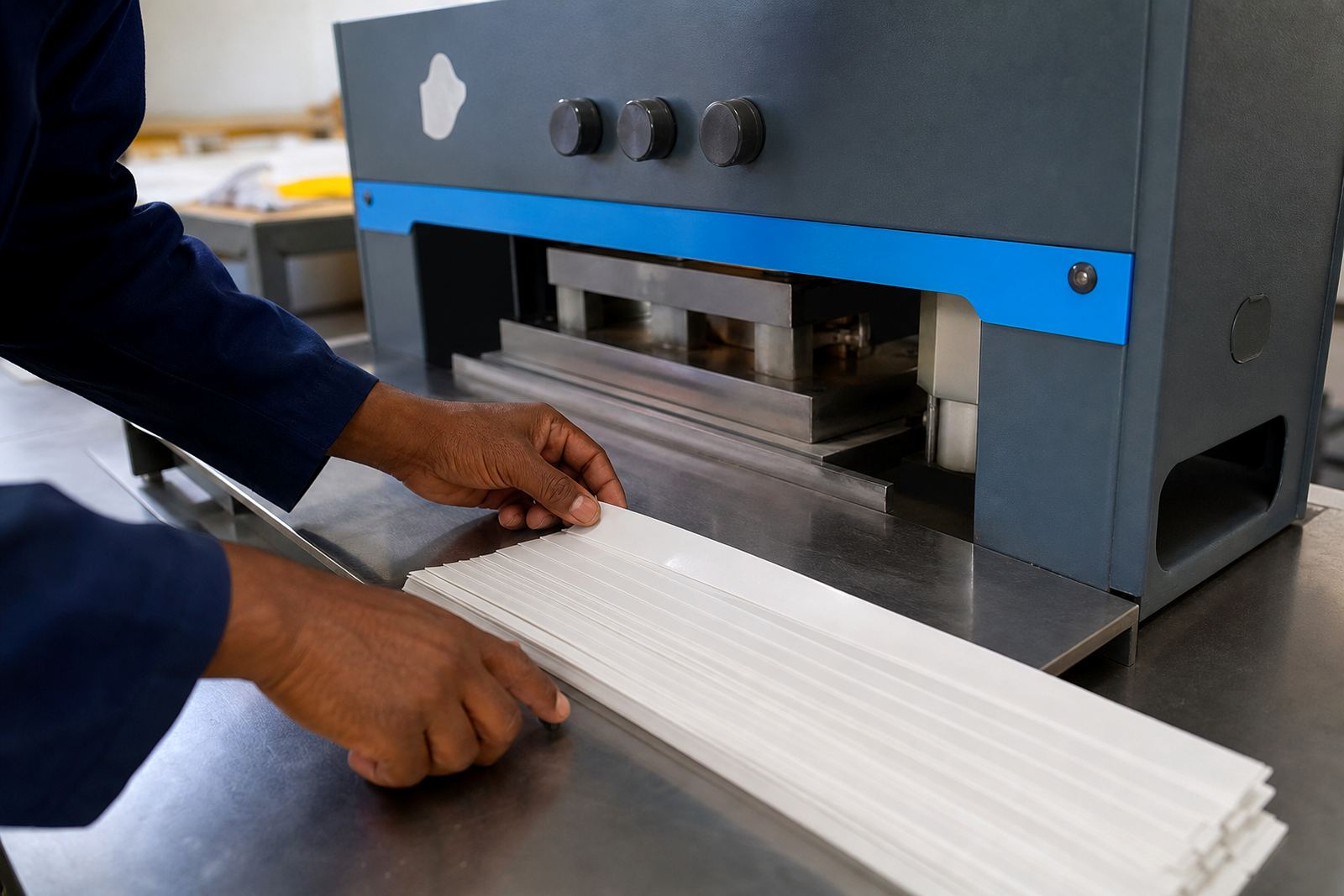
In practice, a strip is cut from the same batch, then welded using the same machine settings planned for the job. The result shows whether the coating is taking the weld evenly, whether the base cloth is marking, and whether the seam opens cleanly or pulls apart at the edge. On a humid Durban week, or in a dry Pretoria workshop, the material can behave differently enough to justify a fresh check.
- Confirms the bond before full-length seams are run
- Helps avoid scorching, under-welds and puckering
- Shows whether the coating thickness has changed from the last batch
- Gives the operator a reference sample for the shift
What a test strip should tell the operator
A proper strip is not just a scrap. It is a measured check that tells the operator what the machine is doing to the material. For radio frequency welding, the strip should show an even bond across the full width, with no dry spots or edge lift. For hot-air or hot-wedge work, it should show the right melt line, clean overlap and no excess distortion in the cloth.
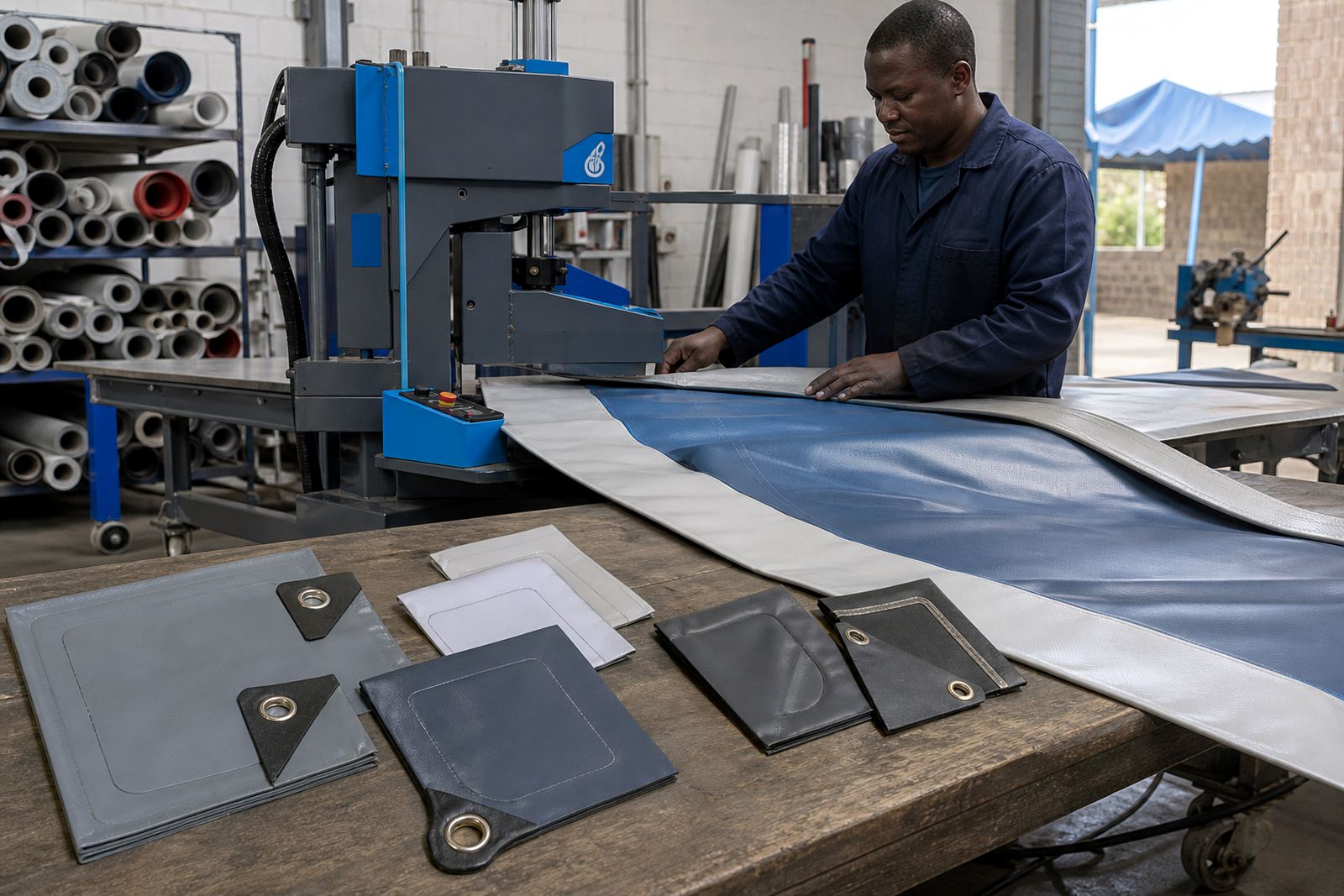
The strip also helps with seam type selection. A lap seam may behave well on a simple banner panel, while a folded hem or reinforced edge can need more heat and more dwell. If keder is being welded into a track, or eyelet bands are being prepared, the test strip shows whether the reinforcement is laying flat and holding its shape under heat. That is especially important where the final product must stay straight for hanging, lacing or tensioning.
- Check for full-width adhesion, not only the centre of the seam
- Look for colour change, gloss marks or surface blistering
- Test the edge of the seam by hand, not only the middle
- Keep one accepted strip from each batch for reference
Radio frequency, hot-air and hot-wedge need different checks
Different welding methods need different test habits. High-frequency welding is often used where a clean, repeatable seam is needed on compatible PVC-coated fabrics. The strip should confirm that the field is forming evenly, the electrodes are aligned and the pressure is spreading across the seam instead of pinching one side. When the strip shows a clean mark and even bond, the operator can move into production with more confidence.
Hot-air and hot-wedge machines depend on temperature, speed and pressure working together. A strip reveals whether the fabric is softening too fast, whether the overlap is slipping, or whether the seam is too narrow for the load it will carry. A tent maker in Germiston may use a different setting for a sidewall seam than for a banner hem, even when both are made from PVC-coated cloth. One batch can be a little stiffer, another a bit softer, and the strip tells the truth before the whole job is committed.
For larger workshops, it helps to run a test strip at the start of each shift and again when the roll changes. That habit catches small changes early, especially when the workshop is busy and several operators are sharing the same machine.
Where seam type changes the test
Test strips are most useful when the finished article has more than one kind of seam. Tarpaulins often combine long body seams, folded hems, corner reinforcements and eyelet bands. Banners may need straight hems, pocket folds or welded sleeves. A strip can be cut and checked for each seam style so the operator knows how the material behaves in every part of the job.
That matters when the job calls for more than plain joining. A keder edge must feed neatly and keep a uniform round profile. An eyelet band needs enough body to stop tearing. A folded hem needs enough heat to bond cleanly without hardening the fold. A strip test on each detail is quicker than finding out later that one section took the weld well and another did not.
- Use separate strips for hems, lap seams and reinforcement bands
- Check keder insertion channels for even weld lines
- Test eyelet band strength before punching or pressing fittings
- Compare the first strip with the last strip after any setting change
A Germiston example from a busy tarpaulin shop
A tarpaulin workshop in Germiston receives a mixed batch for a road freight cover job, with a deadline tied to vehicle collection. The rolls look consistent, but the operator still cuts a short strip from the new material and runs a seam test before the main panels are welded. The first strip shows a slightly hotter mark than expected, so the settings are eased back a touch. The second strip comes out clean, with a firm bond and no distortion at the edge.
That small step avoids a full roll of overcooked seam line and keeps the job moving. In a coastal market like Durban the same habit helps with humid stock that may handle differently in storage, while in Bloemfontein a drier batch can respond faster under heat. The point is not to guess. The point is to let the strip speak before the production run starts.
For shops working across Johannesburg, Pretoria, Cape Town and the rest of South Africa, a test strip is one of the quickest ways to protect material and reduce wasted labour. It also gives every operator a common reference for the job, which is useful when more than one machine or shift is involved.
Keep the machine honest and the hands safe
A good strip test also reveals whether the machine itself needs attention. If the seam is uneven on one side, the electrode may be out of line, the roller may be worn, or the pressure may be uneven across the bed. If the finish changes from one strip to the next without any settings change, the machine may need servicing before the production run continues. That is where preventive servicing, tooling alignment and electrode refurbishment make a visible difference.
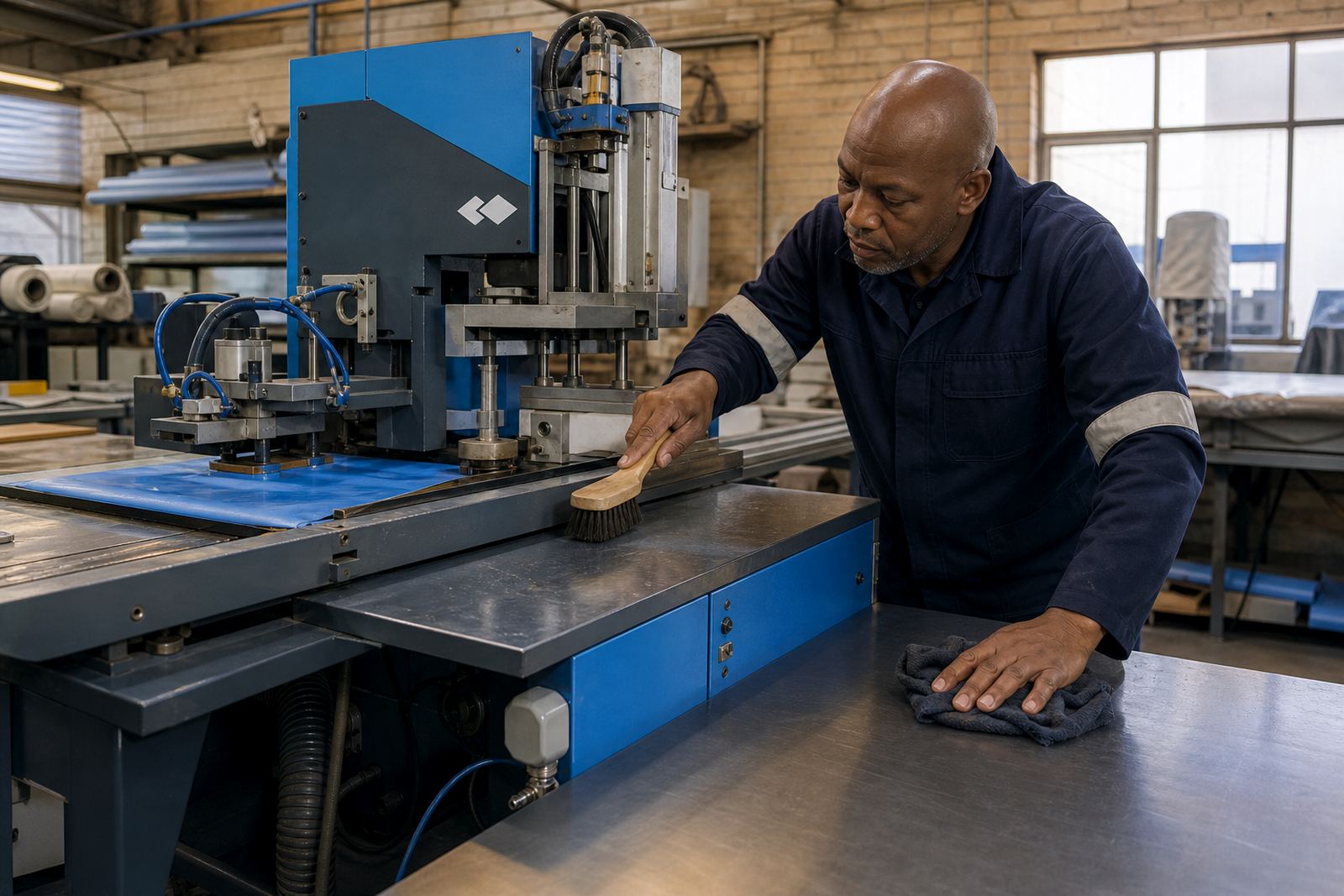
Operators should handle strips carefully as part of workshop safety. Hot seams stay warm for longer than most people expect, and freshly welded PVC-coated fabric can stick if it is moved too soon. Keep hands clear of the welding zone, use the correct trimming tools, and let the sample cool before judging the final bond. A tidy bench helps too, because offcuts, dust and loose fittings can interfere with the weld line and make the sample hard to read.
For workshop managers, the best routine is simple: test first, sign off the strip, then run the batch. It is a small step, but it keeps the seam quality steady and it saves real material on the floor.