When Light Banner Stock Needs a Different Touch
Thin PVC-coated banner material behaves differently from heavy tarpaulin. It heats up faster, cools faster and can show every mark from a roller or guide if the operator is rushing. On radio frequency welders, that means shorter dwell times and more attention to electrode alignment. On hot-air or hot-wedge machines, it means watching the melt line closely so the surface does not glaze or distort.
For sign makers working on shorter runs or display panels, thin seams are often the part that gets noticed first. A straight seam is not only about appearance. It also affects how the banner hangs, how the hem carries wind load and whether the eyelets sit evenly when the job is tensioned on site.
Edge Preparation That Keeps the Seam Flat
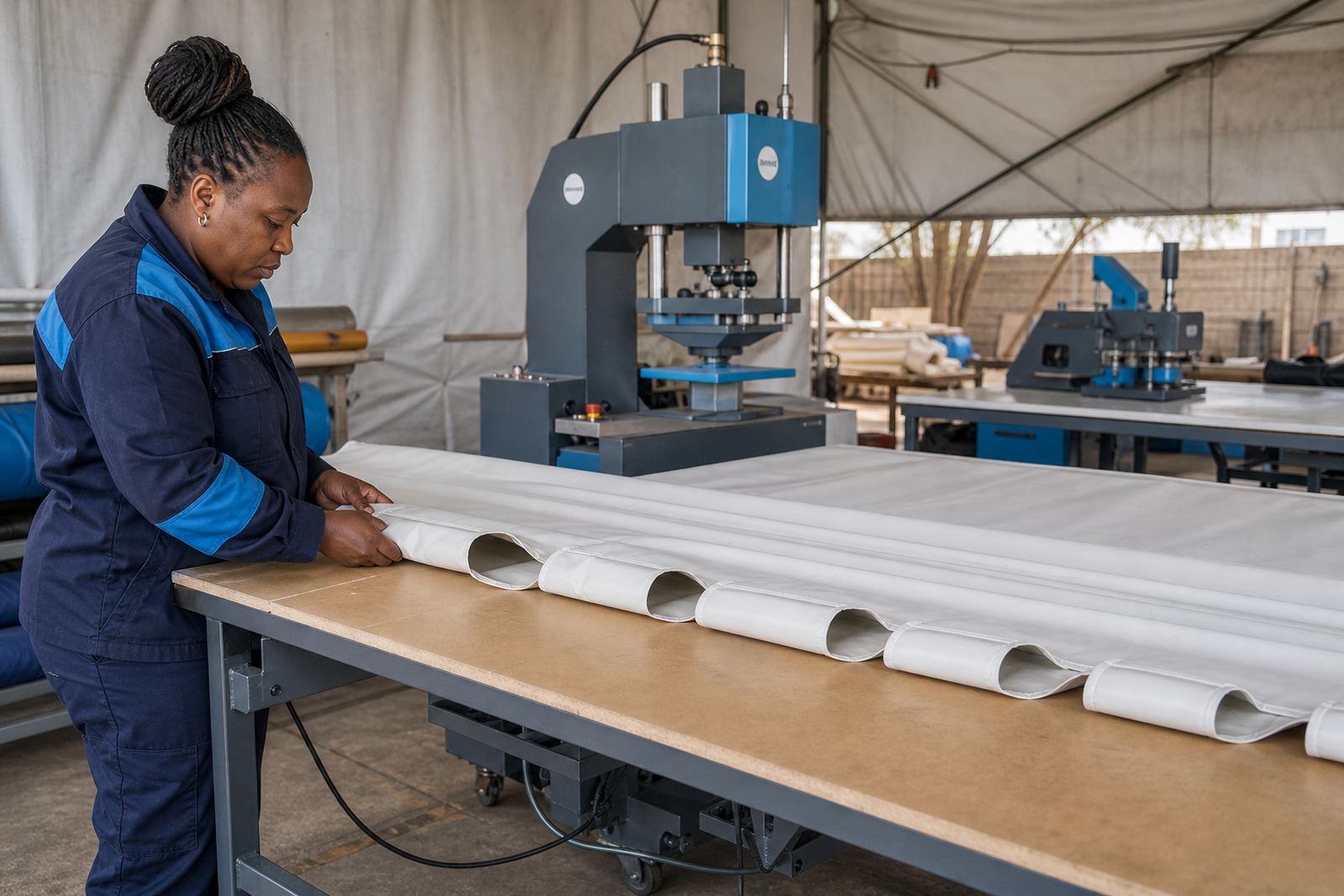
Before welding, the cut edge must be straight, clean and free of loose threads or dust. A thin banner edge that is ragged will telegraph through the weld and can trap air pockets. That is especially visible on light-coloured material, where even a small ridge stands out in daylight. In coastal areas like Durban and Cape Town, moisture and salt film can also interfere with a clean bond if stock is left open for too long.
- Trim edges square before loading the material onto the bed.
- Wipe away dust and chalk marks that can sit under the seam.
- Keep panels flat so the feed path does not pull the edge off line.
- Check that the overlap matches the seam width the job needs.
A little extra care at this stage saves time later, because a thin banner seam is less forgiving than a heavier tarp seam.
Heat Control on Radio Frequency and Hot-Air Work
High-frequency welding gives a very even bond on PVC-coated fabrics when the material and tooling are set correctly. The energy is concentrated at the weld area, so the operator can form neat seams without overworking the surrounding surface. With thin banner stock, the challenge is not enough heat, but too much. If the seam starts to shine, shrink or ripple, the settings are too aggressive.
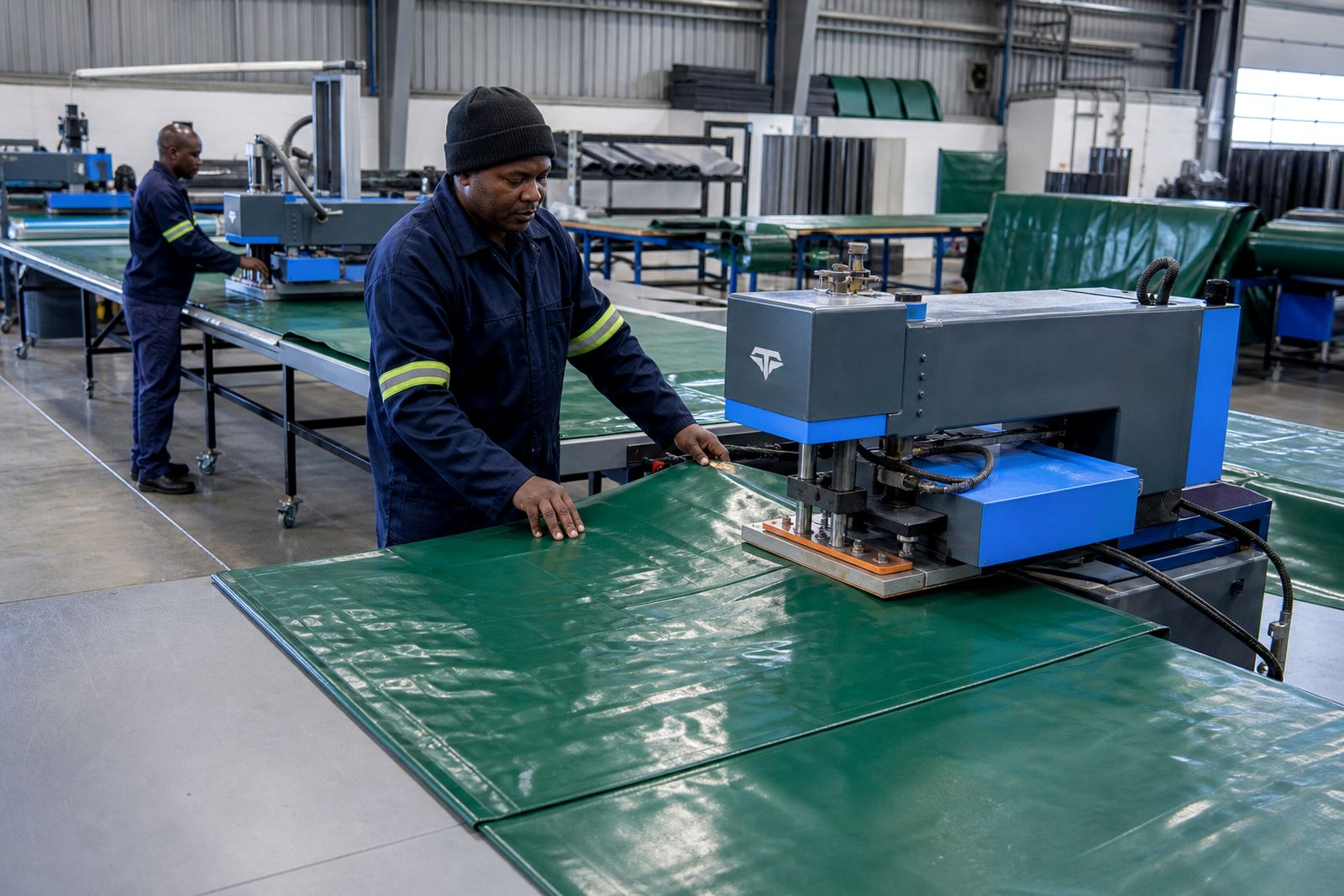
Hot-air and hot-wedge machines need the same discipline. The aim is to soften the coating evenly, then press it together while the material is still in the right state. If the operator moves too slowly, the edge can curl. If the feed is too fast, the seam may look closed but open up under tension later.
On production floors in Gauteng, where jobs often need to move from print finishing to eyelet work and packing in the same shift, consistent settings matter more than speed alone.
- Start with test strips before a full run.
- Watch the seam for shine, waviness or edge pull.
- Match pressure to material thickness rather than using one setting for every job.
- Let the seam cool flat before folding or stacking.
Hems, Keder and Eyelets on Lightweight Material
Thin banner stock often needs hems that are neat but not bulky. A wide folded edge can add strength, yet too much build-up makes the banner stiff and uneven. Keder work must also be handled carefully so the bead is centred and the pocket stays straight. If the feed drifts, the banner can sit crooked in a frame or track.
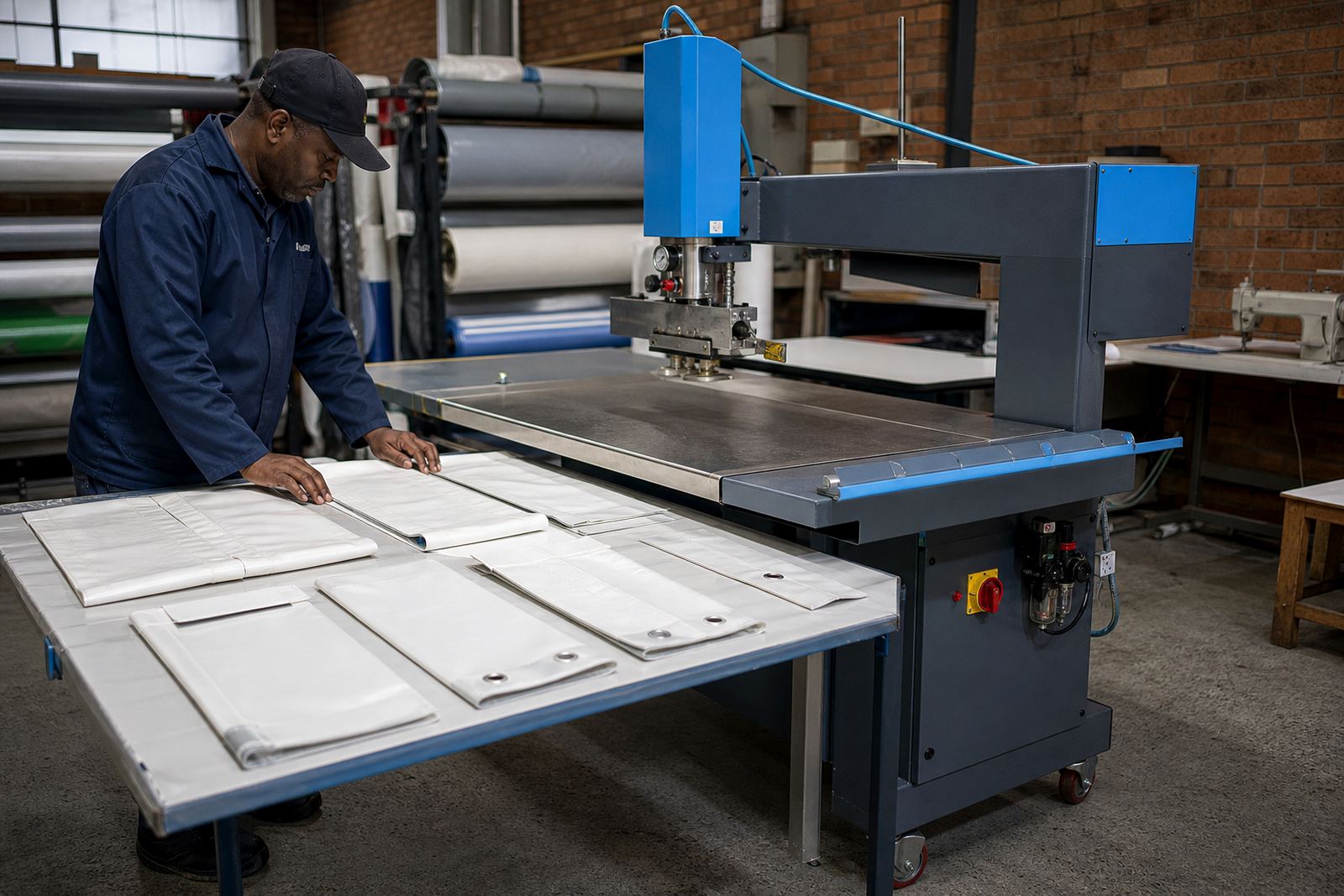
Eyelet areas deserve special attention. On light material, a poor weld around the reinforcement patch can tear once the banner is tensioned outdoors. That is common on event signage where panels are lifted, tied and re-tied during setup. A well-set eyelet patch spreads the load and keeps the edge from stretching out of shape.
Practical seam options for lighter jobs include:
- Single folded hems for display banners and short-term signage.
- Reinforced hems where wind load is expected.
- Keder pockets for frame systems and track-mounted work.
- Eyelet patches with even spacing for tie-down points.
The Local Conditions That Change the Result
South African conditions affect welding more than many people expect. In Pretoria and Bloemfontein, dry air can make lightweight stock sit very flat, but static and dust build-up can still cause handling problems. In Durban and Cape Town, humidity can change how the material stores and feeds, especially when stock is taken from a cool store into a warmer work area. In Johannesburg and Germiston, dust from busy workshops and transport corridors can land on cut edges fast.
A practical example: a banner maker in Ekurhuleni preparing a run of promotion panels for an outdoor event may find that the same settings used on a heavier roadside tarp leave a thin banner seam too glossy. Backing off the heat slightly, checking edge alignment and slowing the feed just a touch can produce a flatter seam with better lay. It is not dramatic work, just careful work.
Servicing That Protects Fine Seam Quality
Thin seams show machine wear earlier than heavier jobs do. A slightly misaligned roller, a tired electrode edge or uneven pressure across the bed can leave a mark that is easy to miss on a thick tarp but obvious on a light banner. That is why servicing matters for workshops running high-frequency welders and hot-air machines day after day.
Good maintenance for this kind of work usually includes:
- Tooling alignment checks.
- Electrode refurbishment when the working face shows wear.
- Roller replacement where pressure has become uneven.
- Seam testing after adjustments or repairs.
- Preventive servicing to keep heat and pressure repeatable.
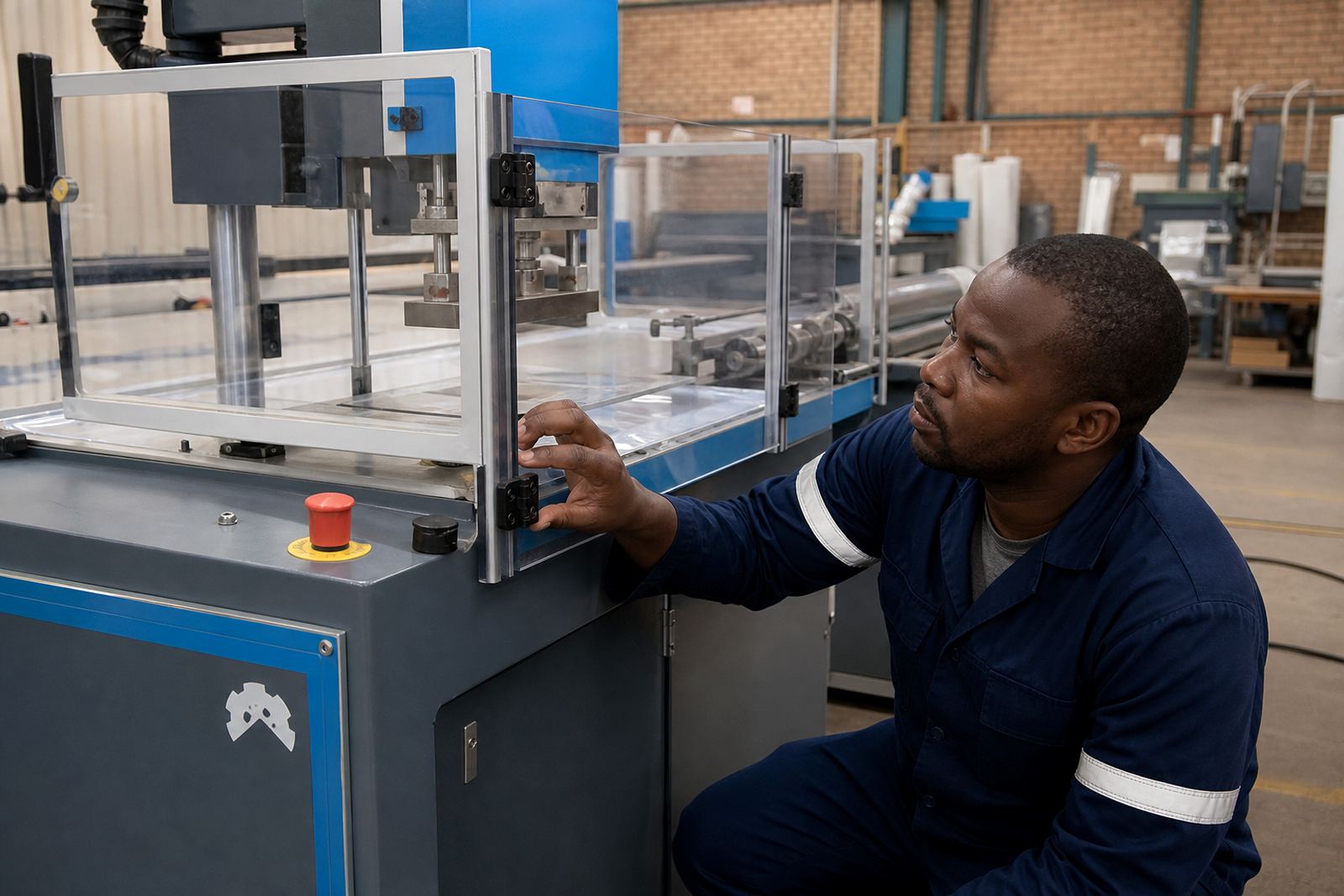
For operators, safety is part of the same picture. Guards must stay in place, hands need to stay clear of the weld zone and material handling should be steady, not rushed. Training helps new staff recognise when a seam is drifting off spec before a full batch is affected.
What Thin Banner Work Asks From the Workshop
Light banner stock rewards patience. The neatest seams usually come from clean preparation, careful heat control and a machine that has been set up properly for the job at hand. Whether the work is hems, keder pockets, eyelet patches or straight seam welding, the result depends on small details handled well.
For workshops supplying signage, display and event work across South Africa, that discipline protects both the finished product and the schedule. When the seam is thin, every millimetre counts and every setting has a visible effect.