What guarding is doing while the machine runs
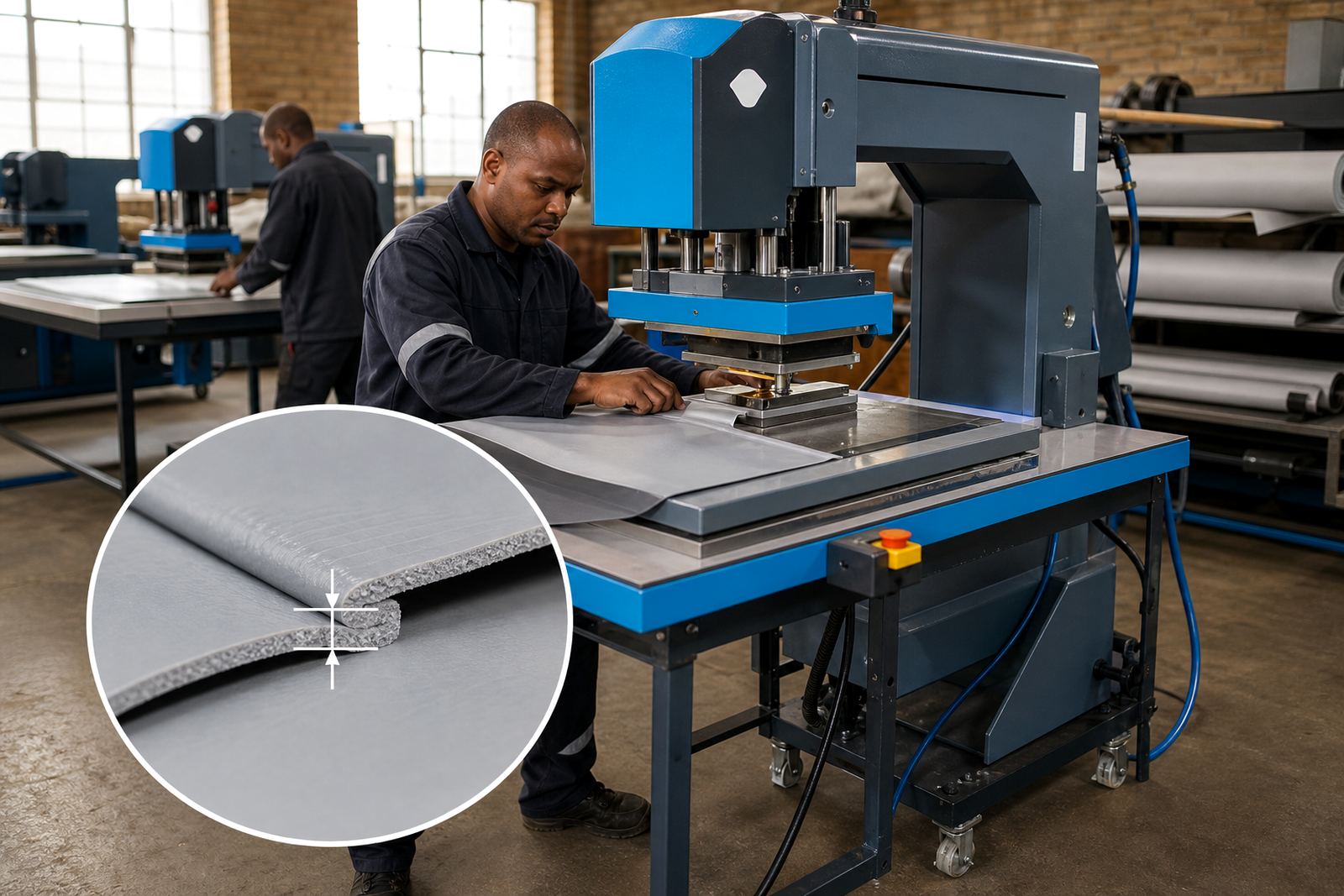
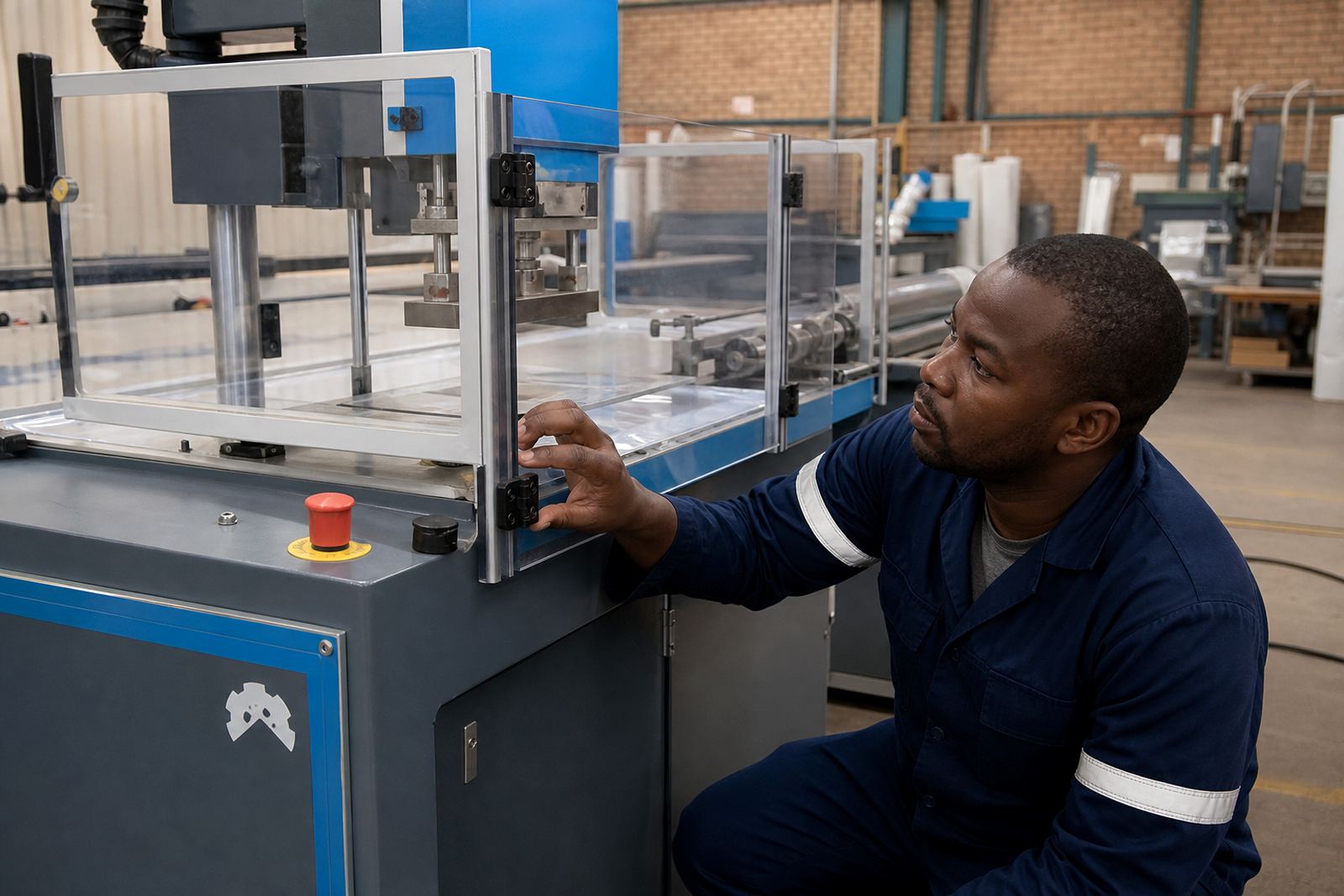
On a PVC welder, guarding is there to separate hands, sleeves and loose material from rollers, heated tooling and pinch points. In radio frequency machines it also helps keep the operator from reaching into the work zone while the platen is closing. On hot-air and hot-wedge equipment, the guards around the feed path and heated area matter just as much, because a small slip can mark the fabric or catch a fold at the wrong moment.
For South African workshops handling PVC-coated fabrics, clear guards are not only a safety item. They also help maintain a straight feed on hems, keder inserts, lap seams and reinforced edges for eyelets. If the guard is bent, loose or missing fasteners, the operator starts working around it and that is when mistakes creep in.
Checks to do before the first weld
A quick inspection at the start of the shift helps pick up damage before it becomes downtime. In Germiston, where a lot of tarpaulin and signage work runs on tight workshop schedules, this routine saves a lot of trouble later in the day. It also helps when humidity is high, especially near Durban, where fabric handling and dust build-up can change how the machine feels during the first run.
- Look for cracked covers, missing screws and loose hinges on all fixed guards.
- Check that interlocks and limit switches respond properly when the guard opens.
- Make sure no tooling, offcuts or tape are sitting where the guard closes.
- Confirm that the operator can see the seam line without reaching around the guard.
- Inspect warning labels and stop controls for wear or fading.
If a guard needs force to close, something is out of alignment and the machine should not be pushed through the job. That is often a sign that the roller track, electrode position or wedge alignment needs attention.
Hot parts, moving parts and the habits that cause trouble
Most guarding issues come from habits, not big failures. People prop a cover open for convenience, use the machine with a side panel hanging loose, or skip the checks because the job is small. That sort of shortcut can lead to burns, trapped fingers, torn film and uneven seams on PVC banners or tent panels.
In a workshop making long hems or keder runs, the feed is often slow and repetitive. That is where a hand can drift too close, especially if the material snags. A proper guard setup keeps the operator working in a defined space, with both hands where they should be. It also helps when several staff share the same machine during a busy week, because the same setup applies to each shift.
A few warning signs need attention straight away:
- The guard rattles when the machine cycles.
- A door or cover does not latch fully.
- The operator can touch the heated zone from the normal standing position.
- Material catches on a rough edge near the guard opening.
How guarding affects seam quality
Guarding is often treated as a safety issue only, but it also affects the weld itself. If the operator has to lean awkwardly or keep one hand out of position because a guard sits badly, the material feeds off-line. That can show up as a wandering lap seam, a pinched hem or a keder pocket that runs unevenly for several metres.
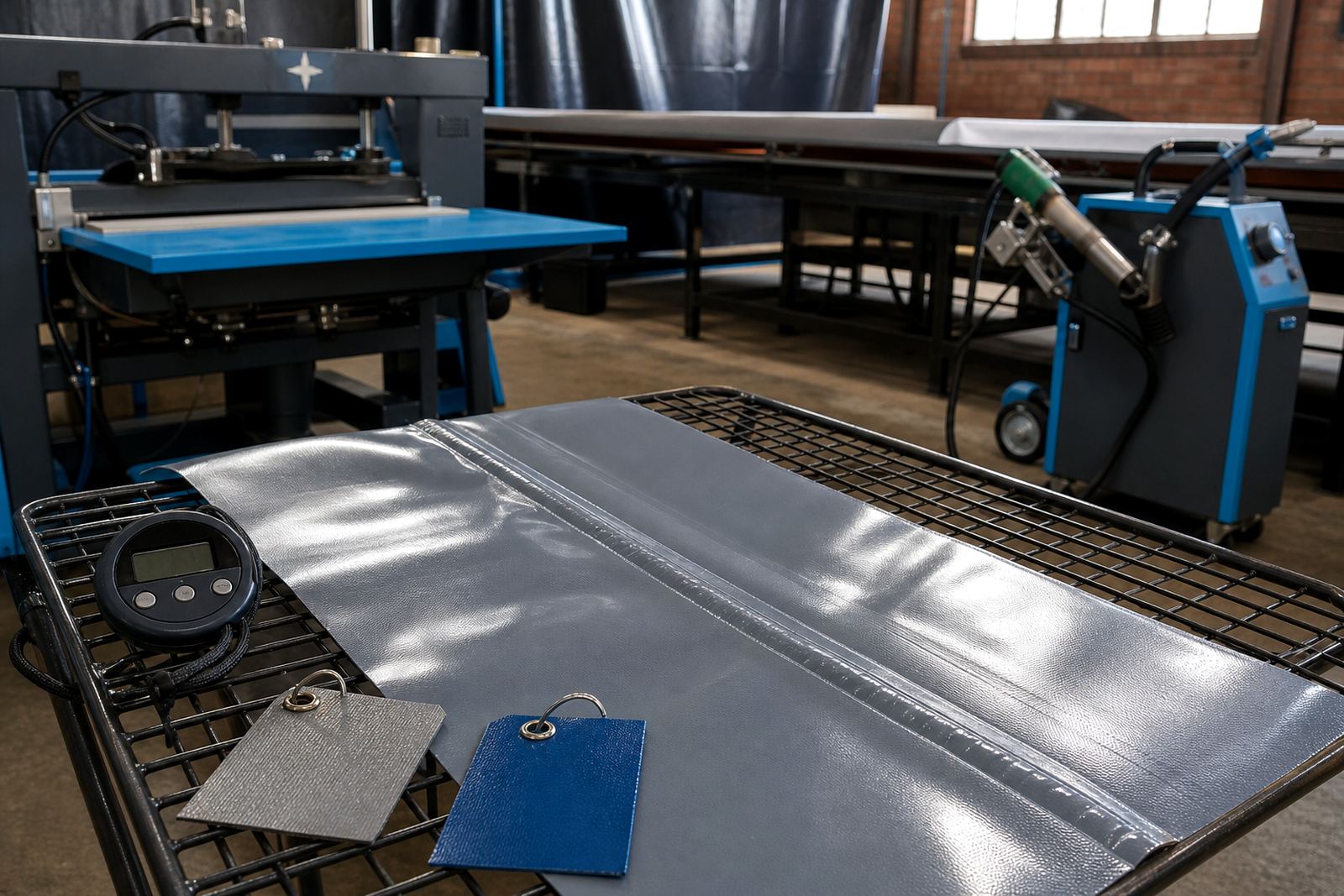
For radio frequency welding, a guard that does not close properly can allow the work to shift before the cycle is complete. For hot-air and hot-wedge machines, poor guarding around the feed area can let dust, scraps or loose trim move into the seam path. On eyelet prep work, that means extra rework and a weaker finished panel around the edge.
Good guarding supports:
- Steady feed speed on long straight seams.
- Consistent pressure across the weld line.
- Cleaner hems and edge folds.
- Better repeatability on banners, covers and tent sections.
When a guard problem needs service work
Some faults are minor and some point to deeper wear. If a guard no longer lines up after a roller replacement, tooling change or electrode refurbishment, the machine may need alignment rather than a quick tweak. A bent bracket, worn latch or damaged hinge can change the closing position enough to affect both safety and weld consistency.
Service work should also cover the parts that are easy to overlook, such as interlock settings, cable routing near moving covers and the condition of any viewing panels. On machines used for tarpaulin and banner production across Johannesburg, Pretoria and Bloemfontein, regular preventive servicing helps keep the guarding sequence predictable. That matters when multiple operators share the same unit and each one expects the same close, cycle and release action.
A Germiston workshop example
A fabrication shop in Germiston handling PVC banners for event sites and welded covers for transport customers may run the same machine on long seam work in the morning and eyelet reinforcement later in the day. If the side guard starts rubbing on the frame, staff often notice the noise first and ignore it for a while. A week later the latch is loose, the cover sits skew and one operator begins using the machine with the guard half shut. That is when the risk rises.
After the guard was realigned and the latch replaced, the team could feed material square again and the seam line settled. The change was not dramatic, but it kept the job moving and reduced the need to trim back weak edges. Small corrections like that matter in a workshop where each panel has to leave clean and ready for use.
A check routine that works without slowing the job
The best guarding routine is short, practical and done every time. It does not need a long sheet of paperwork. What it needs is consistency from the person loading the fabric and the person signing off the machine at the end of the shift.
- Open and close each guard once before production starts.
- Watch the machine cycle with no material loaded.
- Check that the operator can reach the stop control without stretching.
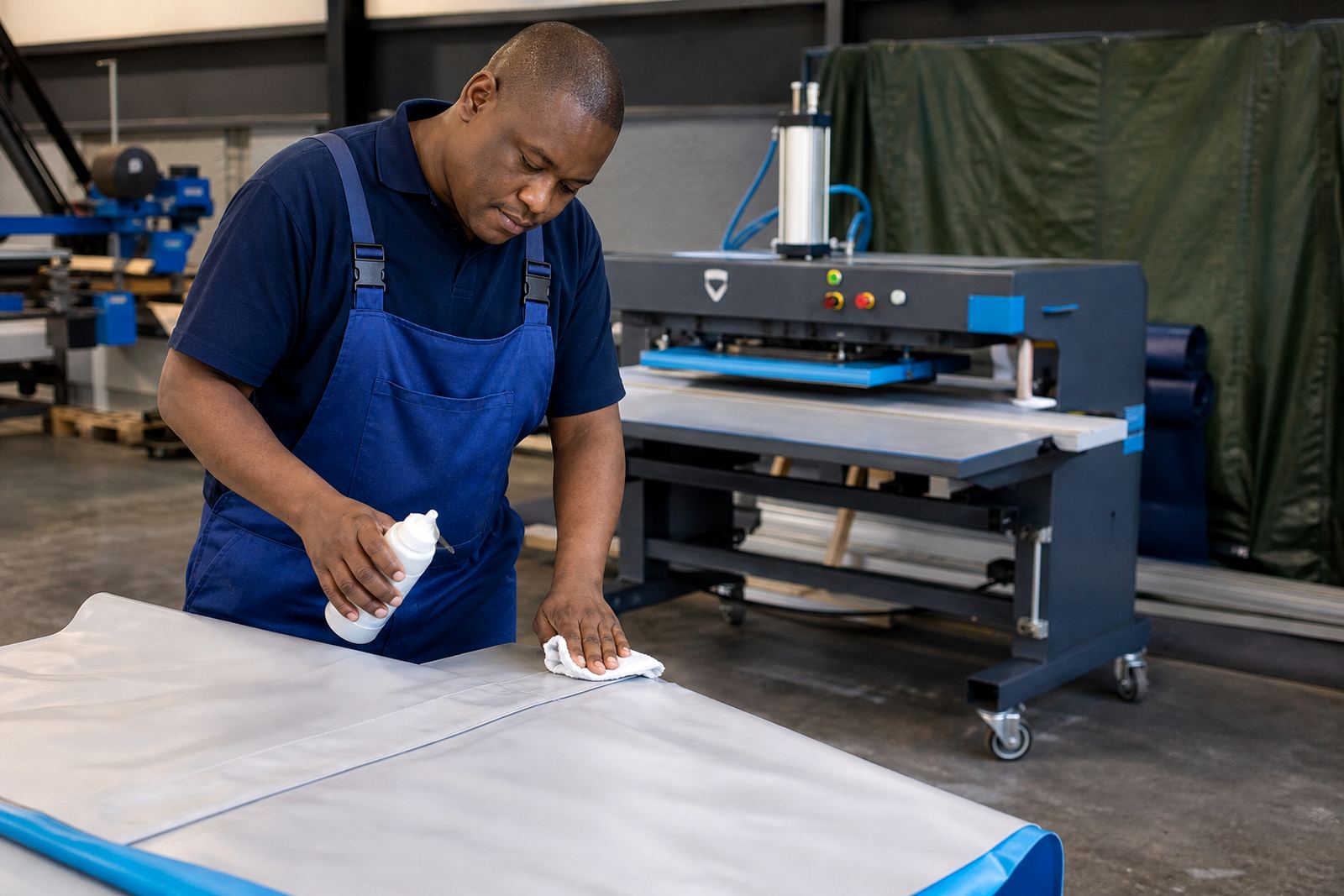
- Wipe dust and trimmed PVC from hinges and seals.
- Report any loose cover, bent edge or damaged interlock before the next job.
That routine supports safer work on high-frequency and hot-air welders used for tarpaulins, banners and tents. It also helps the machine last longer because guards that work properly protect the moving parts beneath them.