Why overlap seams are used on tarpaulins and covers
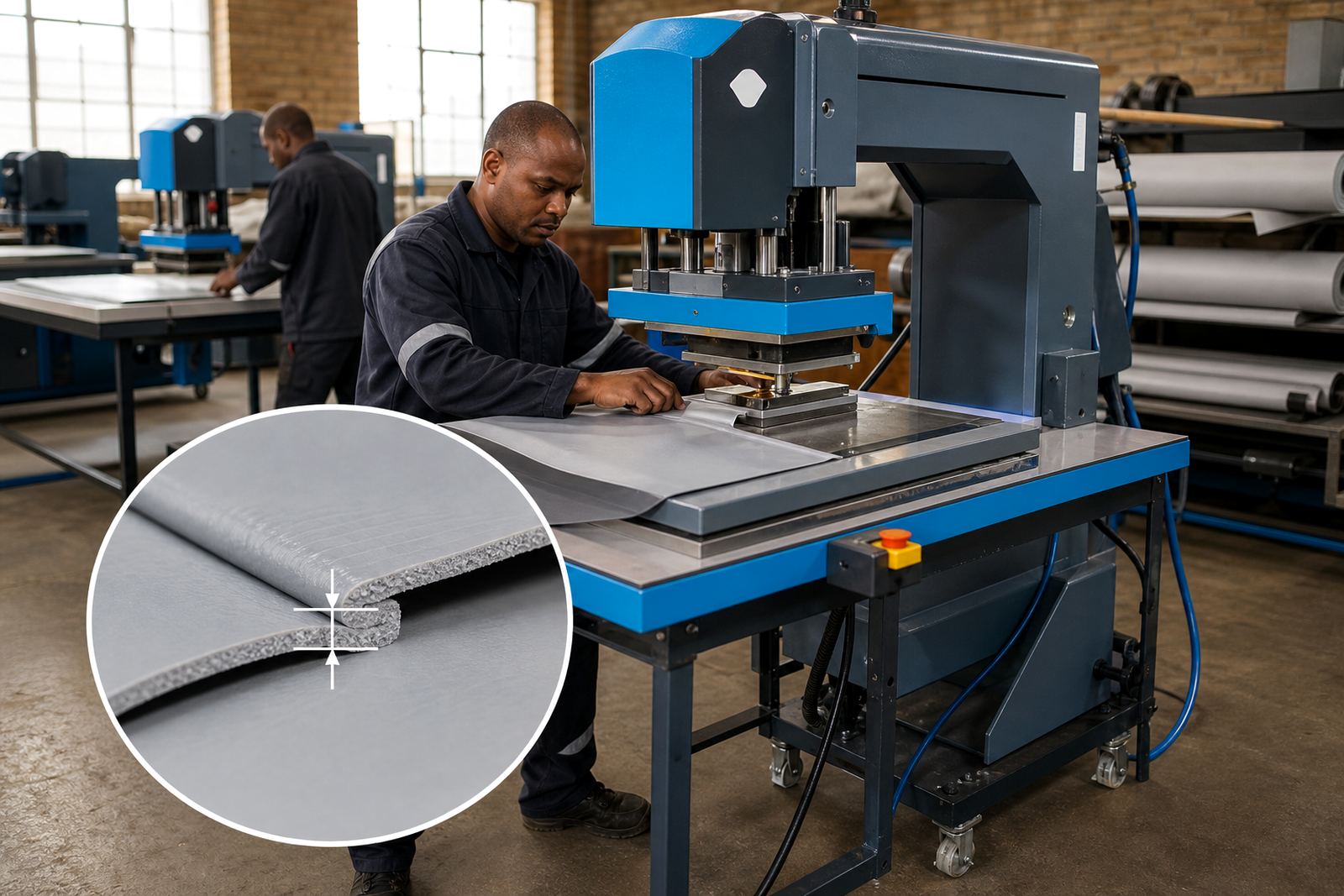
An overlap seam places one piece of PVC-coated fabric over another, then bonds or welds the layers together over a set width. On tarpaulins, truck covers, market shelters and larger banners, that extra overlap gives a cleaner load path than a narrow butt join and helps the seam cope with flexing, lifting and repeated rolling.
For bigger assemblies, overlap seams are also easier to plan around hems, reinforcements and attachment points. A cover used in Germiston’s industrial areas or on coastal jobs in Durban may see dust, sun, moisture and movement in the same week, so the seam has to do more than look neat. It must stay flat, seal properly and hold consistent width along the full length.
- Works well for long straight joins on sheets and panels
- Helps distribute stress over a wider welded area
- Makes it easier to add hems, keder or eyelets nearby
- Supports both radio frequency welding and hot-air or hot-wedge welding methods
Choosing the right seam width for the job
Seam width is not guesswork. A narrow overlap may suit light banner work, while a wider overlap is often used where the fabric will carry more strain or where the finished item must resist flapping and pulling. If the overlap is too narrow, the seam can open at the edge. If it is too wide, the item can become stiff and bulky where it needs to fold.
Operators also need to match the seam width to the machine type and the fabric thickness. High-frequency welding is commonly used on PVC-coated textiles because it creates a controlled bond along the overlap. Hot-air and hot-wedge welding are useful where the job calls for long runs and careful heat control. The point is not to chase heat for its own sake, but to get an even, repeatable seam that suits the material.
- Light banners often need slimmer overlaps and cleaner finishing
- Tarpaulins and tent panels may need wider overlaps for added holding area
- Thicker coated fabrics usually need more careful heat and pressure balance
- Consistent feed speed helps prevent scorching, wrinkling or weak edges
How overlap seams work with hems and reinforced edges
Overlap seams are often part of a larger construction sequence, not the only join on the product. On tarpaulins and covers, the edge may first be folded into a hem, then overlapped to another panel or reinforced strip. That layered approach helps the finished piece resist tearing at stress points, especially where ropes, buckles or frames pull against the fabric.
In practical workshop terms, the seam layout must leave enough room for a clean hem and still allow proper welding width. If the overlap runs too close to the edge, the fabric can curl or lift. If the fold is awkward, the operator may struggle to keep the panel square. A good layout reduces trimming, improves appearance and makes later repairs easier too.
- Hems add stiffness and neat finishing along exposed edges
- Reinforcement strips help around corners and high-wear areas
- Overlap placement should allow eyelets or fixings to sit clear of the weld line
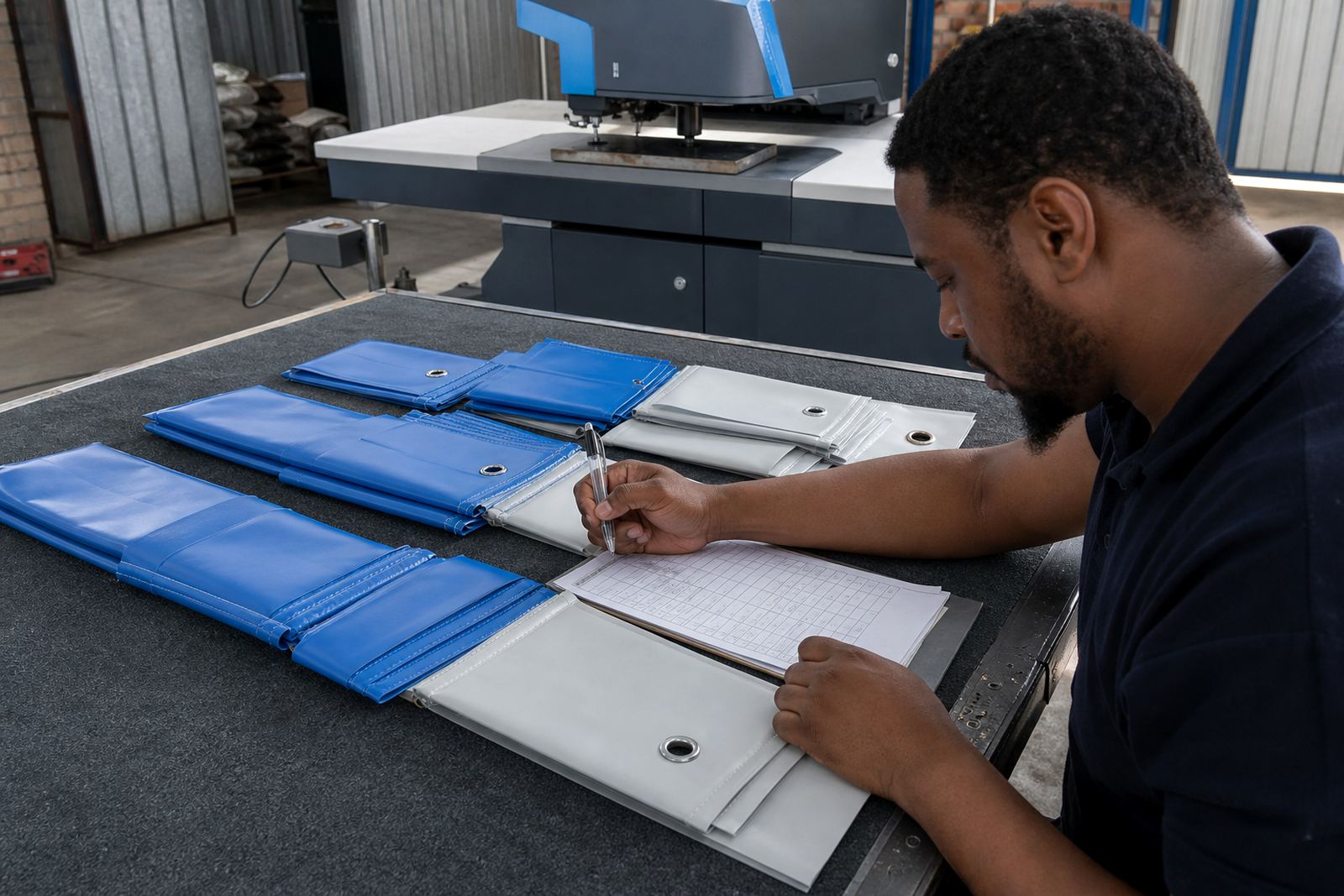
- Panel marking before welding saves rework and keeps dimensions accurate
Keder tracks, eyelets and overlap planning
Many larger assemblies need more than a plain seam. A banner or tent wall may include keder for sliding into a rail, or eyelets for fixing to a frame or rope system. In those cases, the overlap seam has to sit comfortably with the attachment method. If the seam is placed badly, the finished item can pucker, twist or place too much load on one side.
Keder work is especially sensitive to alignment. The welded channel must stay straight and the overlap beneath it must remain even, otherwise the profile feeds poorly into the track. Eyelet rows need the same care, because the weld line and the punched holes should not fight each other. On large production runs, this is where tooling alignment and seam testing make a real difference.
- Keep keder channels straight and parallel to the main edge
- Leave enough spacing between eyelets and the overlap weld
- Check that folds do not trap air before welding
- Test sample pieces before moving into full production
Safety and servicing on welding machines
Whether a workshop uses radio frequency welding or hot-air and hot-wedge equipment, operator safety matters. Guards, switches, foot controls and work area layout must be kept in order so that hands stay clear of moving parts and hot surfaces. Fabric handling also needs attention, because large PVC sheets can shift suddenly when they are fed through the machine. In busy shops around Johannesburg or Pretoria, a tidy station usually saves more trouble than last-minute fixes.
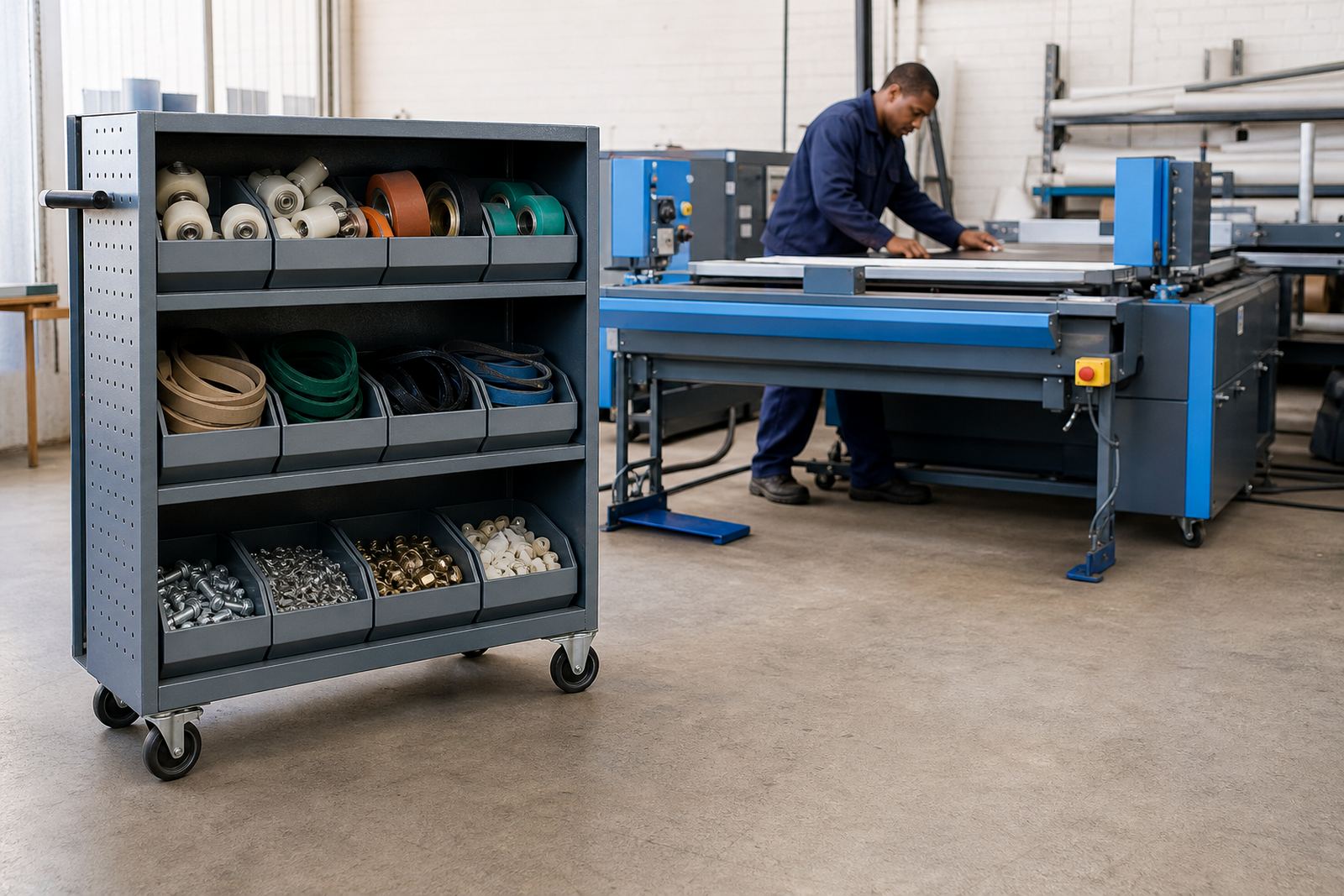
Servicing is part of seam quality, not separate from it. Worn rollers can drag the fabric off line, dirty electrodes can mark the material and poor alignment can spoil the overlap before the weld even forms. Preventive servicing, fault finding and parts replacement keep the machine consistent, and that consistency shows up in the finished seam.
- Check rollers, guides and electrodes before long production runs
- Keep work surfaces clear of offcuts and loose tools
- Watch for uneven heating, pressure loss or drifting alignment
- Replace worn tooling before it starts affecting seam quality
A Germiston workshop example on large tarpaulins
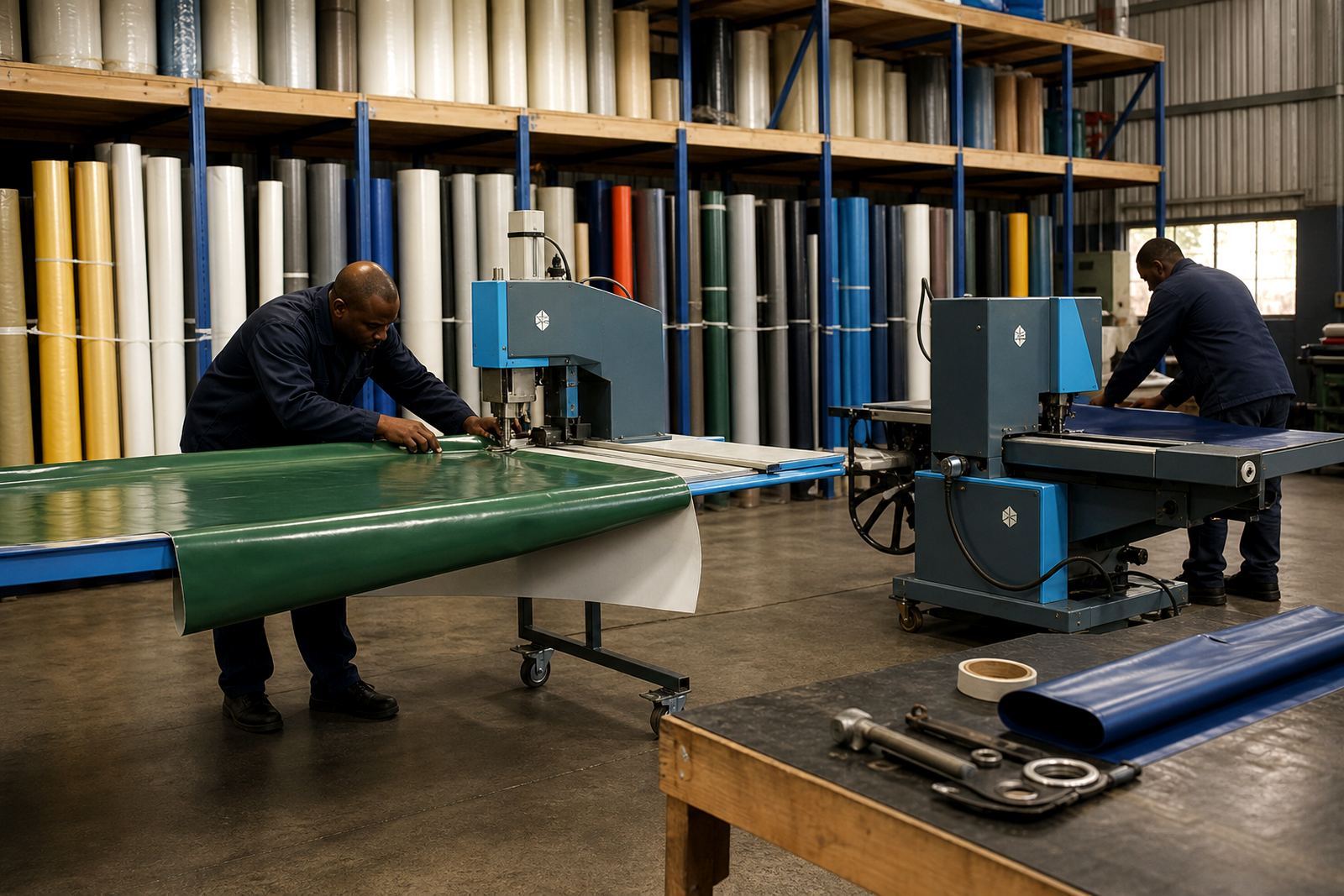
A local tarpaulin maker in Germiston may be asked to produce a batch of large covers for transport or site storage. The job can include long overlap seams, reinforced hems, eyelets around the perimeter and a few keder sections for frame mounting. If the fabric is a heavy PVC-coated grade, the operator has to keep the overlap even from end to end, especially where the sheet is wide and awkward to handle.
On a job like that, a small error early in the layout can multiply across the full panel. The seam line may wander, the hem may pull out of square, or the eyelet positions may land too close to the weld. Good training, proper machine setup and a steady feed speed help avoid those problems. For workshops working across South Africa, from Durban’s humid conditions to Bloemfontein’s drier climate, the same rule applies: a clean overlap seam starts with accurate preparation and ends with careful checking.
When overlap seams are done properly, the result is practical rather than flashy. The join sits flat, the fabric remains serviceable and the finished article can handle the daily knocks that tarpaulins, covers and larger welded assemblies receive in real use.