Why the surface matters before the weld starts
On PVC-coated fabrics, the weld line is only as steady as the material under it. A clean surface lets heat and pressure work on the coating itself, not on loose dust, chalk marks or oily fingerprints that sit between layers. That matters whether the job is a straight lap seam, a folded hem, a keder pocket or an eyelet strip.
When fabric has been handled on a workshop floor, loaded in and out of vehicles or stacked near cut edges, it can pick up fine grit without looking dirty from a distance. In Germiston and Boksburg workshops, this often shows up after a windy day with open doors, or when rolls are unwrapped and left waiting near cutting tables. The result can be patchy welding, small bubbles or a seam that looks sound but peels unevenly under pull.
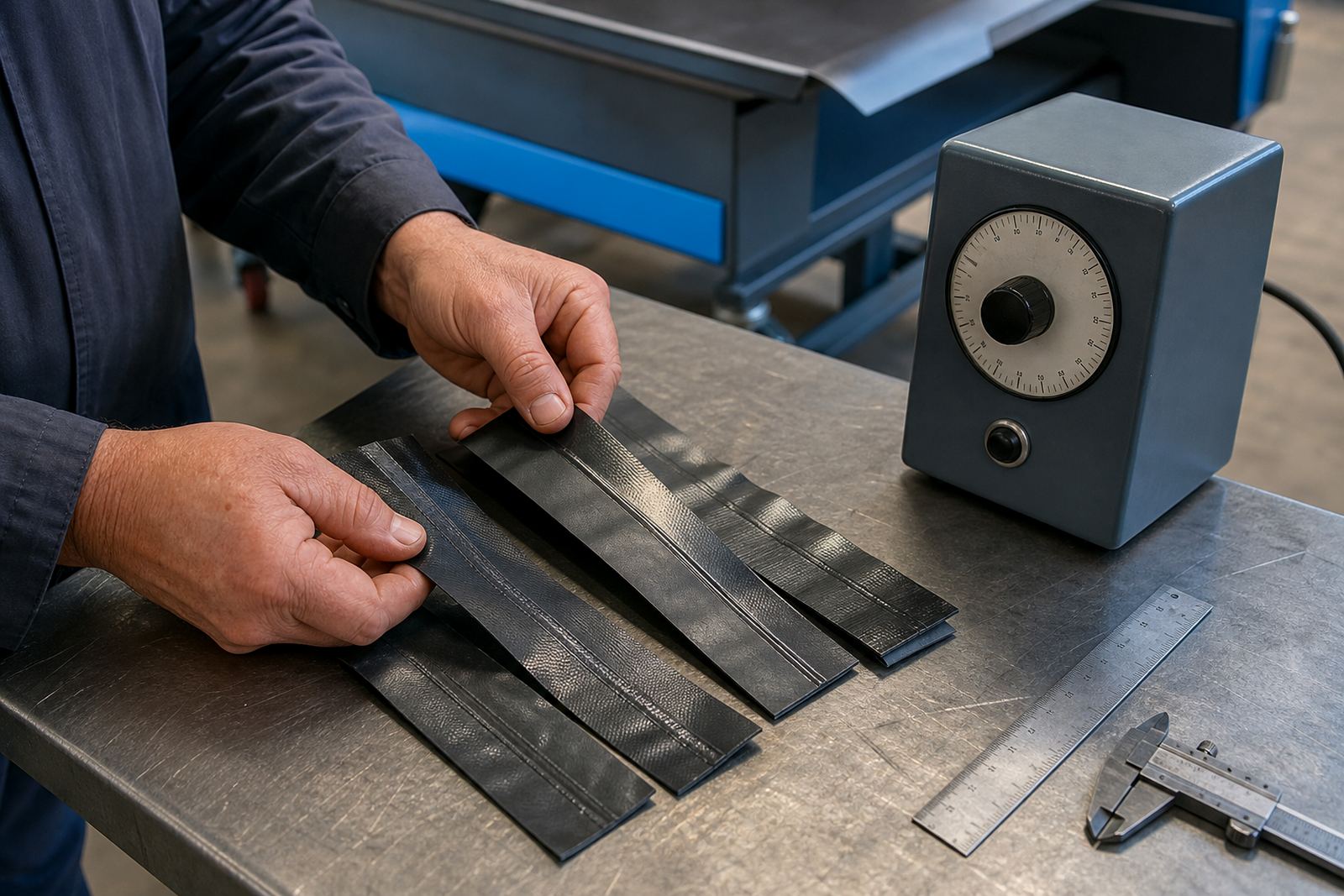
For radio frequency welding, the contact surfaces need to be even and free of contamination. For hot-air and hot-wedge welding, dirt can char, crease or keep the melted coating from bonding properly. Surface cleaning is not a fancy extra, it is part of preparing the job for a consistent result.
What usually needs cleaning on tarpaulins and banners
Different workshop tasks leave different marks. A banner edge may carry cutting dust from the blade path, while a tarpaulin panel can pick up hand oils from repeated folding. Tent makers often see dust in creases, especially where panels were stored in a truck or against corrugated sheeting. If the work is going out to coastal Durban, there may also be a light film from damp air and salt carried in the breeze.
Common trouble spots are the parts that get folded, marked, clamped or passed through a machine more than once. These areas deserve more attention before seam work begins.
- Cut edges that have collected loose PVC dust or fibres
- Fold lines where dirt sits in the crease
- Areas touched often during setting out and alignment
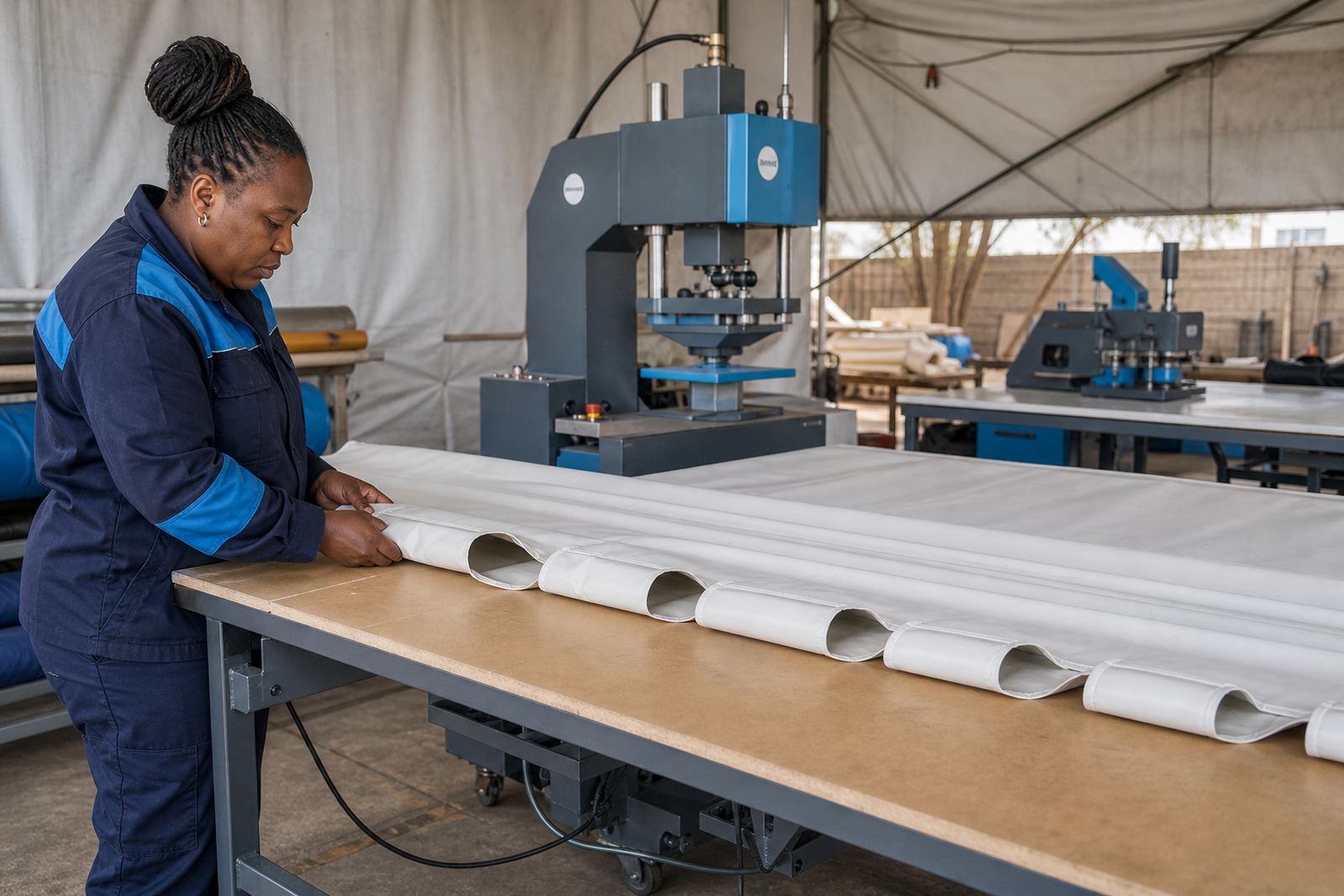
- Sections near hems, rope pockets and keder channels
- Surfaces around eyelet positions where drilling or punching marks remain
If a panel has visible grease, adhesive residue or heavy dirt, it usually needs more than a quick wipe. The surface should be cleaned and dried before welding starts, otherwise the first seam may hold while the second one causes trouble later.
Cleaning methods that suit PVC-coated fabric
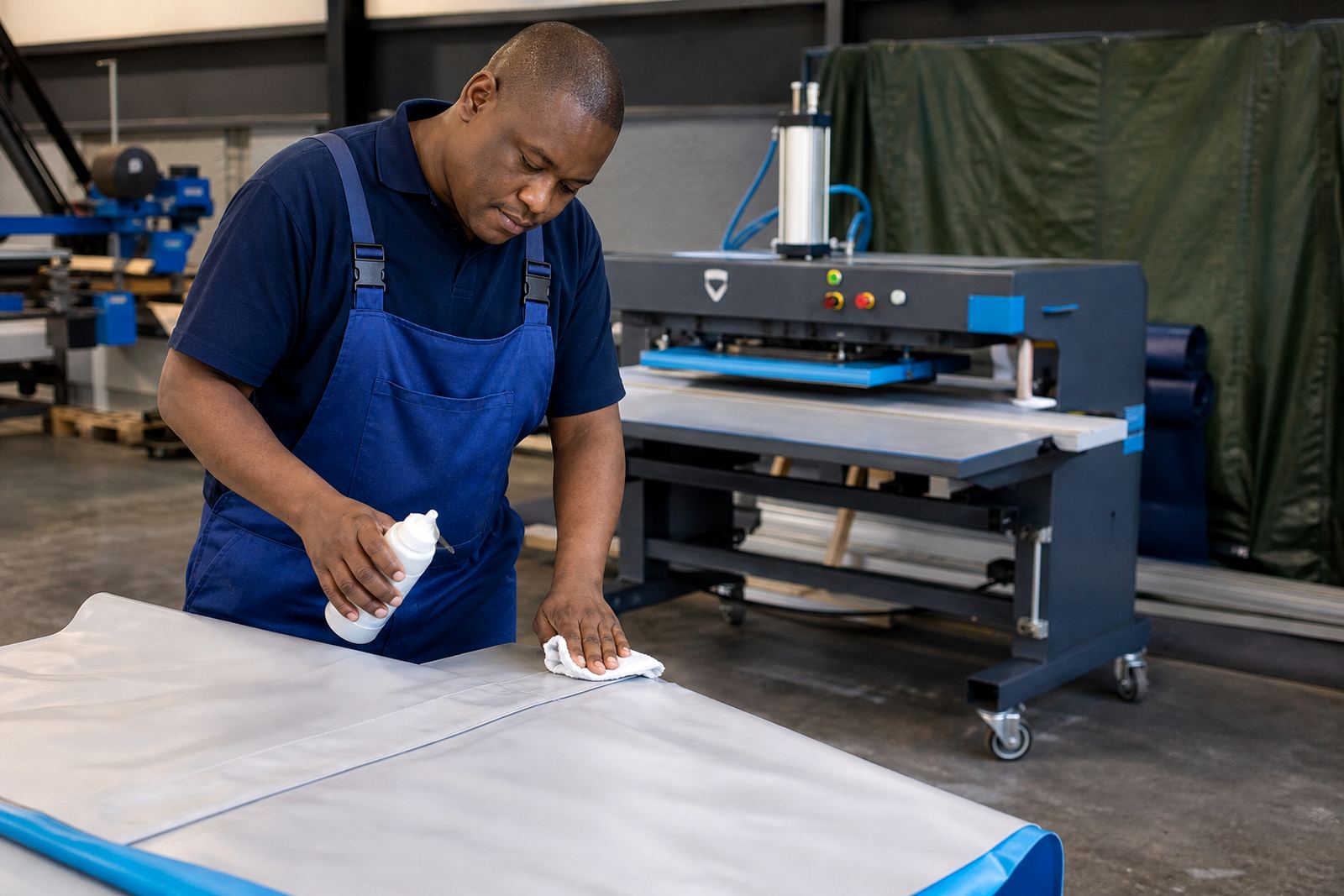
The safest method depends on the fabric coating and the amount of dirt. For light dust, a clean dry cloth or soft brush may be enough. For handling marks, a slightly damp lint-free cloth is often better. The aim is to remove the contamination without softening the coating too much or leaving moisture trapped between layers.
Solvent use needs care. Some products can dull the surface or make the coating too soft for neat alignment. On a hot day in Pretoria, a wiped panel can dry fast, but the cleaner still needs to be controlled. In cooler Bloemfontein conditions, surfaces may take longer to settle after wiping, so the operator should not rush into welding before the moisture has cleared.
Good practice is to keep the cleaning method simple and consistent across the workshop, then check the first weld on a new batch of material before running the full job.
- Use clean cloths that do not shed lint onto the seam area
- Wipe in one direction instead of scrubbing back and forth
- Let the surface dry fully before clamping or heating
- Keep cleaned panels away from dusty benches or floor contact
- Label panels that have already been cleaned so they do not get handled roughly again
How clean surfaces improve seam types and finishing work
Seam quality is not only about strength. It also affects the way the finished job looks along the edge. A clean surface helps hems lay flat, keeps keder feeding evenly and supports neat eyelet spacing. When dust gets trapped in the fold, the hem can pucker. When marks sit in the weld line, the seam may show colour variation or small raised points.
For radio frequency welding, cleaner contact zones help the energy transfer more evenly through the coating. On hot-air and hot-wedge equipment, the molten surface has less chance of picking up burnt debris or stray specks. That makes the seam more predictable, especially on long runs for banners or truck tarpaulins where the operator is moving from one section to the next.
In practice, the best results usually come from pairing cleaning with steady alignment, correct pressure and well-maintained tooling. Surface prep helps, but it works best when the machine, roller and electrode or wedge are also in good order.
A Germiston job with dust, wind and a tight finish
A practical example is a tarpaulin panel prepared in Germiston for delivery into Johannesburg. The work had been cut earlier in the day, then moved between benches while the workshop doors were open. By the time welding started, a fine layer of dust had settled along the hem line and around the keder strip. The first test section showed a slightly uneven finish at the edge.
After the panels were cleaned with lint-free cloths and the work area was cleared, the next seams ran more evenly. The eyelet section also sat flatter because the fold was not carrying loose grit into the punch area. Nothing dramatic changed in the machine settings, but the seam consistency improved because the fabric surface was properly prepared.
That sort of adjustment saves time later. A cleaner start means fewer reworks, less trimming and less arguing over whether the problem came from the operator or the material.
Routine workshop habits that keep dirt from returning
Surface cleaning works best when the whole workshop supports it. If offcuts, dust and marked panels are left beside the welding station, the next job is likely to pick up the same contamination again. A small routine before each shift can prevent that. It also helps when servicing teams attend site callouts in Durban, Cape Town or Pretoria and find the machine running well but the seam area still giving trouble because the fabric handling is untidy.
- Keep cutting and welding zones separated where possible
- Store cleaned panels on raised pallets or clean racks
- Cover partial jobs when they are waiting between operations
- Inspect clamp faces, rollers and table tops for grime
- Make surface cleaning part of the operator checklist, not an afterthought
If the same dust keeps showing up, it is worth looking at the full workflow. Sometimes the answer is better storage, sometimes a clearer movement path, and sometimes a machine service that restores proper pressure and alignment. Clean fabric and a sound welder usually make a better pair than either one on its own.