Why tiny parts give the biggest trouble
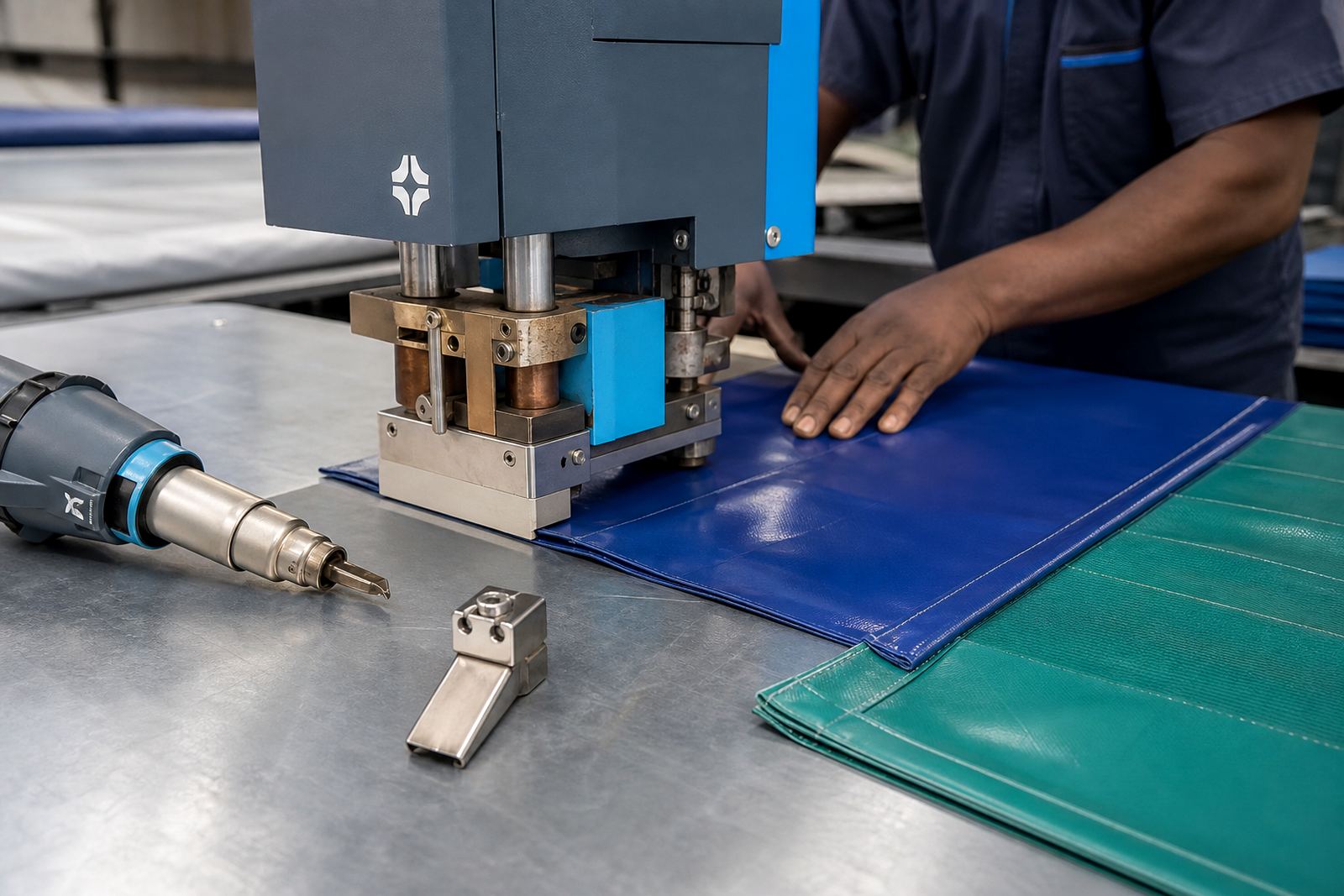
When a banner corner, patch, webbing end or keder insert is only a few centimetres wide, hand pressure alone is often not enough. The material can creep while the heat is on, especially on PVC-coated fabrics that have a slick finish or a heavy reinforcement layer underneath.
That movement shows up later as a crooked hem, a weak overlap or an eyelet that lands too close to the edge. On a busy shop floor in Germiston or Boksburg, where short runs and urgent repair work often sit beside larger orders, a simple fixture saves time and stops rework.
Fixturing also gives the operator a better feel for repeat jobs. Once the part sits in the same place every time, the welding line, clamp pressure and cooling time become more consistent, even when the machine is shared between different jobs.
What a good fixture actually does
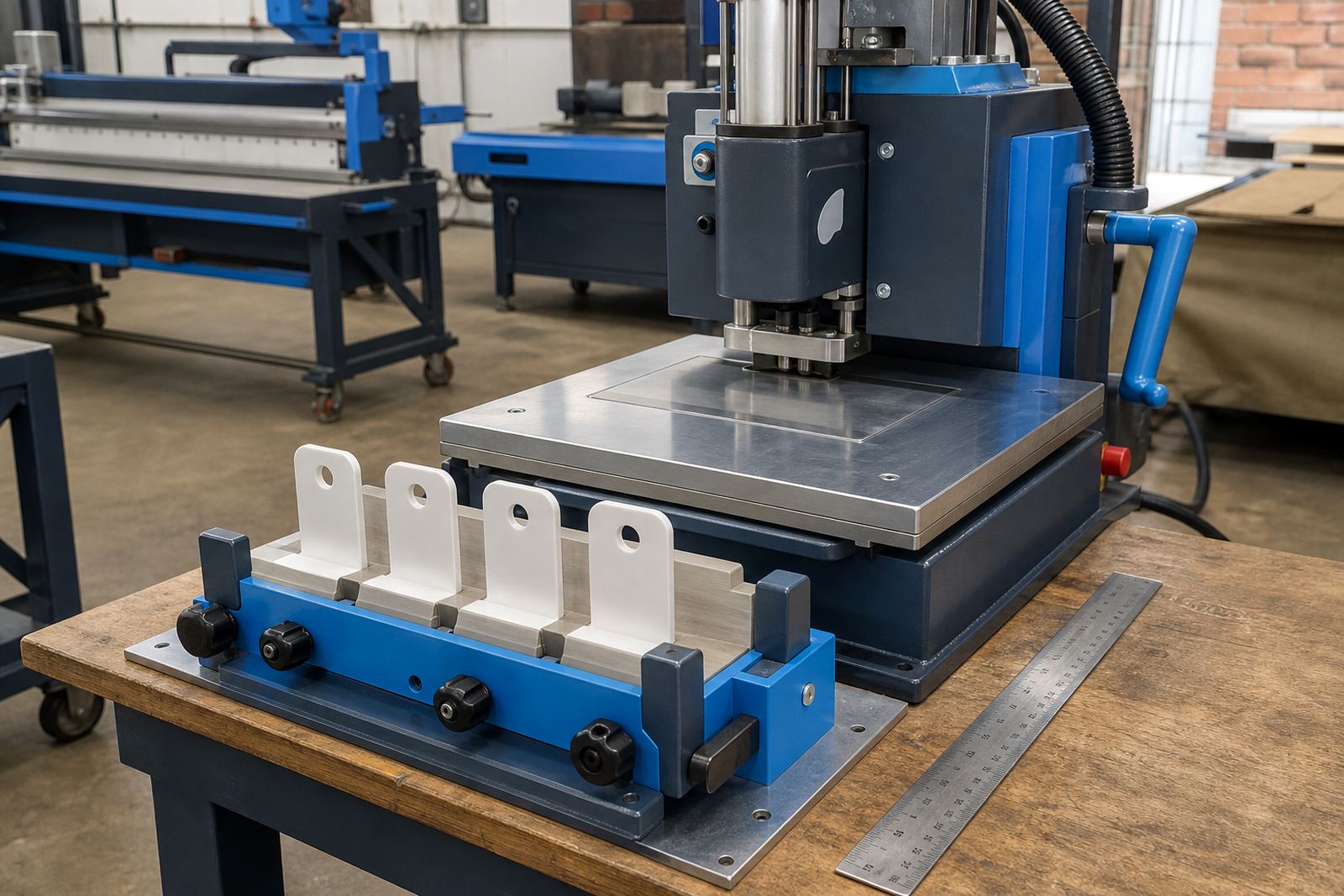
A fixture does not need to be complicated. It only needs to hold the workpiece flat, keep the weld area exposed and stop the part from twisting when heat is applied. For radio frequency welding, the jig must also allow the electrode to close cleanly without catching the wrong layer. For hot-air or hot-wedge work, it should keep the seam path open and steady under the guide.
Good fixturing is especially useful on smaller items such as reinforced corners, valve patches, label pockets and banner pockets. These parts often have more than one layer, and the layers can slide against each other before they are fully sealed.
- Flat support under the weld zone
- Positive stops for repeat placement
- Clear access for the welding head or electrode
- Heat-tolerant contact surfaces where needed
- Easy release after cooling
Matching the jig to the weld type
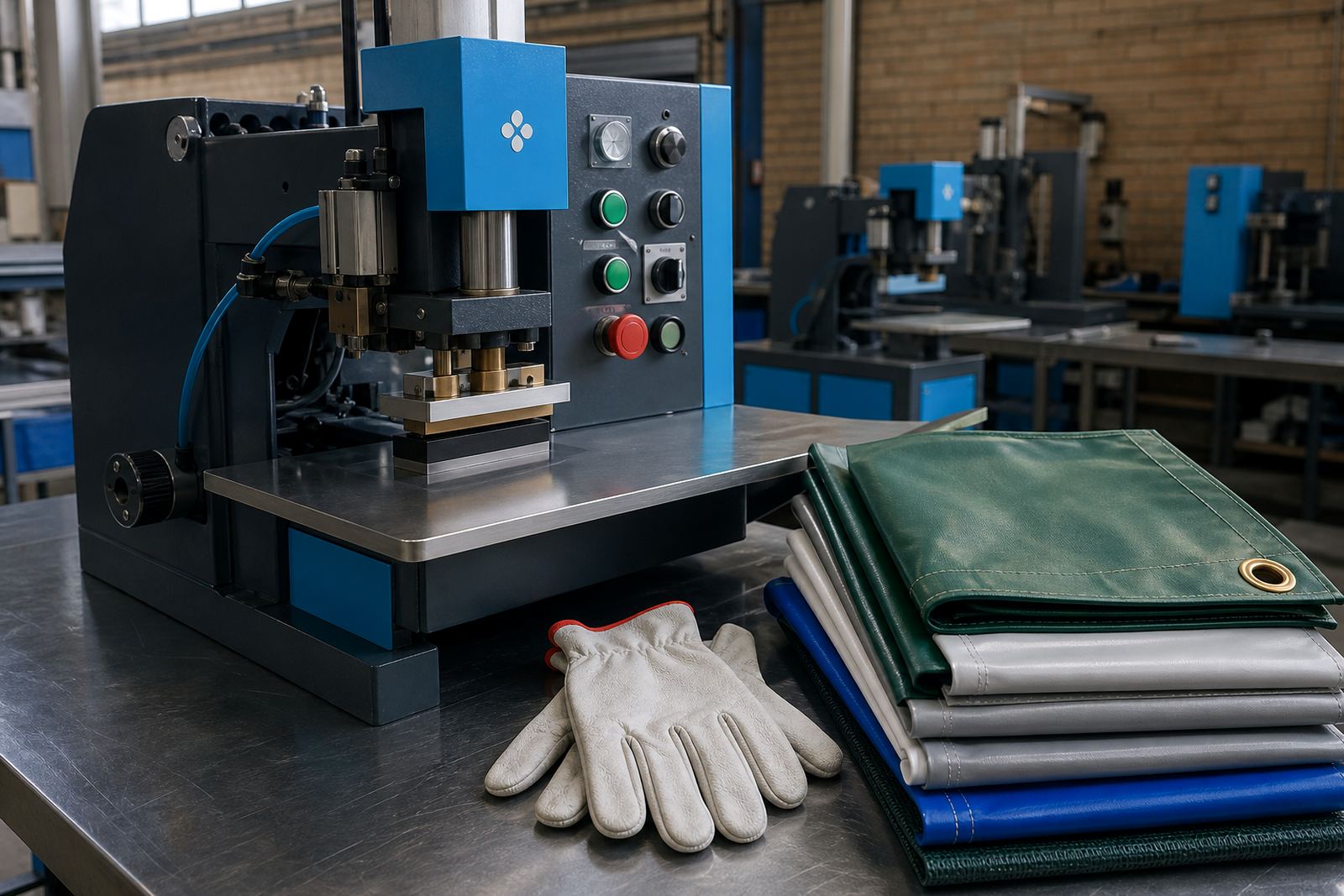
High-frequency welding and hot-air welding behave differently, so the fixture should suit the process. A radio frequency job usually needs precise registration because the weld pattern is formed by the electrode itself. If the part shifts by even a few millimetres, the seam can miss the intended line or bruise the edge of the fabric.
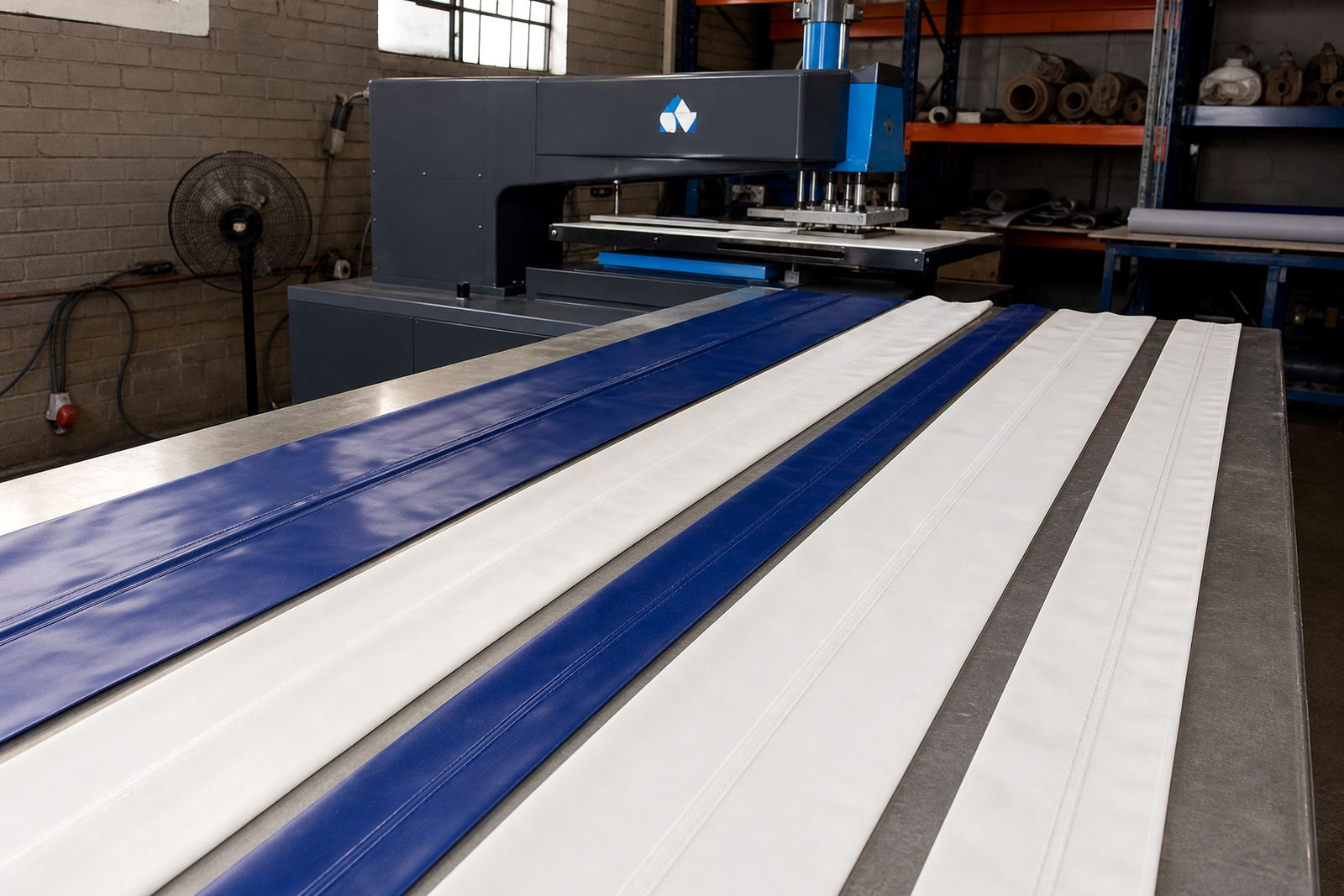
Hot-air and hot-wedge welding depend more on feed control and seam guidance. For hems, pocket folds and longer overlaps, a fixture may be as simple as a fold stop, edge guide or support table that keeps the piece running true. For keder work, the strip must sit evenly so the bead enters the channel without a twist. For eyelet reinforcement, the jig should keep the punched or marked position square to the edge.
- Radio frequency: accurate location and clamp clearance matter most
- Hot-air: stable feed path and seam alignment matter most
- Hot-wedge: support under the overlap helps prevent wavering
- Keder: bead straightness and channel spacing are critical
- Eyelets: consistent spacing from the edge keeps the load even
Jigs for hems, corners and reinforcement patches
Many of the common tarpaulin faults start at the corners. A corner patch without a fixture can shift while the operator is turning the piece, which leaves one side longer than the other. A shaped jig or corner stop keeps the fold in place so the hem lands where it should.
Reinforcement patches are another good candidate for fixturing. A patch over a stress point, such as a tie-down area or banner corner, needs even pressure across the full contact area. The fixture helps spread that pressure, which matters on thicker PVC-coated fabrics used for outdoor signage and event covers in coastal places like Durban, where moisture and salt in the air can make sloppy seams fail faster.
- Corner stops for tarpaulin patches
- Fold guides for hems and pockets
- Spacer blocks for layered reinforcements
- Alignment marks for eyelet spacing
- Support rails for longer banner edges
A neat fixture also protects the operator. Hands stay clear of the active weld zone, and the job is less likely to need a second pass. That helps with cleaner edges and less handling of hot material.
Operator safety and cleaner workflow
Fixturing is not only about appearance, it also helps control the work area. Small parts can move suddenly when the electrode closes or when hot air softens the fabric. A proper jig gives the operator a defined place to hold, release and inspect the job without chasing it across the table.
For workshop teams, that matters on long shifts and mixed production days. Clear fixtures reduce hand strain, cut the chance of finger contact with hot tooling and make it easier to keep the sewing, cutting and welding steps in order. Where machine guards, clamps and cooling areas are used correctly, the whole process becomes calmer and more predictable.
It also helps when training new operators. A trainee can learn placement and seam sequence faster if the jig does the positioning work. That leaves more attention for heat setting, timing and inspection of the finished seam.
Servicing the fixture along with the machine
Fixtures wear too. Alignment stops loosen, locating pins bend, and contact surfaces can pick up residue from softened PVC. If a jig is out of square, the weld will drift even if the machine itself is in good condition. That is why preventive servicing should include the tooling that holds the work, not only the welder.
In practice, servicing means checking for wear, cleaning build-up, confirming that the stops still register correctly and replacing any parts that no longer hold their shape. On radio frequency equipment, the fit between tooling and electrode is especially important. On hot-air and hot-wedge machines, the guide path and pressure surfaces should remain smooth so the fabric feeds without snags.
For shops in Pretoria, Johannesburg or Bloemfontein handling mixed banner and tarpaulin work, this is a plain way to keep small jobs moving. A fixture that is clean and true gives the machine a better chance to do its job right the first time.
A Germiston example from the workshop floor
Picture a tarpaulin shop in Germiston making small reinforced banner tabs for a set of outdoor event panels. Each tab needs to land in the same position, with a clean overlap and room for the eyelet to sit clear of the weld. Without a jig, one operator holds the strip by hand while another tries to guide the seam, and the tabs start varying from piece to piece.
With a simple locating fixture, the folded tab drops into the same place every time. The seam line stays straight, the corner remains square and the eyelet spacing is easier to keep even. That saves material and removes a lot of small corrections at the end of the run.
Small part fixturing may not look dramatic, but in the tarpaulin and banner trade it is often the difference between a job that feels tidy and one that needs sorting out later. A good jig does not replace skill, it gives skill a steadier place to work from.