Why travel speed changes the seam
With high-frequency welding, the machine does more than press two layers together. The speed setting changes how long the material sits under pressure and how much energy is absorbed before the seam cools. Too slow and the PVC coating can overheat, blister or shrink at the edge. Too fast and the bond can look neat on top but open later at the corner, hem or stress point.
Hot-air and hot-wedge welding behave in a similar way, although the heat is applied differently. Travel speed needs to match the thickness of the coated fabric, the width of the overlap and the amount of reinforcement in the job. A 50 mm lap on light banner stock will not take the same setting as a heavy tarpaulin with webbing, keder or an eyelet strip built in.
On a long production run, speed also affects consistency. If one operator feeds smoothly and another pulls the material harder, the seam can vary from panel to panel. That is why the speed setting is only part of the picture, the feed rhythm and alignment matter just as much.
The signs the machine is running too quick or too slow
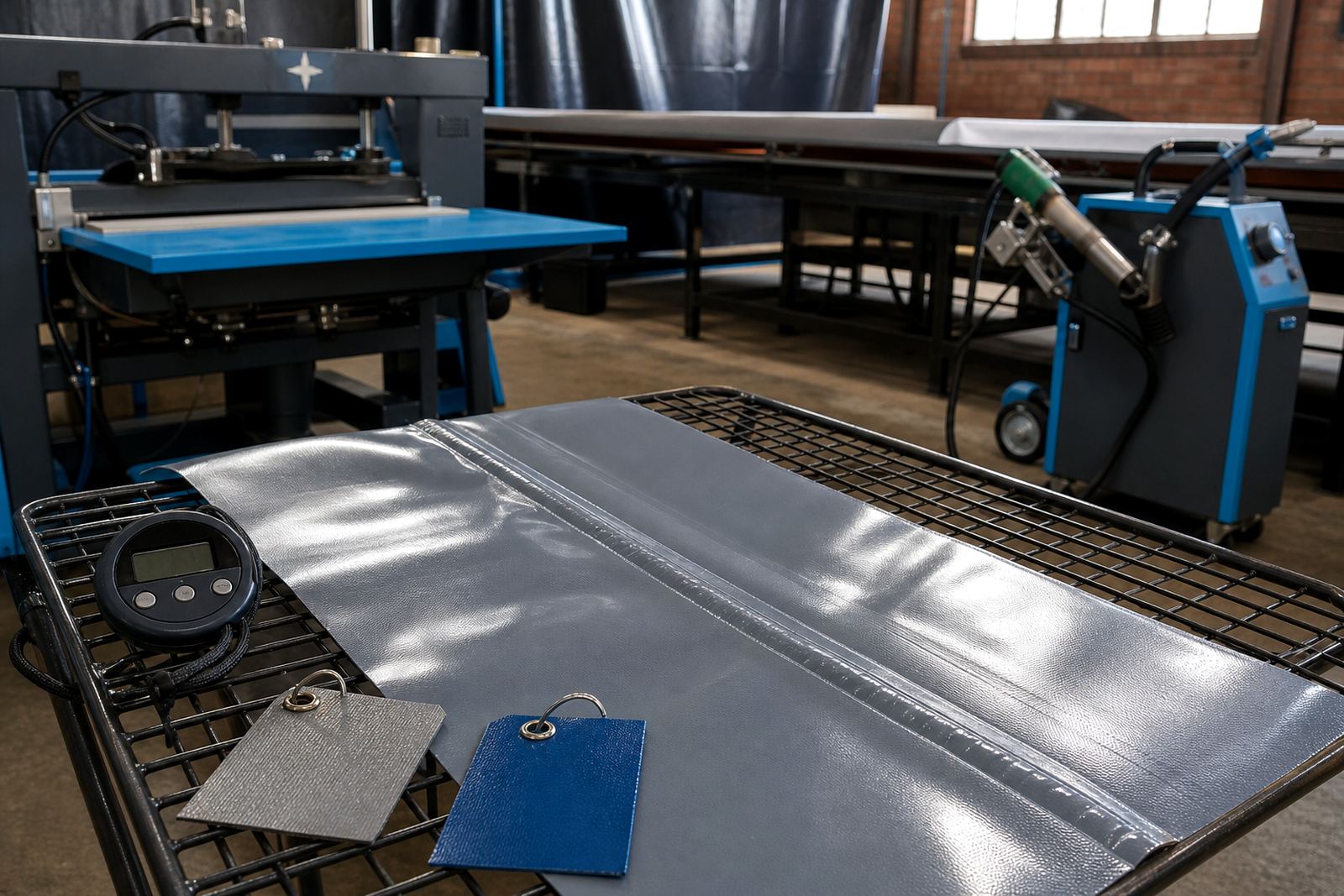
Operators often notice the seam before they know the setting is the cause. A good weld has even texture, clean edges and the same finish from start to end. When the speed is wrong, the symptoms usually show up fast.
- Too fast: weak bond, missed spots, uneven gloss, or corners that lift after folding
- Too slow: scorched coating, shiny burn marks, hard edges, wrinkling or shrinkage
- Too much dwell on the same place: imprint marks from rollers or electrodes
- Feed mismatch: one layer creeping forward and leaving a narrow seam on one side
When a banner starts to curl at the hem or a tarpaulin seam looks tight but opens under tension, the first question should be whether the travel speed suited the material. It is often more useful to check speed than to keep increasing heat.
Matching speed to the seam type
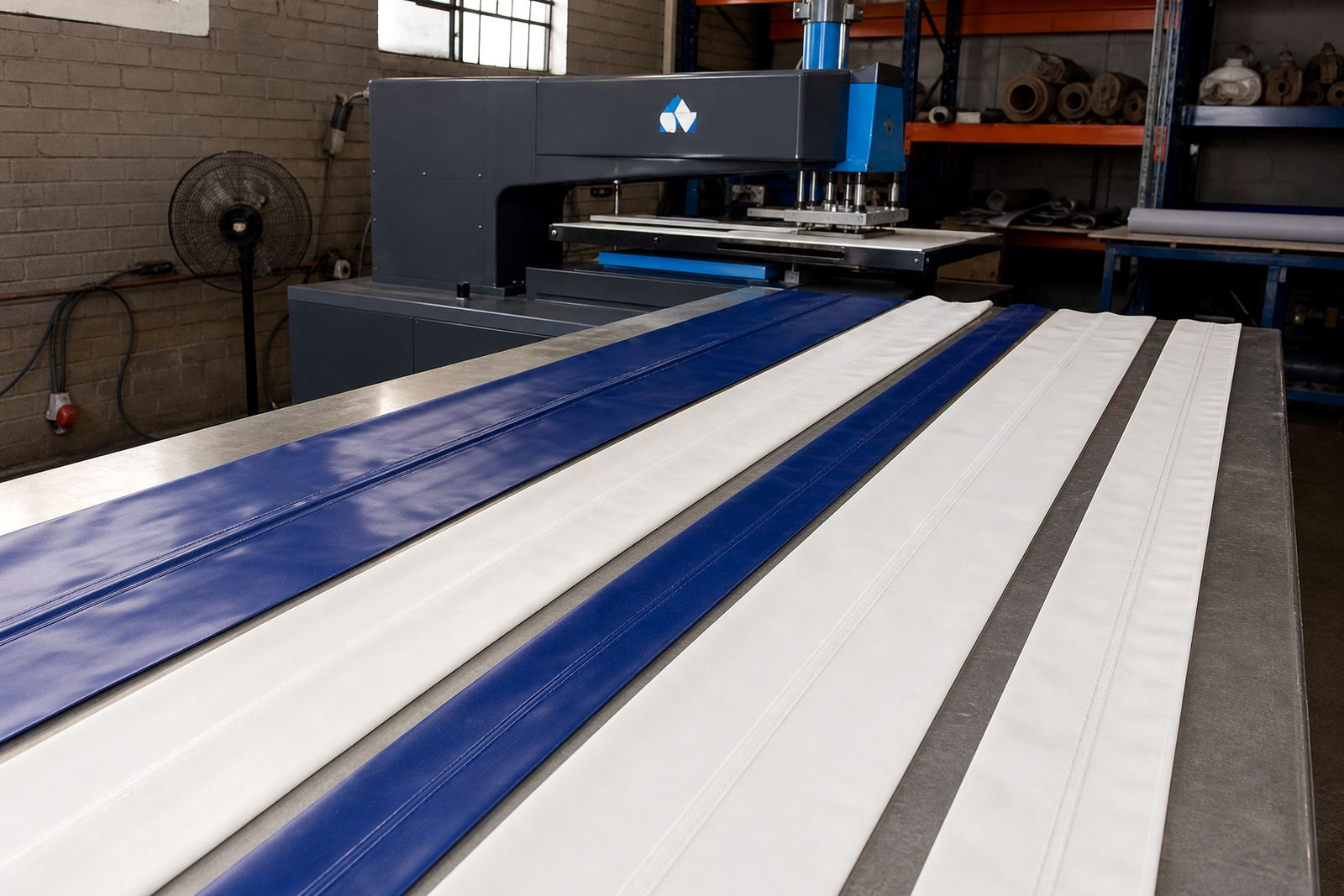
Not every seam needs the same pace. A plain overlap on a display banner can usually run faster than a reinforced hem or a keder weld. The more layers, the slower the machine normally needs to move so the core of the seam reaches the right temperature.
- Overlaps: steadier speed works best for long, straight joins
- Hems: usually slower because the fold adds thickness and stiffness
- Keder: often needs careful control so the rope or bead sits evenly in the sleeve
- Eyelet strips: slower travel helps the reinforcement bond properly before punching
- Patch repairs: speed must suit the existing fabric, which may be weathered or contaminated
For tent makers, the joint near a stress point often needs a different approach from the long body seam. A machine can run fast on one section, then be slowed at corners, gussets and pole pockets where the material changes thickness.
What experienced operators watch during a run
Good speed setting is not a guess. Operators watch the material, listen to the machine and check the seam as it comes off the table. If the weld is stable, the surface stays flat and the finish remains consistent across the width, the setting is usually close.
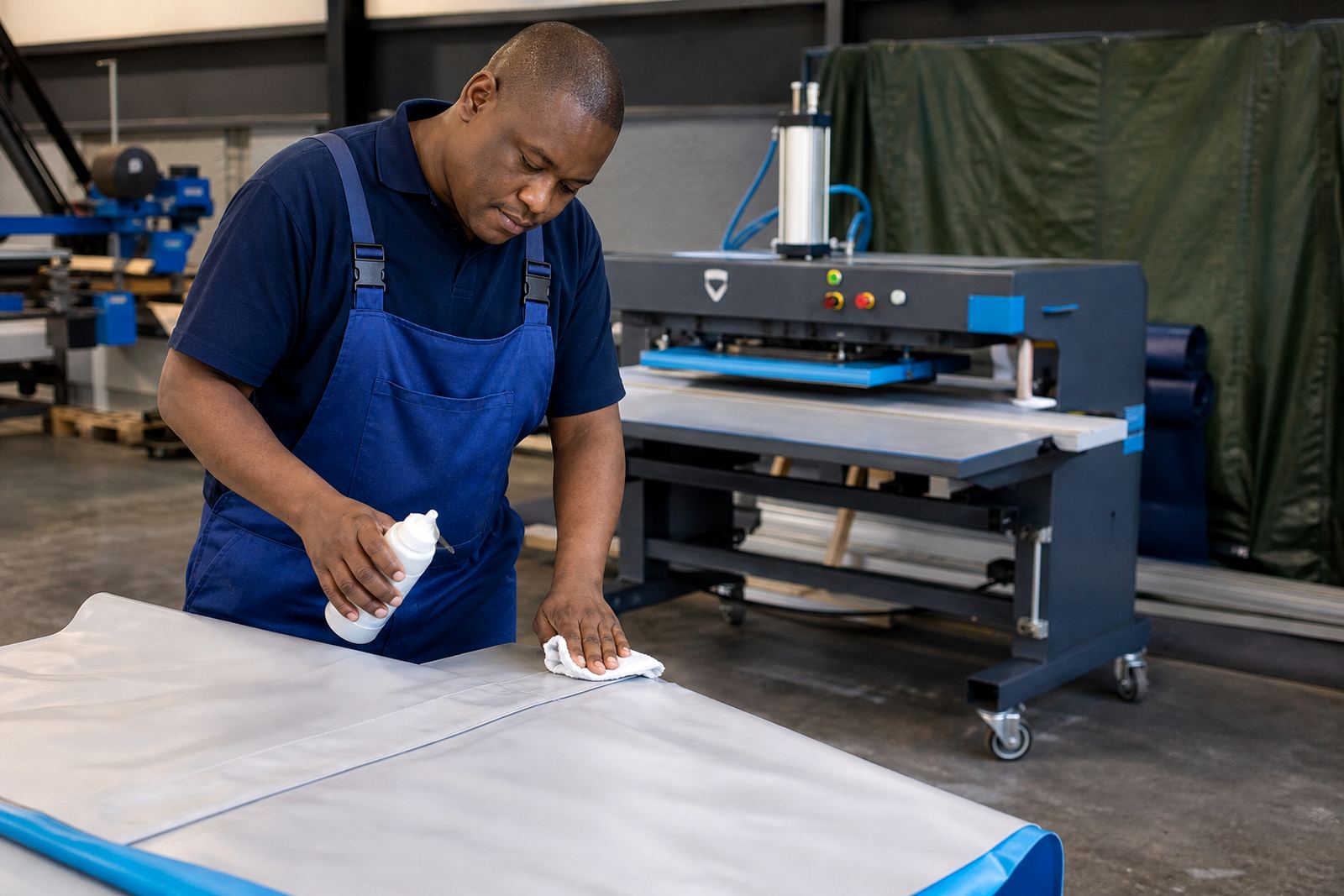
Practical checks include keeping the overlap straight, controlling the pressure, and watching for drag where the fabric sticks or bunches. On hot-air and hot-wedge machines, a clean run means the heated zone stays even and the rollers close the seam without pushing the layers out of line. On high-frequency machines, the pressure needs to stay steady so the RF energy is used in the joint, not wasted at the edges.
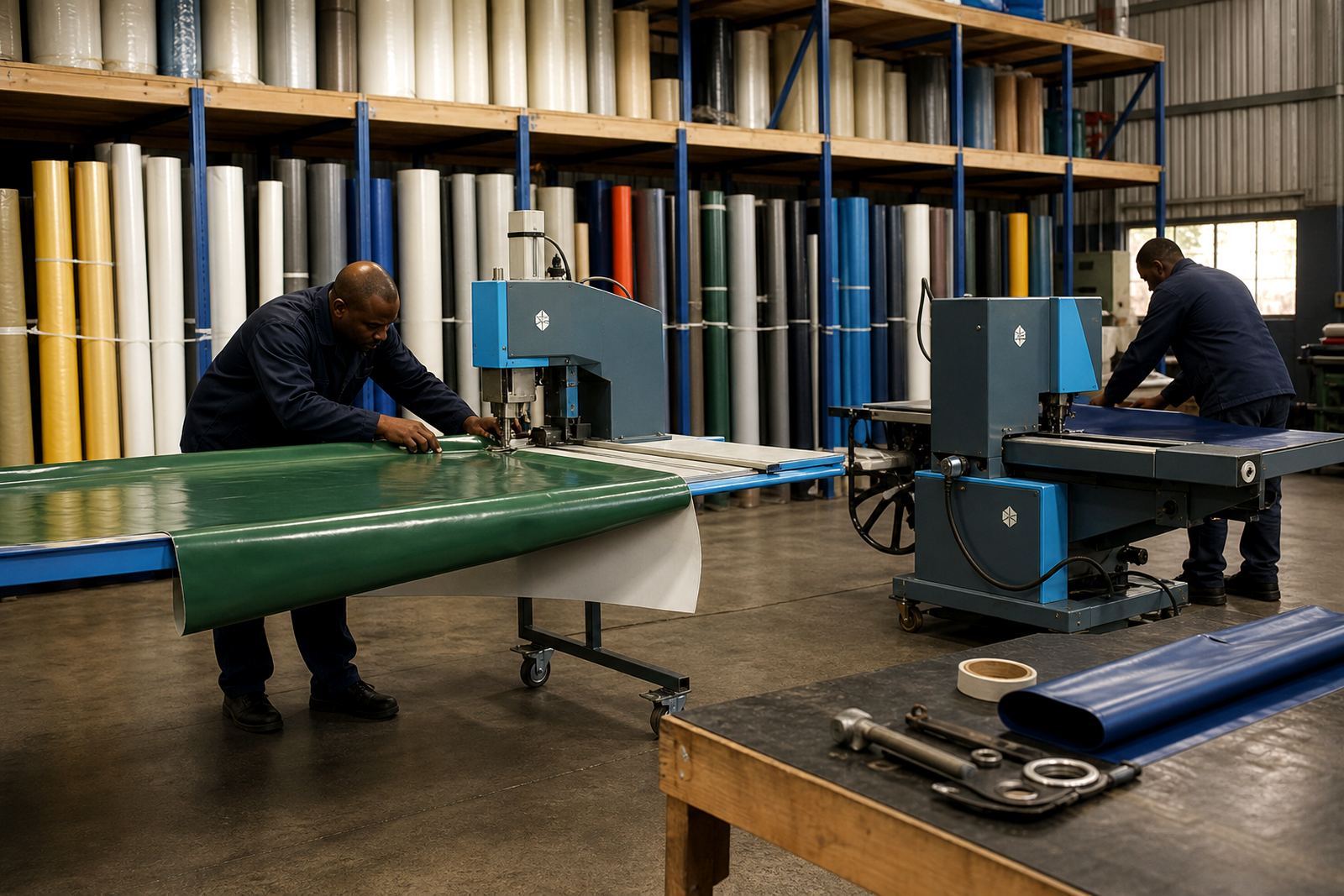
In Germiston and the wider Ekurhuleni area, many fabrication shops work through mixed orders in a single day, from short repair patches to long banners and trailer covers. That is where speed discipline helps most. Changing from one job to another without checking the setting can waste material very quickly.
A Johannesburg banner shop example
A small Johannesburg shop making PVC banners for retail and event work may cut panels in the morning and weld seams in batches through the day. When the same machine is used for both narrow hems and wider joins, the best travel speed changes with each panel size.
For narrow banner hems, a slightly quicker pass can keep the face smooth and prevent heat build-up. For wide joining seams on heavier stock, the operator may need to slow down so the full width bonds evenly. If the shop also adds eyelets or keder strips, those sections need their own pace because the extra thickness changes how the seam takes heat.
This is where a well set machine saves time and rejects. Not by forcing one speed across every job, but by giving the operator control over each pass. That kind of control matters whether the work is for a shopfront banner in Pretoria, a marquee wall in Durban, or a tarpaulin repair job in Bloemfontein.
Servicing points that affect speed control
Even a correct setting can behave badly if the machine is not in good order. Worn rollers, poor alignment, dirty guides and tired electrodes can all change how the fabric moves through the weld zone. A machine that drifts or grabs will make the operator slow down to compensate, which can create new problems in the seam.
Regular servicing helps keep the travel smooth and predictable. Common checks include:
- roller condition and pressure balance
- electrode wear and surface condition
- alignment of the feed path and seam line
- tooling fit for hems, keder and eyelet work
- testing after parts replacement or fault finding
For plants working across South Africa, from Cape Town to Pretoria, that consistency matters because the same job is often repeated on different machines or by different operators. Good servicing makes those settings easier to repeat without chasing the machine all day.
Setting a repeatable pace for daily production
The best speed is the one that produces the same seam every time for that fabric and that seam type. It should be recorded with the material weight, overlap width, pressure and heat setting so the next run starts from the same point. That is especially useful for shops handling tarpaulins, banner repairs and tent panels where the work changes often.
Training also plays a part. Operators who understand how travel speed affects heat exposure tend to waste less fabric and spend less time correcting seams. A clean seam is not only about temperature. It is about moving at a pace that keeps the whole joint under control from start to finish.
For PVC welding work in Germiston, Johannesburg, Durban, Cape Town, Pretoria and Bloemfontein, speed control is one of the simplest ways to protect seam quality. Get the pace right and the rest of the process settles down, which is what most production teams need on a busy floor.