Why the seam still moves after the weld stops
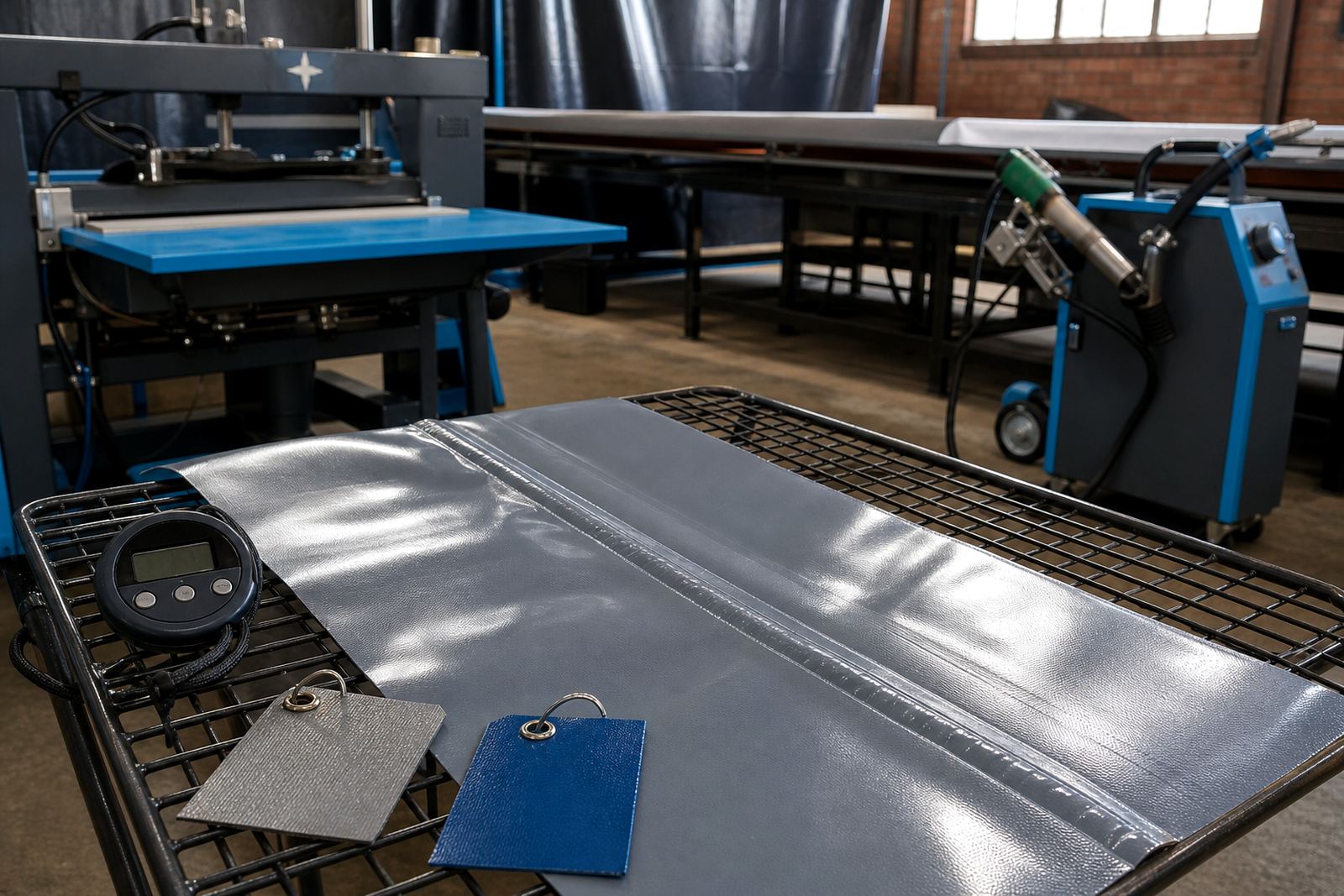
When a PVC-coated fabric is welded, the material is heated just enough to fuse the coated layers together. That joint is still soft straight after the cycle, especially on thicker tarpaulin, banner hem sections and reinforced tent panels. If it is handled too soon, the seam can stretch, twist or mark, which shows later as wrinkling or uneven finish.
High-frequency welding and hot-air or hot-wedge welding both need the same practical discipline: give the seam time to set before the next step. The exact cooling period depends on material weight, seam width, workshop temperature and how much pressure was used during the weld. In a Germiston workshop on a warm afternoon, a light banner hem may settle quickly, while a heavy tarpaulin overlap on a humid coastal job can need more time before it is moved.
What a fresh weld needs before it is handled
A seam should feel stable before it is trimmed, rolled, measured or fitted with hardware. If the weld still looks glossy and can be indented easily with a finger press, it is usually too early to work on it. The goal is not just strength, but shape retention for the finishing stages that follow.
- Let the seam lie flat until surface heat drops to a safe handling level.
- Keep the welded section free from tension while it cools.
- Move the material on a clean table so it does not pick up grit or dust.
- Avoid stacking warm pieces on top of each other because the coating can mark.
- Use straight support during long seams to prevent curl at the edges.
For shops making banners for Johannesburg traffic sites or PVC tents for event work in Pretoria, this pause helps the panel keep its dimensions. It also makes later folding and packing cleaner, with less rework at the finishing table.
Cooling time and the seam types that show it most
Not every seam reacts the same way. A simple lap seam may settle quickly, but hems, keder edges and eyelet reinforcement areas often carry more heat because there is more material in the weld zone. Those sections need extra care before punching, trimming or feeding into hardware.
In practical workshop terms, the areas below are the ones that most often need a cooling check:
- Overlap seams: common on tarpaulins and side curtains, they can slide if moved too soon.
- Hems: used on banners and covers, they must keep a straight line before edge finishing.
- Keder welds: these need the bead to stay true so the edge feeds smoothly into a track.
- Eyelet zones: the reinforced area must be firm before punching to avoid oval holes or tearing.
With radio frequency welding, the heat is generated in the PVC layer itself, so the seam can feel different from a hot-air weld even when the finish looks similar. The rule remains the same: let the material settle before placing stress on it.
A Germiston example from daily production
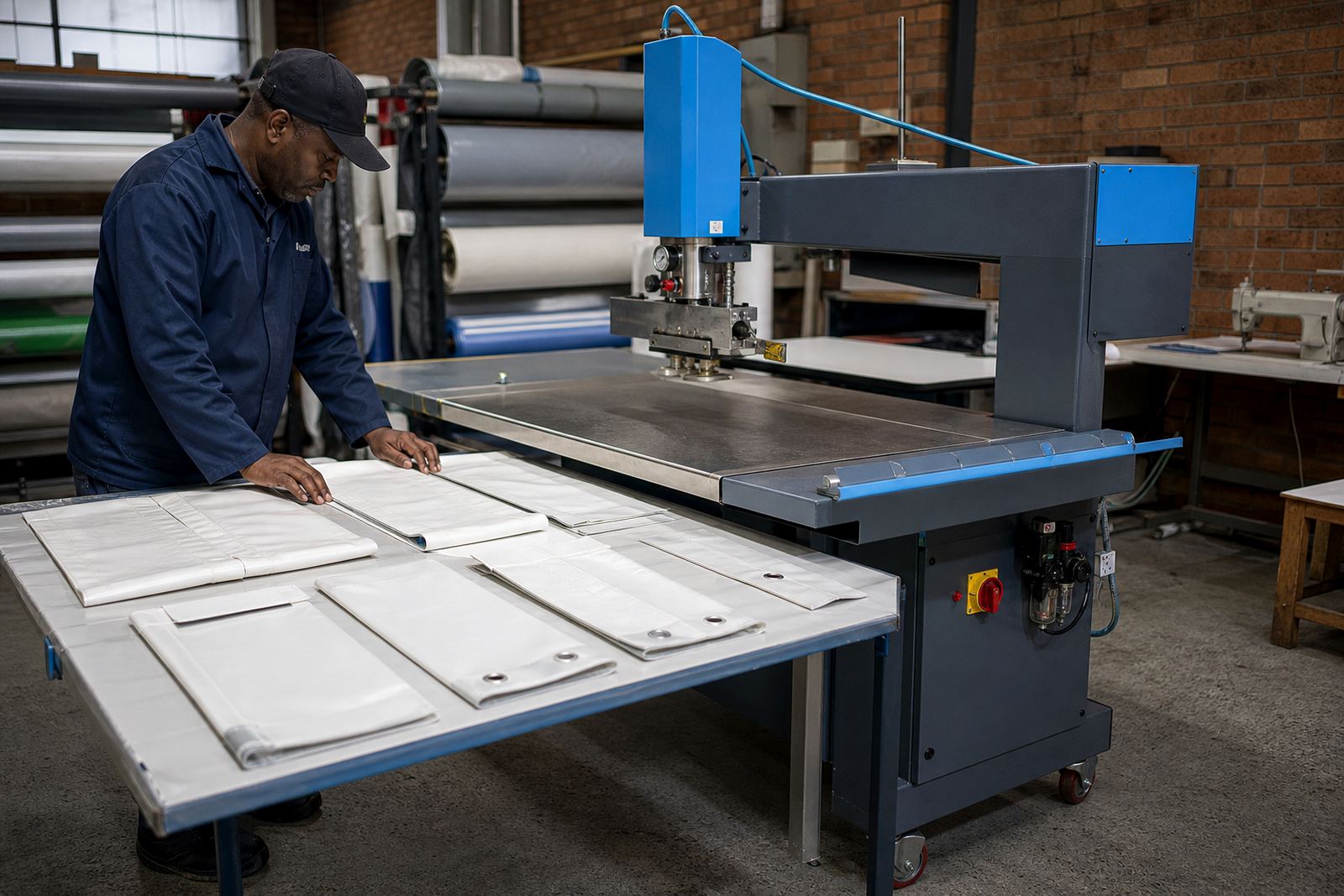
In a Germiston workshop serving sites across Ekurhuleni, a team making PVC banners for a Durban event may weld long hem pockets in the morning, then move the panels to a clean cooling rack before eyelet work. The weather there is often humid, and that moisture can make the top surface feel cool before the inside of the seam has fully set. If the next operator starts folding too soon, the hem can take a slight wave that shows once the banner hangs.
For tarpaulin repair jobs in Cape Town or Bloemfontein, the same applies when a patched section is welded on top of older material. The outer face may look ready, but the fused core still needs time to stabilise. A careful team watches the fabric rather than the clock alone, because heavy PVC, ambient heat and airflow all affect cooling.
How cooling time affects finishing work
Finishing depends on the seam staying where it was placed. If the weld is still soft, the following operations can pull it out of line or leave marks where the presser, roller or punch has pressed too early. That is why good cooling practice sits between welding and final assembly.
Common finishing faults caused by rushed handling include:
- Wrinkled hems that no longer hang straight
- Keder edges that feed unevenly into track systems
- Eyelets that sit at a slight angle
- Trim lines that creep off the intended edge
- Shiny pressure marks on the PVC surface
For event tents and signage work, those small faults can create extra labour later. A seam that cools properly is easier to inspect, measure and pack, and the finished item carries a neater line.
Safety around hot welds and moving material
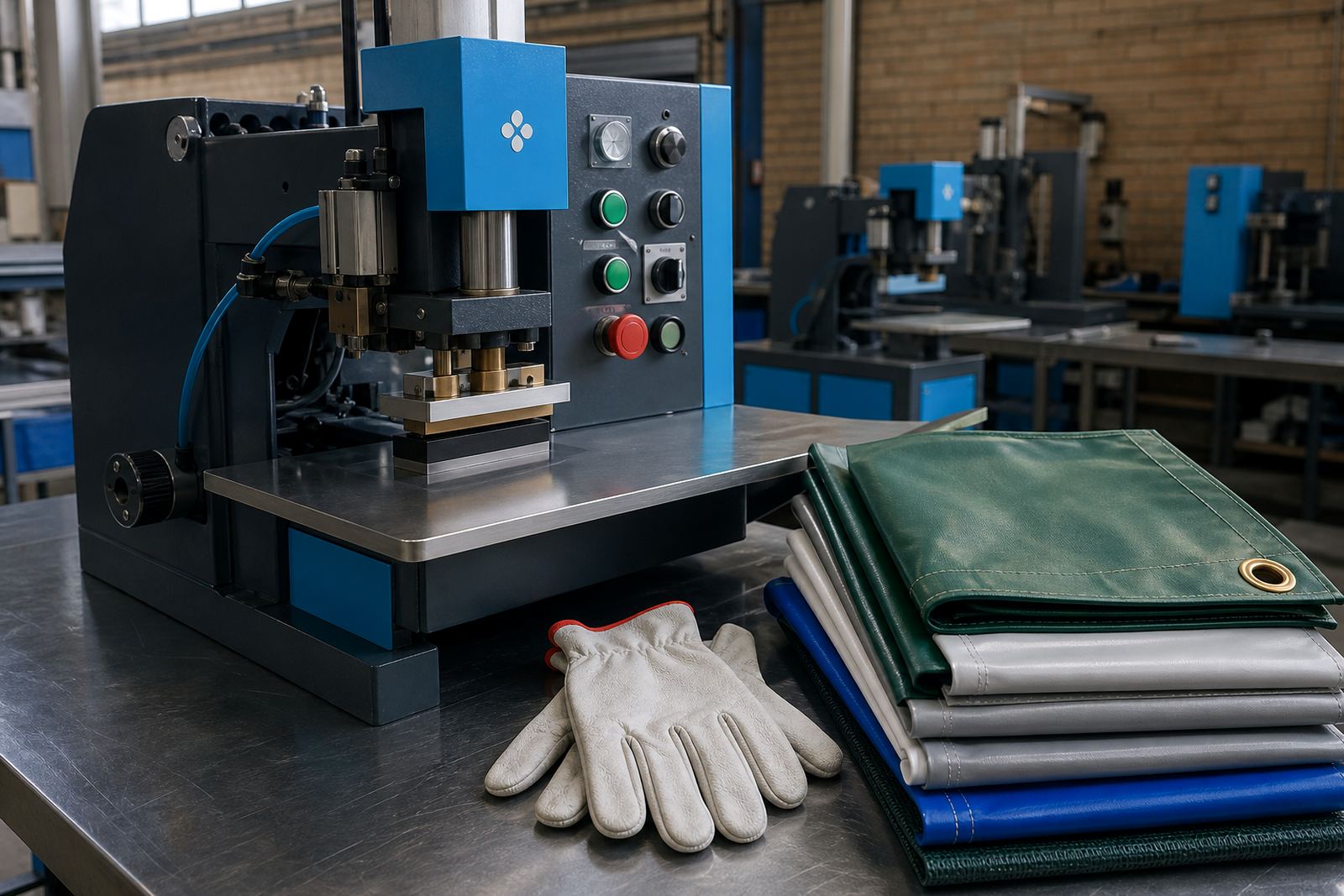
Cooling time is also a safety step. Freshly welded PVC can retain enough heat to cause skin contact burns, and the surrounding tooling may still be warm after a run of panels. Operators should treat every just-finished seam as hot until it has clearly settled.
- Use heat-resistant gloves where handling is close to the weld zone.
- Keep cables, offcuts and loose tools away from cooling tables.
- Mark separate areas for warm work and finished work.
- Do not force a panel flat with bare hands while the seam is still soft.
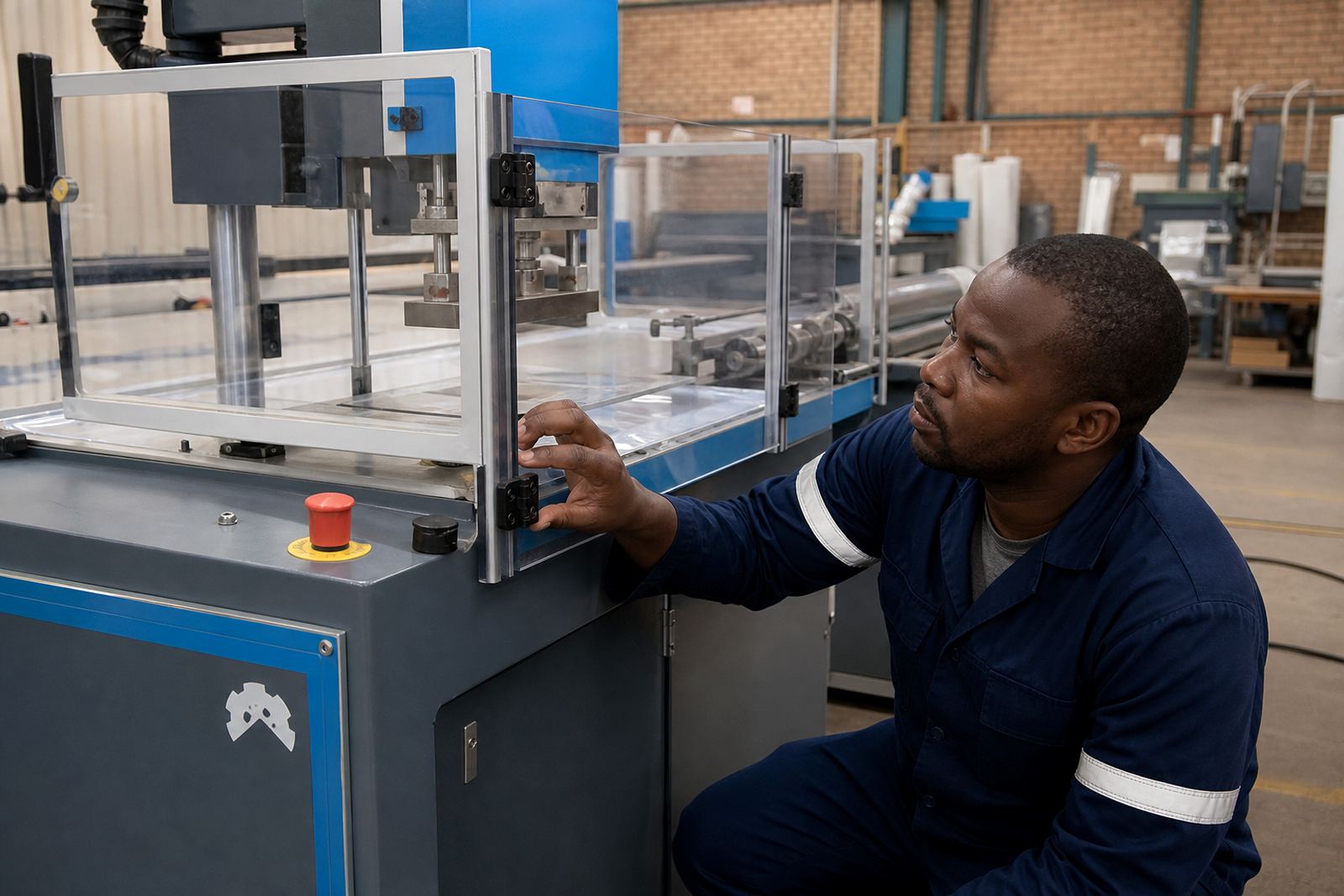
- Check that guarding, cooling fans and moving parts are in order before long production runs.
Good machine servicing supports this discipline. When tooling is aligned, pressure is even and electrodes or rollers are in good condition, the weld cools more predictably and the finish is cleaner. That reduces the temptation to rework a seam that should have been left alone a little longer.
The practical habit that keeps seams tidy
Cooling time works best when it is built into the workshop routine rather than treated as an afterthought. A sensible flow is weld, release, rest, inspect, then finish. That small pause is often what protects the shape of the seam, especially on wide banners, long tarpaulins and tent panels that need straight edges and neat hardware placement.
PVCWelder supports tarpaulin, banner and tent makers across South Africa with machine installation, commissioning, operator training, preventive servicing, fault finding, tooling alignment, electrode refurbishment, roller replacement, parts supply, seam testing, site callouts and service plans. From Germiston Support through to Johannesburg, Pretoria, Durban, Cape Town, Bloemfontein, Boksburg and Benoni Support, the same workshop principle applies: give the weld time to settle, then finish it cleanly.