Grip That Still Lets Fingers Work the Controls
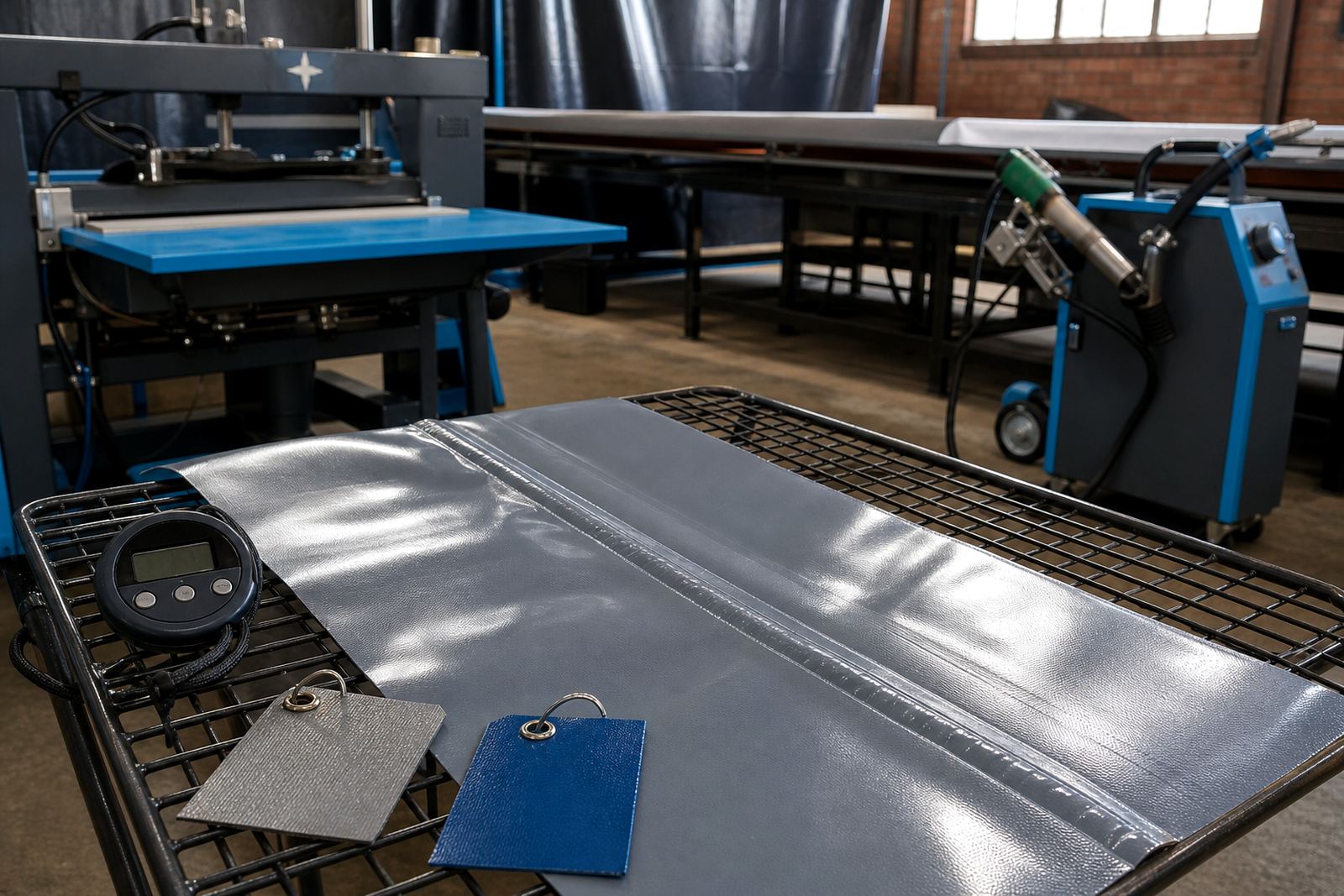
In a welding bay, gloves are only useful if the operator can still feel the edge of the fabric, the guide line and the clamp pressure. High-frequency welding uses controlled heat at the seam area, while hot-air and hot-wedge units work with moving heat and pressure, so hand control has to stay precise. Thick gloves may feel safe but they can make fine alignment slower, and that can lead to crooked hems, uneven overlap or a keder pocket that sits too loose.
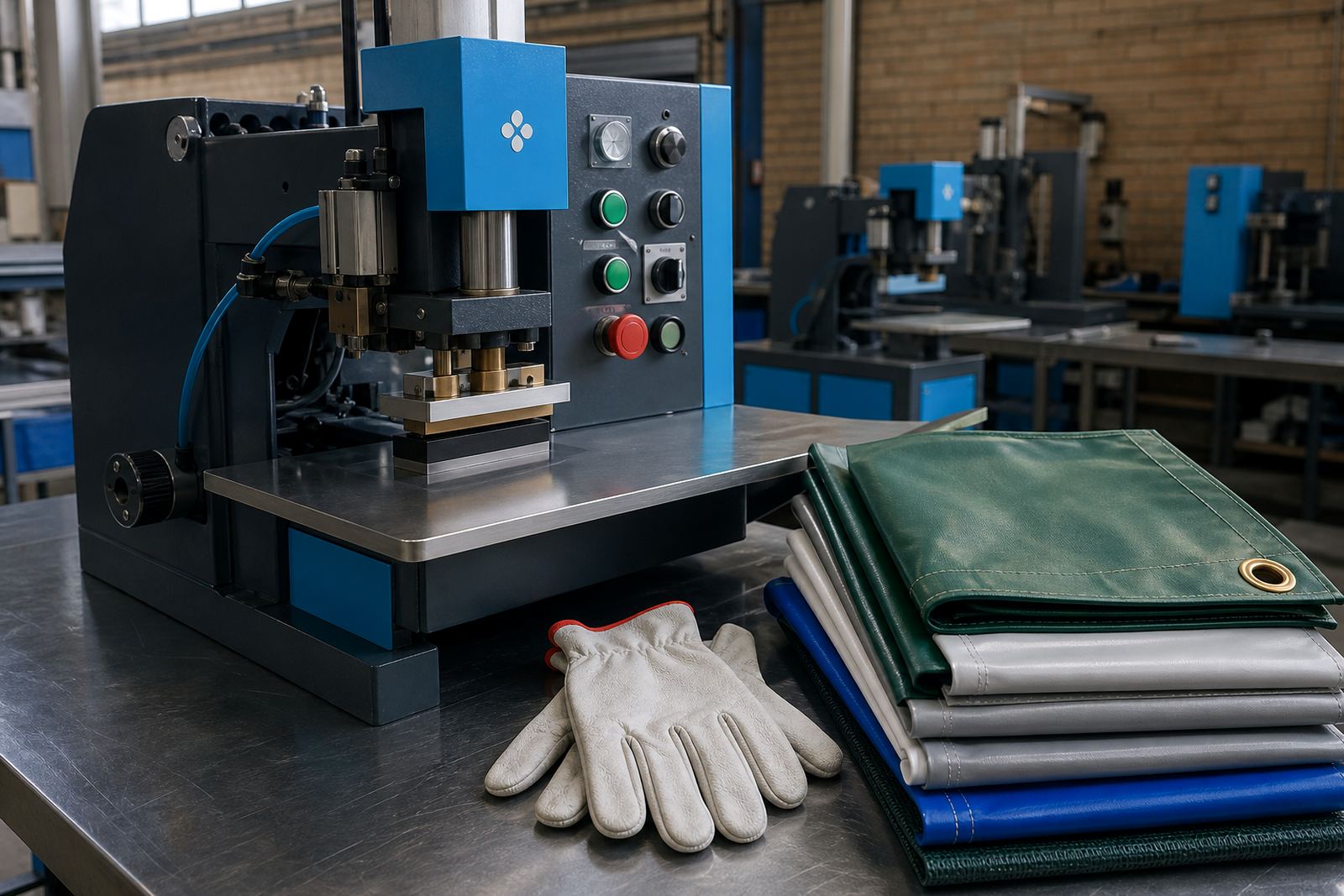
The better choice is usually a glove with a close fit, a palm that grips PVC-coated fabric without slipping, and a back that allows the hand to flex. For tarpaulin and banner work, especially when operators are feeding long lengths or folding edges for hems, the glove should not bunch up at the fingers. A small crease can catch on an edge or on tooling, and that is where mistakes start.
- Snug wrist fit for steady handling
- Good palm grip for slippery coated fabric
- Enough finger feel for marking and checking overlap
- Light protection without bulky seams inside the hand
Heat, Trimmed Edges and the Parts That Catch Hands
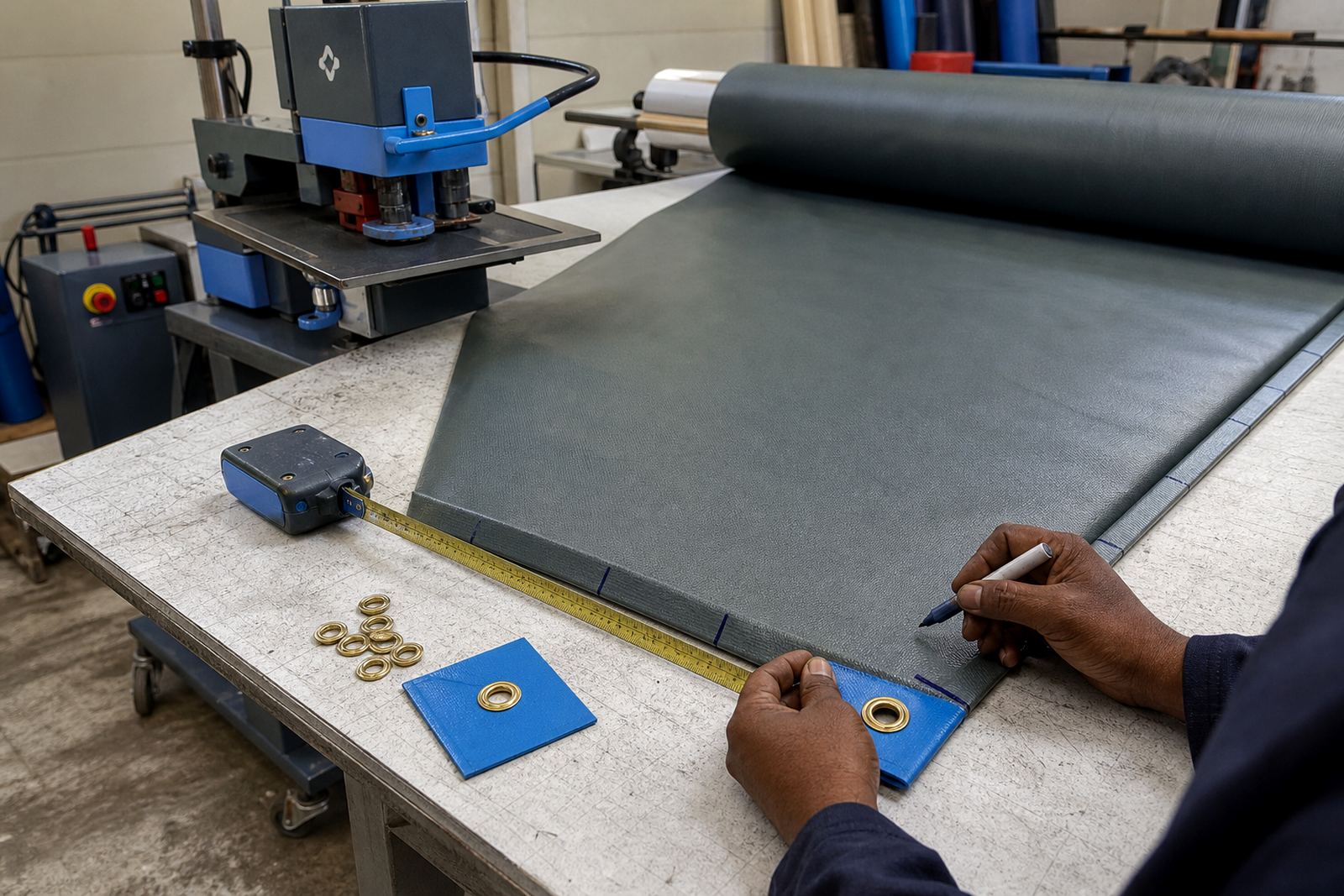
PVC welding workshops have a few hand hazards that appear often. Freshly trimmed banner edges can feel soft, but the core on some materials is still sharp enough to cut skin. Eyelet punching, roller handling and seam testing all bring hands close to metal edges and moving parts. On hot-air and hot-wedge equipment, the weld zone is the obvious heat risk, but operators also tend to reach near warmed guides, nozzles and newly welded sections that hold heat longer than expected.
Operator gloves should be chosen with those tasks in mind. A glove that can manage light heat, resist abrasion and give a decent hold is usually more practical than a heavy industrial glove that belongs in another trade. When the job includes installing hems on coastal tarpaulins in Durban or handling larger signage panels in Pretoria, gloves also help reduce sweat slip and give a steadier hold on folded PVC that has just been moved from storage.
- Light heat resistance for freshly welded sections
- Abrasion protection for trimmed PVC edges
- Grip for eyeleting, folding and rolling
- Flexibility for tool changes and seam inspection
Matching Gloves to High-Frequency and Hot-Air Work
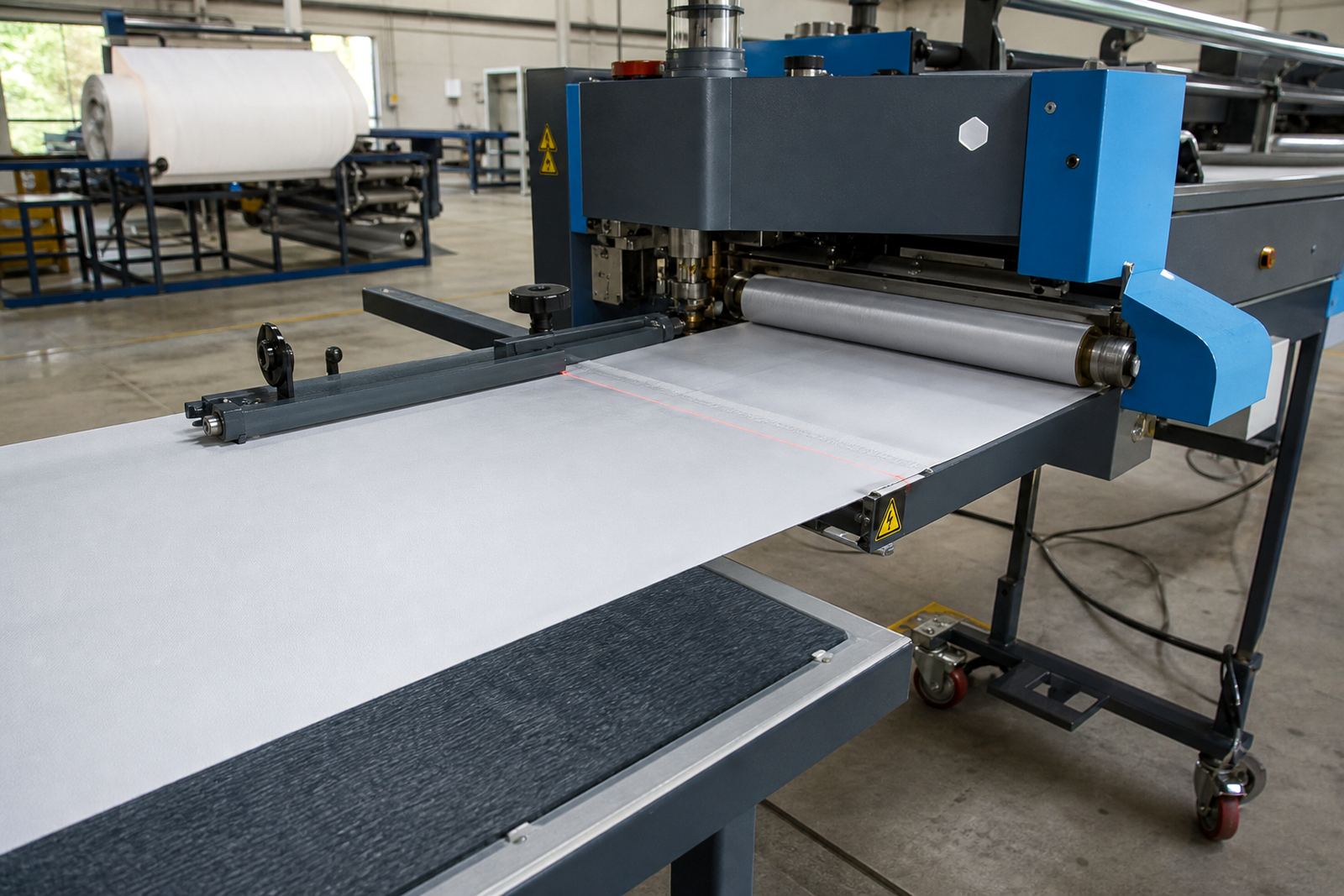
High-frequency welding usually keeps the heat concentrated in the joint under pressure, so the operator often needs good handling rather than heavy heat shielding. Hot-air and hot-wedge work can mean more frequent contact with warm tooling and longer handling of heated material. That difference matters when choosing gloves for a workshop in Germiston or on a site visit in Ekurhuleni, because the same pair may be fine for one task and awkward for another.
For radio frequency seam work, the best glove often feels light and tidy on the hand. For hot-air hemming, keder fitting and repeated patch work, a slightly tougher glove may be better if it still allows fingertip movement. The point is not to cover every hand problem with one oversized pair. It is to match the glove to the way the team actually works with fabric, tooling and finished sections.
- RF seam setup: light, close-fitting gloves
- Hot-air hemming: grip and moderate heat protection
- Keder insertion: dexterity for feeding and guiding
- Eyelet work: control around punching and finishing tools
What to Look At Before a Pair Goes Into Daily Use
A practical glove check is worth doing before a workshop puts a pair into daily service. Look at the stitching inside the fingers, the cuff length, the grip surface and how the glove behaves when the hand bends. If the seam inside the glove rubs during a full shift, the operator will avoid wearing it. If the cuff is too loose, dust and small PVC offcuts can work their way in. If the palm coating is too smooth, the hand will slip when moving long banner panels or heavier tarpaulin sections.
It also helps to treat gloves as part of the full setup, not a separate item. A clean bench, sharp trimming tools, correctly aligned rollers and sensible handling habits all reduce the strain on hands. In a busy production space, gloves should support the operator not get in the way of the job. If they are causing snagging, heat build-up or poor movement, they are the wrong pair for that task.
- Check finger movement with a folded seam sample
- Test grip on PVC-coated fabric and smooth tooling
- Look for loose cuffs or rough internal stitching
- Replace worn pairs before holes start at the fingertips
Servicing Days, Site Callouts and Safe Handling Habits
When PVC welders need servicing, glove choice still matters. A technician opening panels, handling tooling, checking rollers or aligning electrodes should use gloves that allow careful control without getting caught in moving parts. During site callouts, especially at busy fabricators in Johannesburg, Cape Town or Bloemfontein, the work area is often tight and time is limited, so good hand protection should help the job, not slow it down.
Safe handling habits are just as important. Operators should keep gloves dry, clear away offcuts that may hide sharp wire or trim, and avoid using damaged gloves with torn fingertips. In coastal conditions, moisture can make the fabric or tooling feel slippery, while inland dust can work into seams and cuffs. A glove that stays in shape and remains easy to clean is worth more than one that looks heavy but wears out quickly.
For teams working around tarpaulin, banners and tent panels, operator gloves are part of the daily rhythm. They protect the hands during setup and finish work, and they help keep attention on the seam, not on a sting from a sharp edge.
A Practical Fit for Germiston Workshops and National Supply
From our base in Germiston, Ekurhuleni, PVCWelder supports businesses across South Africa that use high-frequency and hot-air welding equipment for PVC-coated fabrics. That includes tarpaulin makers, banner shops and tent producers handling hems, keder, seam testing and eyelet work. The right gloves are a small item, but they have a direct effect on how safely and neatly that work is done.
Mandla Mnisi leads the business with Alicia van der Merwe on sales, Sibusiso Abrahams on service, Johan Mkhabela on installation, Thandi Mokoka on training and Lebo Motsepe on parts and support. The team handles machine installation, commissioning, operator training, preventive servicing, fault finding, tooling alignment, electrode refurbishment, roller replacement, parts supply, seam testing, site callouts and service plans. If a workshop needs to improve handling around its welding line, gloves are usually one of the first practical details to get right.
Clients reach PVCWelder through the enquiry form on the contact page, with support linked to Germiston, Johannesburg, Pretoria, Durban, Cape Town, Bloemfontein, Boksburg and Benoni. For operators, the goal is plain enough: keep a steady grip, protect the hands and still feel the work properly.