The hem sets the pace for the eyelets
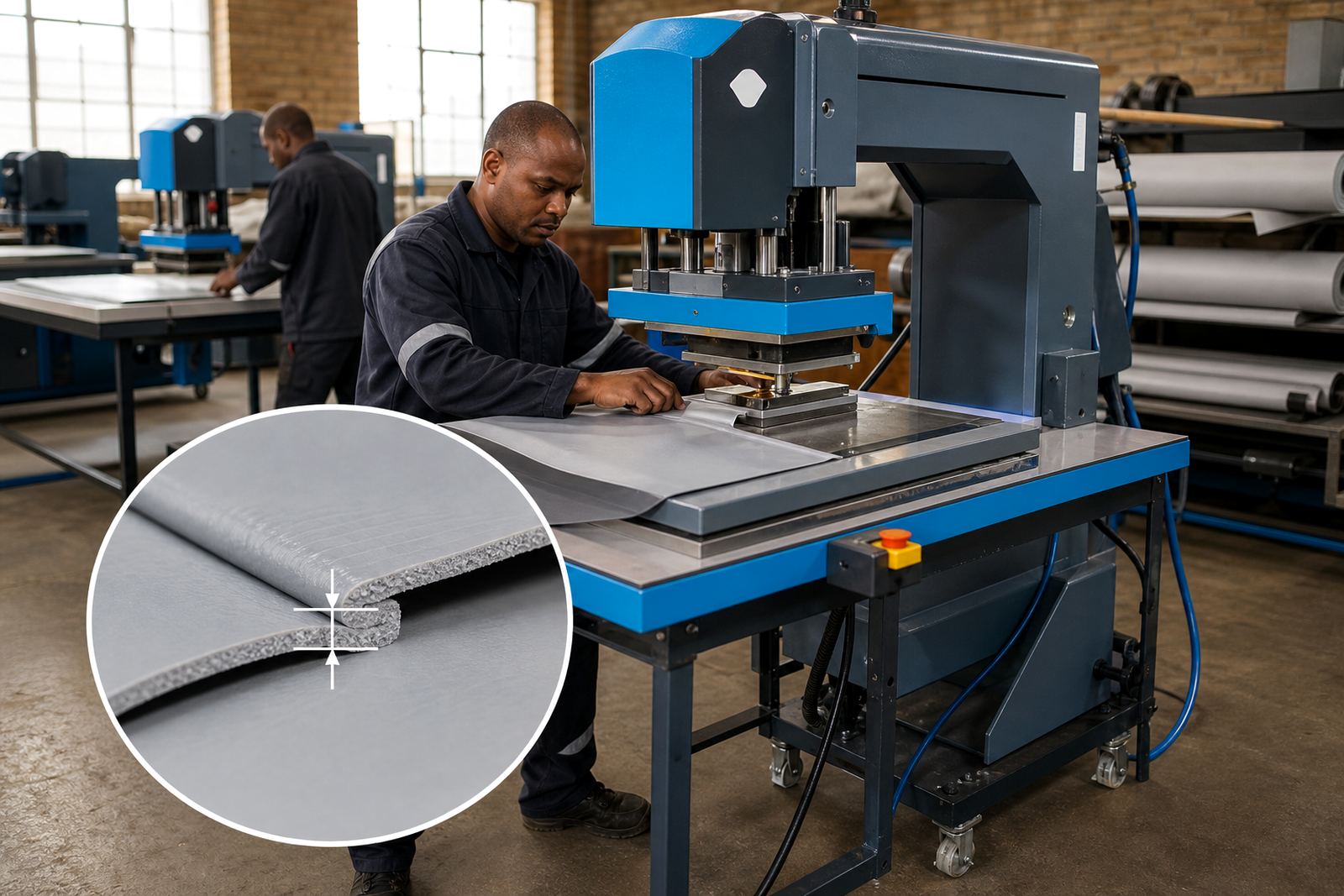
On PVC-coated fabrics, the hem is usually the first thing to decide before the eyelets are marked. A clean welded hem gives a thicker edge for punching and stops the eyelet from pulling straight through the cloth. With hot-air or hot-wedge welding, the edge can be folded and sealed in a controlled way, while high-frequency welding is often used where a neat, repeatable bond is needed on suitable PVC materials.
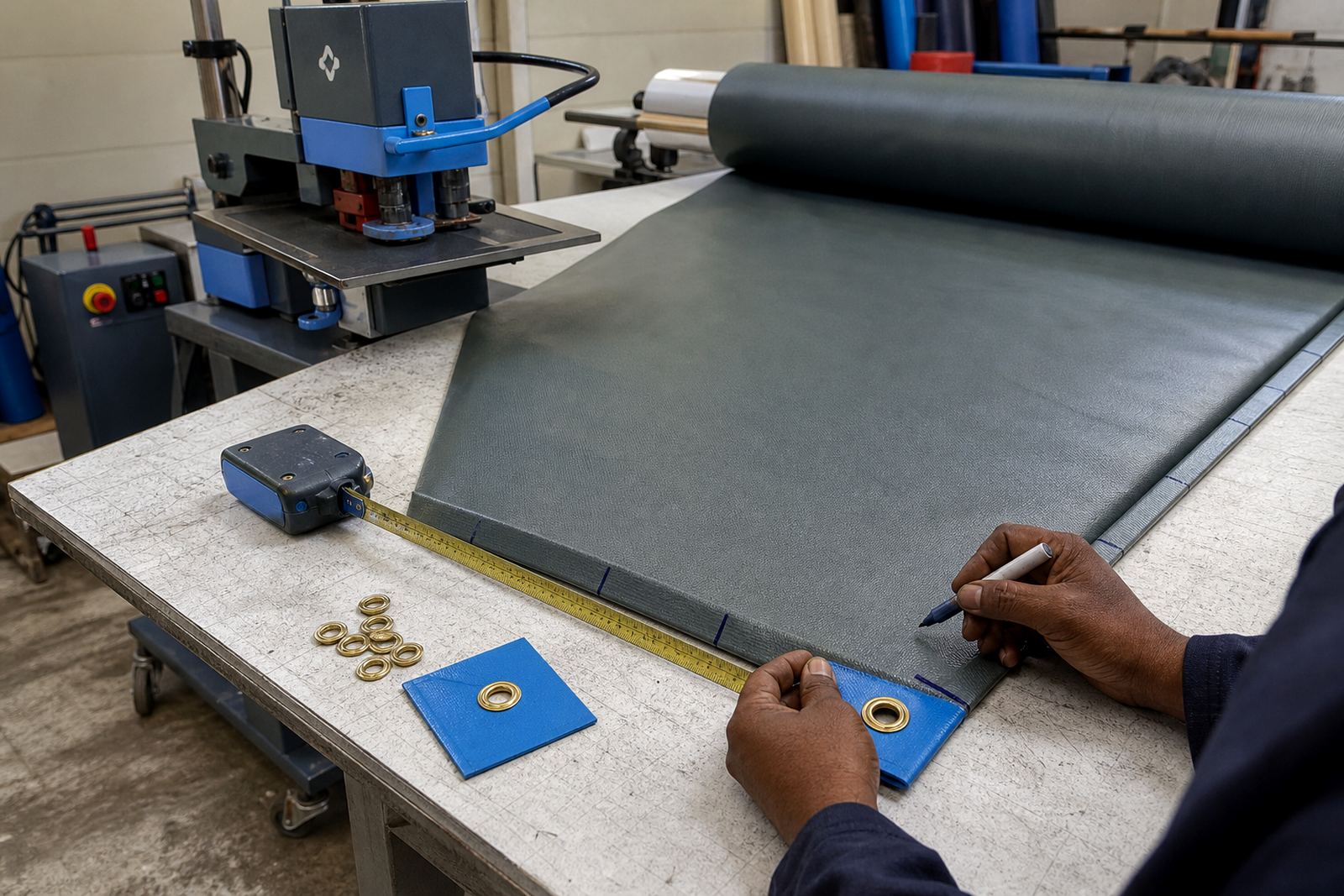
For most tarpaulins and banner work, the eyelets should sit far enough in from the edge to leave material around the hole. If the eyelet is too close, the load lands on the fold and the fabric starts tearing. Too far in, and the edge can pucker or flare when tension is applied. The hem width and the eyelet line should work together, not fight each other.
- Keep the hem even before marking the spacing
- Allow extra width where the sheet will be tensioned hard
- Use the same edge reference all the way around the panel
Corner reinforcement needs its own thinking
Corners take the sharpest pull, so the eyelet layout there should not copy the straight runs without thought. A corner patch, doubler or shaped reinforcement spreads the strain over a wider area and gives the eyelet a better base. On welded PVC, that extra layer is often the difference between a corner that stays tidy and one that starts curling or splitting after a few installations.
In practice, the corner eyelet is usually placed to work with the reinforcement shape, not right on the point. That helps the load move into the side hems and away from a single stressed spot. If the banner or tarp will be tied to poles, frame rails or timber battens, the fixing point should match how the sheet will sit when it is under tension.
- Use a shaped corner patch where wind load or pull is higher
- Leave enough room for the washer or eyelet flange to seat properly
- Match the corner spacing to the tie-off method used on site
Spacing changes with the size of the sheet
There is no single spacing that suits every job. A small fascia banner in sheltered conditions may need a lighter fixing pattern than a long tarpaulin on a truck cover or a large display wall exposed to coastal wind. The wider the panel, the more the eyelet line must share the load evenly. If the spacing is too open, the fabric can belly between fixings. If it is too tight, the edge can become stiff and awkward to tension.
For banner work, neat spacing also helps the finished piece hang square. For tarpaulins, the edge must survive repeated tying and untieing, often in dusty yards or wet conditions. In Durban and along parts of the coast, humidity and salt air can make fittings and fabric edges age differently, so tidy welding and consistent hole placement matter more than ever.
- Longer runs usually need more support points
- Wider sheets need a steadier balance between top, sides and corners
- Allow for the way the panel will move in wind and when wet
Weld quality affects every hole
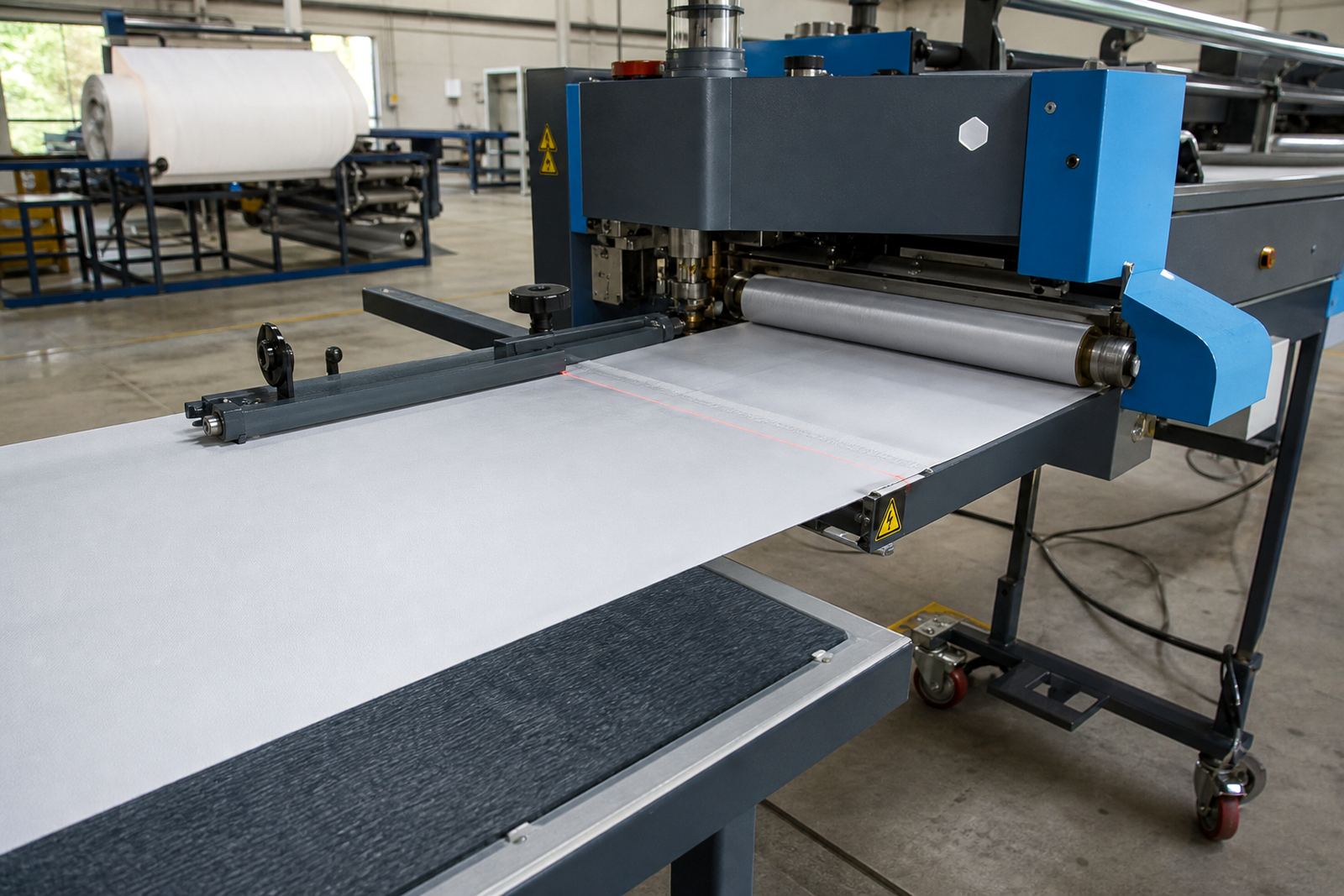
If the weld line is uneven, eyelet spacing becomes guesswork. A wavering hem changes the distance from one point to the next, and once the holes are punched the error is hard to hide. That is why seam testing matters before the eyelets go in. A clean weld line gives a straighter edge, better alignment and a neater finish on the final product.
High-frequency welding is commonly used where a consistent seam is needed on suitable PVC-coated fabrics. Hot-air and hot-wedge methods are also widely used for hems, panels and overlaps on tarpaulins, banners and tent components. The choice of method depends on the material, the seam shape and the job size. Whatever the process, a stable seam makes the eyelet line easier to mark and repeat.
- Check for ripples, burn marks or lifted edges before punching
- Keep the seam width consistent from panel to panel
- Test a sample pull before fitting the full run of eyelets
Eyelet work on site needs proper handling
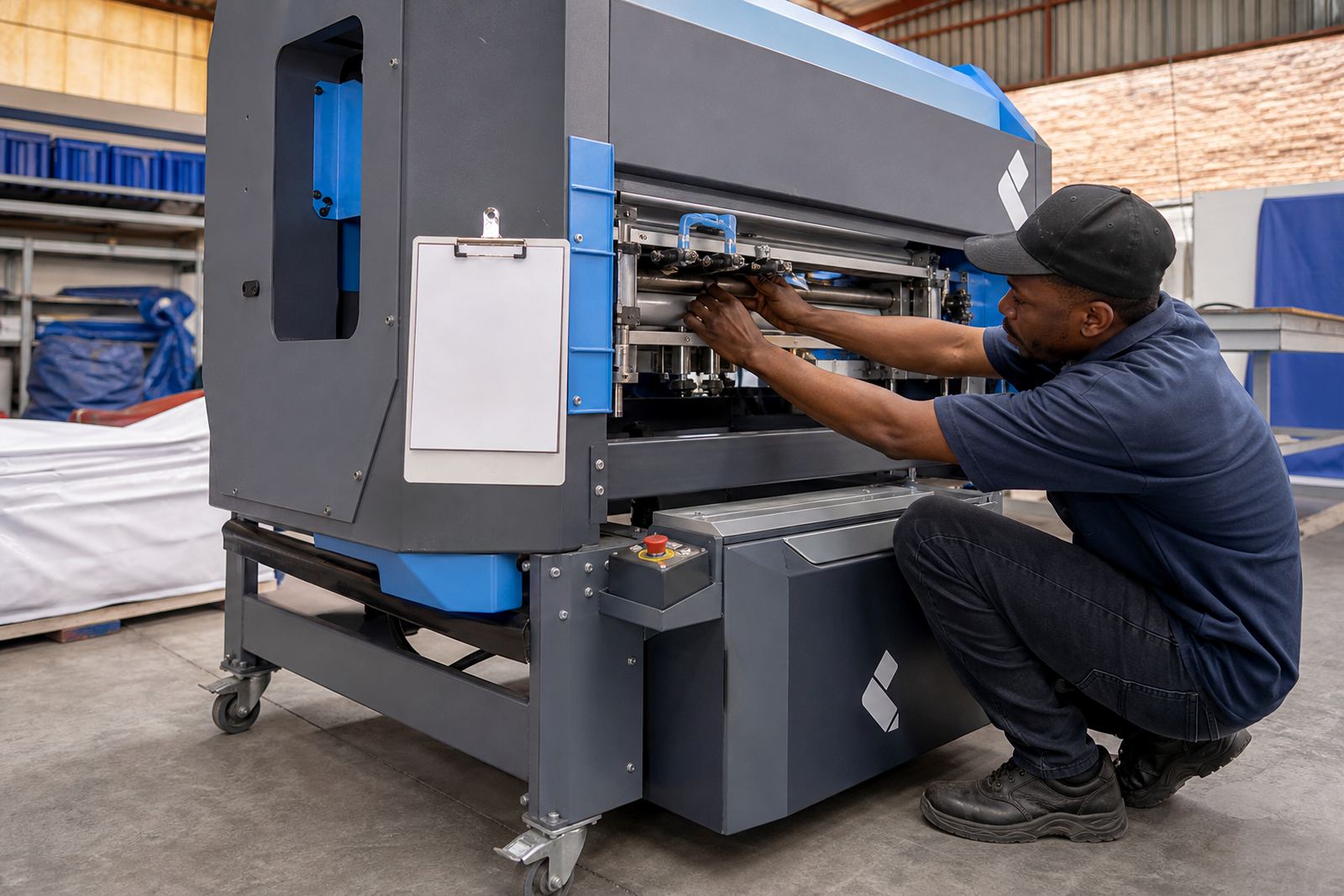
Many problems show up after the sheet leaves the workshop. If the operator pulls the fabric too hard while fitting, the eyelet can distort and the edge starts looking tired before the job is even done. Safe handling matters as much as spacing. Heated welding equipment, punches and rollers should be kept in good order, and operators need clear working space, sound guarding where fitted and the right PPE for the task.
For a Germiston workshop making tarpaulins for Johannesburg depots and tent sides for Pretoria events, the routine is the same: inspect the welded hem, mark the eyelet line, check the corner reinforcements, then punch and set the fittings with steady pressure. That method gives a cleaner finish than rushing the work on the floor or trying to correct a bad line after the fact.
- Store punched and welded sections flat so the edges do not twist
- Keep tooling aligned to avoid oval holes and crushed rims
- Service presses, rollers and heating parts before the edge quality drops
A practical rule for local tarpaulin makers
A sensible eyelet pattern starts with the load path. Ask where the pull will come from, how the sheet will be tied, and which edges carry the most strain. Then build the hem and reinforcement to suit. That is how a banner for a busy road frontage differs from a truck tarp or a tent valance. The hardware may look similar, but the stress on the edge is not.
For shops working across South Africa, from Germiston and Boksburg to Cape Town and Bloemfontein, small changes in spacing can make the difference between a neat install and a fraying edge. Eyelets should support the weld, not rescue a weak seam. When the hem, corner patch and spacing all match the job, the finished panel sits cleaner and lasts longer in use.
If the eyelet line keeps shifting, the first place to look is the welding setup, the cutting accuracy and the way the reinforcement is being built. That is usually where the fix lies, not in adding more holes.