A Seven-Day Check Beats a Weak Seam Later
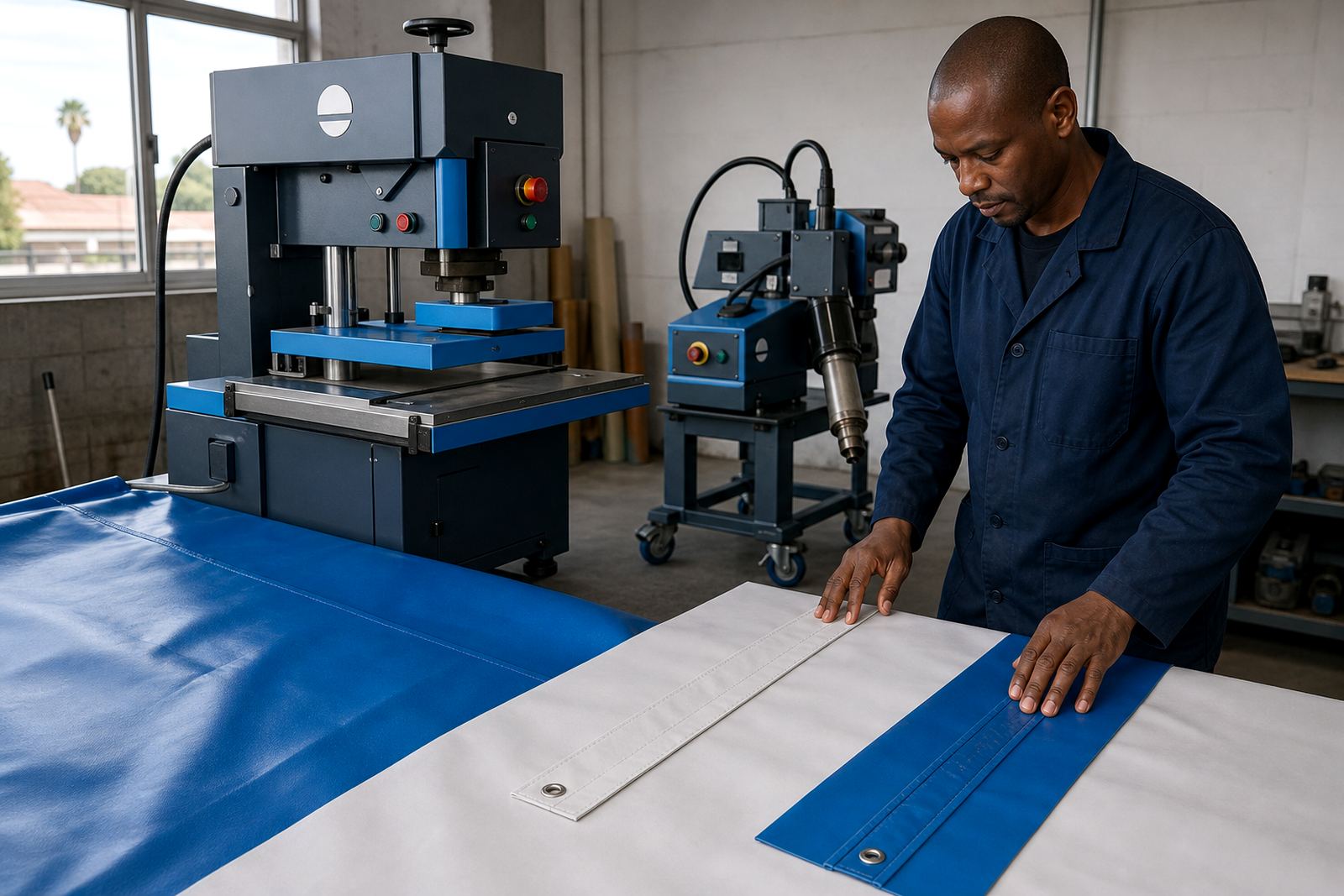
When a PVC welder is used daily on tarpaulins, banners, tents and printed PVC-coated fabrics, a weekly inspection is often the point where small wear shows itself. That might be a slightly dirty electrode, a loose guide, heat build-up around the working area or a roller that no longer tracks evenly. Left alone, those small issues change the seam profile and make the weld harder to keep straight.
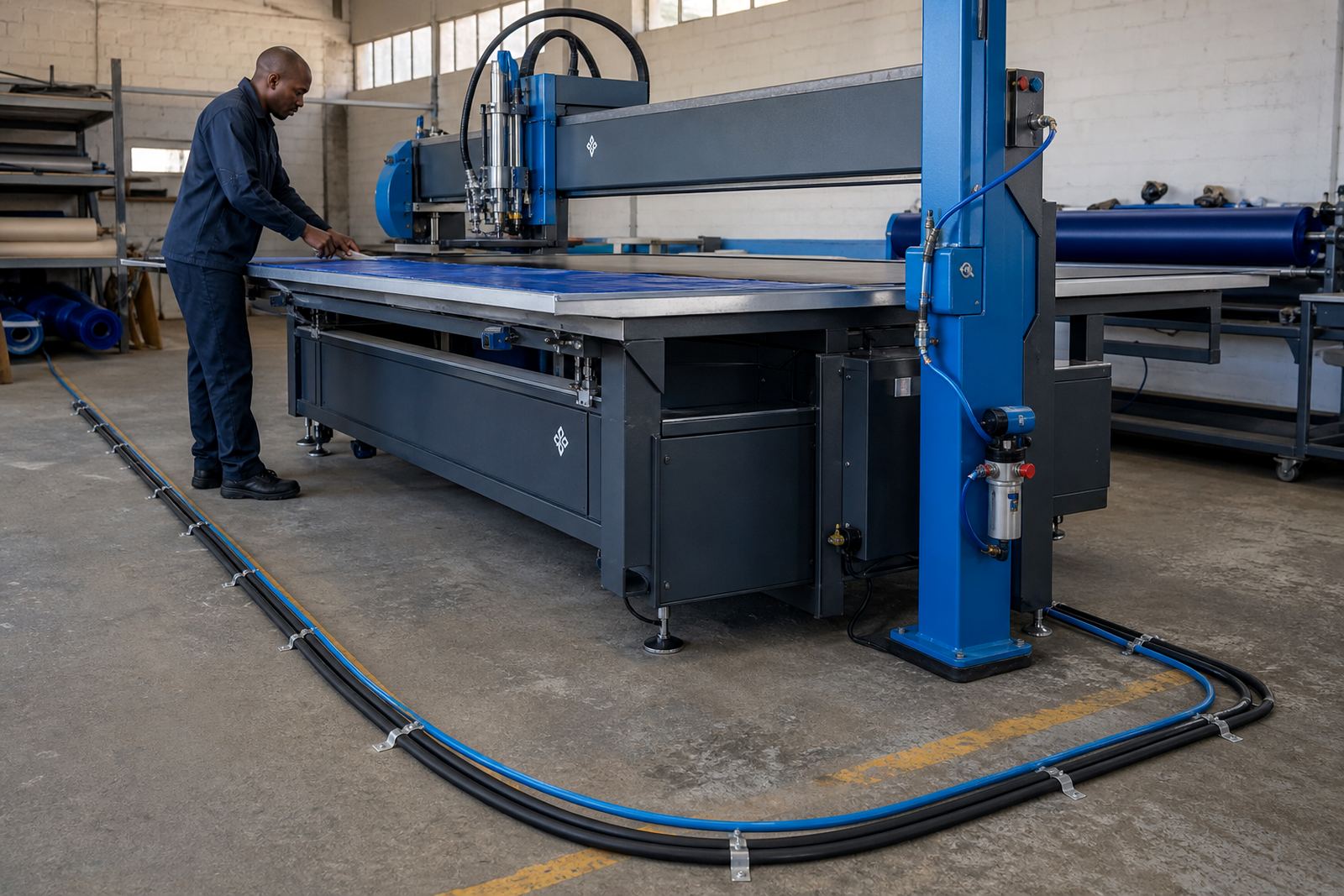
In Germiston and the wider Ekurhuleni area, a lot of fabrication work happens in busy workshops where machines run through the week and jobs are turned around in batches. A weekly check helps the operator notice a change before it becomes a repair job. It also gives the service team a clearer picture when a fault callout is needed, because there is a record of what changed and when.
What To Look At Before The First Weld Of The Day
Weekly inspection starts with the parts that affect contact, alignment and heat transfer. On high-frequency equipment, the electrode and tooling surfaces should be clean and free of scoring. On hot-air and hot-wedge machines, check the nozzle, wedge and pressure surfaces for dust, melted residue or wear marks that can disturb the weld path.
- Inspect cables, fittings and moving guards for visible damage or loose connections.
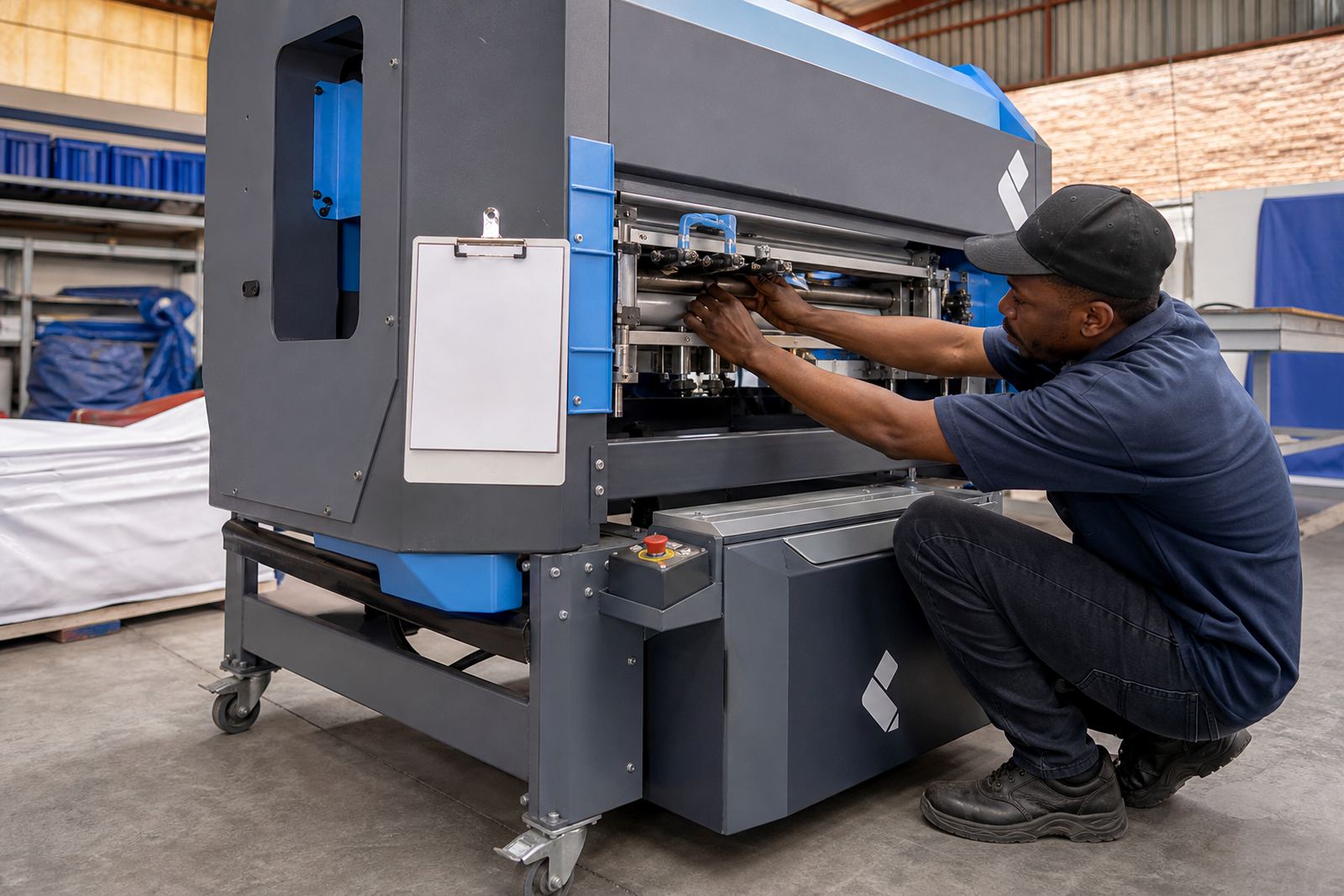
- Check rollers, guides and pressure arms for smooth movement and even contact.
- Look for signs of arcing, scorching or uneven heating on the work face.
- Confirm that emergency stop controls and safety guards are in place and working properly.
- Make sure the work area is clear of offcuts, loose tools and vinyl scraps that can catch in moving parts.
A quick look is not enough if the machine has been running hard. A hand-over check between shifts, or at the start of the week, often shows issues that are easy to miss during a busy day.
Seam Quality Changes Start Small
Most seam problems do not begin as major failures. They begin as a small shift in bond strength, a faint wave along the hem or a keder pocket that no longer feeds cleanly. In RF welding, the first warning may be a seam that looks sound on the surface but has a weak edge or uneven width. In hot-air or hot-wedge welding, the first signs are often pinched corners, heat marking or a section where the overlap has not fused evenly.
Weekly inspections help track those changes before the customer sees them on a finished banner or tent panel. That matters where seams carry load, as in eyelet strips, tensioned hems and keder tracks. A weak point in any of these areas can lead to rework, wasted material and delays on site.
- Check welded hems for straightness and full fusion across the width.
- Inspect keder inserts for even seating and consistent bite along the edge.
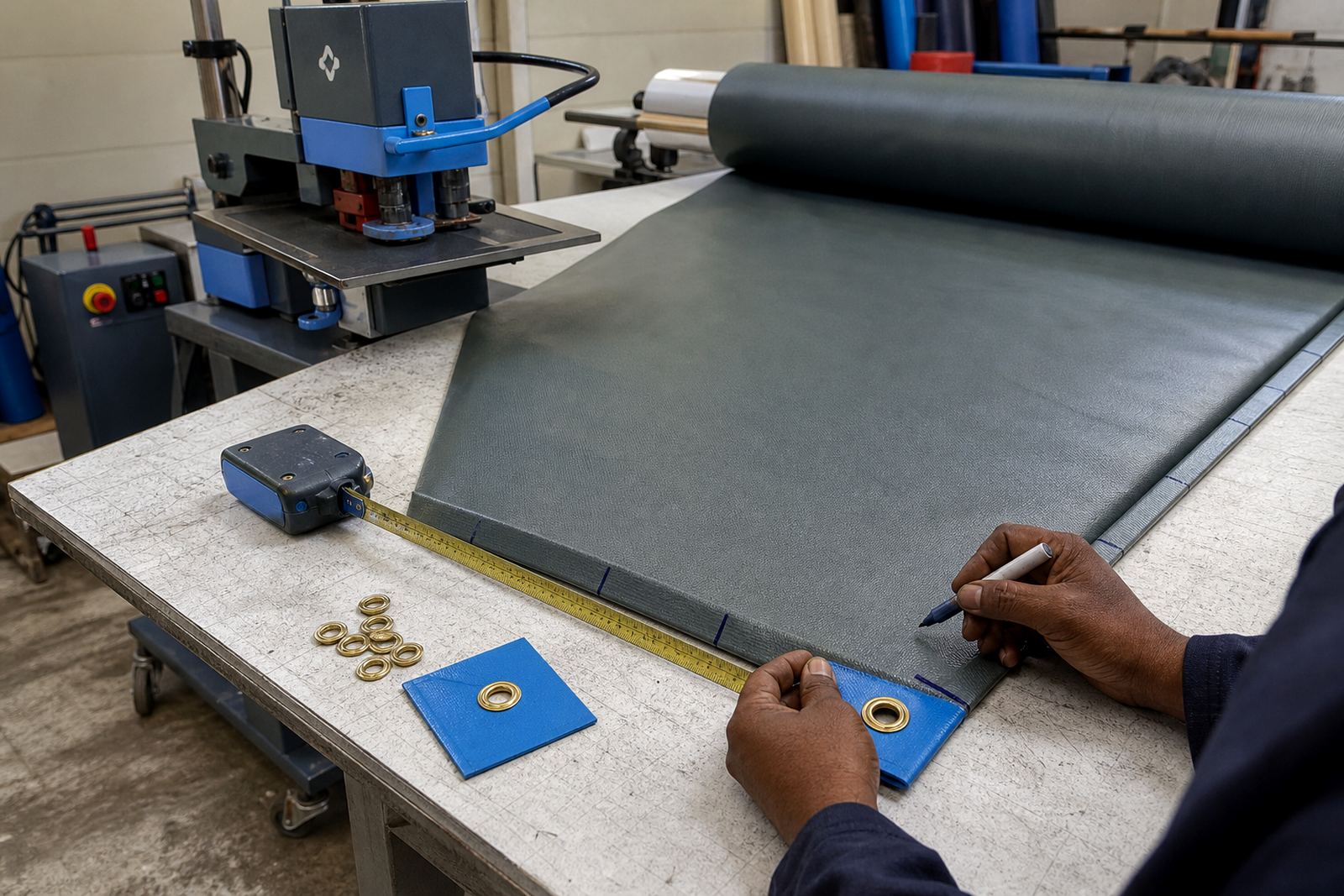
- Look at eyelet areas for puckering, heat stress or stretching around the hole.
- Test sample seams from the week’s work where material thickness or finish has changed.
Operator Safety Belongs In The Same Routine
Weekly inspection is also the right time to look at operator safety. Welders use heat, pressure and moving parts, and the working habits around the machine matter just as much as the machine itself. A clean floor, proper handling of rolls and clear access to controls all reduce the chance of injury. In a coastal workshop in Durban, where humidity can affect storage and handling, damp material and slippery floors add another layer to watch for.
Good safety habits are practical, not complicated. Operators should know which parts stay hot after shutdown, where pinch points are and how to isolate a machine before cleaning or adjustment. If the workshop uses extension leads or temporary power points, those should be checked for wear too. Poor power connections can affect machine performance and create unnecessary risk.
- Confirm guards, switches and stop controls are not blocked or damaged.
- Check that cleaning cloths, solvents and scrap are stored away from heat sources.
- Keep hands clear of pressure points when testing rollers or alignment.
- Use the correct cleaning method for the machine surface and surrounding fittings.
Servicing Notes That Make The Next Week Easier
Every weekly inspection should leave behind a few clear notes. It does not need a long report, just enough detail to show what was checked, what looked different and what needs follow-up. That record is useful when the machine is due for preventive servicing, tooling alignment, roller replacement or electrode refurbishment. It also helps spot patterns, such as one station wearing faster than another or one operator setting the pressure slightly differently.
For workshops in Pretoria, Bloemfontein and Johannesburg, where production loads can change quickly from one job type to the next, those notes help keep the machine set correctly for the actual work on hand. A tarpaulin line may need heavier seams one week and lighter banner work the next, so the machine condition must stay easy to read. A small note about roller marks, heat setting or seam drift often saves time later.
A Germiston Workshop Example
Picture a workshop in Germiston making banners, tent panels and side curtains for clients across Gauteng. The team runs high-frequency welders for long straight seams, then switches to hot-air work for hems and repair sections. On Friday afternoon the operator notices the keder edge is feeding slightly tighter than usual, and one seam is leaving a light ridge near the end of the run. A weekly inspection on Monday would likely show the cause before the week gets busy again, perhaps a worn roller surface or a tool that needs alignment.
That kind of early finding matters because the machine is not the only thing under pressure. Deadlines, material costs and labour all sit behind every job. A small change in the way the weld lands can turn into a rejected panel if it is not caught in time. Weekly checks give the workshop a better chance of keeping seams straight, hems even and finished work presentable when it leaves the shop.
For support across South Africa, including Germiston, Johannesburg, Pretoria, Durban, Cape Town, Bloemfontein, Boksburg and Benoni, PVCWelder supplies and services high-frequency and hot-air welding equipment for tarpaulin, banner and tent makers. The goal is straightforward: keep the machines in working order, keep the seam quality consistent and make the next inspection easier than the last.