Why the hem matters before the first weld
On PVC-coated fabrics, the hem is not just a folded edge. It is part of the load path, which means it helps share pull forces when a banner is tensioned, tied off or fixed to a frame. If the fold is too narrow, the seam can peel under strain. If it is too wide, you waste material and can create a bulky edge that sits poorly in clamps or brackets.
For tarpaulins, banners and tent panels, hem design should start with the final use. A roadside banner in Johannesburg needs a different edge treatment from a heavy cover on a truck in Durban, where coastal humidity and repeated handling can show up quickly in weak corners. For display work, a cleaner fold may be enough. For transport covers or outdoor enclosures, the hem often needs extra reinforcement at corners, joins and fixing points.
- Match hem width to the pull on the panel, not only to the material width.
- Allow extra build-up where eyelets, webbing or keder will be added.
- Keep folds straight so the weld line stays even across the length.
Folded hems that hold shape under tension
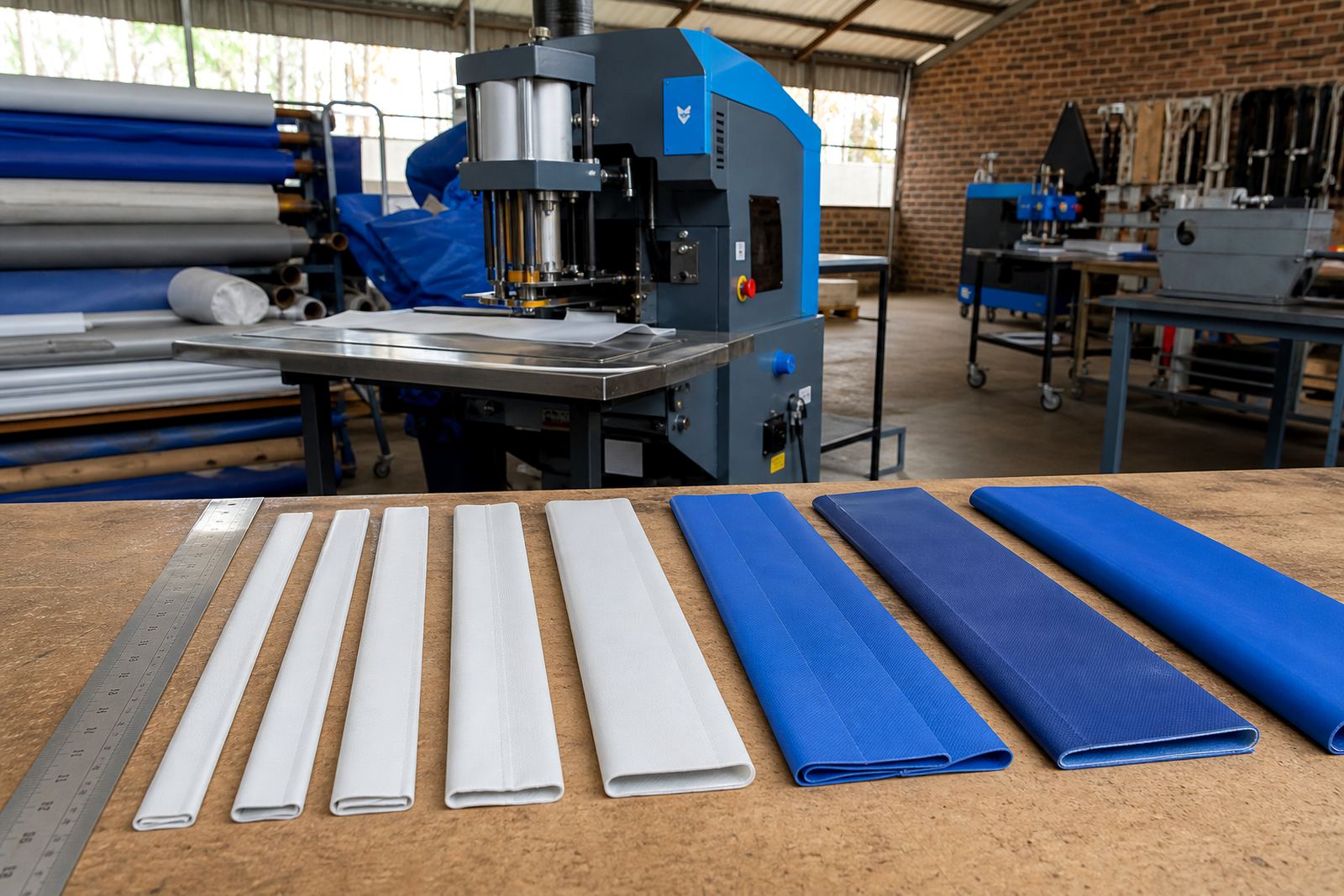
Common hem designs include a single fold, double fold and reinforced corner folds. A single fold is quicker and suits lighter applications, while a double fold gives more body and covers the raw edge more completely. On PVC-coated fabric, the fold direction also matters because the coating and weave can behave differently under heat.
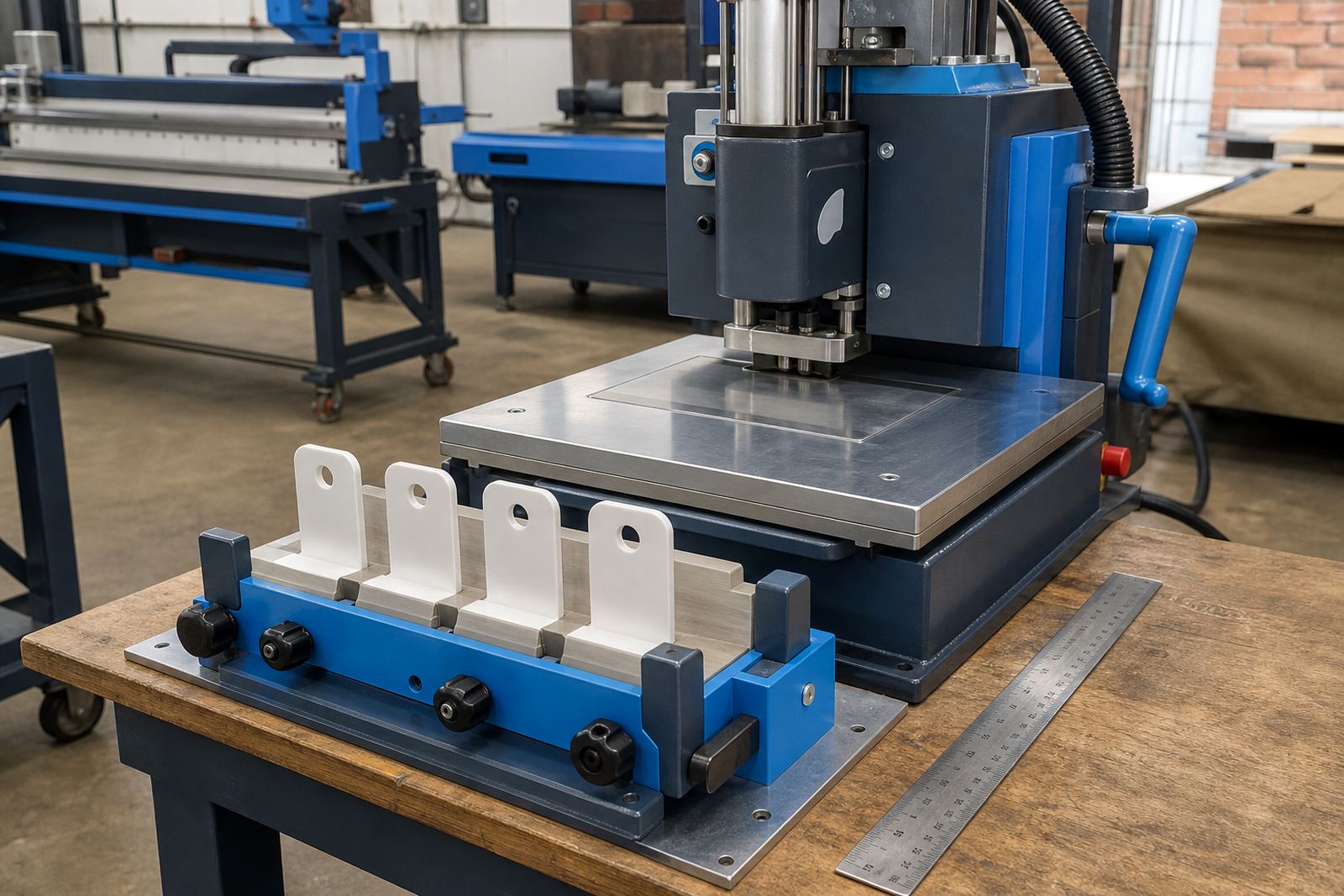
High-frequency welding is often used for neat, repeatable seams on compatible PVC materials. It gives a clean bond and works well for hems, pockets and overlap joins. Hot-air and hot-wedge welding are also useful, especially where long straight runs need steady heat control. The operator has to watch the temperature, pressure and travel speed closely, because a hem that is overheated can wrinkle or gloss unevenly, while one that is underheated may pull apart at the edge.
In practice, fold width, seam spacing and material thickness should be checked together. A banner with a wide hem and grommets placed too close to the edge can tear around the eyelet. A cover with a slim hem may look tidy but fail early if it is pulled by ropes in windy conditions.
Eyelet-ready edges, keder tracks and corner build-up
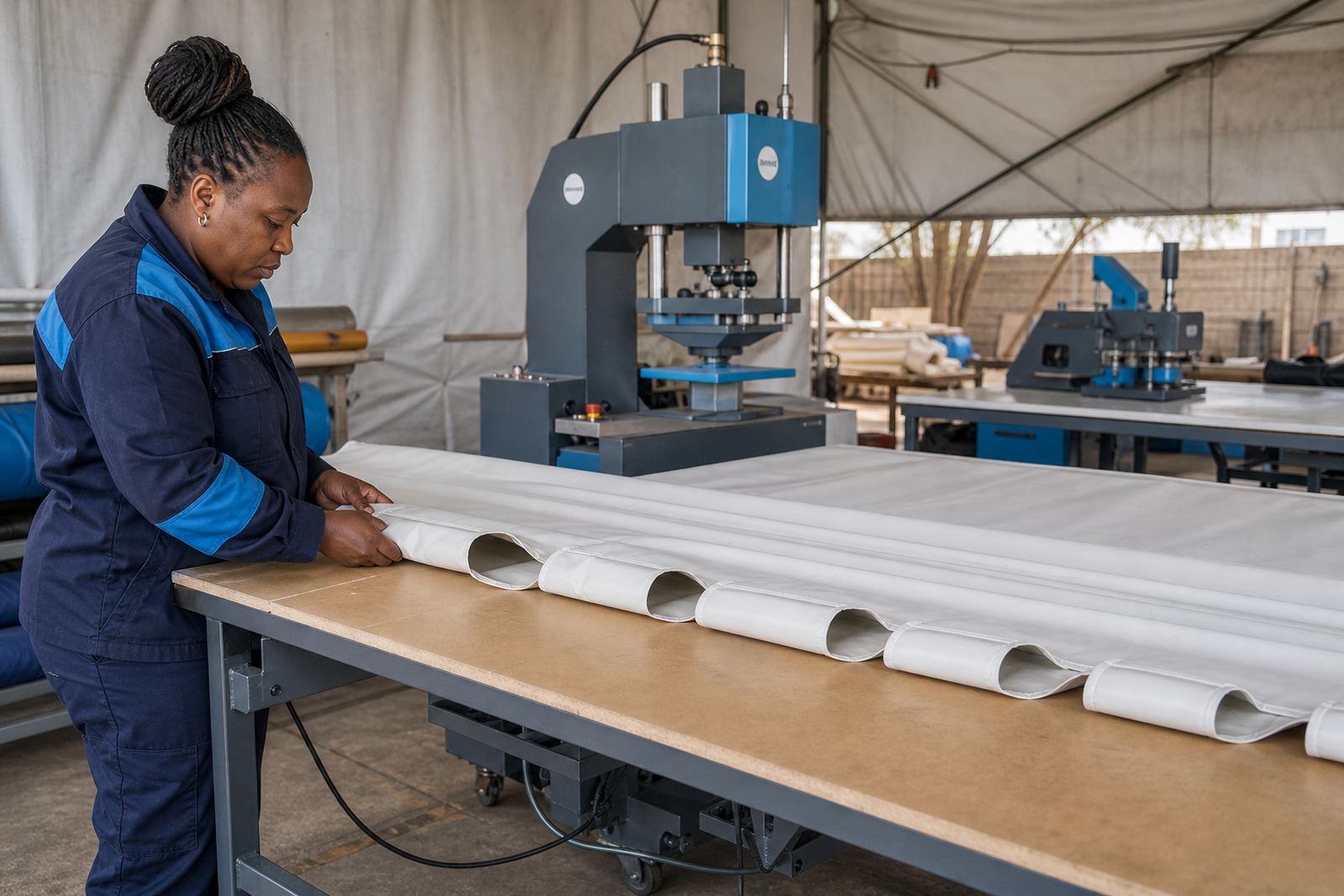
Many customers ask for hems that are ready for eyelets, ropes or keder. Each fixing method changes the hem design. Eyelet-ready edges need enough material behind the hole so the washer does not cut through the fabric. Keder work needs a straight and consistent pocket so the cord runs smoothly into a channel or track. If the edge is going to be folded back and welded, the fold must stay consistent from end to end otherwise the keder feed can bind at the corners.
Corner build-up is where many jobs go wrong. Corners take more strain than the straight sections, especially on banners and covers exposed to wind or movement. A good workshop will often add a reinforcement patch, extra fold, or shaped corner gusset to spread the load.
- Use a wider hem where eyelets will be punched through the edge.
- Keep keder pockets straight, with no twists in the fold.
- Reinforce corners before fitting hardware, not after damage starts.
- Check that the seam allowance still leaves enough bite for the fixing method.
Choosing the right weld method for the job
Not every hem suits the same welding method. High-frequency welding is well suited to PVC-coated fabrics when the job needs a controlled, uniform bond. It is commonly used on panels that need neat seams and repeatable output. Hot-air welding gives more flexibility on site or in workshops where straight runs, repairs and corner work are part of the daily load. Hot-wedge welding can handle long seams on larger covers and tent sections with a steady travel line.
The right choice depends on fabric weight, seam length and the shape of the finished edge. For example, a banner hem with eyelets may be handled differently from a truck-side curtain or a tent wall. If the material is thick, a weld that looks fine from the outside may still need checking for internal bond quality. That is why seam testing, trial samples and tool alignment matter so much in a working shop.
In Germiston and across Ekurhuleni, many fabricators deal with mixed batches of work, from short promotional runs to larger outdoor covers. A well set machine helps keep the hem straight and the seam consistent even when the operator changes from one job to the next.
What operators watch for at the machine
Good hem work depends on the operator as much as the machine. The feed has to stay even, the fold has to stay flat, and the edge must not creep while the weld is forming. When a hem drifts, the eyelet line ends up uneven and the finished panel can look untidy even if the weld is strong.
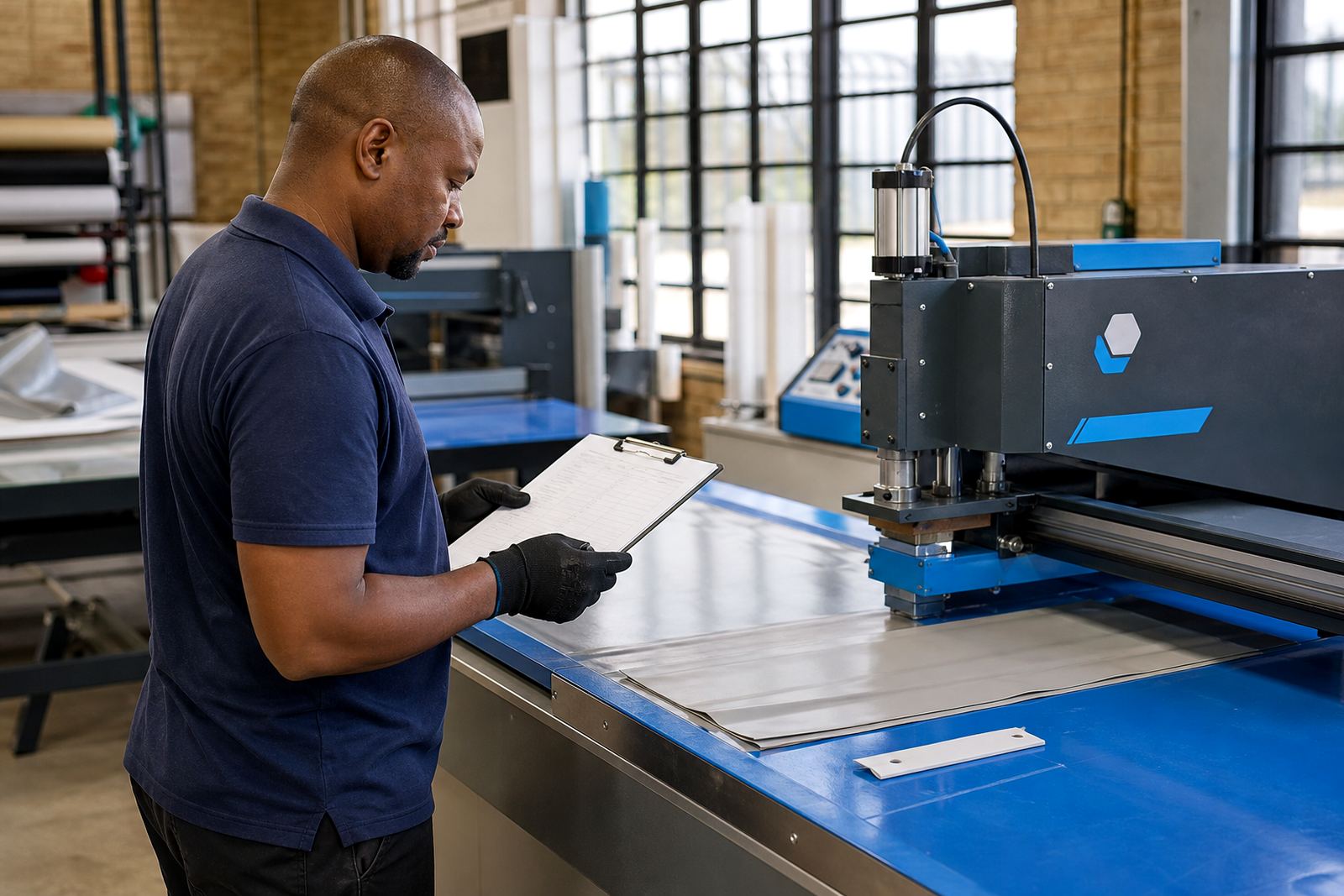
Operator safety matters as well. Heat zones, moving rollers and clamping points need proper guarding and a disciplined working routine. When handling hot-air or hot-wedge units, gloves and clear bench space help reduce burns and snags. With high-frequency equipment, correct setup and safe handling around the weld head are essential. A trained operator can spot early signs of trouble such as burning, arcing, poor pressure or uneven trim before a job is wasted.
- Keep the fold aligned before starting the weld cycle or travel run.
- Watch for shiny overheated spots, wrinkling or weak edge lift.
- Use training to keep new operators consistent on repeat jobs.
- Stop and check the first sample rather than pushing through a bad setting.
Keeping hem quality steady in South African conditions
Heat, dust and humidity all affect PVC work. In Durban, moisture in the air can change how materials lie on the table and how fast they settle after handling. In Pretoria and Bloemfontein, dry conditions can make some fabrics stiffer, which affects folding. In Cape Town, wind exposure often means more demand for clean eyelet lines and durable hems on outdoor signage. The hem design should allow for these realities, not fight them.
Machine servicing supports the seam quality too. Roller wear, poor alignment, tired electrodes and dirty tooling can show up first at the hem because the edge is where any mistake becomes obvious. Preventive servicing, fault finding, tooling alignment and seam testing all help keep the welds even. If a machine is used for banners, tarpaulins and tent work day after day, small checks are worth doing before the seam starts drifting.
For shops in Germiston, Johannesburg, Pretoria, Durban, Cape Town and Bloemfontein, a good hem is often the difference between a panel that installs cleanly and one that needs rework on site. That can mean the difference between a neat fit and a long morning with a hot knife and extra patches.
A practical layout for better hem results
Before cutting the full batch, it helps to mark the hem line, fixing positions and corner build-ups on a sample piece. That sample should be welded, handled and tensioned in the same way the finished work will be used. If the edge tears at the eyelet, the fold is too light or the fixing point is too close. If the hem puckers, the fold or heat setting needs attention. A bit of testing saves material and time, especially on larger runs.
For PVCWelder clients, the useful part is not only the machine supply. It is the mix of installation, operator training, preventive servicing, tool alignment, parts support and site callouts that keeps the weld line dependable. Hem design is one of those details that looks small on paper but carries the whole job in practice.
- Test the hem width on a sample before cutting the full order.
- Check eyelet spacing against the expected tension points.
- Use the same fold method across the run so the finish stays even.
- Revisit the seam after the first few panels are fixed into place.