Why Mesh Needs a Different Hand on the Machine
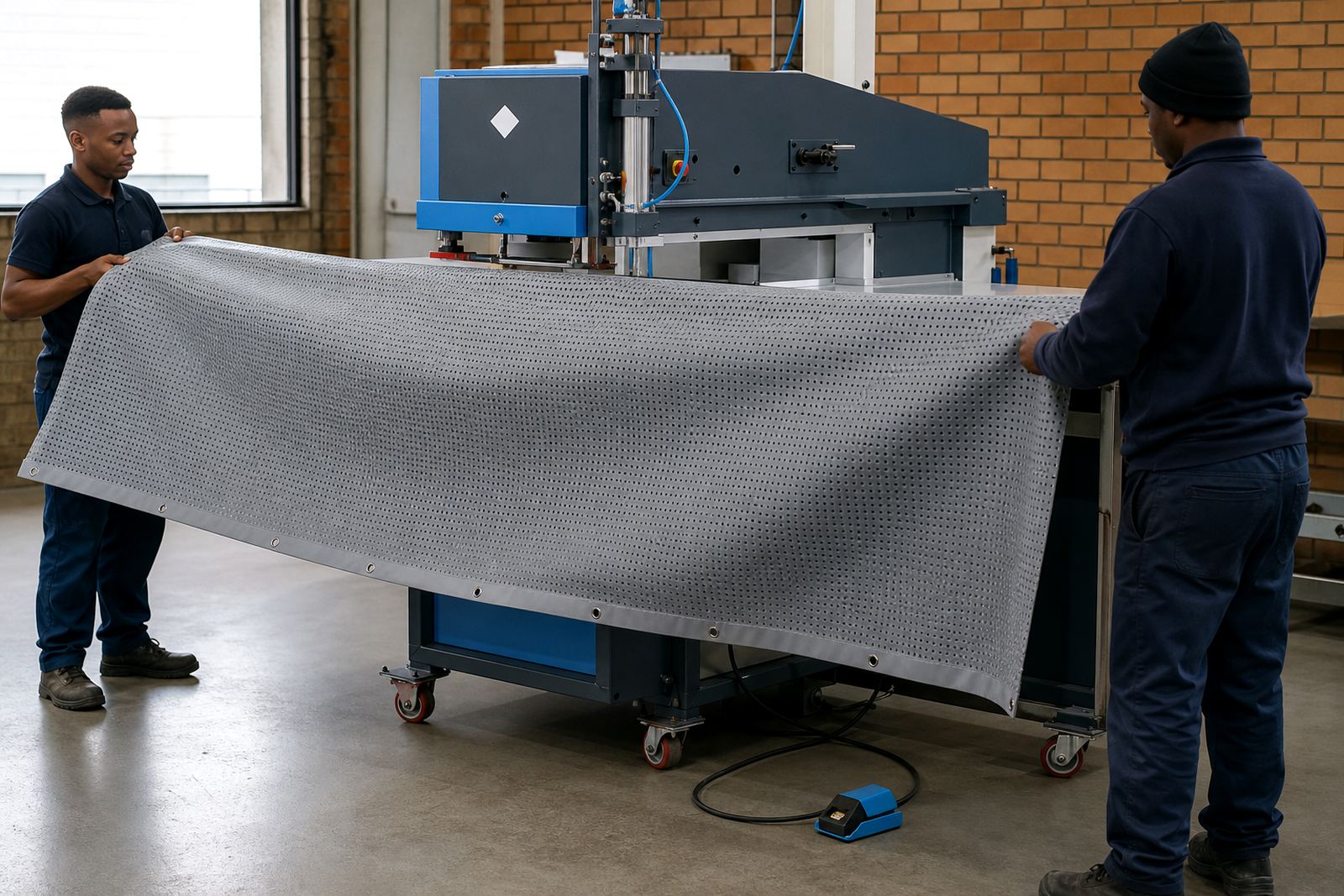
Mesh-backed PVC and similar perforated materials do not sit flat the way a plain banner material does. The open structure can catch on guides, pull out of line near the feed, and create uneven pressure at the seam if the operator treats it like a normal sheet. In practice, that means a clean weld starts before the machine is even switched on. The roll needs to be straight, the edge needs to be stable, and the fold has to stay consistent from the first metre to the last.
For tarpaulin, banner and tent work in South Africa, this matters most on long runs where the material is handled many times before dispatch. A mesh panel for a wind-exposed sign face in Durban, or a vented section on a tent wall for a job in Pretoria, will show poor handling very quickly if the hem wanders or the pocket thickness changes.
Setting the Edge Before Hems and Pockets
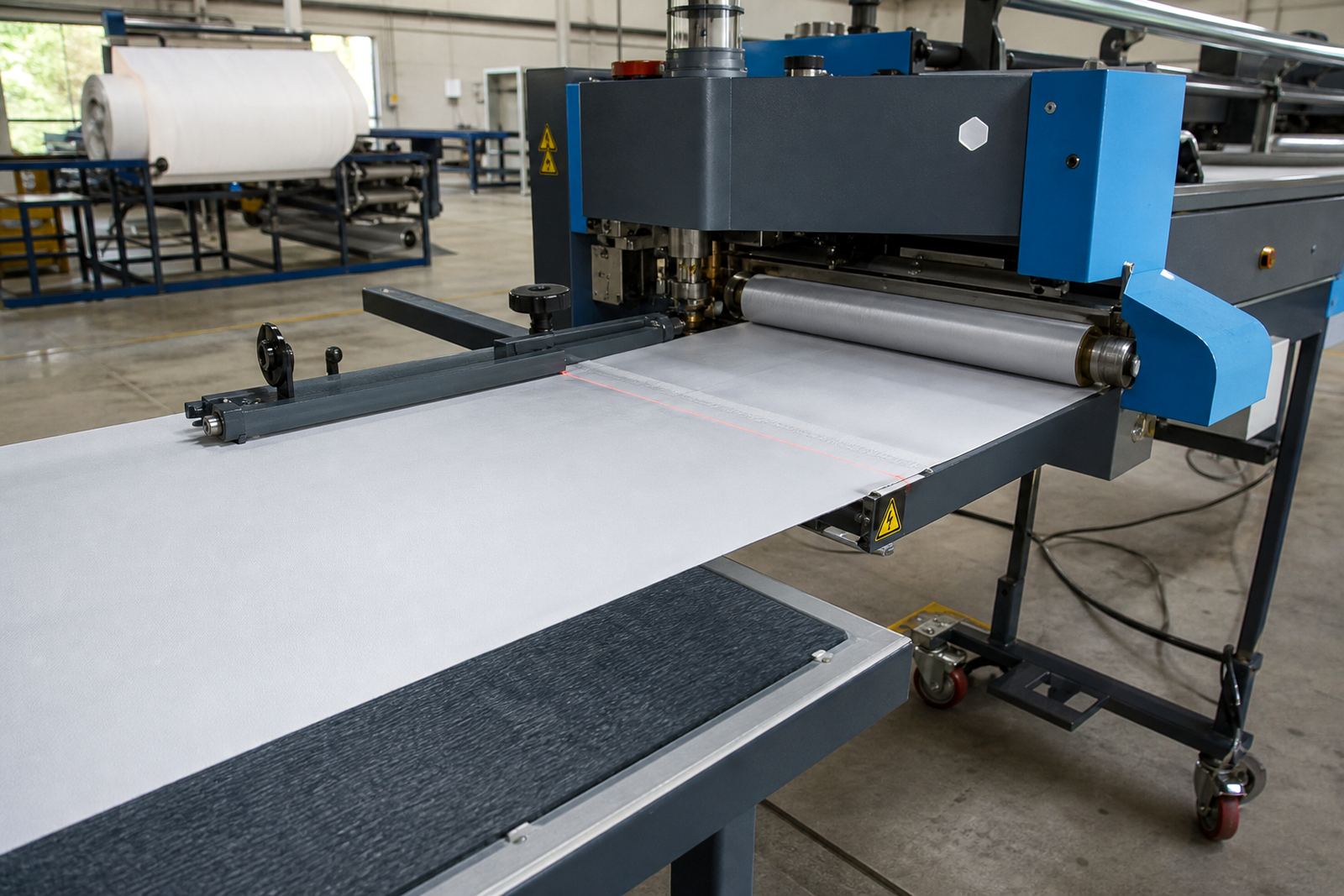
Before a hem is welded, the edge should be squared and checked for fraying, coating lift or crushed weave. Mesh can relax once it has been unrolled, especially in warm plant rooms or near open loading bays. If the edge is not controlled, the fold can move by a few millimetres each time it passes through the machine, and that is enough to spoil a narrow pocket or an even return.
- Keep the roll supported so the fabric feeds without dragging at the side.
- Use a marked work line for repeated fold widths, especially on long banner panels.
- Check the first metre of each section before committing to the full weld.
- Trim damaged selvedges rather than forcing a weak edge into the fold.
On wider jobs, two operators often handle the material better than one, with one feeding and one keeping the edge true. That small change reduces twisting and helps the seam stay parallel to the mesh structure.
What Works on Hems, Pockets and Reinforced Edges
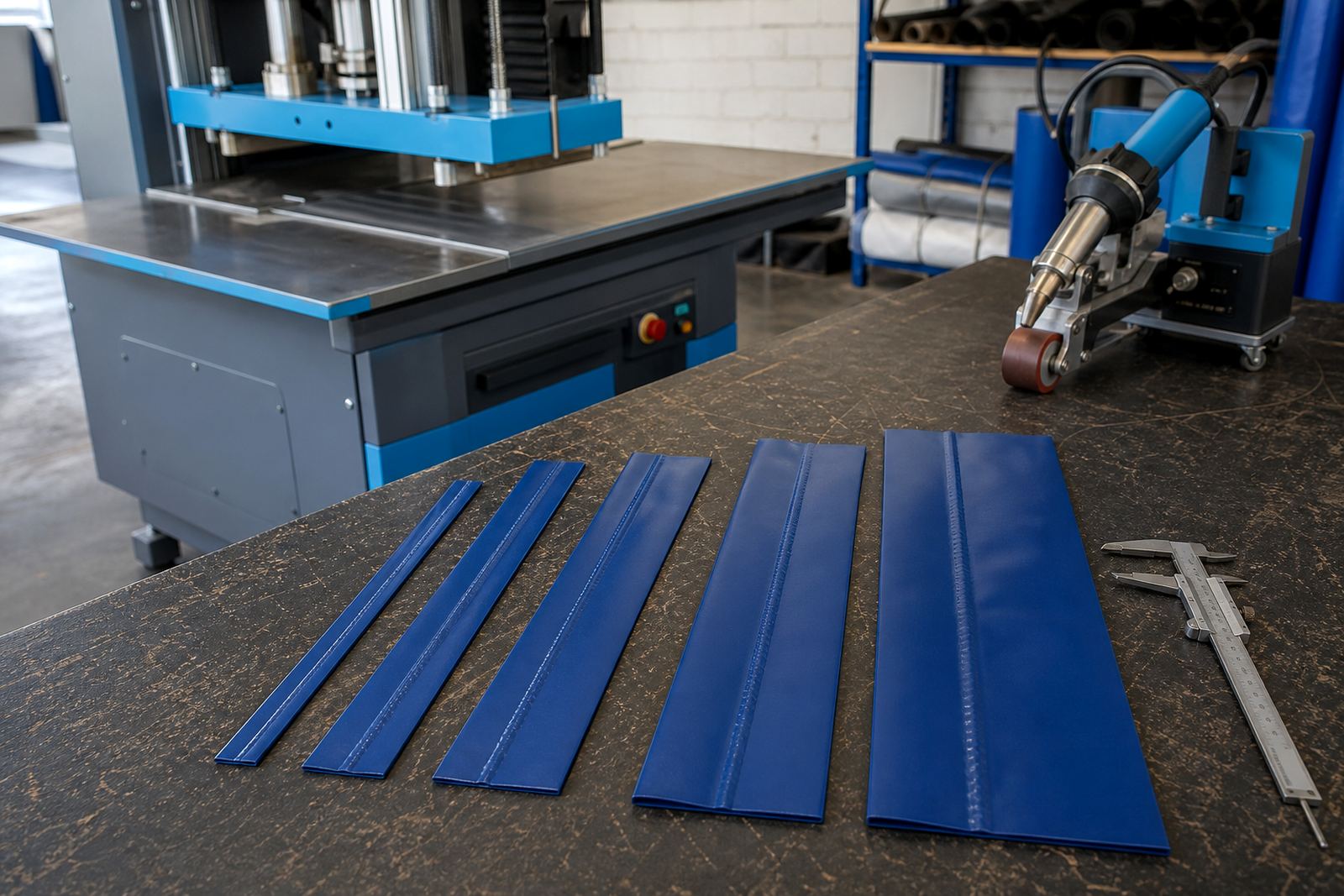
Hem work on mesh usually needs steady pressure rather than heavy pressure. Too much force can flatten the weave and leave a visible line where the material has been over-compressed. For pocket work, the fold must stay open enough to accept tubing or reinforcing parts without snagging, but tight enough to hold shape after welding.
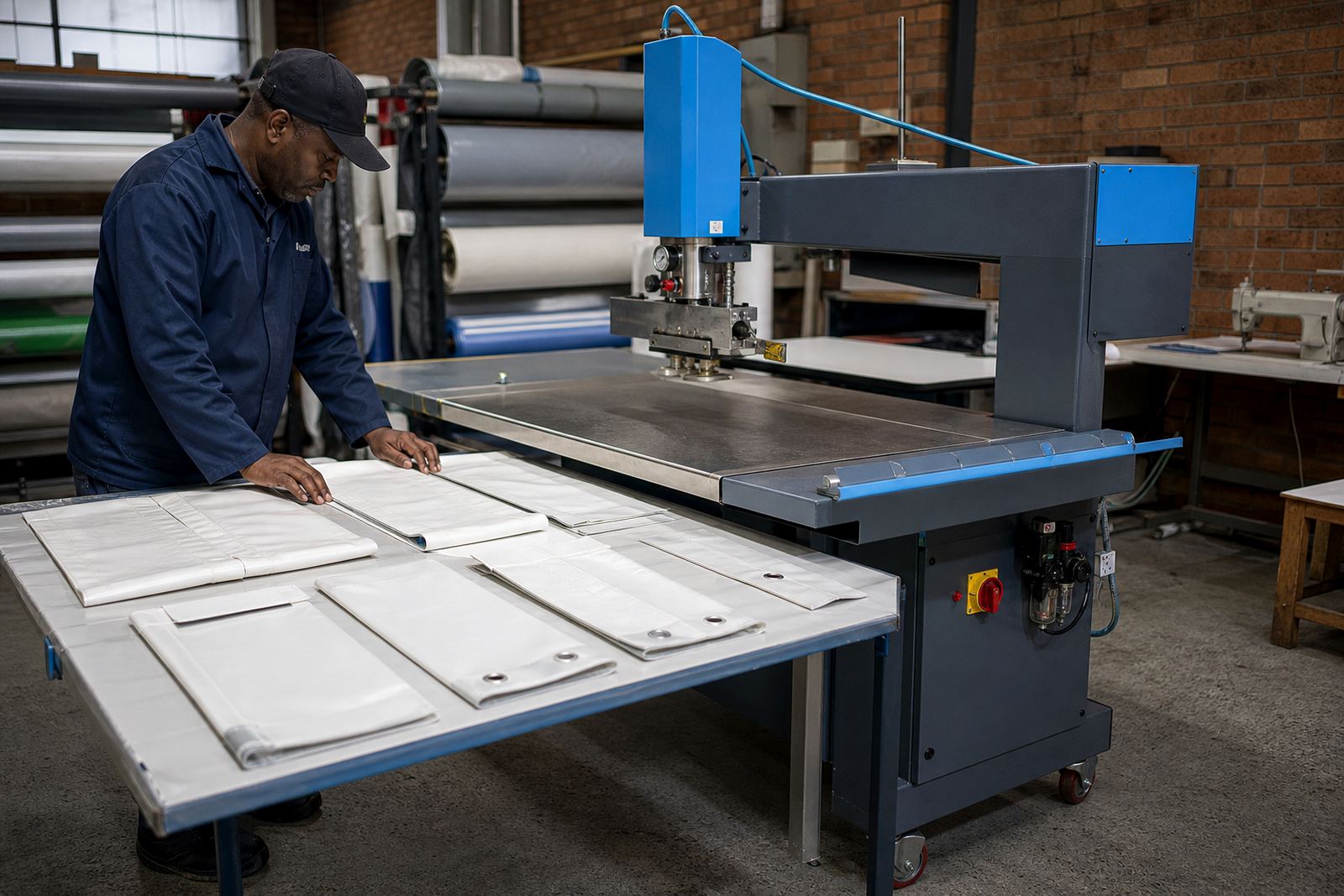
High-frequency welding suits PVC-coated fabrics where the coating responds well to field control at the seam. Hot-air and hot-wedge welding are also used on compatible materials, especially where long straight seams or wider hems are needed. The important part is matching the process to the material thickness and the fold style. A narrow return for a banner hem is not treated the same as a deeper pocket for a tent pole sleeve.
- Use even fold widths so the pocket lands at the same size across the run.
- Allow enough lay-flat area so the mesh does not spring back during feeding.
- Use test strips when changing from light banner mesh to heavier tarpaulin mesh.
- Keep the weld path clear of trapped dust, offcuts and loose threads.
Keder, Eyelets and the Weak Spots Around Openings
Keder edges and eyelet areas place extra demand on mesh handling because the material is already being asked to carry load at a controlled point. If the fold is uneven, the stress moves away from the intended line and the opening can start to elongate. That is especially noticeable on display walls and shade structures where the eyelets are pulled repeatedly during installation.
For keder work, the weld must hold a neat pocket without crushing the round profile inside. The mesh needs enough support on both sides so the seam forms evenly and the cord stays seated. Around eyelets, reinforcement patches should be aligned carefully so the face fabric does not pucker. If the operator rushes the fold, the hole can drift off centre and the pull load ends up on the wrong part of the seam.
- Keep keder pockets consistent along the full length, especially on long runs.
- Place eyelets after the reinforcement has cooled and settled properly.
- Do not stack too many layers in one pass if the mesh is already bulky.
- Inspect the first and last openings on each batch, not only the middle section.
Heat, Pressure and the Risk of Distortion
Mesh reacts quickly to heat, and that can be useful if the machine is tuned correctly. It can also become a problem if the heat is too high or the dwell time is too long. The coating may soften enough to slide, then lock in the wrong position once the pressure comes on. This leads to a seam that looks sound from a distance but shows waviness, shrinkage or a raised ridge when viewed side on.
In humid coastal conditions, particularly around Durban, material storage can also affect the result. A damp roll feeds differently from a dry one, and the outer layers may behave more tightly than the inner layers. That is why operators should let the material acclimatise where possible and keep the roll covered when not in use. In Gauteng, dust and workshop heat can create their own problems by clogging guides and changing the way the material glides through the machine.
Good handling means watching the fabric as much as the controls. If the edge starts to ripple, if the fold is creeping, or if the mesh is pulling sideways, the operator should stop and reset before the error runs through the whole batch.
Machine Care That Protects the Finish
Clean tools and straight alignment are not a luxury on mesh work, they are part of the seam quality. A worn roller, a dirty electrode face or a slightly off-centre guide will show up fast on a perforated material because the open structure makes every defect easier to see. Regular servicing also helps prevent hot spots that can overwork one side of the fold.
For teams working on tarpaulins, banners and tents across South Africa, the practical checks are straightforward: keep the pressure even, confirm the tooling line, inspect the rollers for marks, and make sure the operator is not forcing the material through at a crooked angle. If the machine is used for both solid and mesh PVC, the settings should be reviewed when changing between material types rather than assuming the last job will suit the next one.
- Check roller wear before long production runs.
- Remove adhesive build-up and welding residue from contact surfaces.
- Confirm that guides, stops and alignment points are still square.
- Test seam quality after maintenance, not only before it.
A Germiston Job With Long Panels and Narrow Returns
On a practical run in Germiston, a sign and shade maker preparing vented side panels for a large outdoor installation needed clean hems and a consistent pocket width for hardware attachment. The material included mesh sections that had to sit alongside solid PVC areas, which meant the handling changed several times during the same batch. The crew marked each fold width, kept the roll supported at both ends, and checked the first panel against a sample strip before continuing.
That kind of job shows why mesh handling is not only about the welding machine. It is about the path the material takes from storage to cutting table to weld line. When the folds stay true and the tooling is kept in line, the finished panels hang better, hold tension more evenly and need less rework at site. For businesses supplying Johannesburg, Cape Town, Bloemfontein or Pretoria, that saves time during installation and cuts down on call-backs for loose hems or eyelet pull-through.
Mesh work rewards patience. A careful fold, steady feed and properly serviced machine will usually give a cleaner result than speed alone, even on busy production days.