What equal pressure does on PVC-coated fabric
In high-frequency welding and hot-air or hot-wedge work, the weld zone needs steady contact from start to finish. If one side presses harder than the other, the material can creep, wrinkle or seal unevenly, especially on heavier PVC-coated fabrics used for tarpaulins, banners and tent panels.
Good pressure balance helps the layers heat at the same rate. That matters on straight seams, lap joints, hems and pocket work, and it matters even more where keder is welded in or eyelets are punched near a finished edge. In practice, the operator is looking for a weld that is flat, fully fused and consistent at the edges, with no scorching or soft spots.
- Even pressure helps prevent ripples along long banner seams.
- It supports neat hems on coated fabric that must hang straight.
- It reduces the risk of weak corners on load-bearing tent sections.
Signs the machine is pressing unevenly
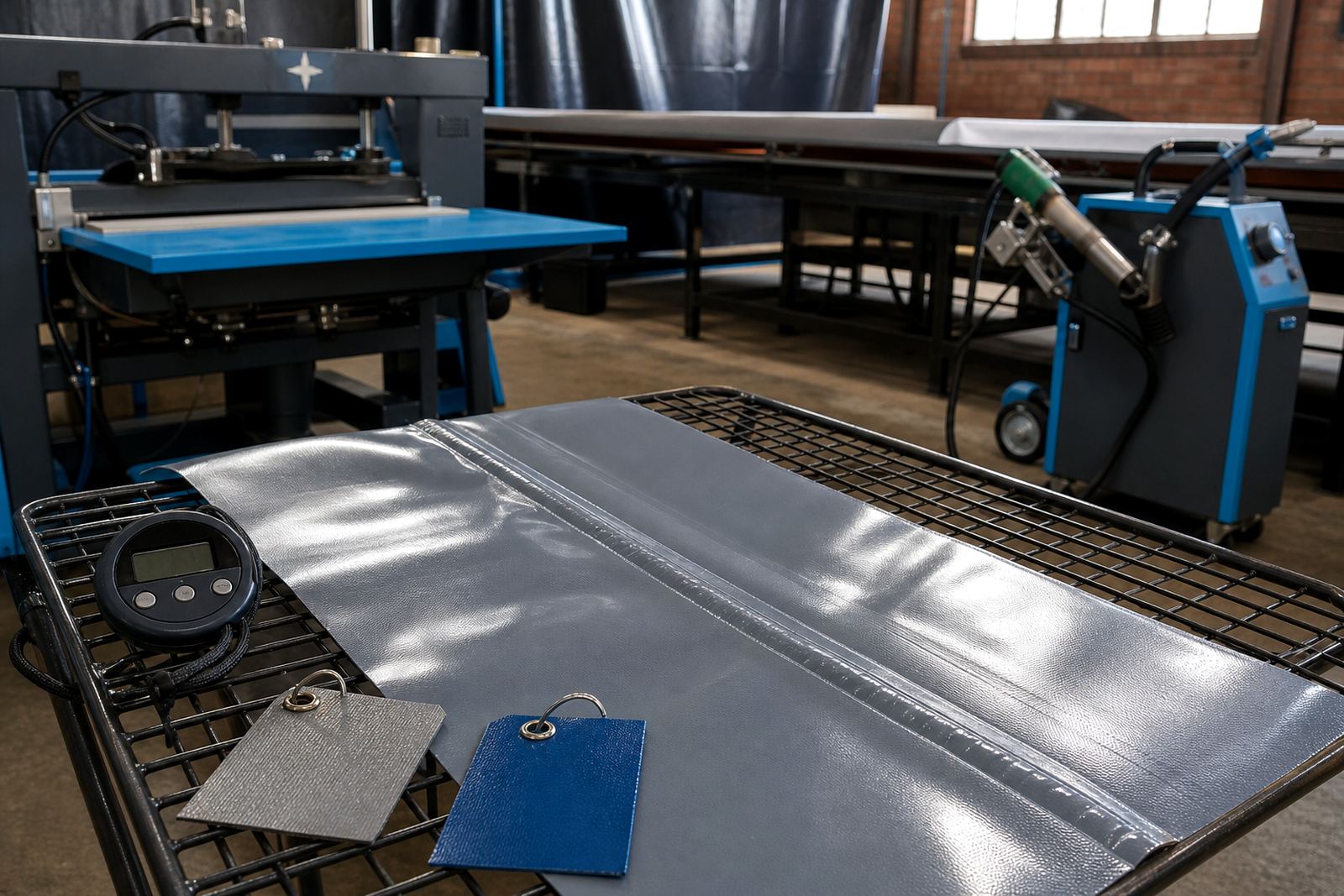
Uneven pressure often shows up before the seam fails. The weld may look shiny in one area and dull in another, or the edge may peel a little when tested by hand. On wide panels, one side can appear tighter while the opposite side shows a slight wave. In workshop terms, that is the machine telling you the pressure path needs attention.
On a tarpaulin line in Germiston, for example, a side clamp that is slightly out of alignment can leave one end of a seam looking sound while the other end lifts under stress. If the job is going out to a site in Durban or Cape Town, where humidity and coastal air can affect handling and storage, it is worth checking the set-up before the full run starts.
- Look for uneven gloss across the weld line.
- Watch for fabric slip at the start or end of the seam.
- Check whether the edge curls after cooling.
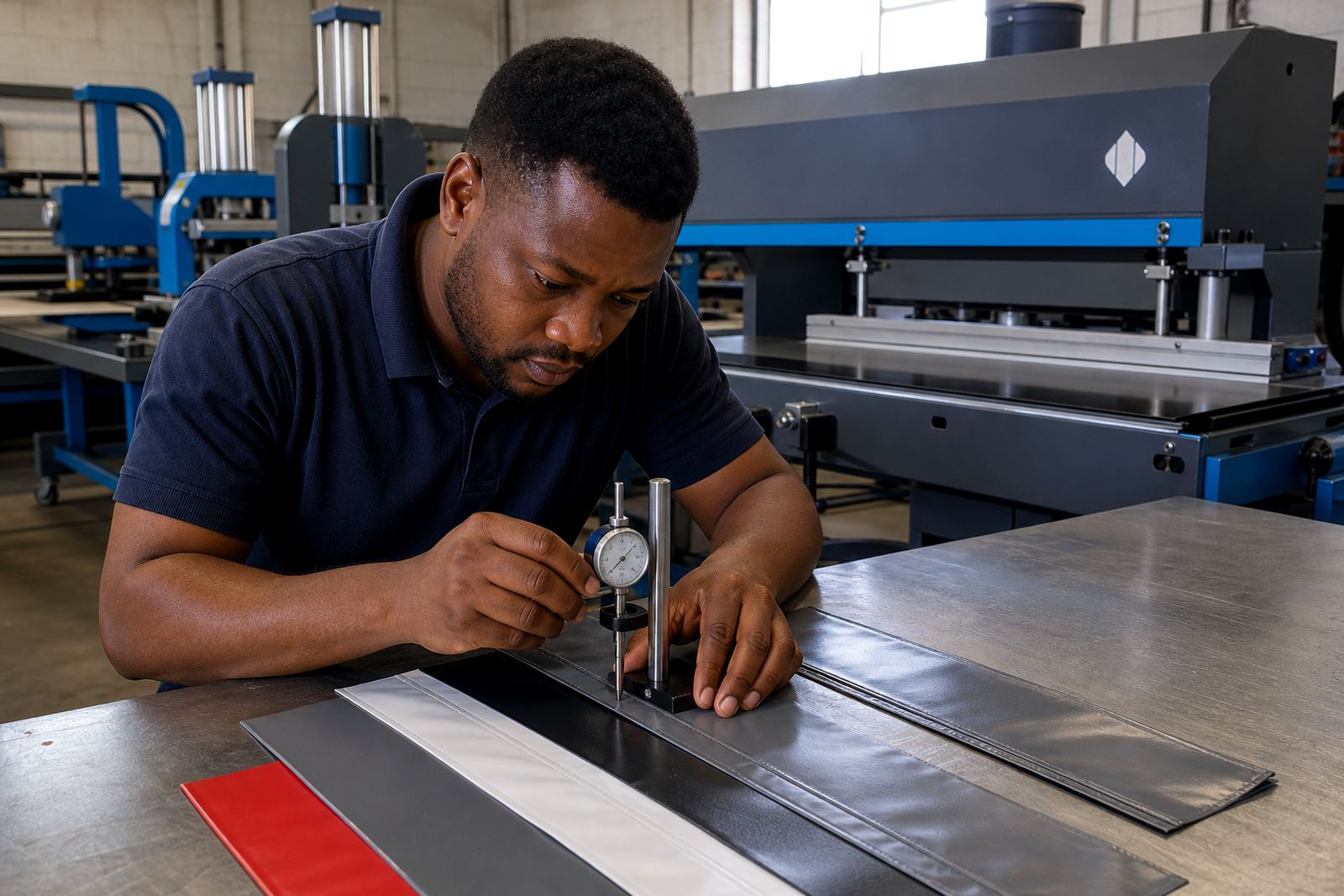
- Test sample pieces before production starts.
How pressure balance differs on high-frequency and hot-air work
High-frequency welding relies on controlled compression while the PVC coating is energised in the weld zone, so the pressure must be firm and even without crushing the material. Hot-air and hot-wedge welding need a different feel, because the heat is delivered through the air stream or heated wedge and the rollers must press the softened layers together at the right moment. In both cases, the pressure system has to match the fabric weight and the seam type.
That is why one setting does not suit every job. A banner hem, a tent ridge seam and a keder strip all need different handling. Too much pressure can mark the surface or squeeze out molten material. Too little pressure can leave a seam that looks complete but does not hold when folded, tensioned or handled on site.
- Light pressure suits thin banner stock and edge finishing.
- Moderate pressure works well for standard tarpaulin laps and hems.
- Higher, controlled pressure may be needed for thicker coated fabric and reinforcement work.
Where pressure shows up in real workshop jobs
The practical side of pressure balance becomes clear in production. A banner maker in Johannesburg may need long, straight hems that sit flat for eyelet fitting. A tent maker in Pretoria may need repeatable seams on multiple panels so every section matches. In Bloemfontein, where dry conditions can make handling a bit different, the operator may notice that fabric feed and clamp pressure affect the finish more than the heating setting alone.
Pressure balance is also important where the job includes folded hems, keder insertion, overlap seams or reinforcement patches. Those details add thickness and change how the material behaves under the rollers or plates. If the pressure is not even, the thicker side can lag behind and leave a small step in the seam.
- Hems need even pressure so the fold stays straight.
- Keder work needs enough force to seal the cord pocket fully.
- Eyelet zones need a neat edge so the fitting sits properly.
Servicing points that keep pressure steady
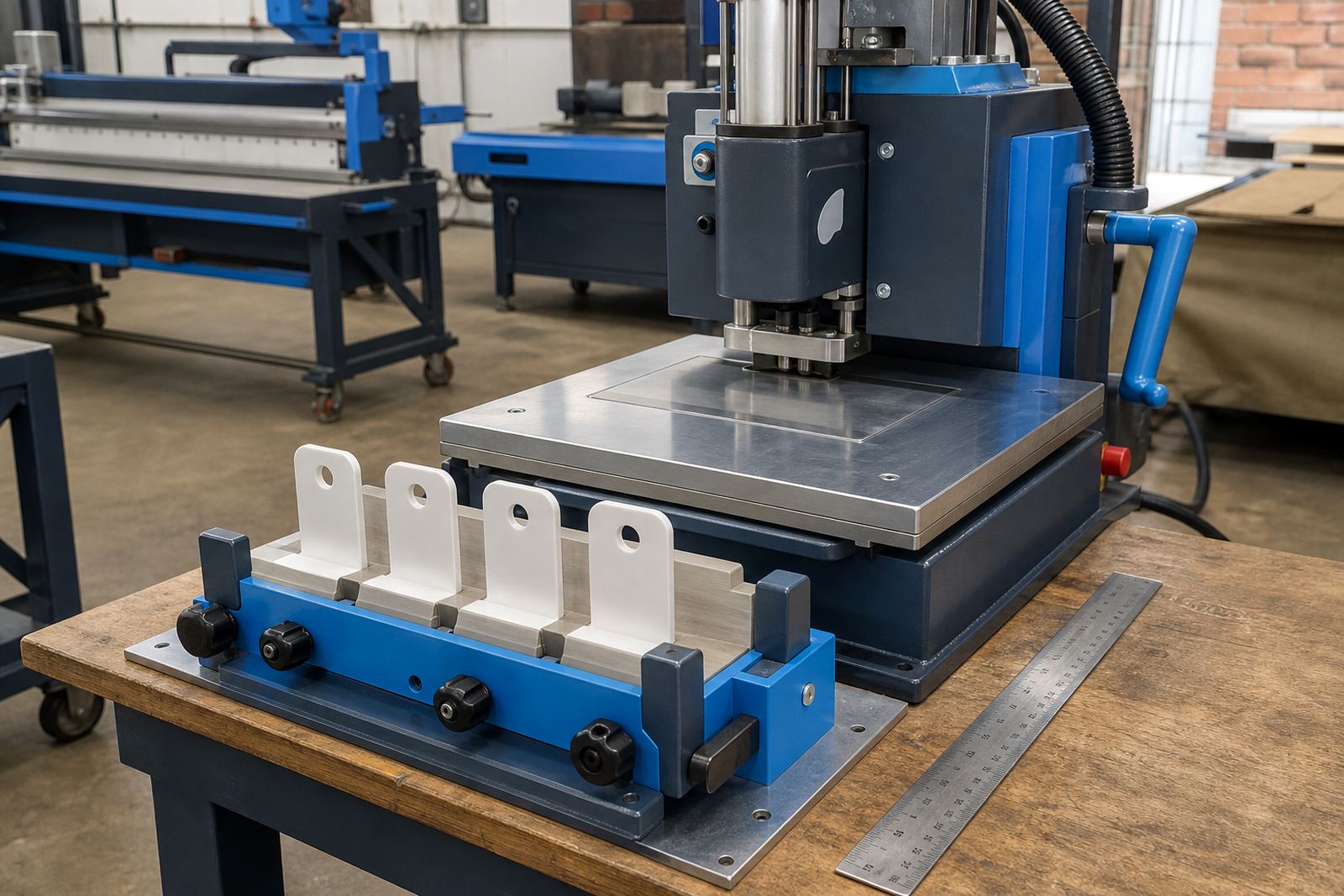
Pressure balance depends on more than the operator’s hand. Worn rollers, loose guides, tired clamps and poor tooling alignment all change how force moves through the machine. During preventive servicing, the technician checks the moving parts, the contact surfaces and the alignment of the welding head or roller path. If one side is carrying more load than the other, the seam quality will show it.
Servicing also matters after moving a machine to a new site. Transport vibration can shift alignment, and a unit installed in Germiston may need fresh checking before it is used in a workshop in Boksburg, Benoni or further afield. The same applies after roller replacement or electrode refurbishment, where the contact face must sit true if the pressure is to remain even.
- Check roller wear and surface condition.
- Confirm guides are square to the weld line.
- Inspect clamps, bearings and pressure points.
- Run seam tests after any adjustment.
Operator habits that protect the weld zone
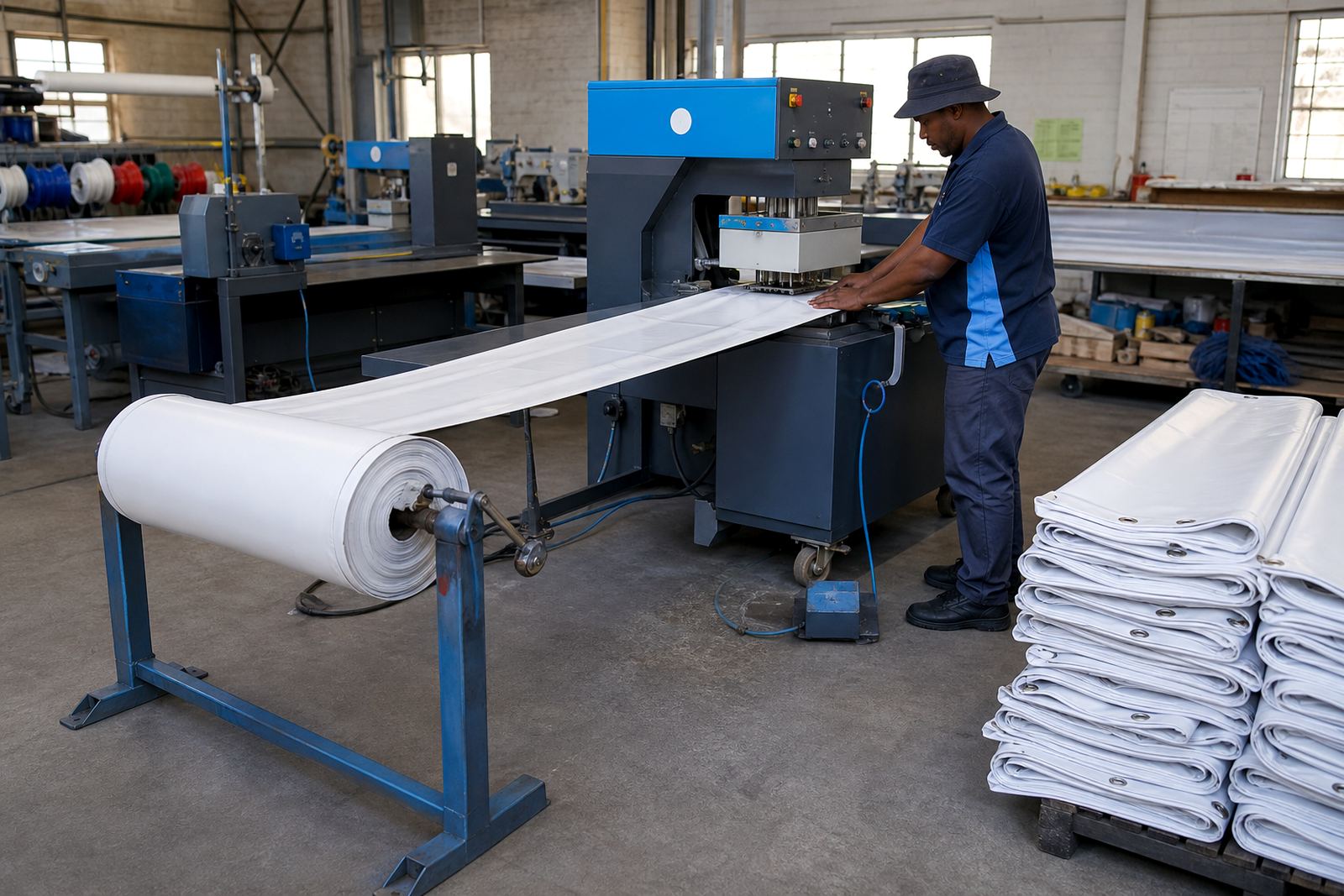
Even a well-set machine can give poor results if the operator feeds the material badly. PVC-coated fabric must sit flat, with the edges lined up before the cycle begins. Creases, trapped debris and tension pulling from one side all disturb the pressure pattern. Good handling keeps the weld zone stable and reduces scrap.
Safety matters too. Hands should stay clear of the heated area and moving rollers, and the operator should use the controls rather than forcing the fabric through the machine. Clear training helps the team understand when to stop, inspect and reset. That is practical on a busy site callout in Durban or during a production run in Cape Town, where getting the seam right the first time saves material and time.
- Keep fabric feed straight and consistent.
- Remove dust, offcuts and loose thread from the weld area.
- Test a short section before committing to full-length work.
- Use the correct settings for the seam type and material thickness.
Pressure checks that suit South African production floors
Pressure balance is not a theory piece, it is a working habit. A workshop that handles tarpaulins, banners and tents every day needs repeatable checks, especially where different fabrics move through the same machine. A short seam test, a visual check and a quick feel for edge finish can save a full sheet from being written off. That is useful whether the job is for a roadside banner, a truck tarp or a large event tent panel.
PVCWelder supports customers across South Africa from Germiston, with machine installation, commissioning, operator training, fault finding, tooling alignment, parts supply and service plans. The point is to keep the weld zone behaving the same way from job to job, so the seam appearance stays clean and the bond stays dependable.
- Use sample pieces to confirm pressure before production.
- Record settings for common materials and seam types.
- Recheck after servicing, transport or a tooling change.