What commissioning covers on site
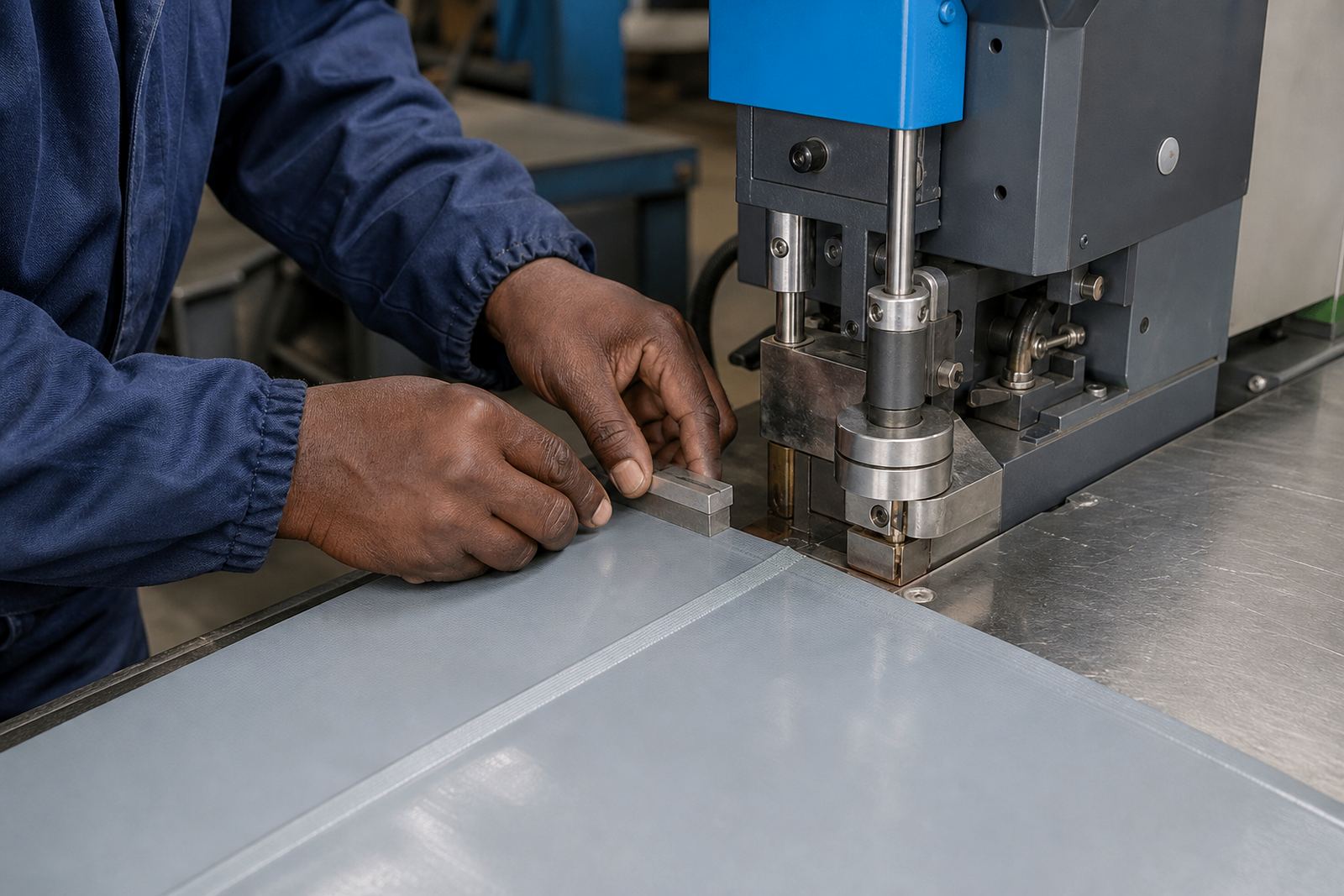
Commissioning is not a quick switch-on job. It is a full working check of the machine, the tooling and the first weld samples so the operator can run PVC-coated fabrics with confidence. For radio frequency welders, that means control response, output stability, platen alignment and seam consistency. For hot-air and hot-wedge units, we check temperature rise, airflow or wedge contact, drive speed and pressure on the material.
We use commissioning to confirm the machine is set for the material thickness and seam style used in the workshop. That includes lap seams for banners, hems for tarpaulins, keder attachment on tent lengths and eyelet reinforcement areas where the edge load is higher. If the machine is too hot, too cold or too fast the seam can pull, wrinkle or mark the PVC coating. Getting the first settings right saves wasted material and keeps production tidy.
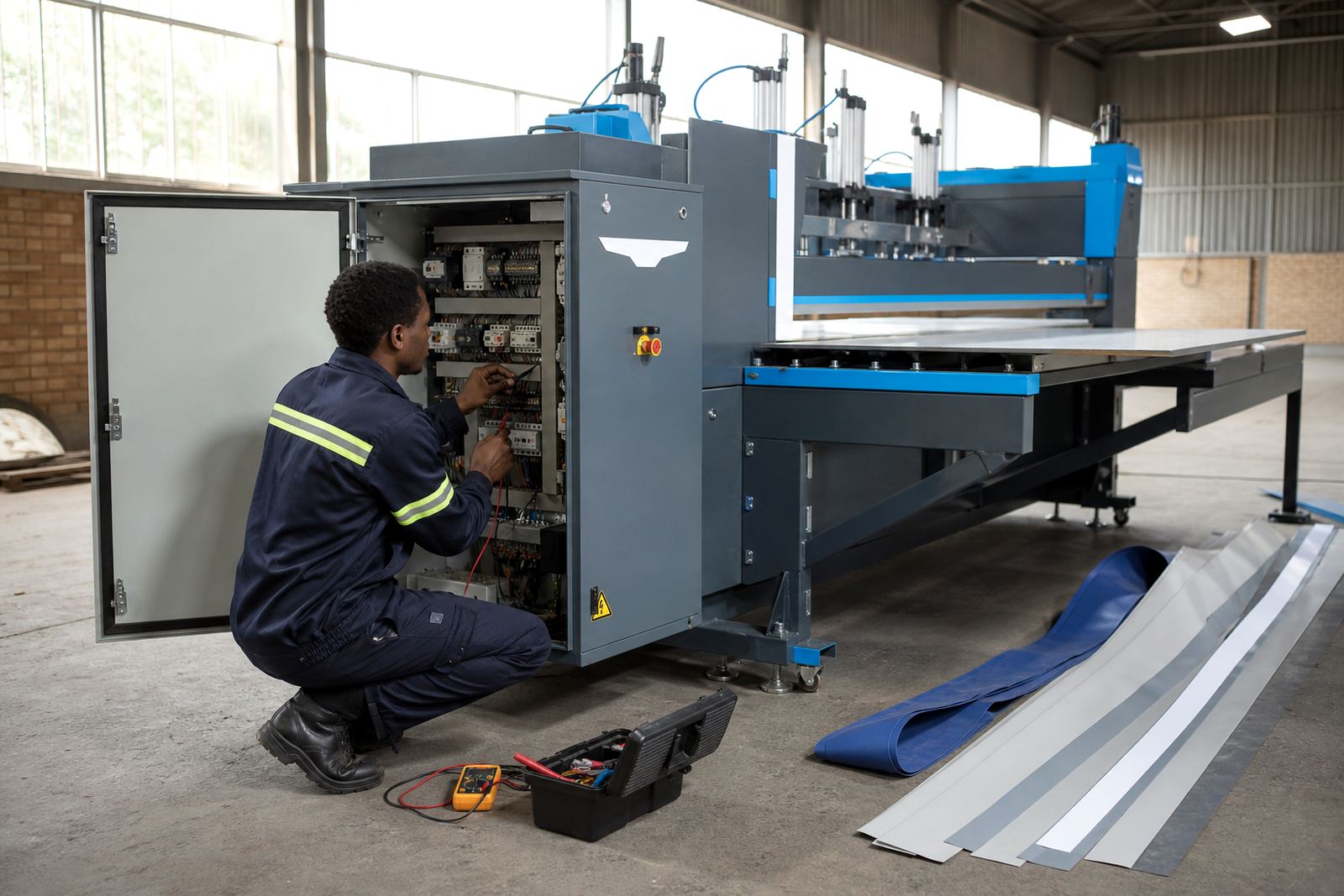
- Control panel check and functional test
- Heat or radio frequency output verification
- Pressure, speed and dwell time set-up
- First seam trials on offcuts or sample rolls
- Basic operator handover on the machine controls
A practical set-up process for workshop crews
Our process is straightforward and hands-on. We inspect the machine installation, confirm the power supply is stable, and check that the weld area is level and clean. On high-frequency machines we test the electrode area, platen pressure and timer settings. On hot-air and hot-wedge units we check the heat source, guide rollers and seam tracking. Where the machine is used for wider banner panels or long tarpaulin runs, we also look at feed consistency across the full width.
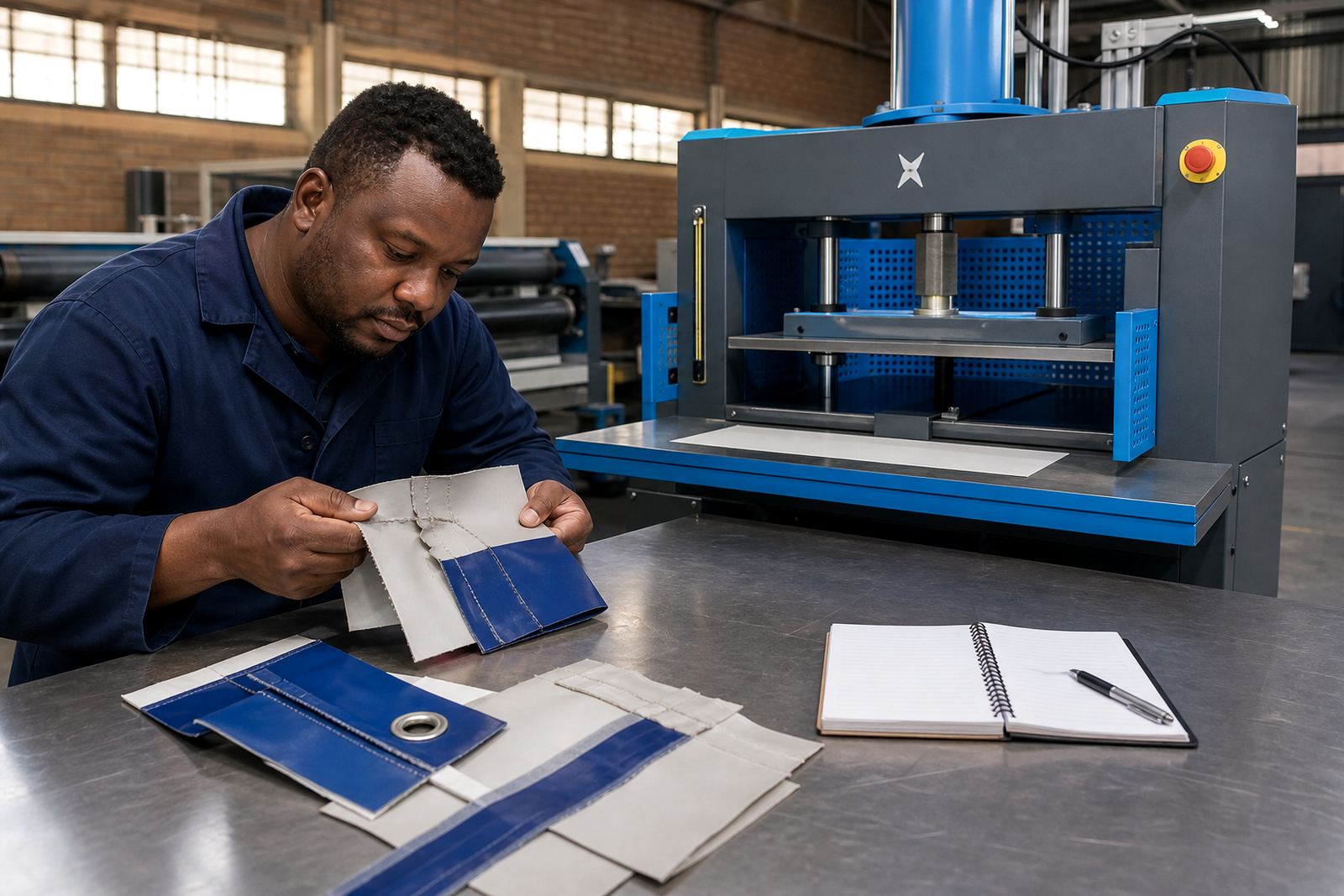
After the checks, we run sample welds in the same material the workshop uses every day. That may be 300 gsm to heavier PVC-coated fabric, depending on the job. We then measure seam hold, edge straightness and finish. If the weld is used for signage hems or display work, the seam needs to stay neat and flat. If it is for tent or cover work, strength and repeatability matter more. A correct set-up makes both possible.
- Installation review and machine positioning
- Electrical supply confirmation and earth check
- Calibration of heat, pressure and timing controls
- Sample welds on actual job material
- Final adjustment before release to production
Seam types we tune for production
Different products call for different seam settings. Banners often need clean lap seams and straight hems. Tarpaulins may need folded hems, rope pockets or eyelet zones that stay flat after punching. Tent makers may need keder welds, reinforcement strips and stronger edge seams where the load is spread through the fixing points. Commissioning lets us set the machine to suit the seam, not force every job into the same setting.
We also check the weld finish around corners, overlaps and joined panels. These points can behave differently when the fabric is cut on the bias or when the PVC coating is thicker near the selvedge. A good commissioning visit will show the operator how to adjust for those changes without overcooking the material. In many workshops the real value is not only the machine check, but the first clean sample that gives the team a working reference.
- Lap seams for banners and display panels
- Folded hems for tarpaulins and covers
- Keder welding for track-fed tent systems
- Reinforcement areas for eyelets and tie-downs
- Edge finishing for long production runs
Operator safety and machine condition checks
Commissioning also covers safe use of the equipment. High-frequency welders need correct guarding, clean electrodes and a tidy work area to reduce contact risks. Hot-air and hot-wedge machines carry heat exposure risks, so we check handles, nozzles, guides and cable condition before production starts. We look for loose fittings, worn rollers, damaged insulation and anything that could affect safe handling during a shift.
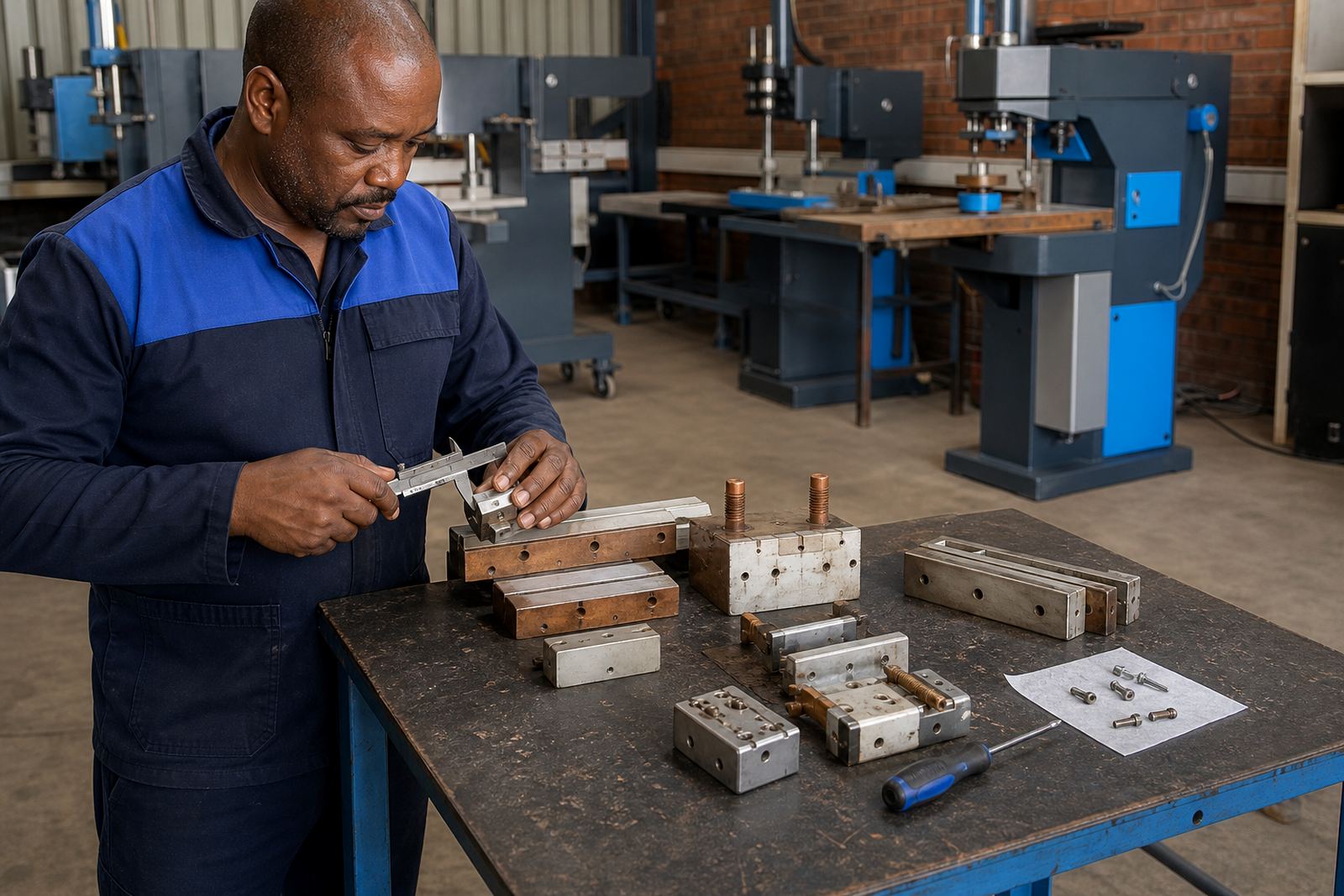
Machine condition matters just as much as settings. A roller that runs unevenly can pull the fabric off line. A dirty electrode can leave marks. A worn heat element or damaged guide can make the weld inconsistent from the first metre to the next. During commissioning we flag these issues early, before they turn into scrap or downtime. In a humid coastal workshop, we also keep an eye on corrosion points and stored parts that may need closer care.
- Guarding, cables and handles checked for safe use
- Electrode and roller condition reviewed
- Heat source and airflow or wedge path inspected
- Work area layout checked for operator movement
- Common wear points identified before production starts
Turnaround, pricing and what affects the scope
Commissioning work is priced according to the machine type, the amount of adjustment needed and whether the job includes sample testing, operator handover or site callout support. A basic set-up on one machine is different from a full line check across several welders and tooling stations. The condition of the machine also affects scope. A well-kept unit with correct installation takes less intervention than a machine that needs alignment, replaced rollers or additional tooling work.
For workshops in Serving workshops in Germiston, Johannesburg, Pretoria, Durban, Cape Town and Bloemfontein, we plan the work around the machine condition and the production task at hand. That keeps the focus on getting the welder ready for real output, not on unnecessary adjustments. If the machine needs extra parts during commissioning, we confirm that before the final trial so the workshop can decide how far to take the set-up on the day.
- Single-machine commissioning or multi-machine set-up
- Sample welding and setting verification
- Extra work if alignment or tooling issues are found
- Pricing based on scope, parts and travel where needed
Aftercare once the first seams are running
After commissioning, we leave the workshop with a clear working setup and a practical handover on the controls, the seam settings and the signs that the machine needs attention. That aftercare helps the team keep the weld quality steady when they move from sample pieces to full production. It also helps when the job changes from banners to tarpaulins, or from flat hems to keder and eyelet work.
If the operator notices a change in seam finish, heat response or machine sound, it is usually best to check it early rather than keep running. Small changes often point to worn tooling, a dirty contact area or a drift in settings. We can also support planned servicing, parts supply and fault finding when the machine needs further attention. The point is to keep the welder useful in day-to-day production, not only working on the day it was set up.
- Working settings handed over in plain terms
- Guidance on what the first welds should look like
- Support for later servicing or fault checks
- Parts supply for common wear items
Key facts
| Machine types | High-frequency welders, hot-air welders and hot-wedge welders |
|---|---|
| Materials | PVC-coated fabrics for tarpaulins, banners, tents and covers |
| Seam work | Lap seams, hems, keder welds, reinforcements and eyelet zones |
| Checks included | Controls, heat response, pressure settings, alignment and first seam trials |
| Service area | Serving workshops in Germiston, Johannesburg, Pretoria, Durban, Cape Town and Bloemfontein |
| Related support | Installation, operator training, preventive servicing, fault finding and parts supply |