What alignment work covers on PVC welding machines
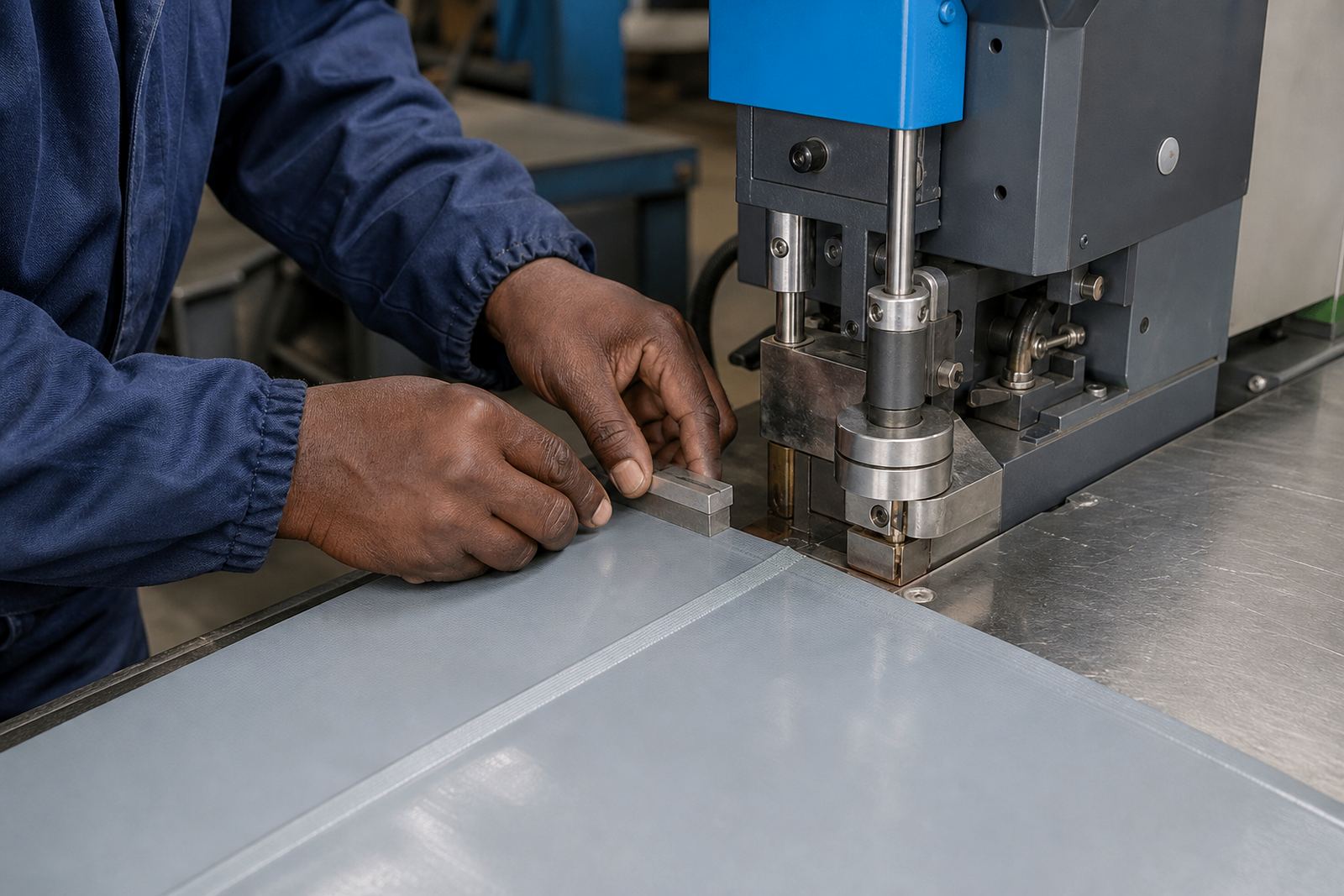
Tooling alignment is the set-up work that brings the welding face, guides, pressure points and feed path into the correct position for the material being run. On high-frequency units that weld PVC-coated fabrics with radio frequency energy, this means checking electrode contact, platen parallelism and the relationship between the tooling and the cloth path. On hot-air and hot-wedge machines, the same attention goes to the nozzle or wedge, roller pressure and the tracking of the fabric edge.
We deal with the parts that affect seam straightness and edge repeatability, especially where long runs are common on tarpaulins, banner hems, keder strips and eyelet reinforcement zones. Small errors in alignment can show up as wandering hems, uneven weld width or edge creep, which is hard on output and hard on the operator as well.
- Electrode, platen and roller position checks
- Feed path and guide adjustment
- Pressure balance across the weld width
- Seam width and edge repeatability checks
- Suitability checks for hems, pockets, keder and overlaps
Why straight tooling matters on tarpaulin, banner and tent work
When tooling is out, the machine can still weld, but the seam may drift or pinch on one side. That shows up quickly on long hems, banner joins and tent panels where the eye notices any wandering line. In Germiston, Johannesburg or Durban where production often runs on tight install dates, a misaligned head can waste material and create extra trimming by hand.
Correct alignment supports cleaner edge control on PVC-coated fabrics, better balance on double hems and more even compression where eyelets are set into reinforced panels. It also helps with keder work, where the weld must stay true so the rope edge feeds properly into the track without twist or tight spots. Coastal humidity in places like Durban can also make fabric handling feel different, so a true setup matters when the material wants to shift under pressure.
- Cleaner seam lines on straight runs and curves
- More even pressure across the weld face
- Less rework on hems, pockets and overlaps
- Better edge control for eyelet and keder applications
How we set the tooling up on site
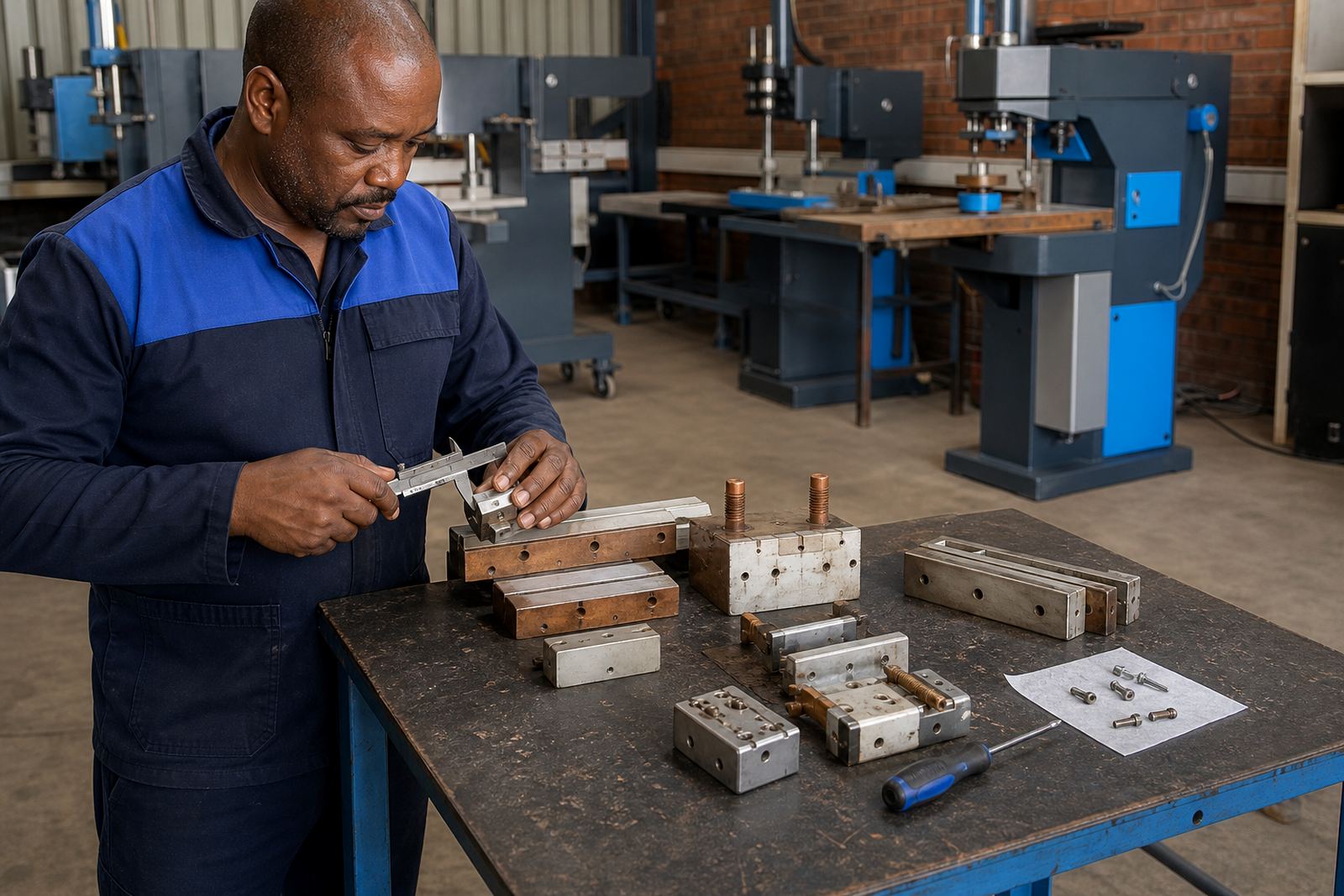
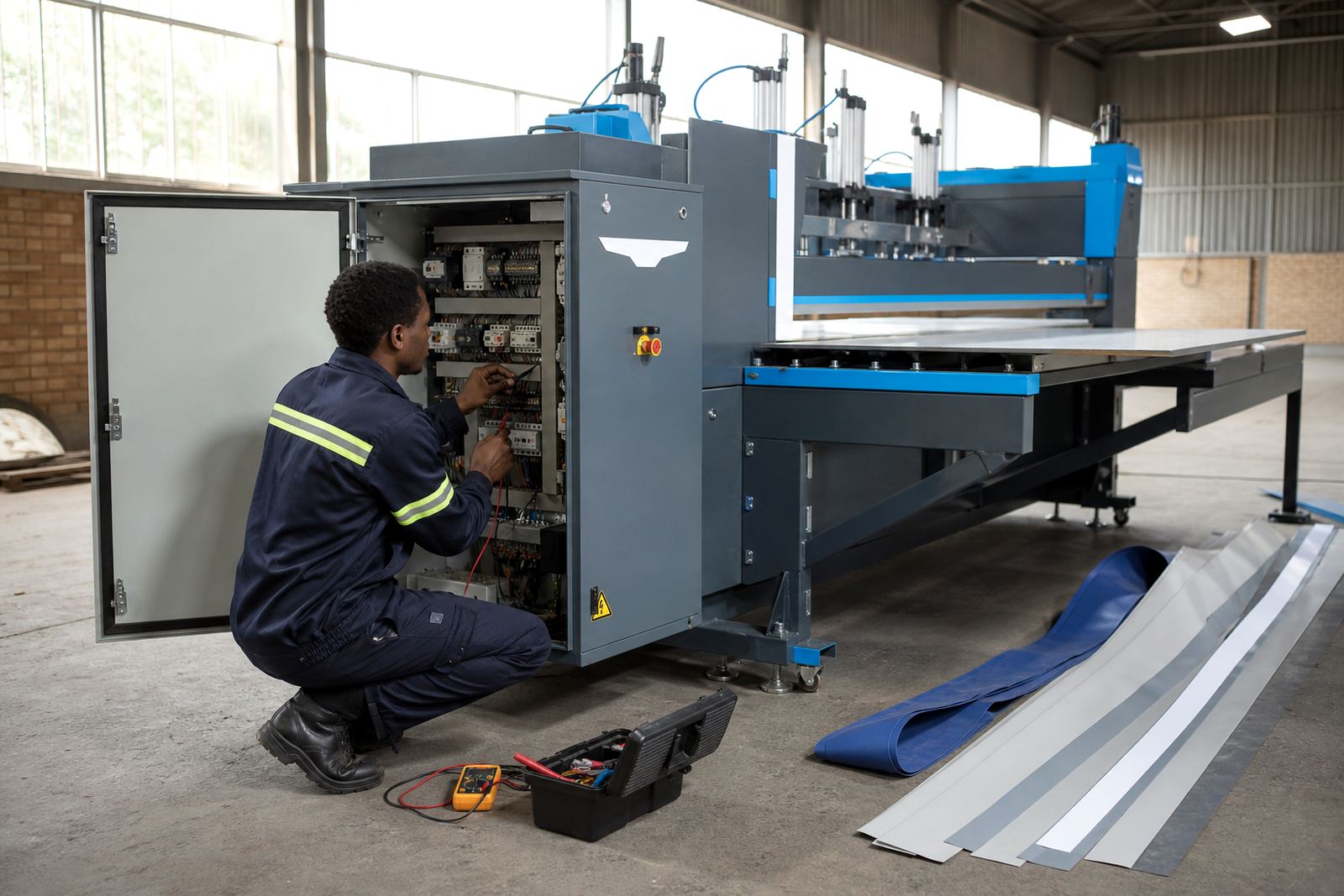
Our process starts with a visual check of the machine condition, then we measure the working faces, guides and pressure points against the actual material being welded. We look for wear on rollers, loose fittings, skew in the feed path and any signs that the tooling is not landing squarely. If there is lift, drag or uneven mark transfer, those details guide the adjustment.
After the first correction, we run sample welds and inspect seam straightness, width consistency and edge position. On hot-air and hot-wedge units we also check how the fabric enters and exits the weld zone, because a small tracking fault can build into a larger edge problem on long lengths. If needed, we fine tune the setup again before the machine is released back into production.
- Initial inspection and measurement
- Alignment of tooling, guides and pressure points
- Sample weld testing on the actual material
- Final check for seam width, straightness and repeatability
Specs and set-up points we work to
Tooling alignment is matched to the machine type and the job at hand. The settings used for banner hems are not the same as a wide tarpaulin lap seam or a keder strip. We work to the machine geometry, the fabric thickness and the weld type so the final set-up is practical for the operator and the product.
- Common material types: PVC-coated fabrics, banner substrates and tent materials
- Seam types: lap seams, butt joins, hems, pockets and reinforced edges
- Typical work areas: 20 mm to 100 mm seam widths, depending on tooling and job
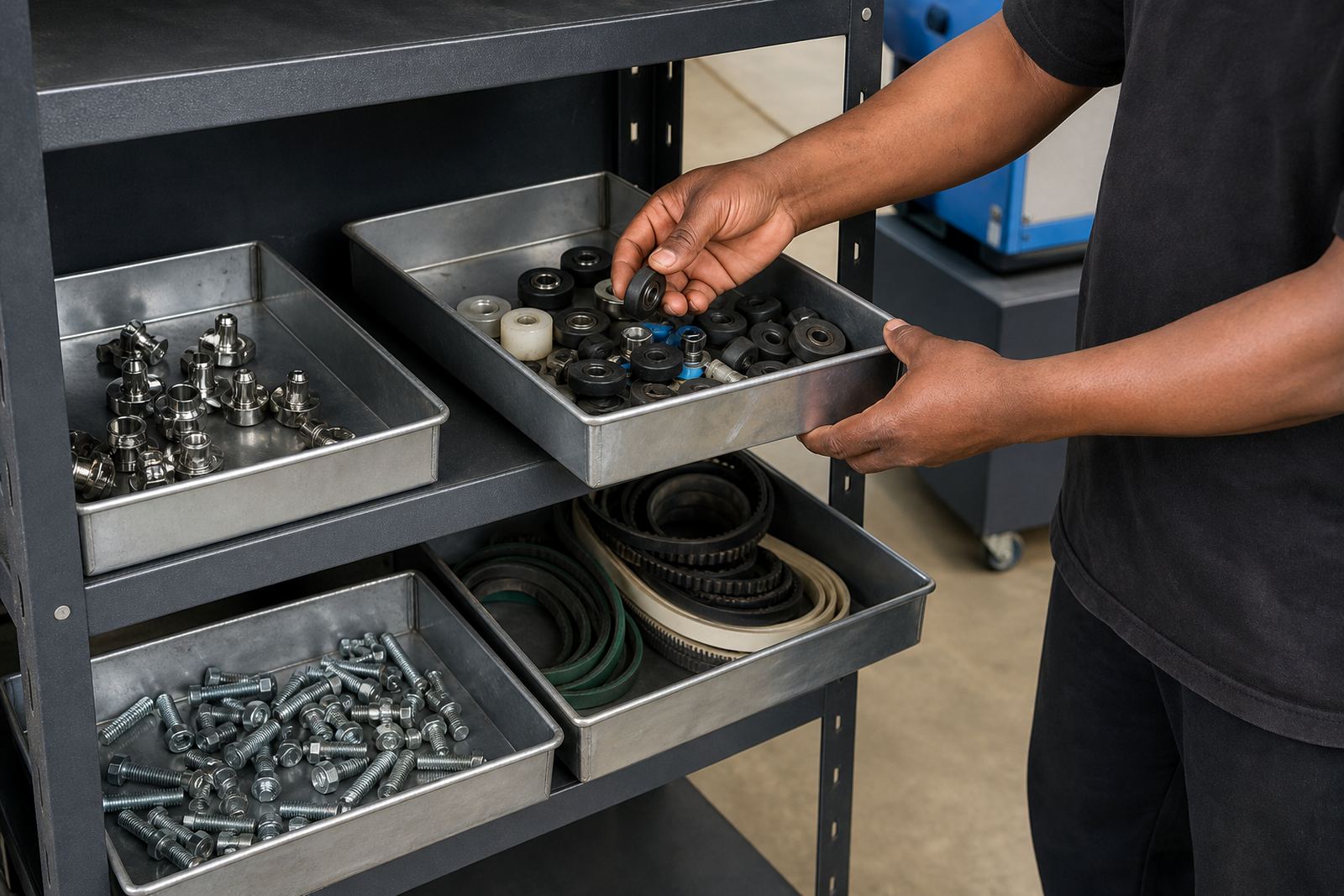
- Tooling checks: rollers, electrodes, pressure bars, guides and feed alignment
- Machine types: high-frequency welders, hot-air welders and hot-wedge welders
- Output goals: straight seam tracking, balanced pressure and repeatable edge position
Where eyelet work is part of the job, we look at the relationship between the weld line and the eyelet zone so the reinforcement sits square and does not pull the edge off line. That helps the finished panel hold shape better during fitting and handling.
Pricing approach and how the job is scoped
Tooling alignment is quoted according to the machine type, the amount of adjustment needed and whether the work is done in the workshop or on site. A simple reset on one welding head is not the same as a full alignment on a machine with worn rollers, shifted guides or multiple tooling faces. We also take into account whether the unit is used for high-frequency welding or hot-air and hot-wedge production.
Before work starts, we assess the machine condition and confirm the parts that need attention. That keeps the scope practical and avoids guessing. If replacement parts are needed, those are separated from the alignment labour so the quote stays clear and the client knows what is being done to the machine.
- Workshop or site-based alignment scope
- Single-head or multiple-head adjustment
- Wear assessment before any part replacement
- Separate pricing for labour, parts and testing
Aftercare for the first production run
Once the tooling has been aligned, we stay with the machine through the first production checks where needed so the operator can see how the new set-up behaves under load. That matters on heavier tarpaulin work and longer banner seams, where the machine can show a different pull once the material is moving at full length. We also note any handling points that may affect repeatability, such as fabric feed tension or edge guide positioning.
Good aftercare is mostly about keeping the machine in the same condition it was set to. If the rollers start marking, the guide shifts or the weld line begins to wander, the alignment should be checked before the fault grows. On machines that run daily in Johannesburg, Pretoria, Cape Town, Durban or Bloemfontein, that kind of follow-through saves time and material.
- Post-adjustment sample checks
- Operator notes on feed, pressure and edge tracking
- Review of any signs of wear after the first run
- Guidance on keeping the set-up true during normal use
Key facts
| Service type | Tooling Alignment |
|---|---|
| Machine types | High-frequency, hot-air and hot-wedge PVC welders |
| Materials | PVC-coated fabrics, tarpaulins, banners and tent panels |
| Typical seam work | Lap seams, hems, keder, pockets and eyelet reinforcement zones |
| Main outcome | Straighter seams, balanced pressure and repeatable edge position |
| Coverage | Germiston, Ekurhuleni and sites across South Africa |