Wear Parts That Keep Production Moving
Most welding lines slow down because a few predictable items wear out first. We supply common parts for radio frequency welders, hot-air welders and hot-wedge units used on PVC-coated fabrics. That includes sealing faces, rollers, guides, electrodes, heater elements, contact parts, drive components, belts and other items that take daily strain in tarpaulin, banner and tent work.
For South African production floors, especially where coastal humidity or dust affects machine condition, the practical value is having the right part on hand before a fault turns into lost output. We help teams plan stock around their actual jobs, whether they are welding straight seams, hems, keder pockets or preparing panels for eyelet work.
- Electrodes and electrode holders
- Heating elements, nozzles and air delivery parts
- Rollers, guides and pressure components
- Drive belts, switches and control items
- Sealing faces and wear plates for repeat seam quality
Parts Matching For RF And Hot-Air Equipment
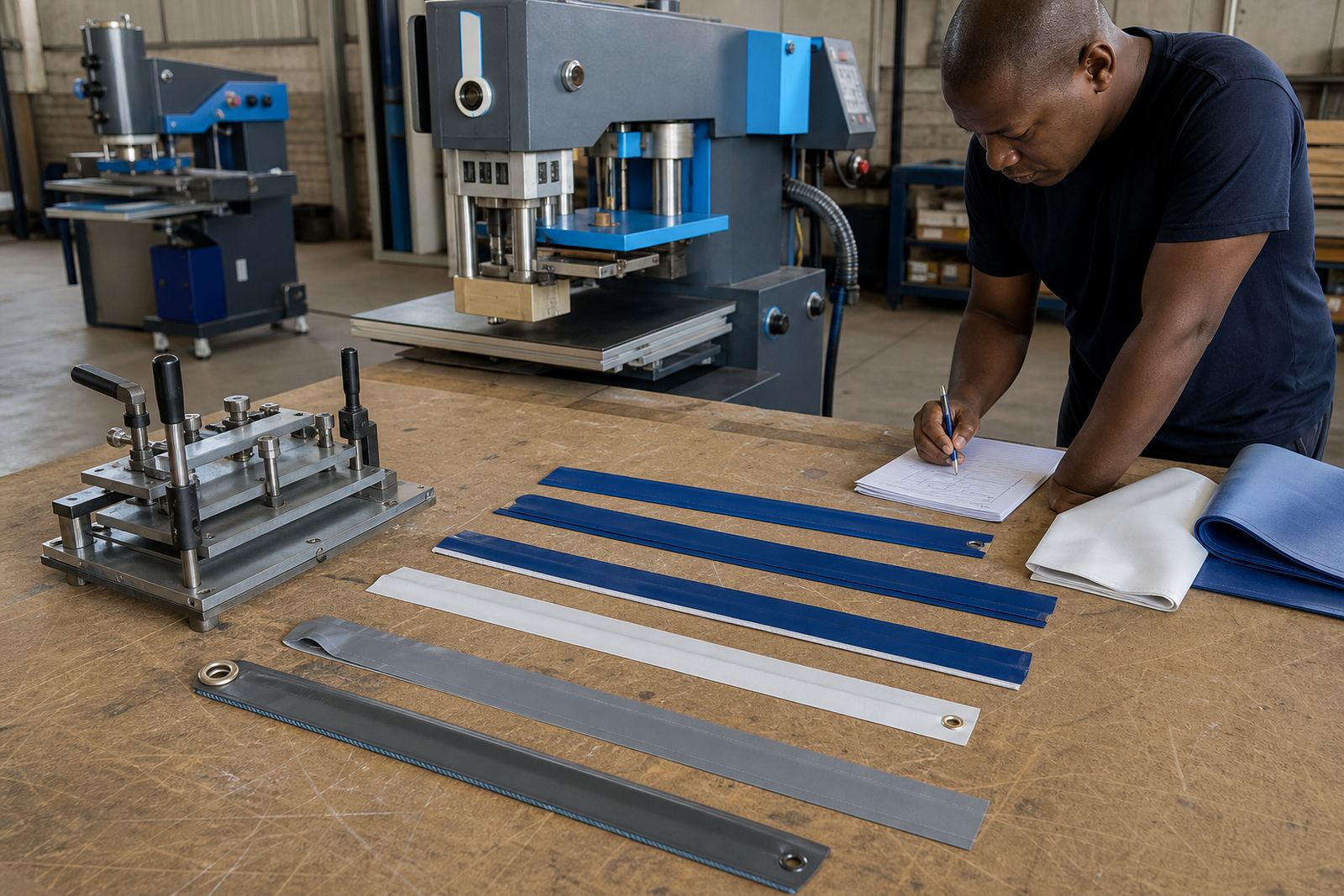
Parts supply only works properly when the match is correct. We identify parts according to machine type, welding width, tooling layout and the job being done. A high-frequency machine used for PVC tarpaulin seams needs different support items from a hot-air machine used on hems, repairs or lighter banner assemblies. The same applies to keder attachment, overlap seams and eyelet reinforcement work, where tool condition has a direct effect on finish and holding strength.
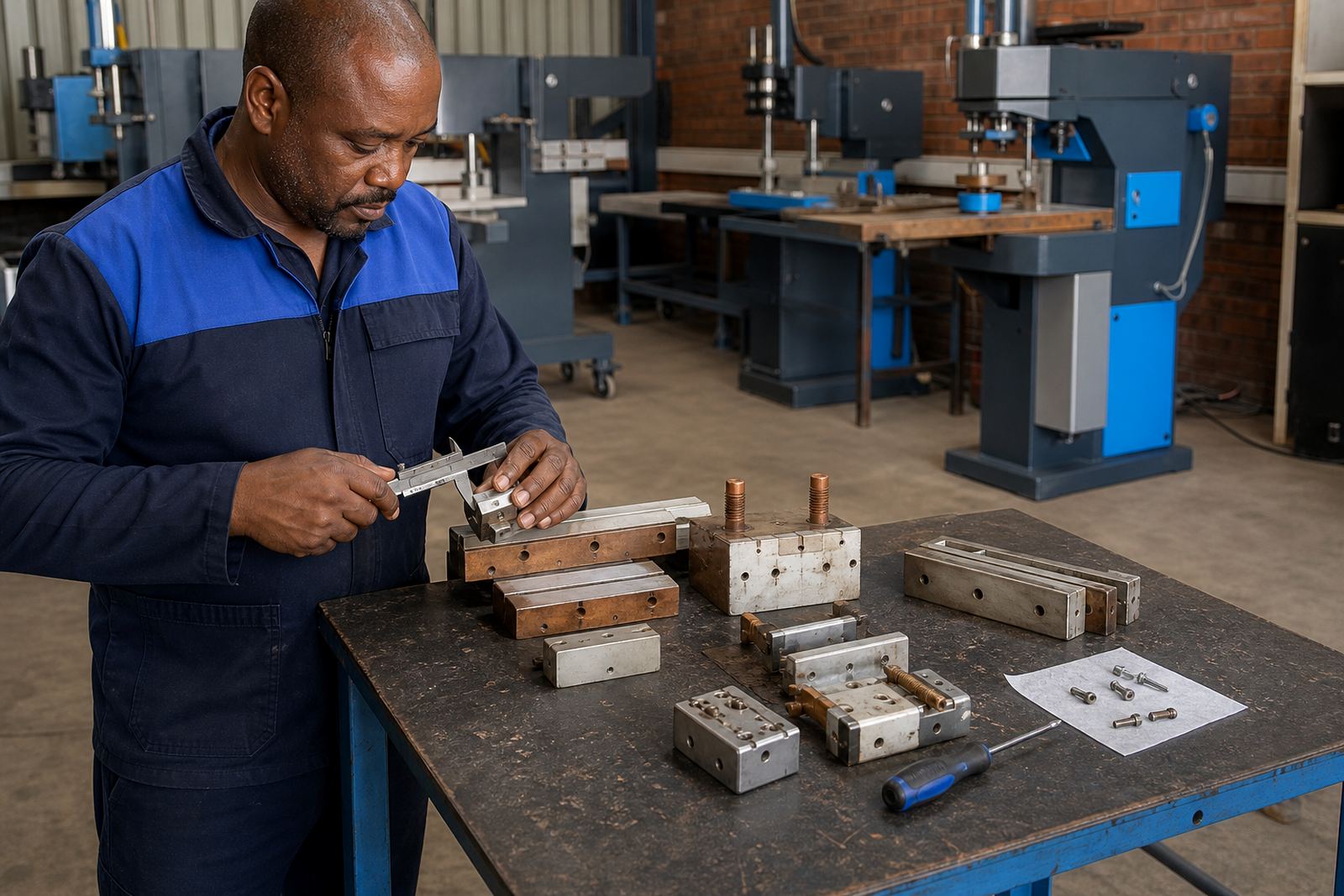
Our team checks the relevant measurements and fitting points before anything is supplied. That includes electrode size, roller width, throat clearance, mounting pattern and the style of feed or pressure system in use. In practice this avoids wasted orders and keeps the machine set up for the work on hand.
- Machine identification by weld type and tooling layout
- Size checks for rollers, electrodes and guides
- Compatibility review for control, heat and pressure parts
- Support for single machines and workshop fleets
How A Parts Order Is Put Together
The process is straightforward and technical enough to avoid guesswork. We start with the machine model details, the job type and the symptoms or wear signs that have shown up on the floor. If a seam is tracking poorly, a hem is lifting or an electrode is marking the material, that information helps narrow the likely part set. Where needed, we can also work from photos, measurements or an old sample part.
Once the correct item is identified, we confirm what can be supplied immediately and what may need to be sourced or prepared. For production sites in Johannesburg, Durban, Cape Town, Pretoria, Bloemfontein and nearby industrial areas, this helps a workshop plan its next batch without waiting to discover a missing fitting after the machine has already been stripped down.
- Identify the machine and welding method
- Match the part to the seam type, width and tooling
- Confirm stock or sourcing status
- Arrange collection, dispatch or site support
Planning Spares Around Real Workloads
Not every workshop needs the same spares list. A banner shop that runs small repeat jobs may need a different pack from a tent maker handling long seams, keder and eyelet reinforcement on larger sheets. We help with practical spares planning so production does not stall because a small item failed on a busy week.
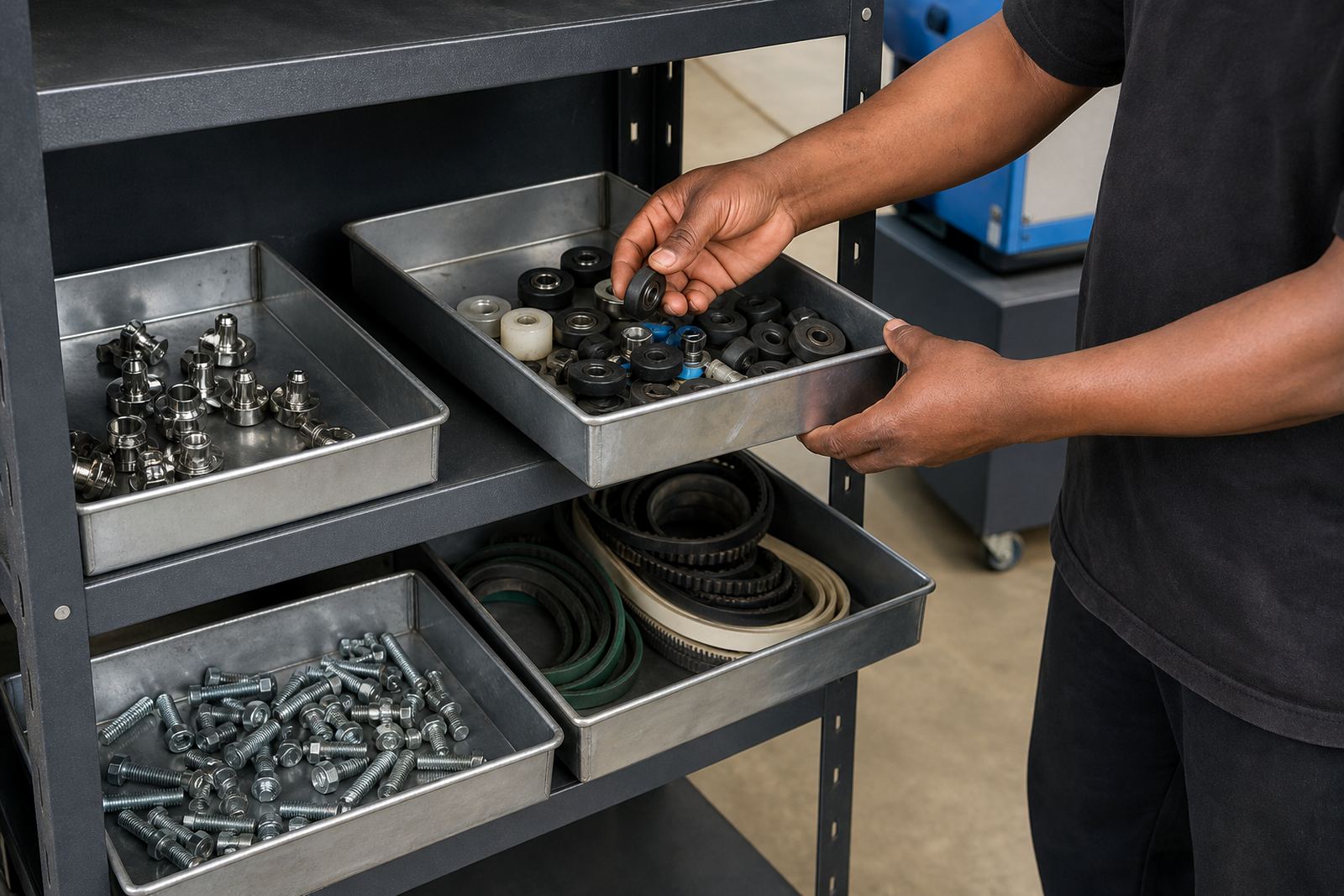
That usually means identifying the fast-moving parts, the items most affected by heat, pressure and repeated changeovers, and the components that are awkward to replace at short notice. In a humid coastal store room, or a workshop with frequent dust from cutting and handling, this planning makes a difference to output and finish quality.
- Fast-moving consumables for repeat production
- Back-up parts for heaters, rollers and controls
- Tooling items for seam quality and alignment
- Practical stock lists for one line or multiple machines
Pricing Approach That Fits The Part And The Job
Parts are priced according to the component type, the machine it fits and whether the item is standard stock or needs special sourcing. We keep the pricing conversation practical and clear, because a workshop needs to know what is being replaced and why. On some jobs a single wear item is enough. On others it makes better sense to replace a set of related parts at the same time so the machine returns to stable operation.
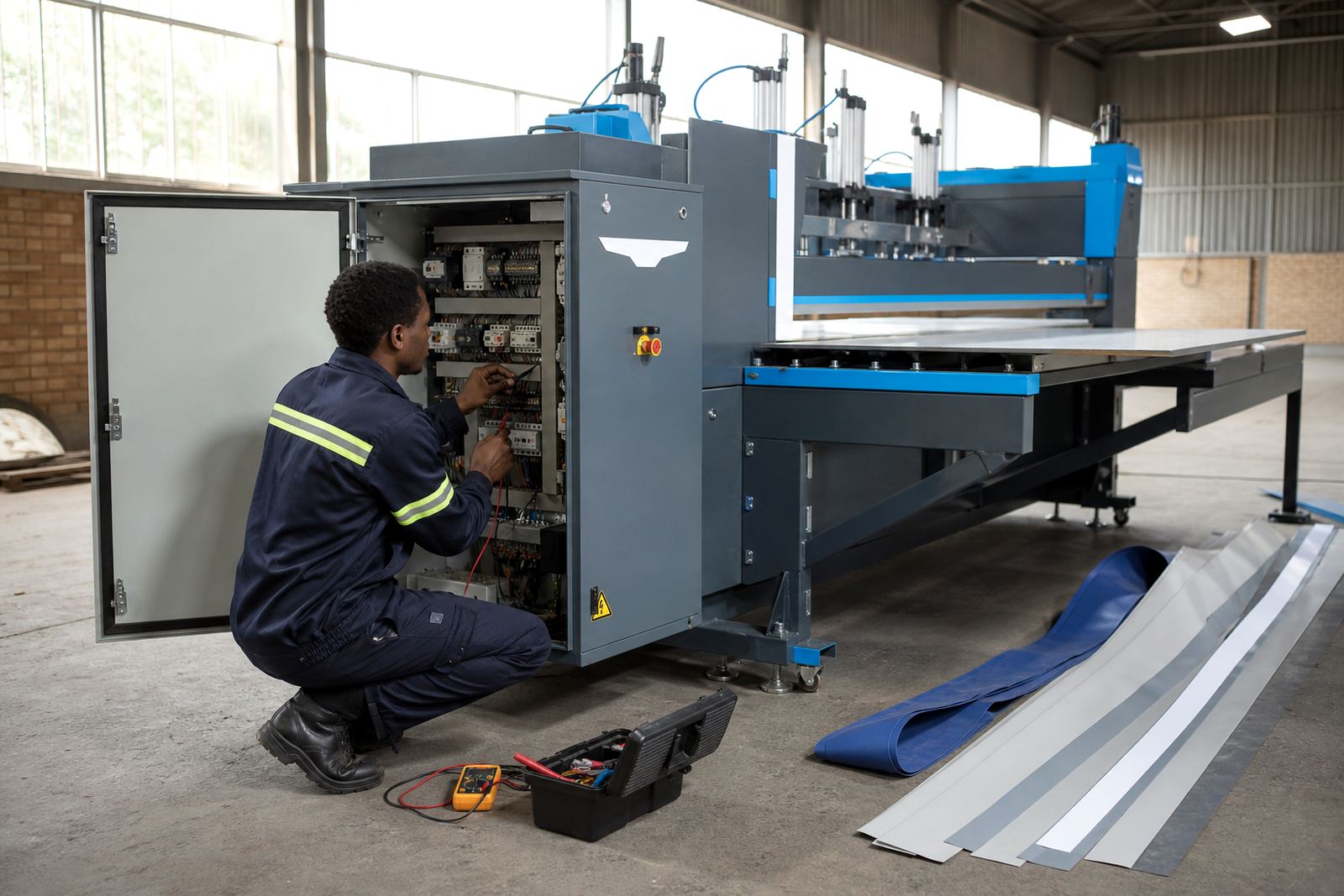
If a part is being used in a safety-related position or influences heat, pressure or electrical control, we will point that out before supply. That matters on RF equipment where the condition of the contact points and tooling affects both seam quality and operator safety.
No two PVC welding spares call for the same quote, because a small guide bushing is not the same as a full tooling assembly. We match the part to the job, then explain the choices before anything leaves the workshop or is fitted on site.
Aftercare Once The Part Is Fitted
After fitting, the machine should be checked under working conditions, not only at idle. We assist with post-fit inspection for seam appearance, pressure consistency, heating response and alignment. If a replacement part changed the feel of the weld, the operator may need a small reset in technique or tooling position, especially on hems, overlap seams and keder work.
We also advise on keeping the replaced part, where useful, for pattern matching or future reference. In many workshops the old component becomes the quickest way to identify the next one needed. That kind of planning supports production continuity and reduces the stop-start cycle that eats into a busy week.
- Check seam finish after fitting
- Confirm heat, pressure and alignment under load
- Record the replaced item for future matching
- Adjust operator setup if the tooling feel has changed
Key facts
| Supported machine types | High-frequency, hot-air and hot-wedge welders |
|---|---|
| Typical work supported | Tarpaulins, banners, tents, hems, keder and eyelet reinforcement |
| Parts categories | Electrodes, rollers, heaters, guides, belts, controls and wear items |
| Fitment checks | Size, mounting pattern, throat clearance and tooling compatibility |
| Service area | Germiston, Johannesburg, Pretoria, Durban, Cape Town, Bloemfontein and nearby areas |
| Support base | Germiston, Ekurhuleni |