Setting the machine where the work actually happens
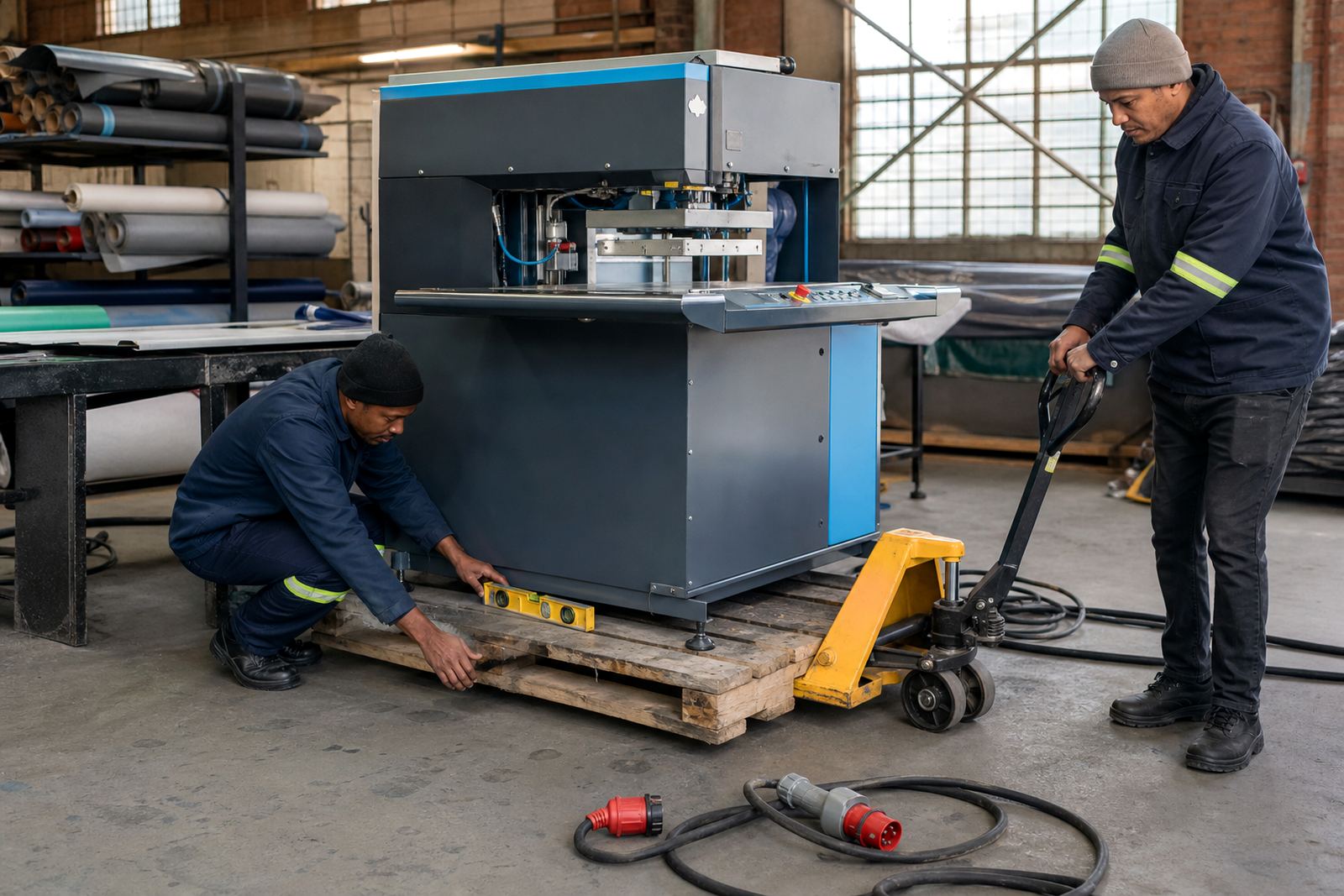
Installation starts with the floor space, access routes and the way material moves through the workshop. A high-frequency welder needs a level position, room for loading and unloading, and enough clearance for the operator to handle tarpaulin sheets, banner panels, hems and keder runs without awkward lifting. Hot-air and hot-wedge units need the same practical layout, with attention to table height, feed direction and space for trim, clamps and finished work.
For sites in Germiston, Boksburg and Benoni, we often work in busy sheds where conveyors, cutting tables and finishing benches already share the same floor. In larger Johannesburg and Pretoria shops, the machine may be tied into a production line. Coastal sites in Durban or Cape Town usually need a closer look at corrosion, dust and humidity, especially around tooling, fasteners and stored electrodes. The position chosen must suit the job, not just the machine.
Utilities, checks and safe first power-up
Before the first run, the machine is checked against the site supply, earthing and any compressed air or extractor requirements. We confirm that the inlet points are suitable, that cable routes are tidy, and that the operator can reach the controls without stretching over heated or moving parts. Where local wiring or breaker capacity needs attention, that is flagged before work starts.
- Incoming power and phase checks for the machine type
- Earthing and cable condition inspection
- Guarding, interlocks and emergency stop test
- Tooling fitment and pressure check
- Initial warm-up and control response check
High-frequency equipment is tested for stable output and clean seam formation, while hot-air and hot-wedge machines are checked for temperature control, feed consistency and track alignment. The first power-up is done slowly, with the operator nearby so the controls and safety points can be explained in plain terms.
Trial runs on customer material, not just empty tables
A proper installation includes trial welding on the material the workshop actually uses. PVC-coated fabric behaves differently from one supplier to another, and even the same stock can vary by coating weight, weave and age. We run sample seams, hem edges, keder strips and eyelet zones where needed, then adjust pressure, dwell, heat and feed so the finished joint suits the job.
The aim is practical: a seam that holds, lies flat and looks right on signage, tarpaulins or tent panels. Where the work calls for overlap seams, butt joints, reinforcement patches or folded hems, the machine is set up for the pattern the team will use most often. That saves time later, and it reduces scrap during the first production shifts.
- Overlap seam trials for banner and tarp panels
- Hem settings for edge finishing and reinforcement
- Keder sample runs for track and awning work
- Eyelet area checks for clean, even material build-up
Operator handover and workshop routine
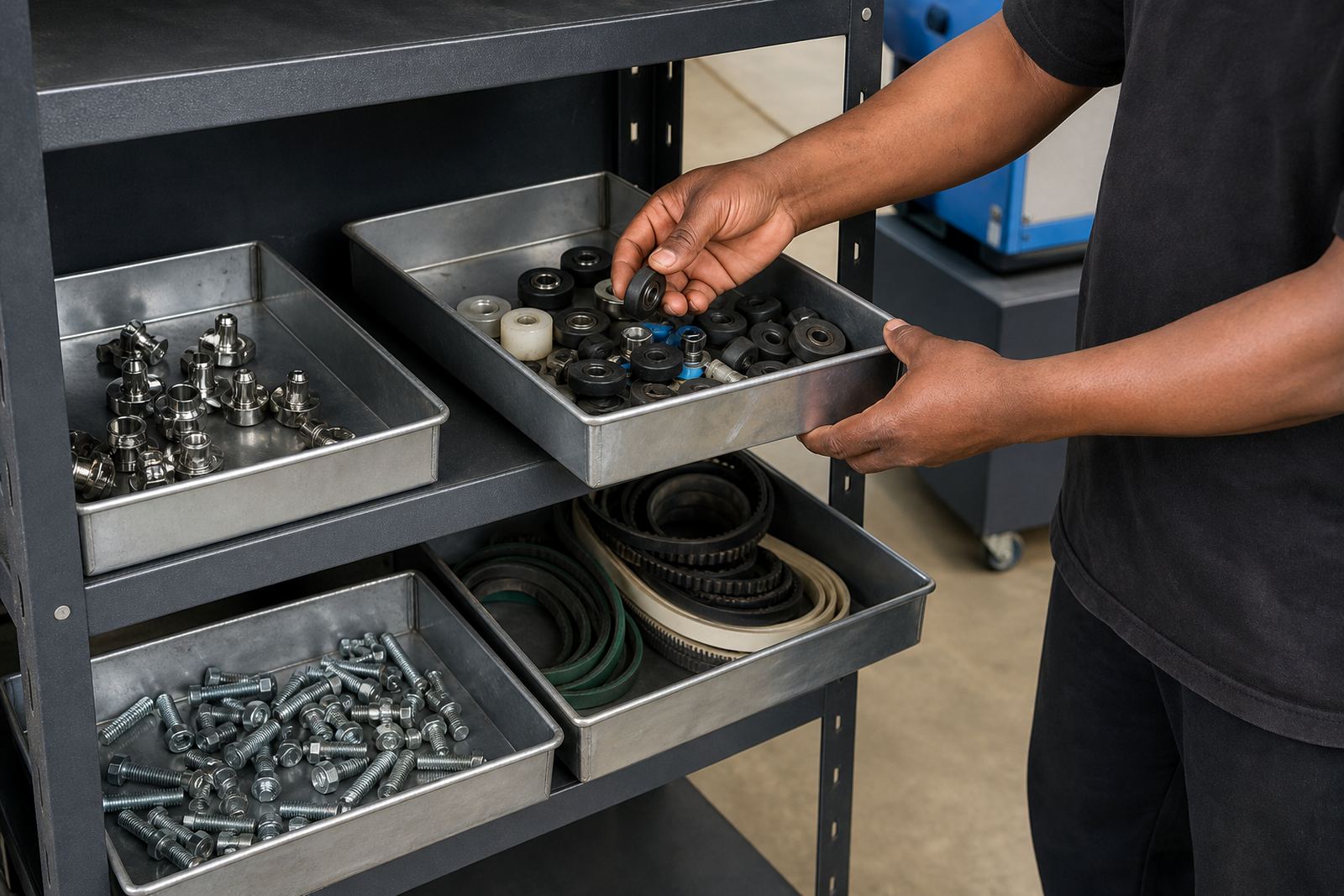
Once the machine is running correctly, the operator handover covers the controls, common fault signs and safe working rhythm. We show the team how to read a weak seam, a scorched edge, a cold join or a crooked feed before those faults spread through a batch. The handover also covers tooling changes, basic cleaning and how to keep the machine area clear of offcuts, dust and loose fasteners.
For shops with more than one shift, the handover is kept consistent so different operators work to the same settings. That matters on banner and tarpaulin jobs where the customer expects neat repeat work across many panels. The team also gets guidance on handling material in humid coastal conditions, where stored PVC can behave differently if it has absorbed heat or moisture.
What our installation service includes
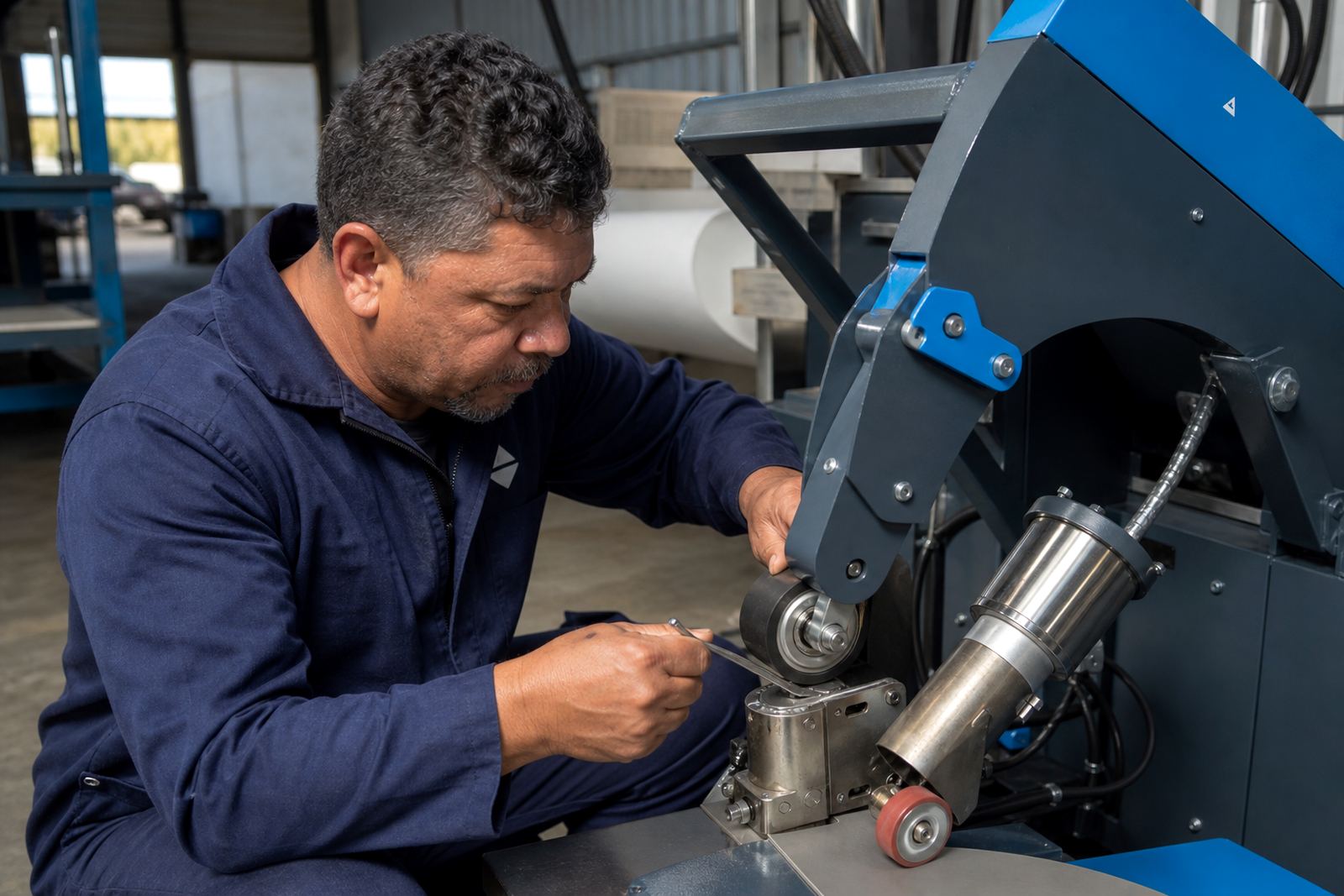
The service is not just a delivery and a plug-in. It covers machine placement, setup, alignment and the first usable output on site. Depending on the machine type, the visit may also include tooling adjustment, electrode or roller inspection, seam test runs and basic fault spotting before production begins.
- Machine positioning and levelling
- Connection checks and commissioning
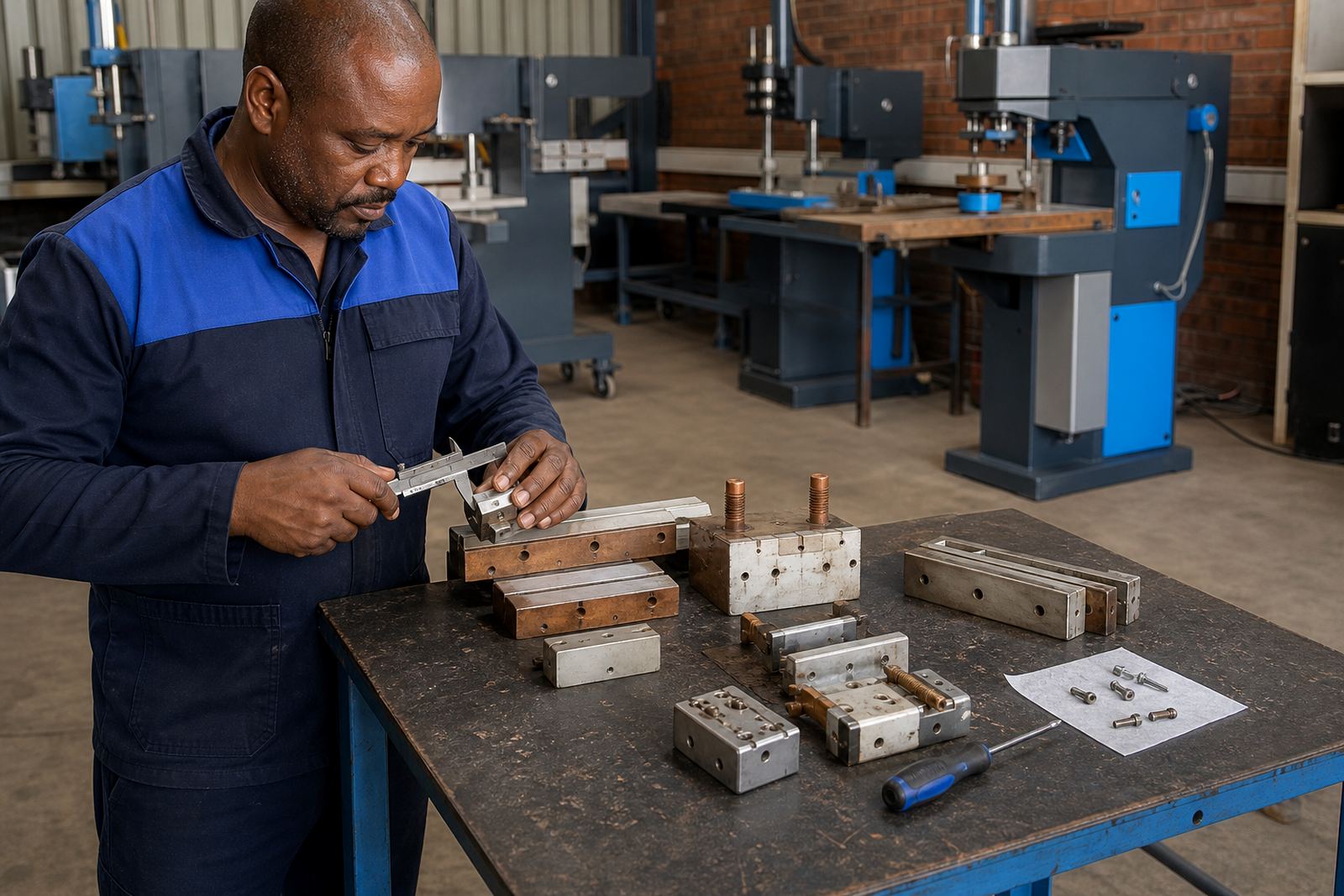
- Tooling alignment and fitment
- Initial seam testing on customer material
- Operator training on controls and safety
- Handover notes for future servicing
We also assist with related finishing work such as hems, keder attachment and eyelet zone preparation where the machine is being used for that purpose. If the site needs a follow-up inspection after the first production run, that can be arranged as a separate support visit.
Pricing approach and aftercare support
Installation pricing is worked out from the machine type, site location, access conditions and the amount of setup required. A single machine in a clear Germiston workshop is different from a larger install in Durban or Cape Town where transport, access and commissioning take more time. If extra tooling, rewiring support or repeat setup is needed, that is reflected in the quote after the site details are reviewed.
After the installation, support continues through fault finding, parts supply, preventive servicing and site callouts when needed. We also help with electrode refurbishment, roller replacement and seam testing so the machine stays useful in daily production. Clients in Johannesburg, Pretoria, Bloemfontein and surrounding areas can use the enquiry form on our contact page to arrange installation or related support.
Key facts
| Machine types | High-frequency radio frequency welders, hot-air welders and hot-wedge welders |
|---|---|
| Material range | PVC-coated fabrics for tarpaulins, banners, tents and related covers |
| Typical seam work | Overlap seams, hems, reinforcement strips, keder attachment and eyelet areas |
| Setup items | Levelling, alignment, utility checks, safety checks and first test runs |
| Workshop support | Operator training, tooling alignment, seam testing and commissioning |
| Service areas | Germiston, Johannesburg, Pretoria, Durban, Cape Town, Bloemfontein and surrounding regions |