What awning skin work usually asks of the machine
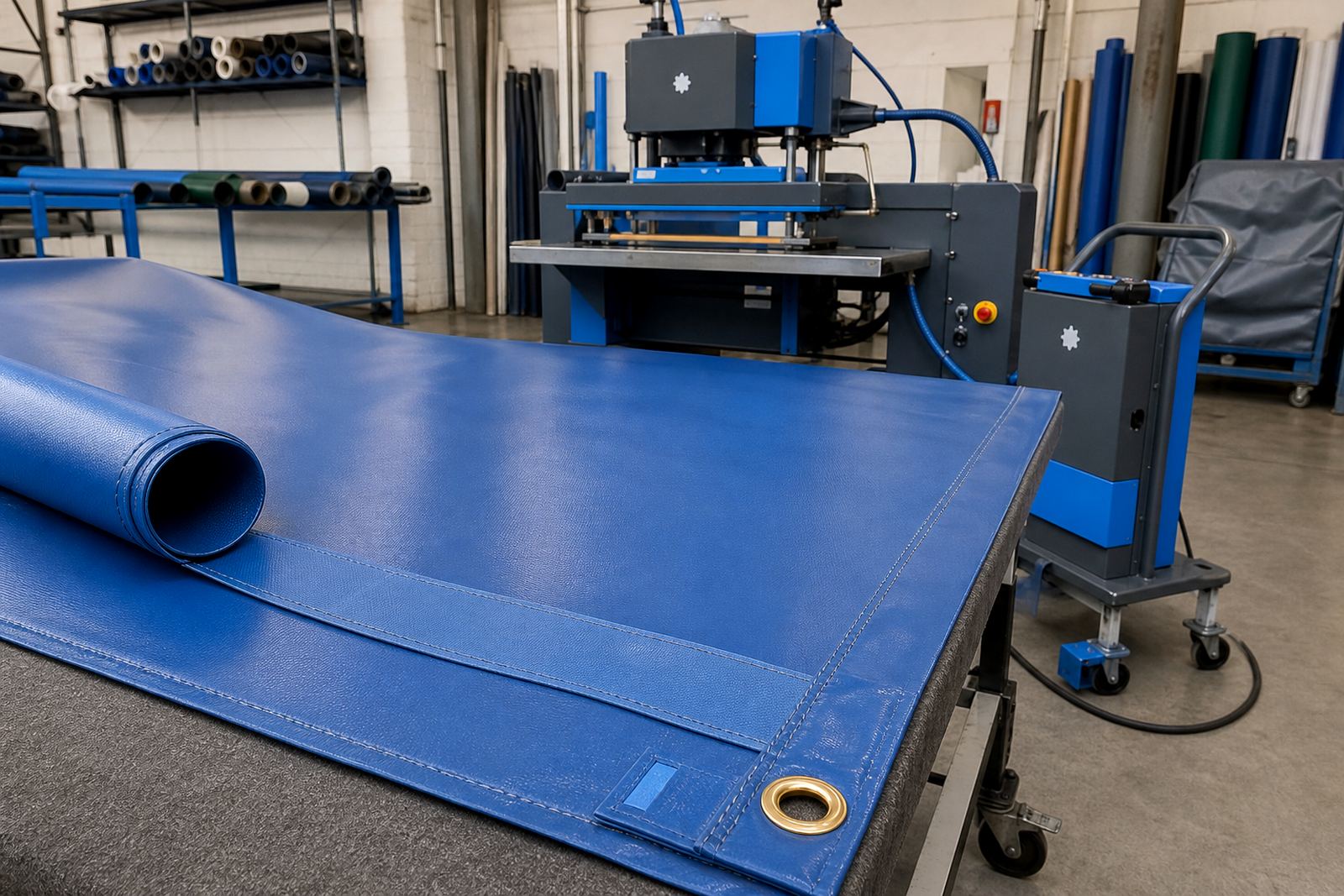
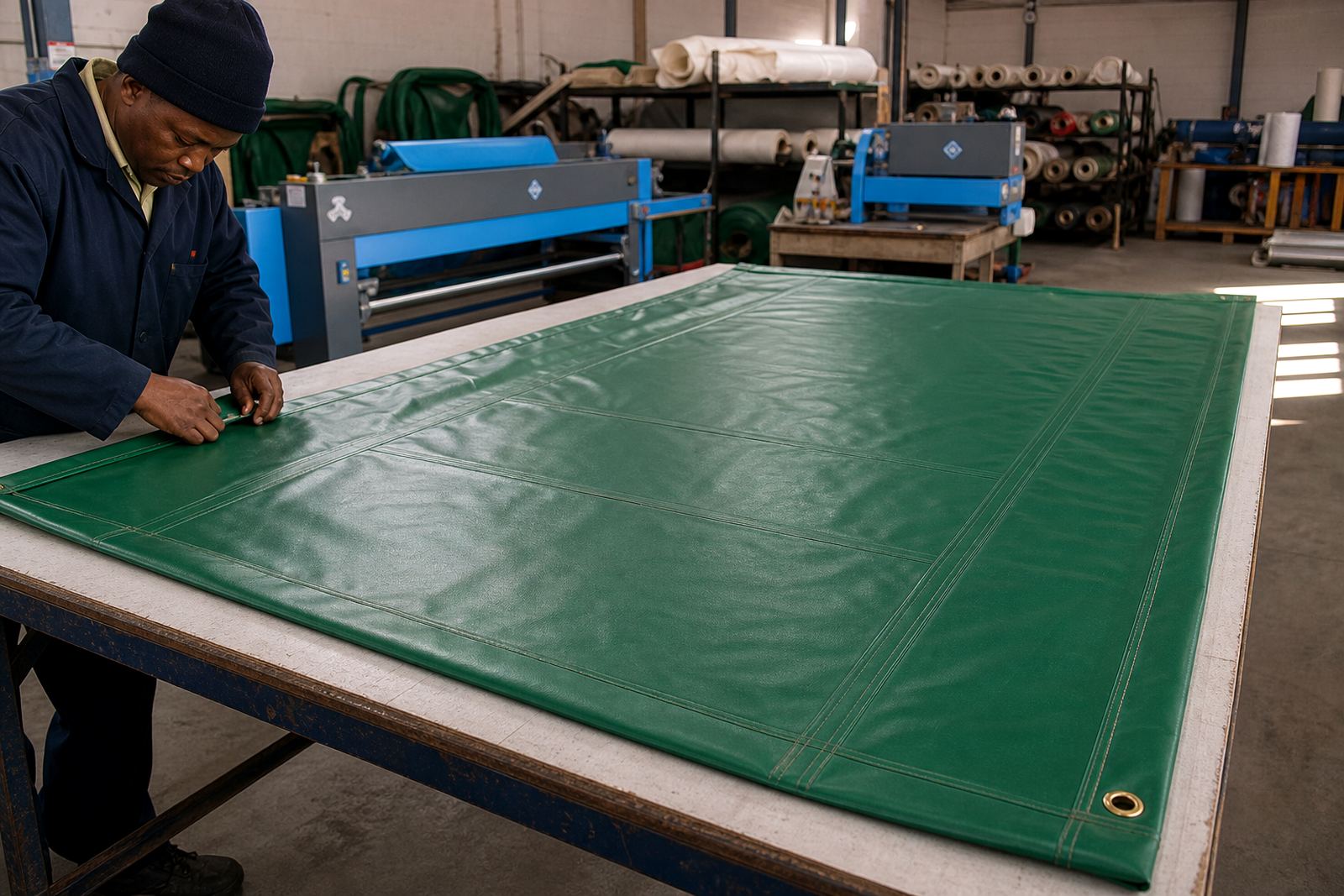
Awning skins are not the same as loose tarpaulins or quick banner jobs. The panels need long, straight seams, clean edge hems and reinforced zones where the skin fixes onto a frame or track. In many Germiston and Johannesburg workshops, the job also includes keder attachment, eyelet work and patch repairs on older skins that have taken sun, dust and coastal moisture.
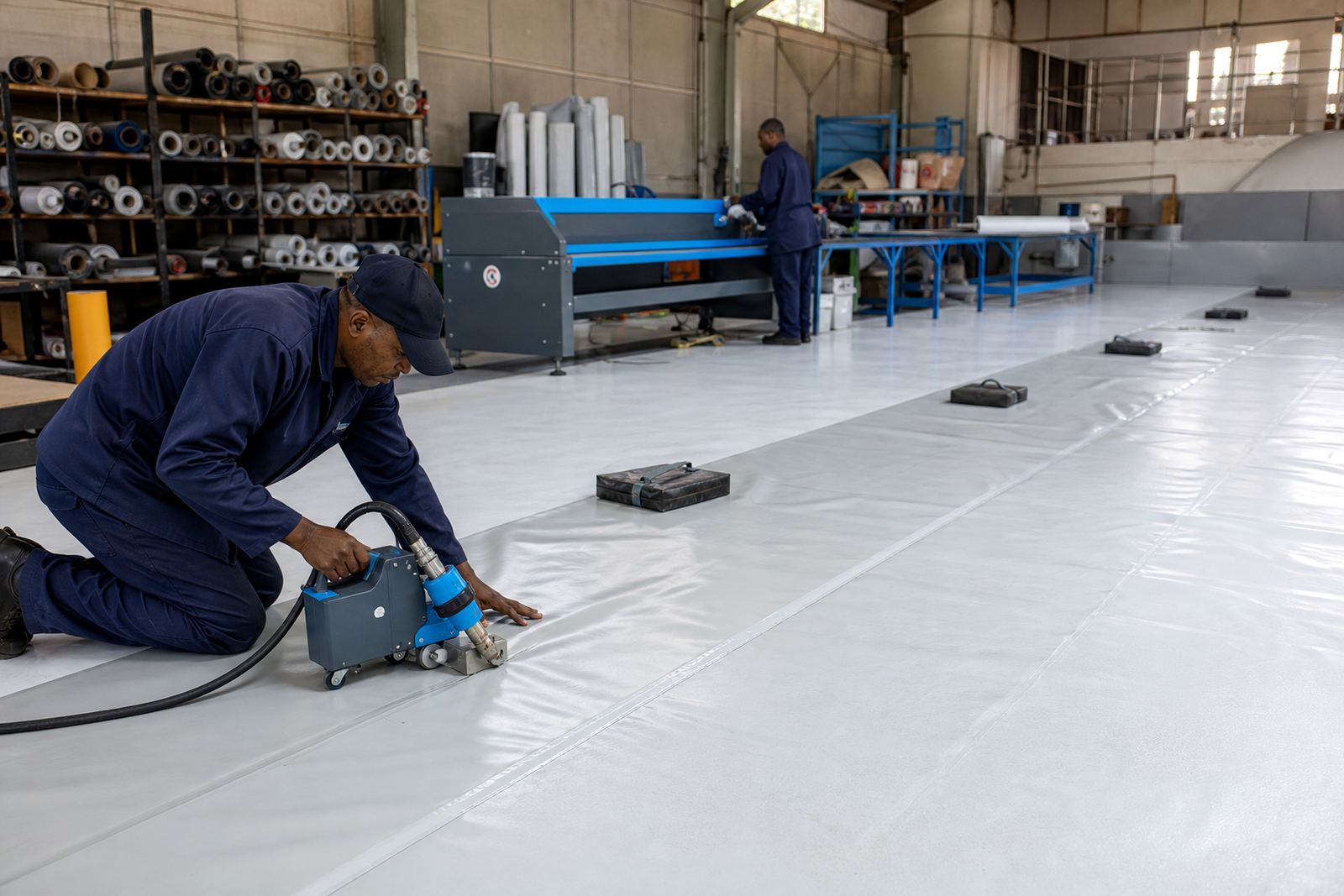
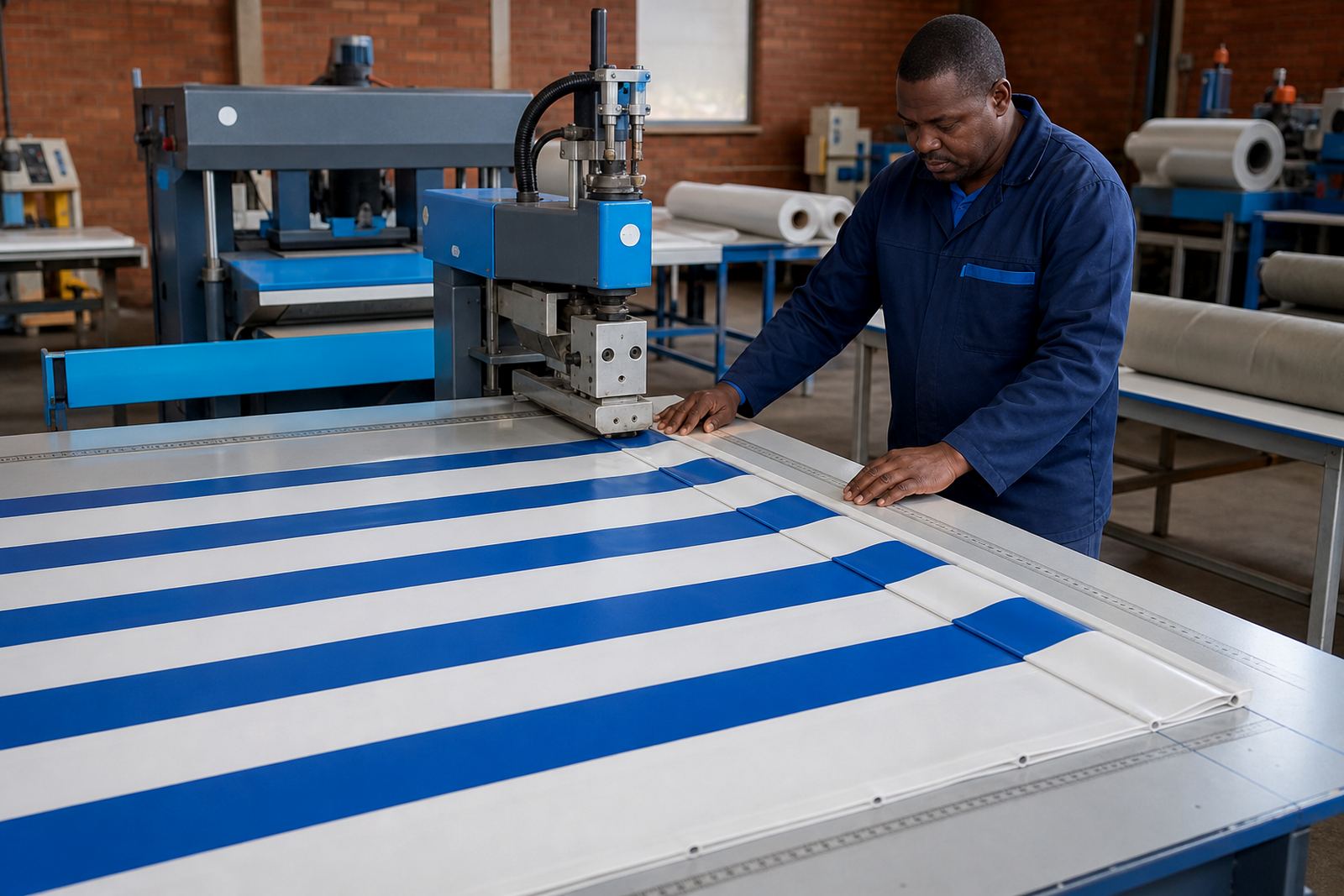
For this kind of work, radio frequency welding suits flat PVC-coated sections where the seam must be even and sealed from end to end. Hot-air and hot-wedge welders are better for longer runs, shaped edges and site work where the operator needs more room to work around corners, returns and edge folds. The key is matching the tool to the fabric weight, seam layout and the way the finished skin will hang.
Awning skins often need enough body to stay square when fitted, but not so much bulk that the edge fights the frame. That is why planning the seam sequence matters before the first weld is made.
Typical equipment set for a skin shop
A practical awning skin line usually combines one or two welding methods, plus cutting, measuring and finishing tools. A larger shop in Pretoria or Cape Town may lean on a radio frequency press for repeat panel joins, while a Durban operation handling humid conditions may prefer hot-air or hot-wedge machines for quick edge work and repairs.
The equipment set normally includes seam guides, rollers, cutting tables, eyelet setting tools, keder feeding accessories and alignment aids for long straight panels. Operators also need suitable clamps and measuring marks, because a few millimetres out at one end can show up as a twist when the skin is fitted.
- Radio frequency welder for flat PVC-coated joins and repeat panel seams
- Hot-air or hot-wedge welder for hems, returns, curved sections and longer runs
- Eyelet tooling for fixing points and load-bearing corners
- Keder tooling where the skin slides into a track or rail
- Cutting and marking tools for keeping panels square before welding
Layout planning before the first weld
Good awning skins are built on layout discipline. The seam positions should suit the visible face, the frame spacing and the direction of pull once the skin is installed. If a join sits too close to a fixing point, the stress concentrates there and the edge can lift or distort over time. If the hem allowance is too small, the finish becomes hard to hold straight.
For straight panel joins, it helps to plan the weld path so the operator can run long, uninterrupted seams. For hems and reinforcement strips, allow enough overlap for a full bond and a neat fold. On keder work, keep the feed aligned from the start. A slight wander at the entry can turn into a visible ripple along the full length.
In larger coastal jobs, extra attention should go into corner returns and fixing zones, since salt air and damp conditions can expose weak edges faster than inland conditions. A shop in Bloemfontein may see different wear, but the same rule applies: a neat layout saves repair calls later.
Mistakes that show up on fitted awnings
The most common faults are plain to see once the skin is hung. Uneven seam pressure can leave a wavy join. Too much heat can glaze the fabric or weaken the bond edge. Too little heat can give a seam that looks fine at the bench but opens once it is under tension. Mixed settings on the same job also cause trouble, especially when the operator switches between thick reinforcement strips and lighter face panels.
Another frequent problem is poor squaring. If the panels are not measured carefully, the skin may fit in the workshop but sit off line on site. Eyelets that are set too close to the edge, or keder that is not fed evenly, can also cause tearing and drag during installation. In busy shops across Ekurhuleni, these faults usually cost more time than the original weld did.
- Using the wrong welding method for the seam type
- Skipping test welds on offcuts before production starts
- Allowing dust, moisture or old adhesive on the weld line
- Overheating corners, hems or reinforcement patches
- Rushing measurement and cutting before the panel is square
Operator safety and machine care on the workshop floor
Awning skin production is repetitive work, so operator safety should be built into the layout. Heated tools need clear resting places, moving rollers need guarding where possible, and leads or hoses should not cross the main walkway. Training matters, especially where new staff are handling radio frequency settings or changing tooling on hot-air and hot-wedge machines.
Regular machine servicing keeps the weld quality steady. Check electrode faces, alignment, rollers, guide surfaces and pressure settings before faults become visible in the seam. Dust and offcut scraps should be cleared often, since small scraps can interfere with feed and alignment. If a shop handles coastal work or long summer shifts, servicing becomes even more important because humidity and heat can change how the fabric behaves during welding.
- Keep the weld area clean and free from loose trim
- Inspect alignment before every production run
- Replace worn rollers and damaged tooling early
- Test seams after setup and after any tooling change
- Use structured operator training for safe, consistent output
What budget ranges usually look like in Rand
For awning skin work, the budget depends on whether a workshop needs a single-purpose machine for panel joins or a fuller setup with finishing tools, installation support and service cover. A smaller shop may begin with one reliable welding machine and basic tooling, while a larger tarpaulin or signage operation may need a wider line for hems, eyelets, keder and repairs.
As a working guide, entry-level equipment packages can sit in the tens of thousands of Rand, while heavier production setups and added tooling can move into higher ranges. Preventive servicing, alignment work, replacement rollers, electrode refurbishment and site callouts should also be budgeted for, because the cost of neglected equipment usually shows up in waste and rework.
For businesses supplying Johannesburg, Durban, Cape Town, Pretoria and Bloemfontein, it makes sense to plan around the type of awning skins being made most often. Straight panel work calls for one setup, while mixed repair and new-build jobs may justify more than one machine type on the floor.