Pool cover jobs need tidy edges and repeatable seams
Pool covers are often rolled and lifted by hand, so the weld has to stay straight and even along long runs. On PVC-coated fabrics, the seam line must be consistent from edge to edge, with enough grip for hems, reinforcement strips and fixing points. A cover that looks neat on the table but opens up at the edge will give trouble later at the poolside.
In Germiston and the wider Ekurhuleni area, many workshops handle mixed work: pool covers, tarpaulins, banners and light tent parts. That means the welding set-up has to cope with different sheet widths, smaller trims and repeat jobs without constant rework. For pool cover production, the main concern is not just speed, but control over heat, pressure and tracking.
Typical welding set-up for rolled pool cover work
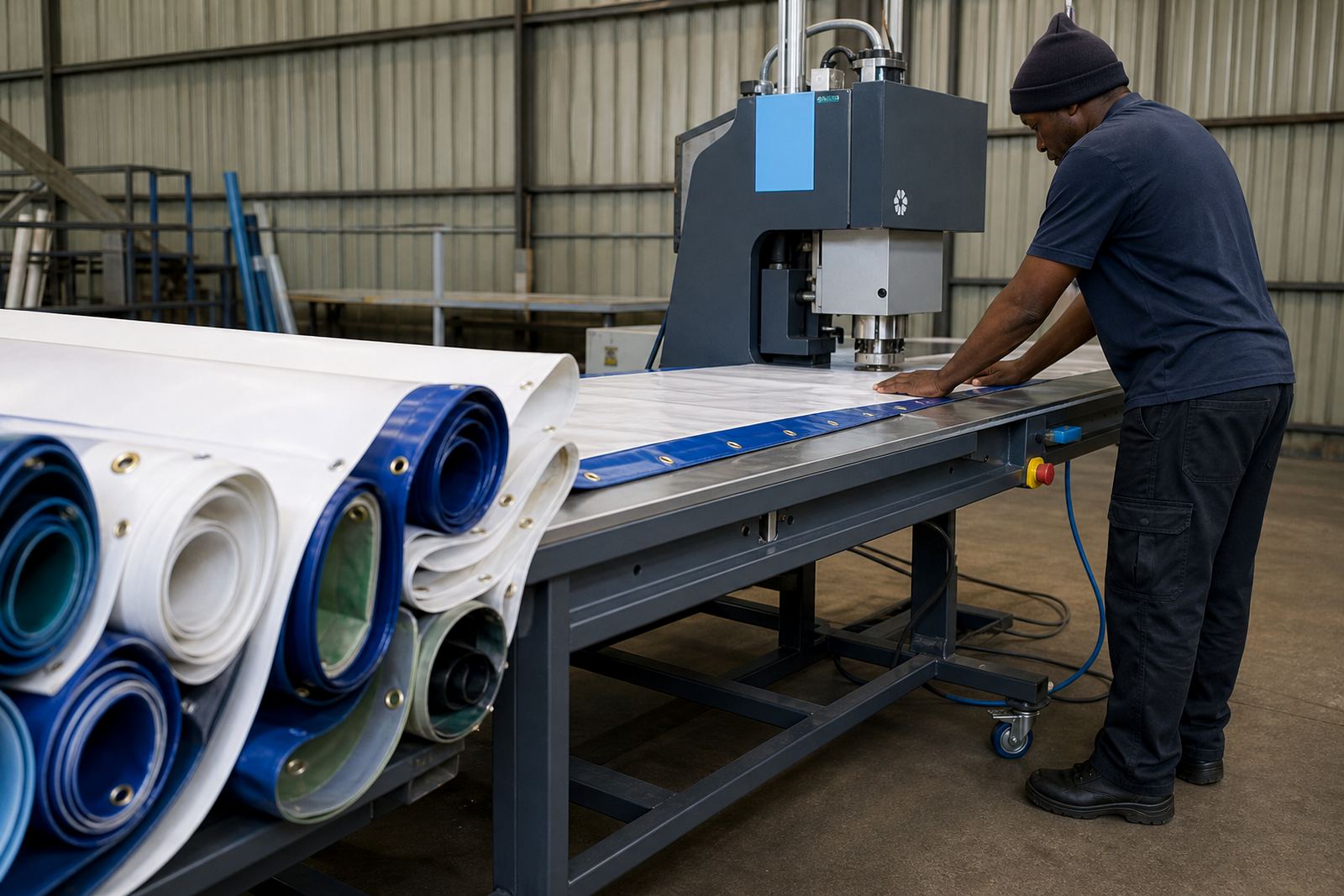
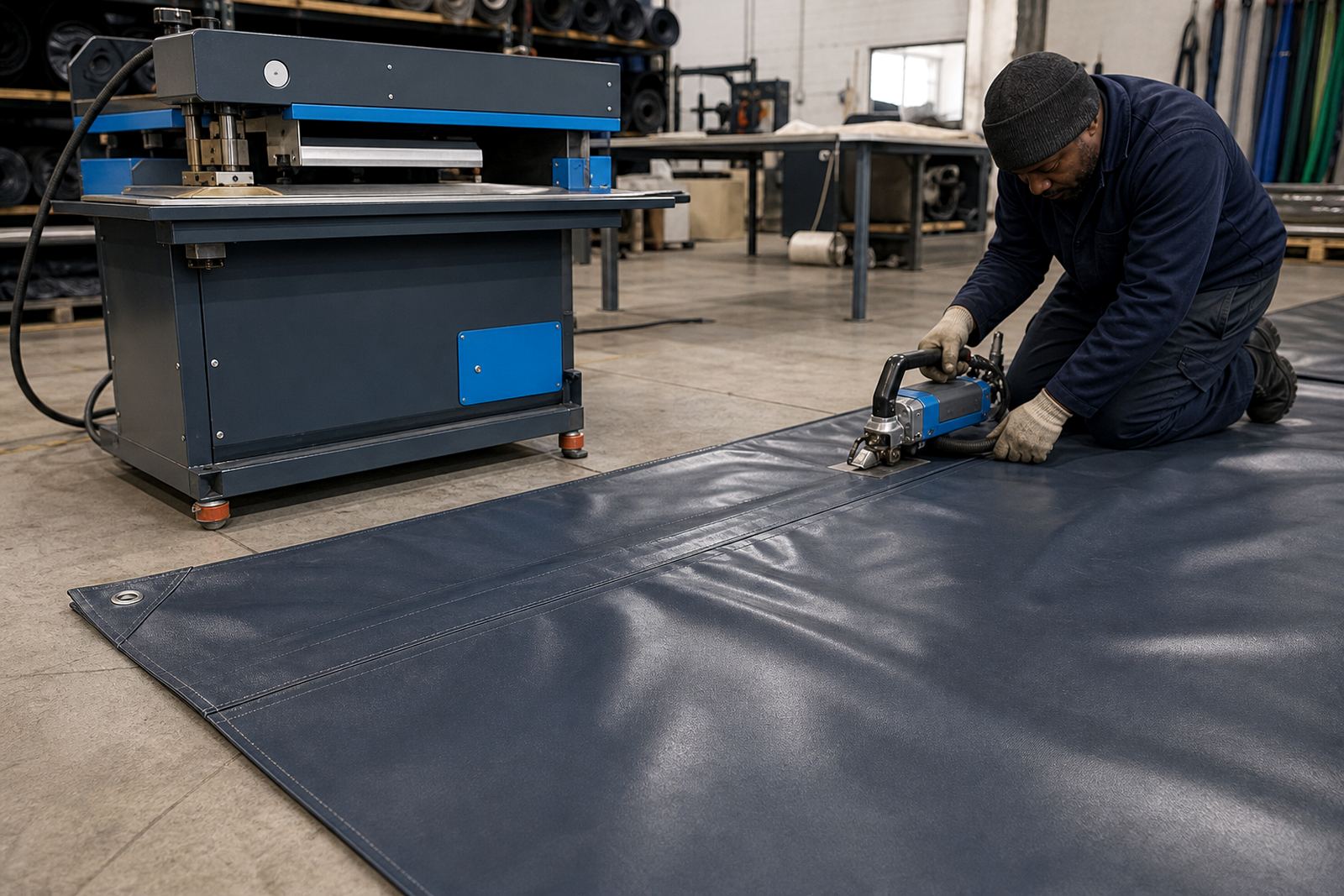
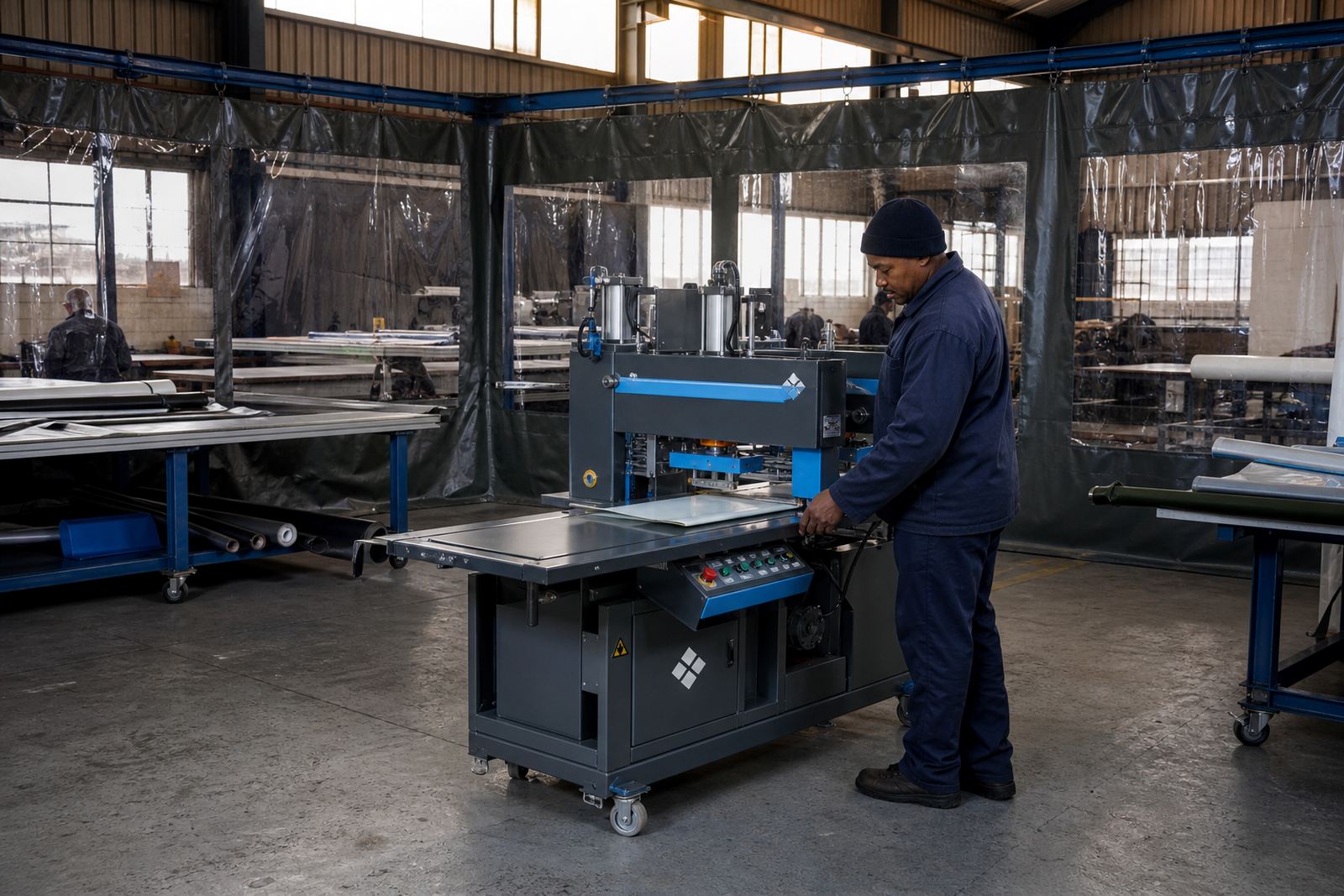
Most pool cover makers use a mix of high-frequency welding and hot-air or hot-wedge welding. High-frequency, also called radio frequency welding, suits straight, repeatable seams on compatible PVC-coated fabrics. It gives a clean bond and is useful where seam appearance matters. Hot-air and hot-wedge machines are common for hems, long edge runs, repairs and shaped sections where the operator needs more hand control.
A practical line for this kind of work usually includes:
- a high-frequency press for straight seams and reinforcement joins
- a hot-air or hot-wedge welder for hems, folded edges and small adjustments
- guides for seam width control
- rollers or pressure wheels for even finish
- cutting tables and alignment marks for repeat sizing
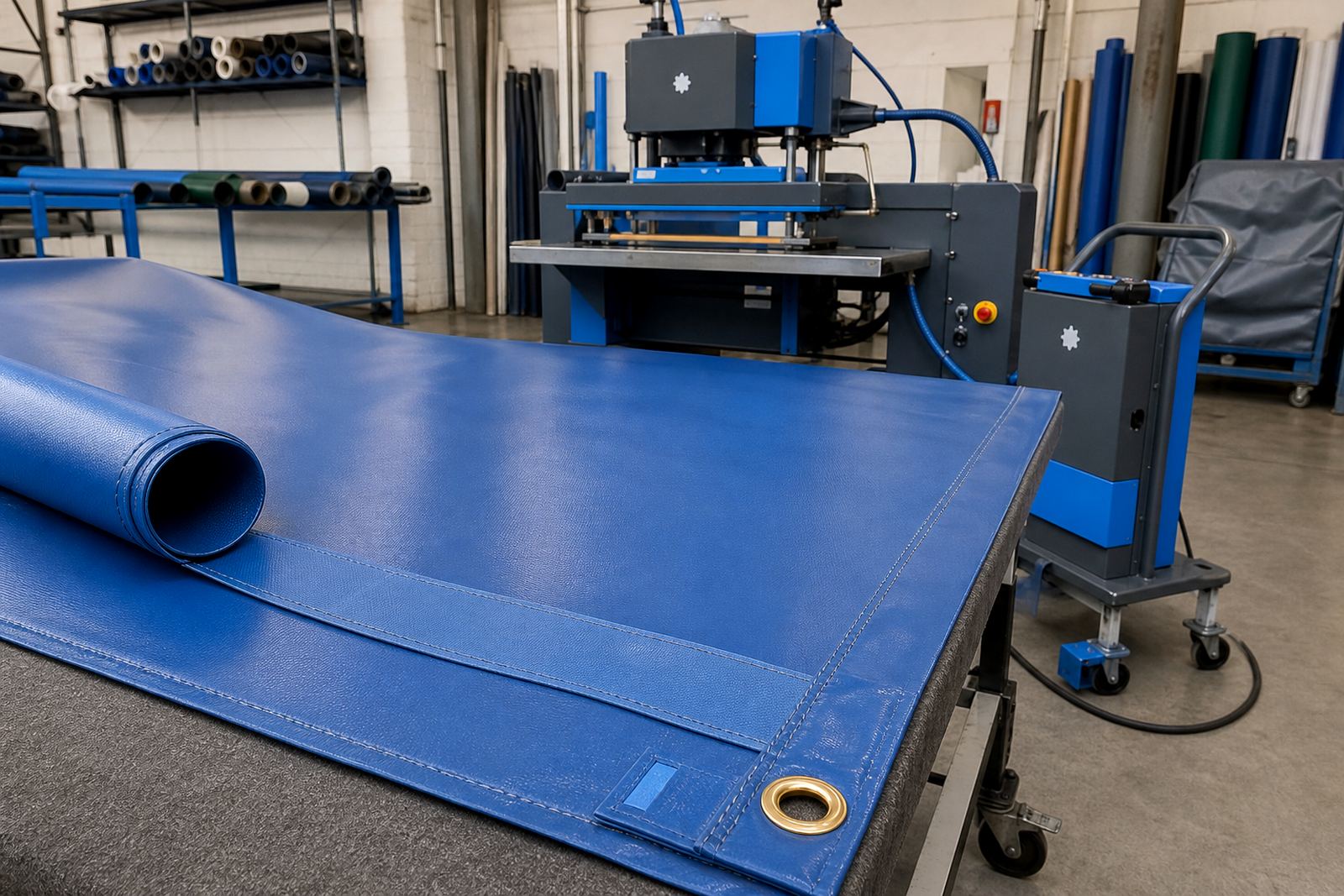
- eyelet tooling and keder attachment where the cover design calls for it
For workshops in Durban or Cape Town, humidity and coastal air can affect storage and handling of PVC stock, so dry stacking and clean feed paths matter. In Pretoria, Johannesburg and Bloemfontein, dust control is more of a workshop issue, especially where covers are cut, moved and welded in the same room.
Planning the workshop so the cover stays square
Pool cover production works best when the table, feed direction and operator movement are planned before the machine arrives. Long sheets should enter the welding area without snagging, and there should be enough clear space to turn a folded edge without dragging the fabric over sharp corners. If the machine sits too close to the cut table, the operator ends up fighting the material instead of guiding it.
For narrow covers and tensioned shapes, a good layout includes a straight reference edge, storage for offcuts and a separate area for eyelet work. Many shops also keep one side free for inspection, so seam width, corner finish and folded hems can be checked before the cover leaves the bench. If keder is part of the design, it helps to place the feed path close to the weld head so the profile stays aligned and the insert does not twist.
- Keep the main welding path clear of scrap and loose trimmings
- Set one fixed measuring point for repeated pool cover sizes
- Separate dirty cutting work from final seam work
- Mark the common seam width on the table or guide rail
- Leave space for cooling and stacking finished covers flat
Seam types, hems and fixing points that hold up
Pool cover makers normally use lap seams, folded hems and reinforced edge strips, depending on the tension and handling on site. For a cover that gets rolled and unrolled often, the hem must be even and not too bulky, otherwise it turns stiff at the reel or around the edge of the pool. Where the design calls for fixings, eyelet placement needs to be spaced neatly so the pull is shared rather than concentrated at one point.
Keder work is useful on some pool cover systems where the edge must slide into a channel or profile. That calls for steady weld pressure and careful alignment, because a twisted keder line will make installation messy. Seams should be tested on sample offcuts before full production starts, especially when a workshop changes material thickness, coating weight or reinforcement style.
Common mistakes include overheating the edge, rushing the fold, and using the same setting for every fabric batch. A machine that is not serviced properly can also leave weak spots, uneven pressure marks or poor tracking on long seams. That is why electrode condition, roller wear and guide alignment matter as much as the weld setting itself.
Operator safety and servicing on busy production floors
High-frequency equipment and heated welding tools both need proper guarding, clean working habits and trained operators. Hands should stay clear of the active weld zone, and the floor around the machine should be dry and uncluttered. Cables, hoses and moving parts need a clear path so the operator can handle long sheets without tripping or pulling the fabric off line.
In a pool cover workshop, service work should be planned around production pressure rather than waiting for a breakdown. Preventive servicing, fault finding, tooling alignment and roller replacement keep the machine working consistently. When a unit starts drifting off centre or leaving weak edges, the problem often grows slowly before it becomes obvious. A quick check of pressure, heat delivery and alignment can save a lot of wasted material.
- Check guards, switches and foot controls before shift start
- Keep the weld area clean of dust, offcuts and loose cords
- Inspect seams on sample pieces after any setting change
- Service rollers and electrodes before they wear unevenly
- Train new operators on feed speed, fold control and eyelet spacing
Budget levels for pool cover welding equipment in Rand
Budget depends on the type of machine, the size of the working table, the tooling needed and whether the workshop wants a single-purpose unit or a mixed production set-up. A small hot-air or hot-wedge machine for hems, repairs and light batch work sits in a lower range than a full production line with alignment fixtures and repeat tooling. High-frequency equipment, with its control system and tooling set, generally sits higher because it is built for consistent seam formation on suitable PVC-coated fabrics.
For pool cover makers in Johannesburg, Pretoria, Durban, Cape Town or Bloemfontein, transport, commissioning and operator training should also be allowed for in the budget. Spare tooling, replacement rollers, seam test material and preventive servicing are worth including from the start. It is better to size the machine for the actual width of the biggest pool cover you make, rather than buying too small and forcing awkward handling on every job.
As a rough planning guide, many workshops start by setting aside a modest service budget for routine checks and a higher capital allowance for the main welding machine and its tooling. The right figure depends on output, work mix and how much finishing is done in-house.