Where Drop Sheets Fail First
Drop sheets are often made from PVC-coated fabric or similar coated materials used to protect floors, machinery and stock during painting, sanding or site work. The trouble usually starts at the joins and edges. A neat sheet can still fail if the seam is too narrow, the overlap is uneven, or the eyelets pull through a weak hem.
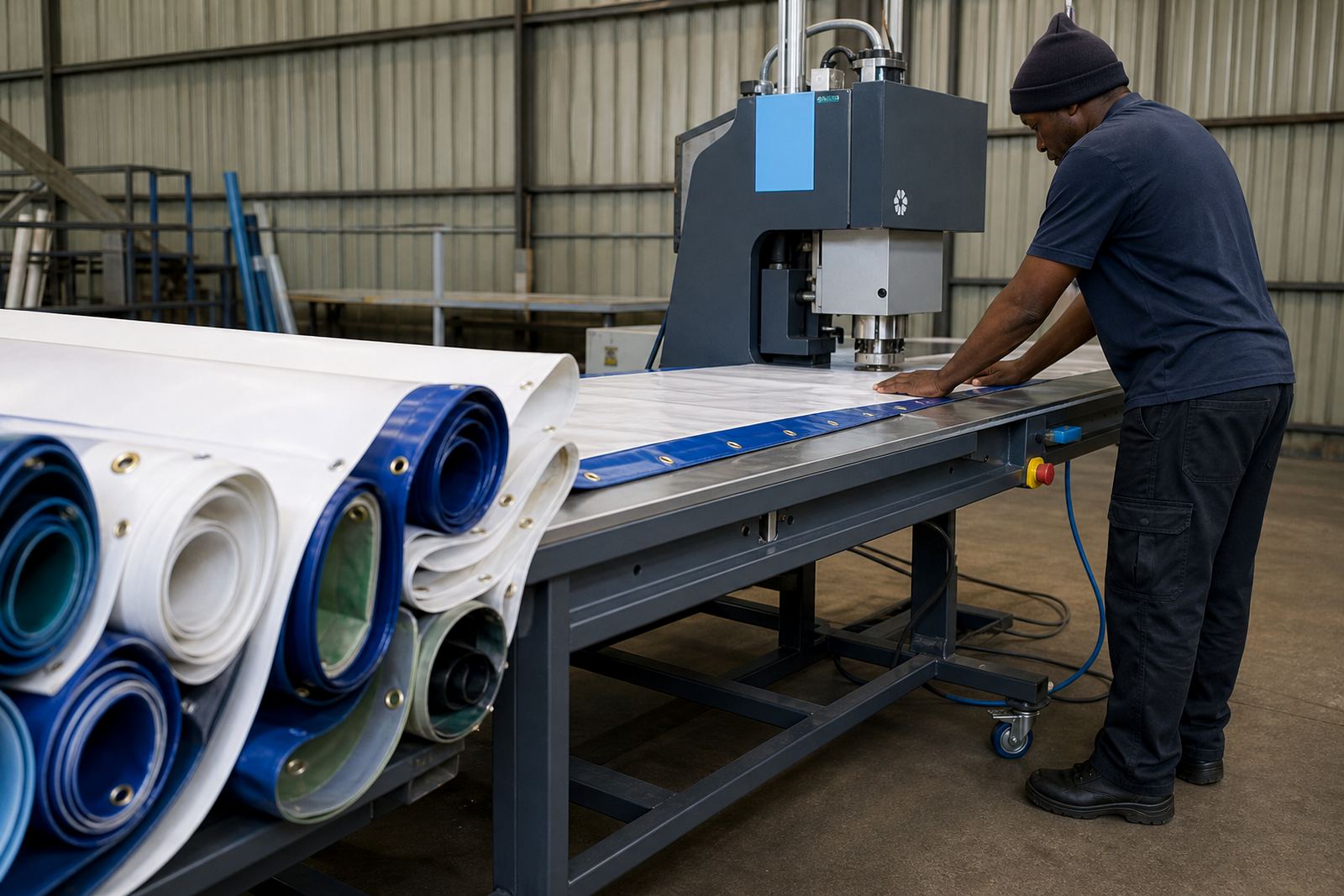
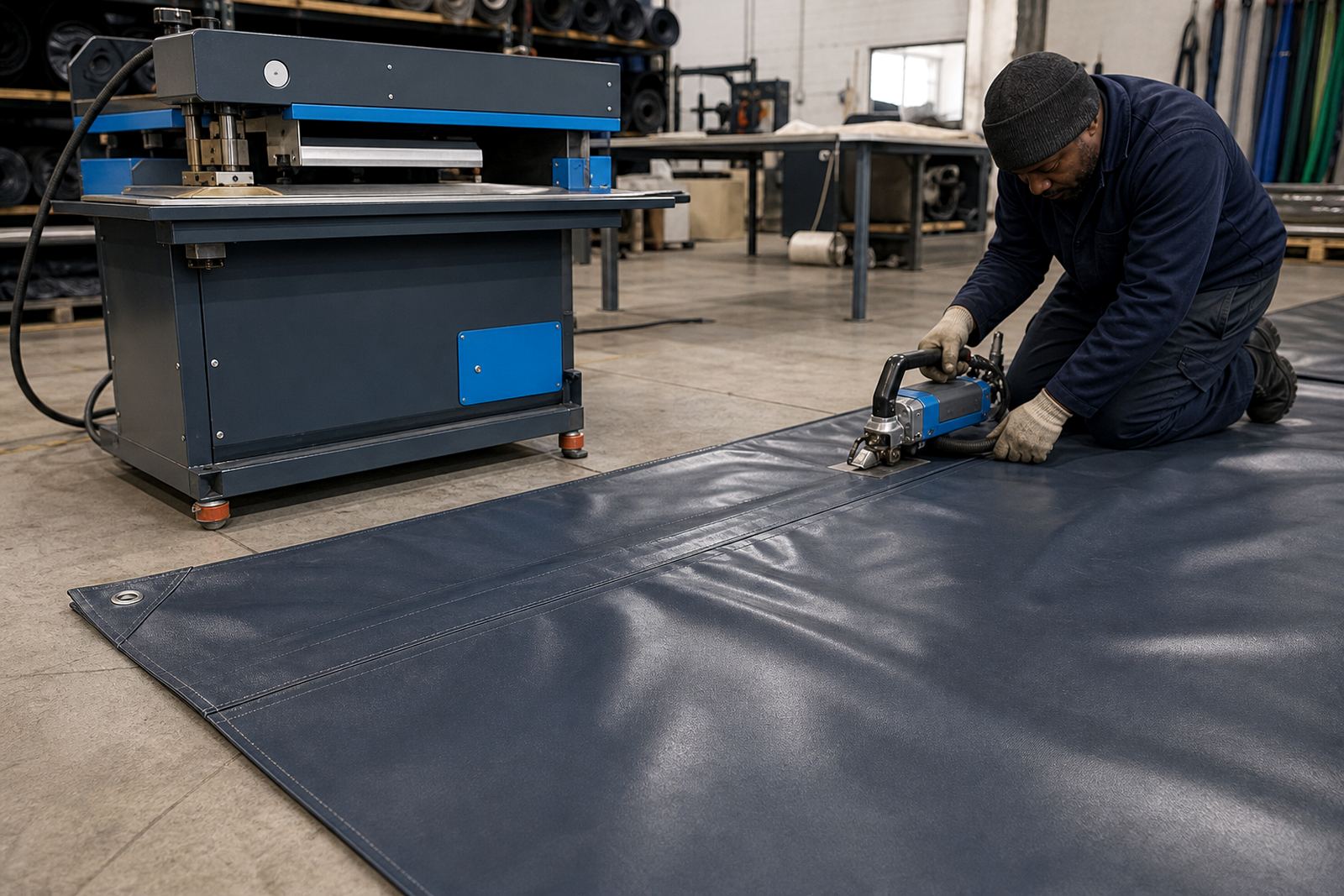
For this use case, the machine choice depends on the production volume and the finish required. High-frequency welding suits repeatable, straight seams and clean panel joins on compatible PVC-coated fabrics. Hot-air and hot-wedge welders are useful for longer runs, hems and joining wider sheets where the operator needs more layout flexibility. A good setup keeps the weld line straight, the material flat and the edge finish consistent from first piece to last.
- Panel joins for standard drop sheets and oversized covers
- Reinforced hems for edge strength and eyelet placement
- Corner patches where wear is highest
- Flat seams that do not create hard ridges or trapped dirt lines
Machine Sets That Suit This Work
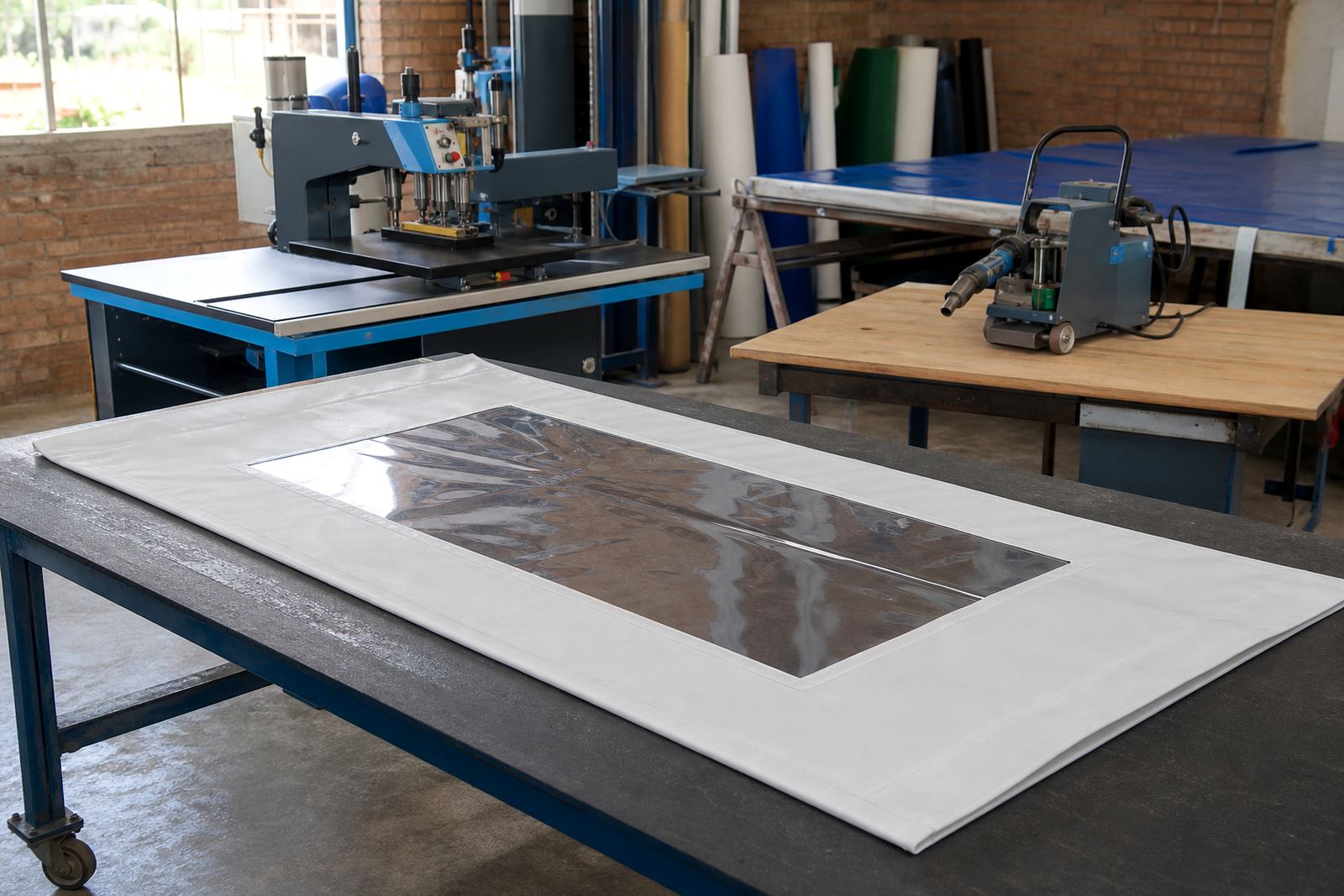
A practical drop sheet line normally uses one or more welding machines, a cutting table, measuring tools and edge-finish tooling. High-frequency units are common where the same seam needs to be repeated many times with consistent pressure and alignment. Hot-air or hot-wedge units are often added for site-friendly flexibility, especially when sheet sizes vary or when long hems need attention before eyelet work.
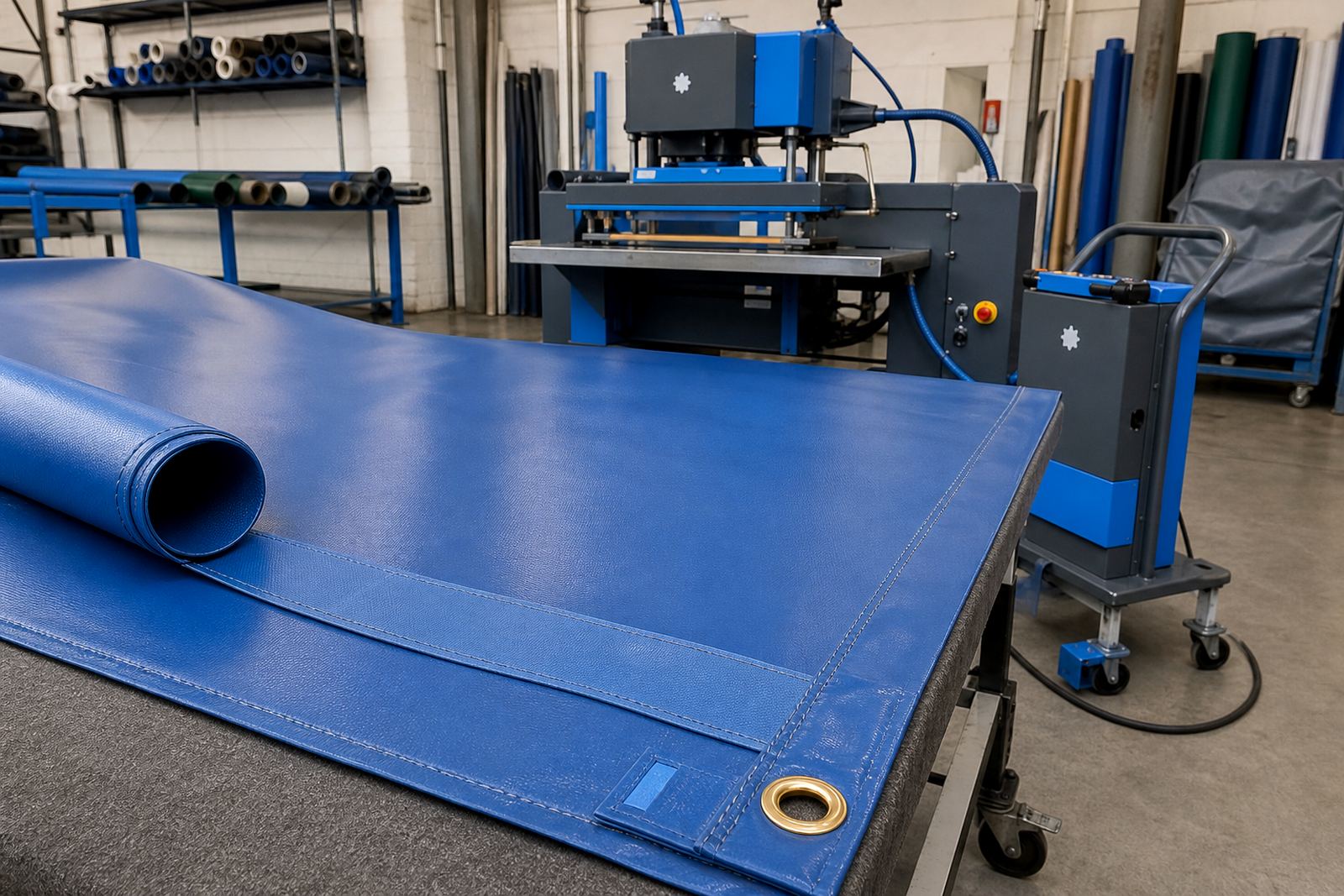
The tooling also matters. Operators usually need clean electrodes or welding bars for the seam profile, guides for edge spacing and simple fixtures to keep overlap consistent. If the sheet is fitted with eyelets, the punching and setting stages must sit on a reinforced hem, not on a single layer edge. On larger jobs the layout should allow enough room to move full-width panels without dragging wet or dusty material across the work area.
- High-frequency welder for straight panel seams on compatible PVC-coated fabric
- Hot-air or hot-wedge welder for hems, long runs and variable layouts
- Cutting and marking tools for panel sizing
- Eyelet tooling and reinforcement strips for edge finishing
Layout Advice Before The First Weld
Drop sheet planning starts with the finished use. A sheet for painting crews needs a different edge allowance from one that will be tied over machinery or folded and stored every day. The panel layout should be arranged so the welds run in sensible directions, with the strongest seams placed where stress is expected. For large floor protection sheets, a full layout check helps avoid short panels that create extra joins and waste material.
Allow for overlap, hem width and eyelet spacing before cutting any material. On PVC-coated fabrics, the wrong cut line can leave too little grip for the weld or not enough room for the edge fold. In Cape Town or Durban, where coastal humidity and storage conditions can affect handling, it also helps to keep material stacked flat and clean before welding. Dust, moisture and grit make edge finishing harder and can spoil the seam appearance.
- Mark seam lines before cutting the full batch
- Check finished size after hems are added, not before
- Keep eyelet centres uniform so tie-downs sit evenly
- Store cut panels flat to avoid creases at the weld line
Common Faults Seen On Site
Most problems on drop sheet work come from rushing the edge preparation. A common fault is a seam that looks fine but has poor bonding at the ends because the material was not aligned properly. Another is a hem that is too narrow for eyelet setting, which leads to tearing when the sheet is pulled tight. If the weld temperature or dwell time is wrong, the seam can become brittle or patchy, especially on thicker coated fabrics.
Machine servicing is part of keeping this work moving. Rollers, guides, electrodes and alignment parts need regular inspection because small wear marks show up quickly on long straight seams. Fault finding should include the heat system, pressure set-up and feed consistency. For operators, safe handling matters too: guards in place, hands clear of the weld zone and a tidy floor around the machine. Slippery offcuts and loose cords are a real risk in a busy workshop.
- Weak seam ends from poor starting and stopping technique
- Eyelets fitted too close to the cut edge
- Creased panels that trap air or dirt under the weld
- Worn tooling that leaves an uneven seam finish
Budget Bands For Drop Sheet Production
Budgeting for drop sheet welding equipment depends on the size of the workshop, the material range and whether the line needs straight-seam output or mixed work with hems and eyelets. Entry-level workshop setups for smaller production runs can start in the lower Rand hundreds of thousands, while heavier-duty systems with better alignment, tooling and support requirements move higher. A fuller production line with installation, operator training and service planning sits in a broader mid-range.
It is also worth budgeting for ongoing parts and servicing. Consumables, edge tooling, roller replacement and electrode refurbishment are part of normal wear in this trade. If the workshop handles frequent orders for Johannesburg, Pretoria, Durban, Cape Town or Bloemfontein, downtime costs quickly show up in missed delivery windows and rework. A service plan and basic spare parts stock usually cost less than sorting repeated seam faults after the fact.
- Smaller workshop setup: from the lower Rand hundreds of thousands
- Mixed production line with more tooling: mid to upper Rand hundreds of thousands
- Service, spares and training should be budgeted separately
What A Good Drop Sheet Finish Looks Like
A proper finish is easy to see. The seam sits flat, the hem is even, and the eyelets line up without puckering. The sheet folds neatly, lies square on the floor and does not fight the operator when it is packed or tied down. In this trade, neat edge work is not cosmetic only, it is what keeps the sheet usable after repeated handling.
PVCWelder supports tarpaulin, banner and tent makers who need high-frequency and hot-air welding solutions for this kind of work across South Africa. From Germiston and the wider Ekurhuleni area, support can cover machine installation, commissioning, operator training, preventive servicing, tooling alignment, site callouts and parts supply for drop sheet production lines.