Sidewalls that fit the structure first time
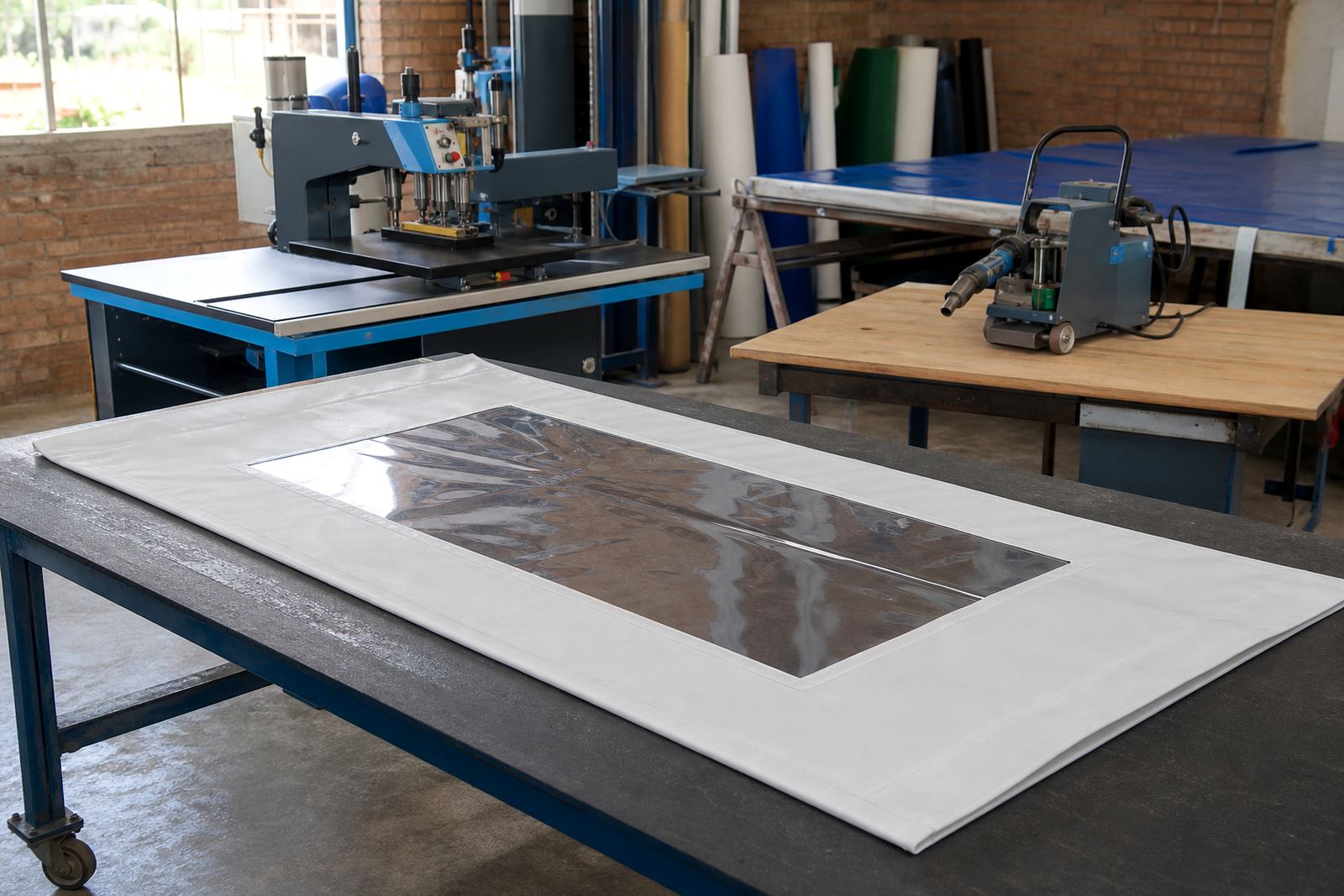
Sidewall panels for marquees, frame tents and event structures usually combine opaque PVC-coated fabric with clear viewing sections, reinforced hems and fastening points along the edges. The cutting and welding plan has to match the frame size, door openings, overlap allowance and the way the panels will be joined on site. If the layout is rushed, the panel might look fine on the table but pull out of line once it is clipped to the frame and tensioned.
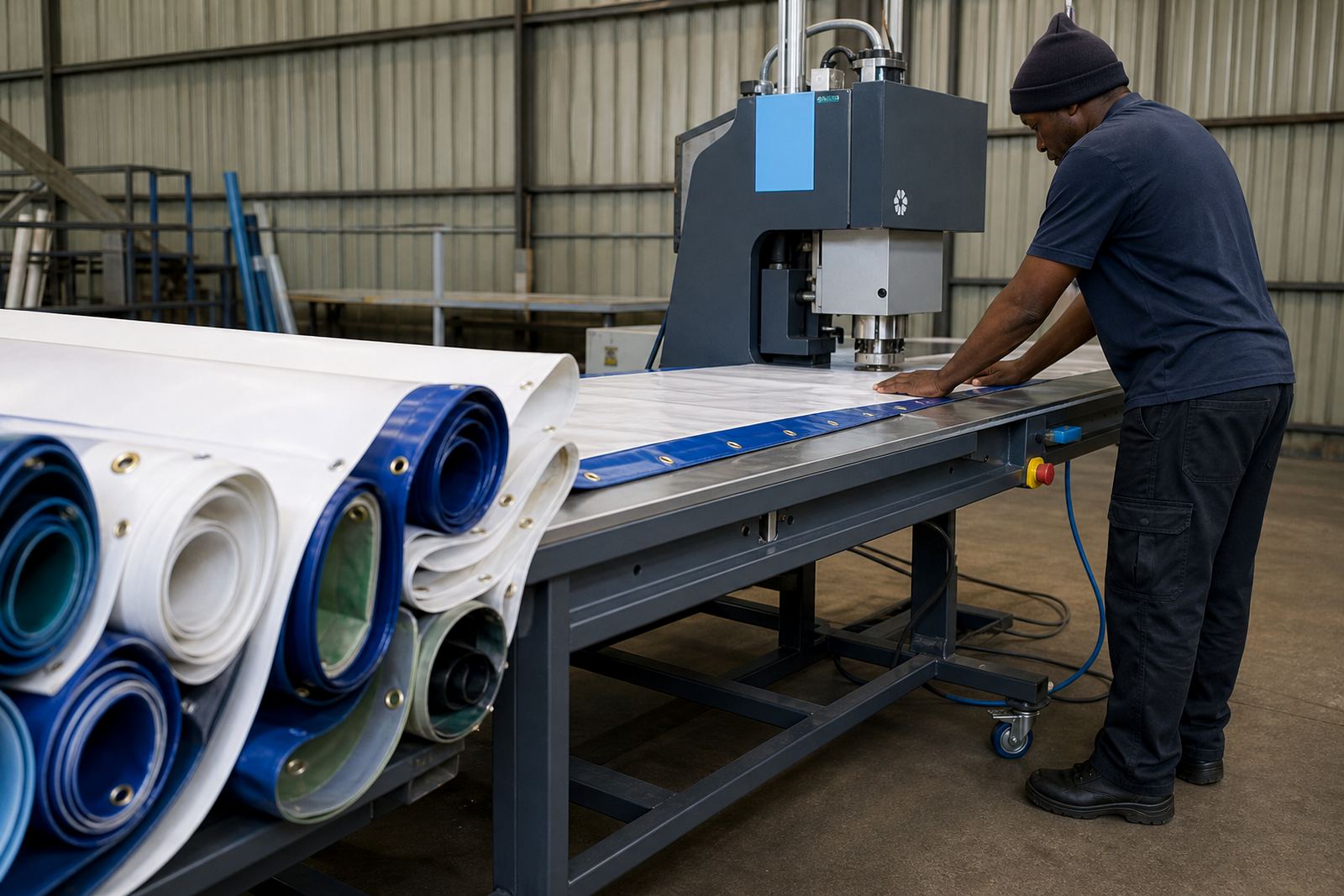
For this kind of work, manufacturers commonly use high-frequency welding for straight, repeatable seams on compatible PVC-coated materials, and hot-air or hot-wedge welding where longer runs or site-friendly fabric joining is needed. Eyelets, webbing tabs and keder edges need to sit in the right position, otherwise the sidewall can twist, sag or leave gaps at the corners.
- Measure the frame bay, not only the fabric sheet
- Allow for hems, overlaps and corner reinforcement
- Keep clear panels square so the opening does not bow
What the workshop usually sets up for this job
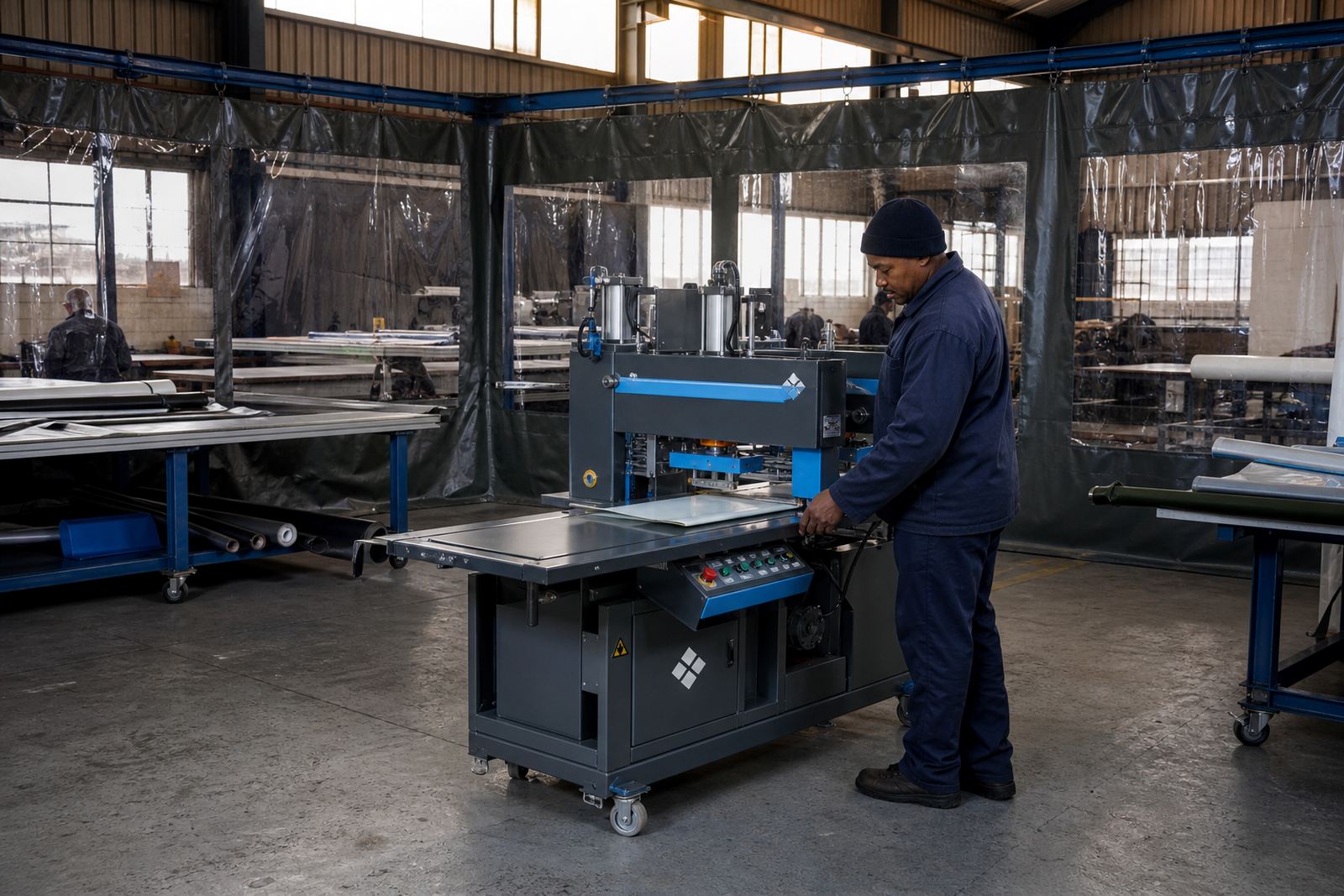
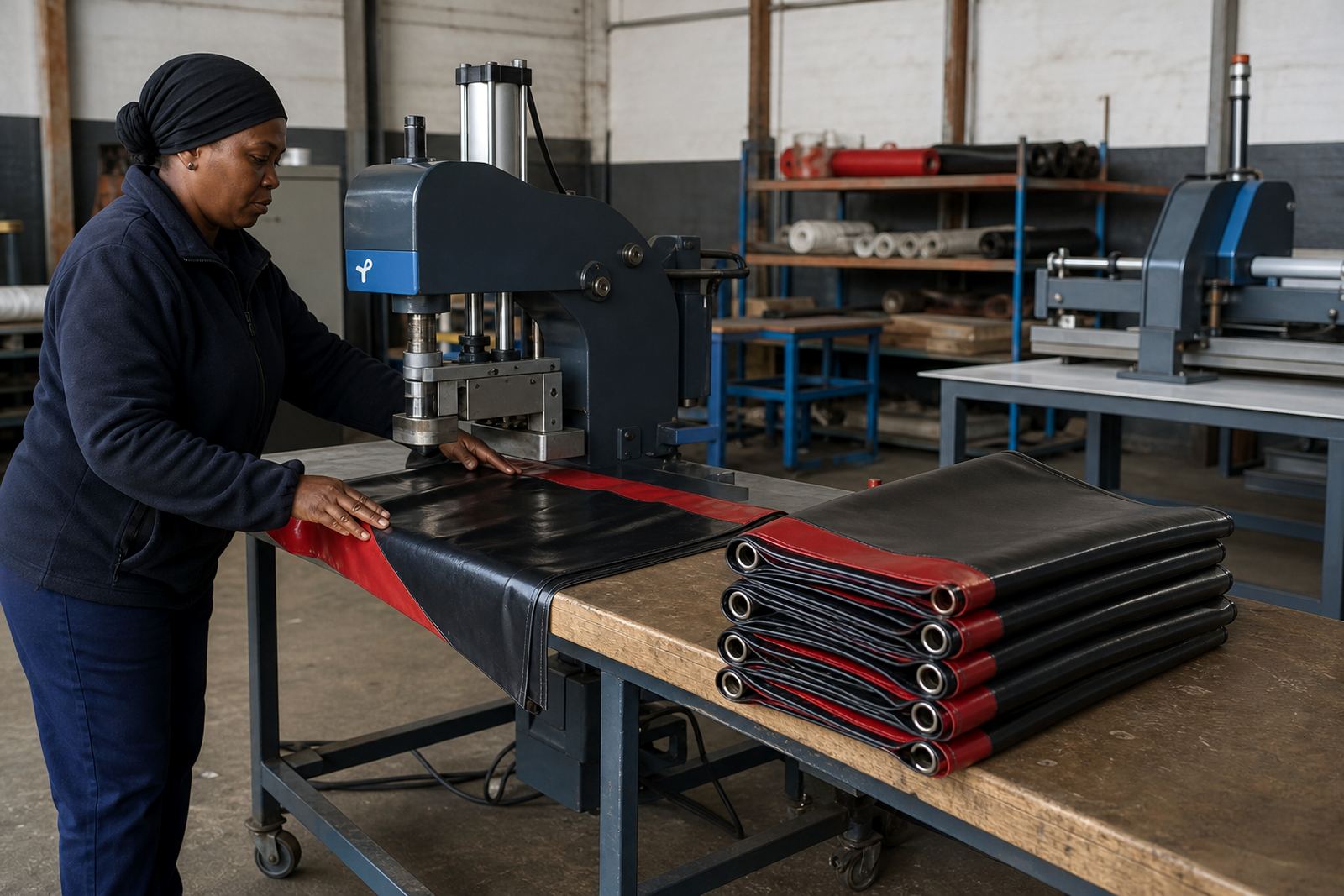
A practical tent sidewall line often includes a high-frequency welder for straight seams, a hot-air or hot-wedge welder for long welds and repairs, cutting tables, alignment guides and punching equipment for eyelets. Some shops also use tooling for keder strips, edge folds and patch work on doors or clear panel sections. The machine choice depends on fabric thickness, seam type and how much repetition the team handles each week.
On sidewall work, the operator needs stable temperature or output settings, even pressure and clean material edges. A tired roller, worn electrode or poor alignment can leave weak spots that show up later when the tent is under load. Coastal humidity in places like Durban can also make storage and handling trickier, so finished panels should be kept flat and clean before dispatch.
- High-frequency welder for sealed seams on compatible PVC-coated fabric
- Hot-air or hot-wedge welder for hems, repairs and longer runs
- Eyelet press, cutting tools and keder handling accessories
Planning the panel layout before the first weld
Good sidewall planning starts with the tent drawing and the actual frame measurements on site. Door positions, window height, zipper lines and panel joins should be marked before the first cut. If the workshop skips that step, the result can be a sidewall that looks neat in rolls but does not line up with poles, brackets or neighbouring panels.
For event structures, the clear section often needs a border around it so the heat does not distort the transparent material. Hems should be wide enough for strength, but not so bulky that they interfere with clips or lacing. Where keder is used, the edge needs consistent feed through the channel so the sidewall slides smoothly into the track without forcing the seam.
- Check whether the sidewall needs doors, vents or overlap flaps
- Keep clear sections away from fold lines where possible
- Mark eyelet spacing before cutting the edge folds
Mistakes that cost time on site
The most common faults are uneven seam width, rushed edge finishing, incorrect eyelet spacing and clear panels that are welded too close to the border. Another problem is mixing materials without testing the weld first. PVC-coated fabrics behave differently from one weight to another, so a setting that works on one roll may leave a weak seam or a burnt edge on the next.
It also helps to watch the handling of finished sidewalls. Sharp bends, dirty floors and tight storage straps can crease the clear sections and stress the hems. For tent makers in Johannesburg, Pretoria or Bloemfontein, that usually means checking the finished packs before delivery rather than discovering the issue on the erection day.
- Do not place eyelets too close to welded corners
- Test weld settings on offcuts before full production
- Do not fold clear panels across hot weld lines for long storage
Service and operator safety on welding machines
High-frequency and hot-air equipment both need regular servicing if the workshop wants consistent seams. That means checking rollers, guides, electrodes, heaters, pressure systems and the general condition of the machine beds. Preventive servicing helps reduce downtime, but it also protects the weld quality because worn tooling can leave gaps, scorch marks or poor bond strength.
Operator safety matters as much as output. Guards should stay in place, moving parts must be kept clear and material should be fed with hands positioned away from the weld area. Clean leads, tidy floors and correct earthing also matter in a busy fabrication space. In Germiston and Boksburg, where many shops run daily production for tarpaulins and banners as well, a proper service schedule saves a lot of trouble.
- Machine installation and commissioning
- Operator training and seam testing
- Tooling alignment, electrode refurbishment and roller replacement
Budget ranges for tent sidewall production
Budgets vary depending on whether a workshop is adding a single machine, setting up a full sidewall line or only looking for servicing and parts. A smaller repair-focused setup might start around R85 000 to R180 000 for welding equipment and basic tooling, while a more complete production line with alignment aids, cutting support and finishing equipment can move into the R220 000 to R650 000 range. Exact figures depend on machine type, output need and the condition of the existing workshop equipment.
For service work, preventive servicing, fault finding, tooling alignment and parts supply are usually planned around the machine condition and site access. Site callouts across South Africa need the right information up front, including the fabric type, seam fault and machine model in use, so the technician can arrive with the correct parts and tools.
- Smaller repair setups: about R85 000 to R180 000
- Mid-sized production lines: about R220 000 to R650 000
- Service, training and callouts priced to the job and machine condition