Barrier skins that keep the line tidy
Queue barriers are often judged by the finish on the skin rather than the frame alone. Compact welded sleeves, hemmed ends and straight side seams give printed PVC-coated fabric a cleaner look, and they help the skin sit properly on the post-and-belt setup without twisting. In busy public areas, that matters because the barrier gets seen from close range and from across a foyer or hall.
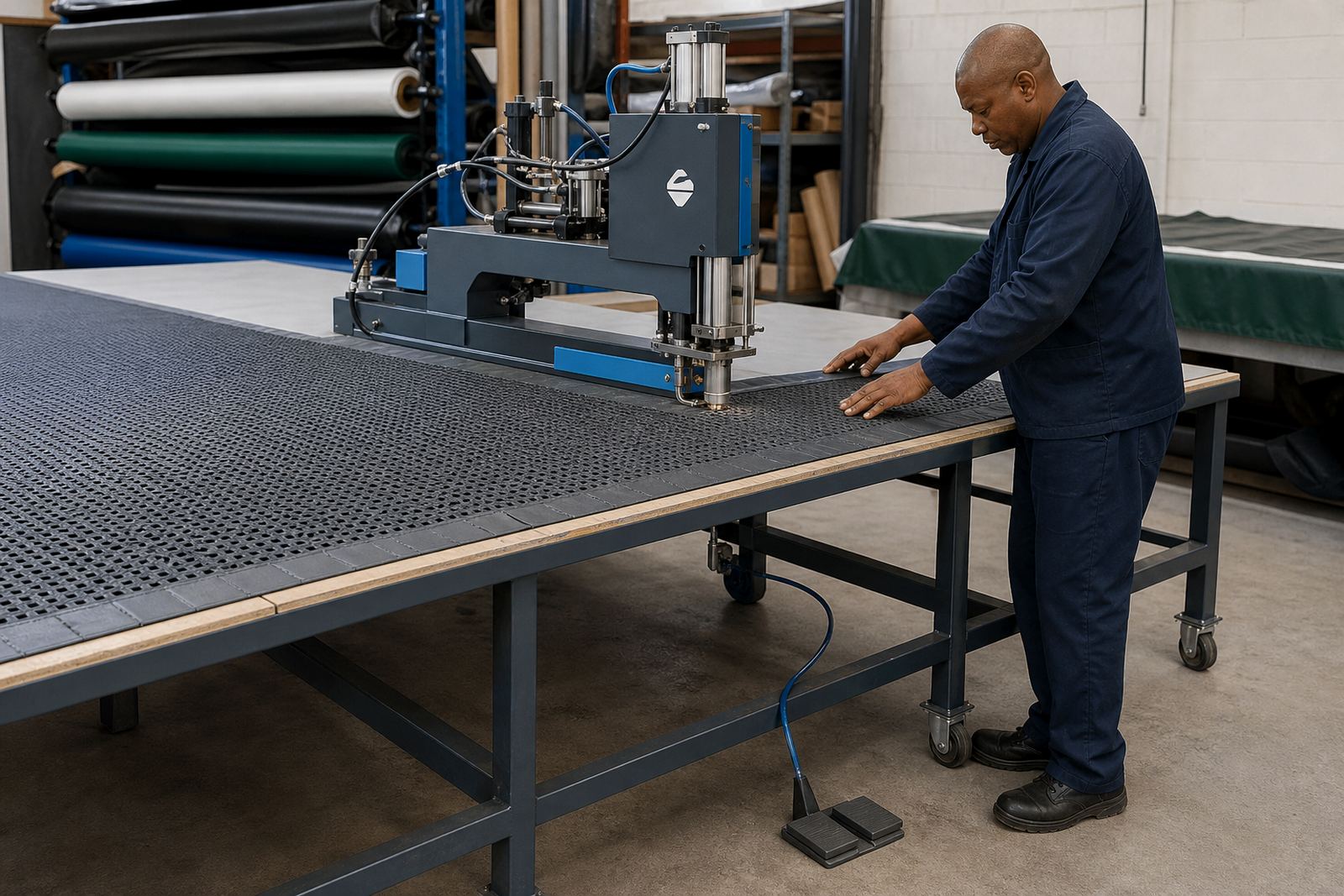
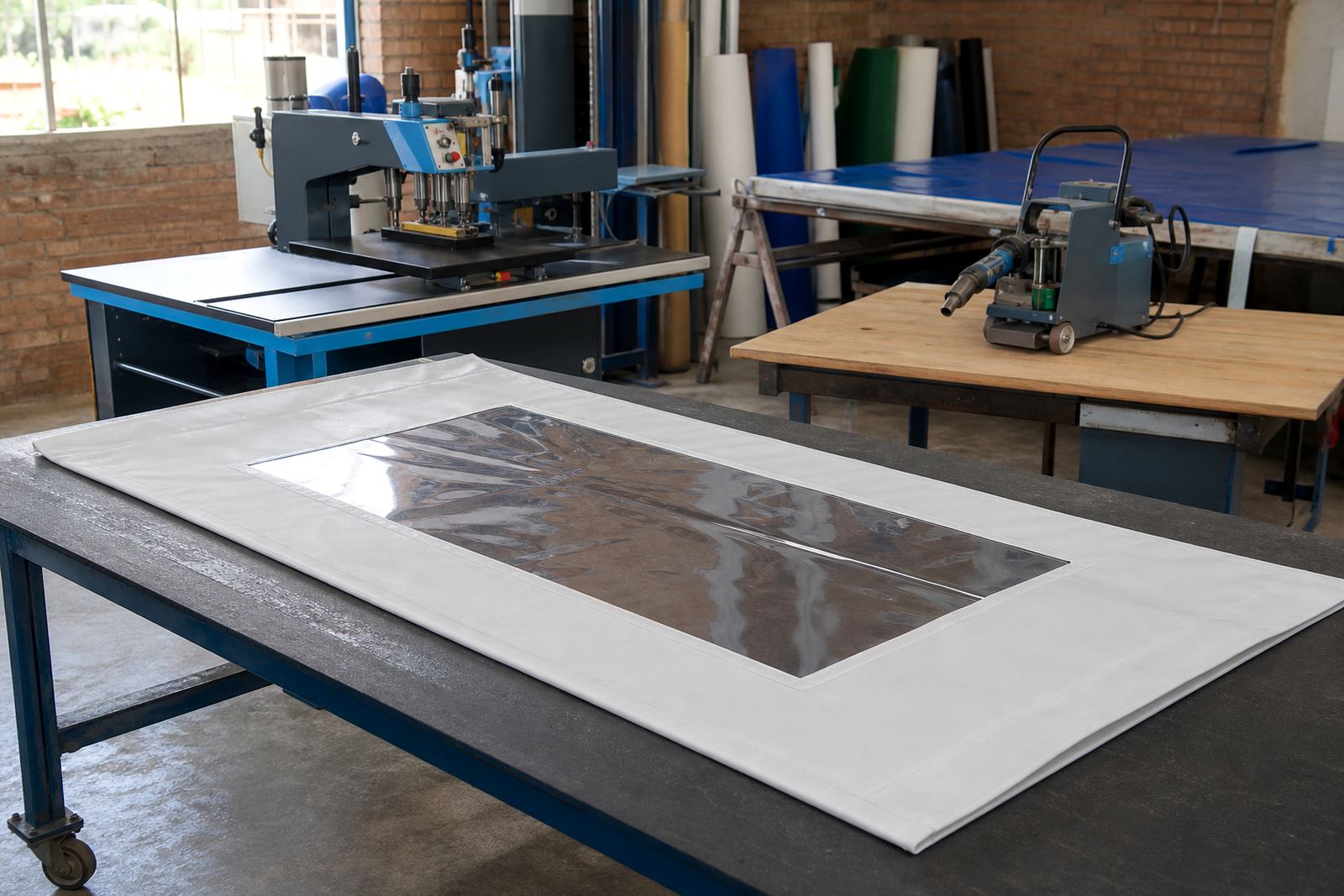
For this work, high-frequency welding is commonly used on compatible PVC-coated fabrics where a neat sealed seam is needed. Hot-air and hot-wedge welding are also used on the right materials, especially where long runs, hems or reinforcement strips need controlled heat and steady pressure. The choice depends on the fabric spec, the seam shape and the finish required for the job.
What a queue barrier line normally needs
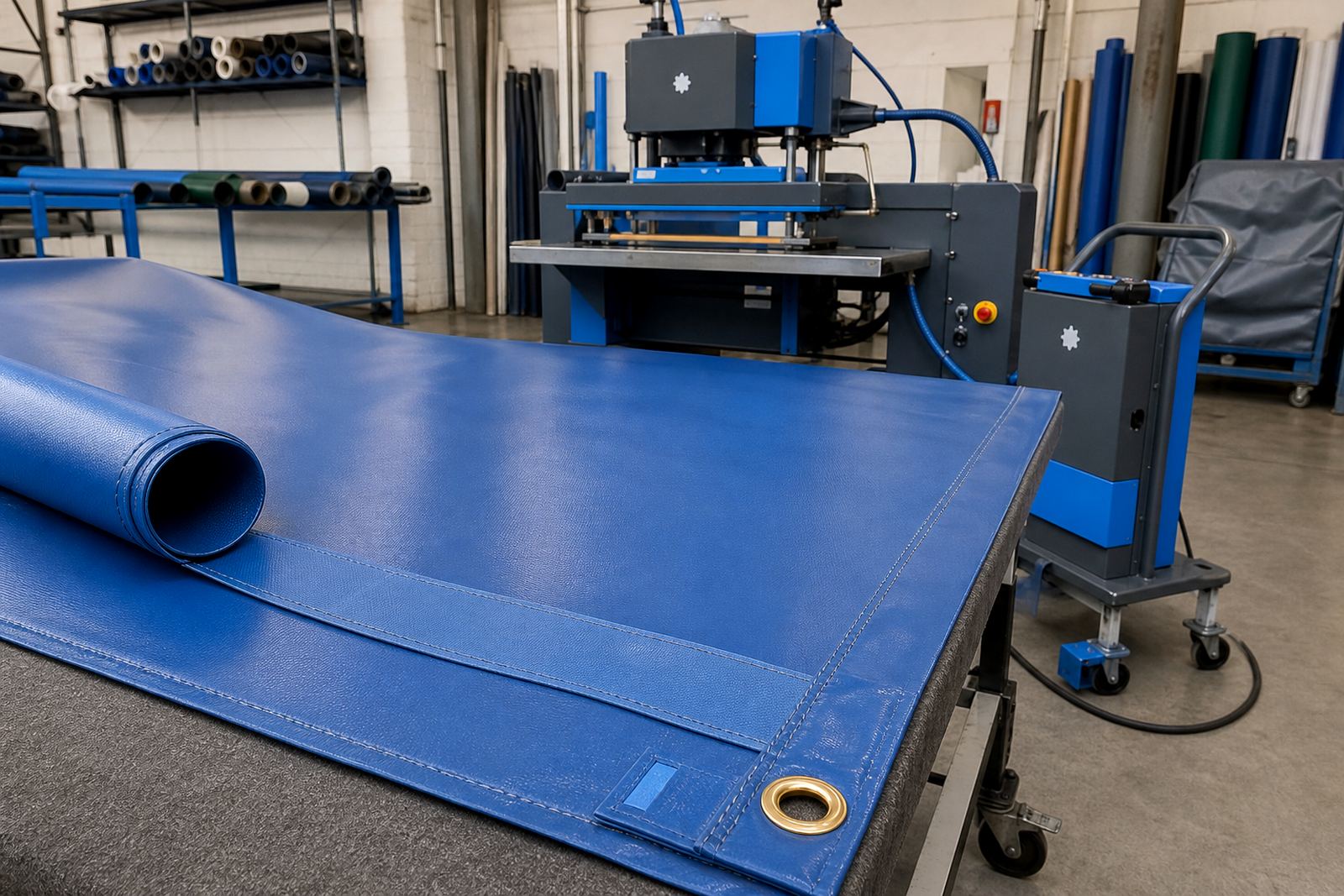
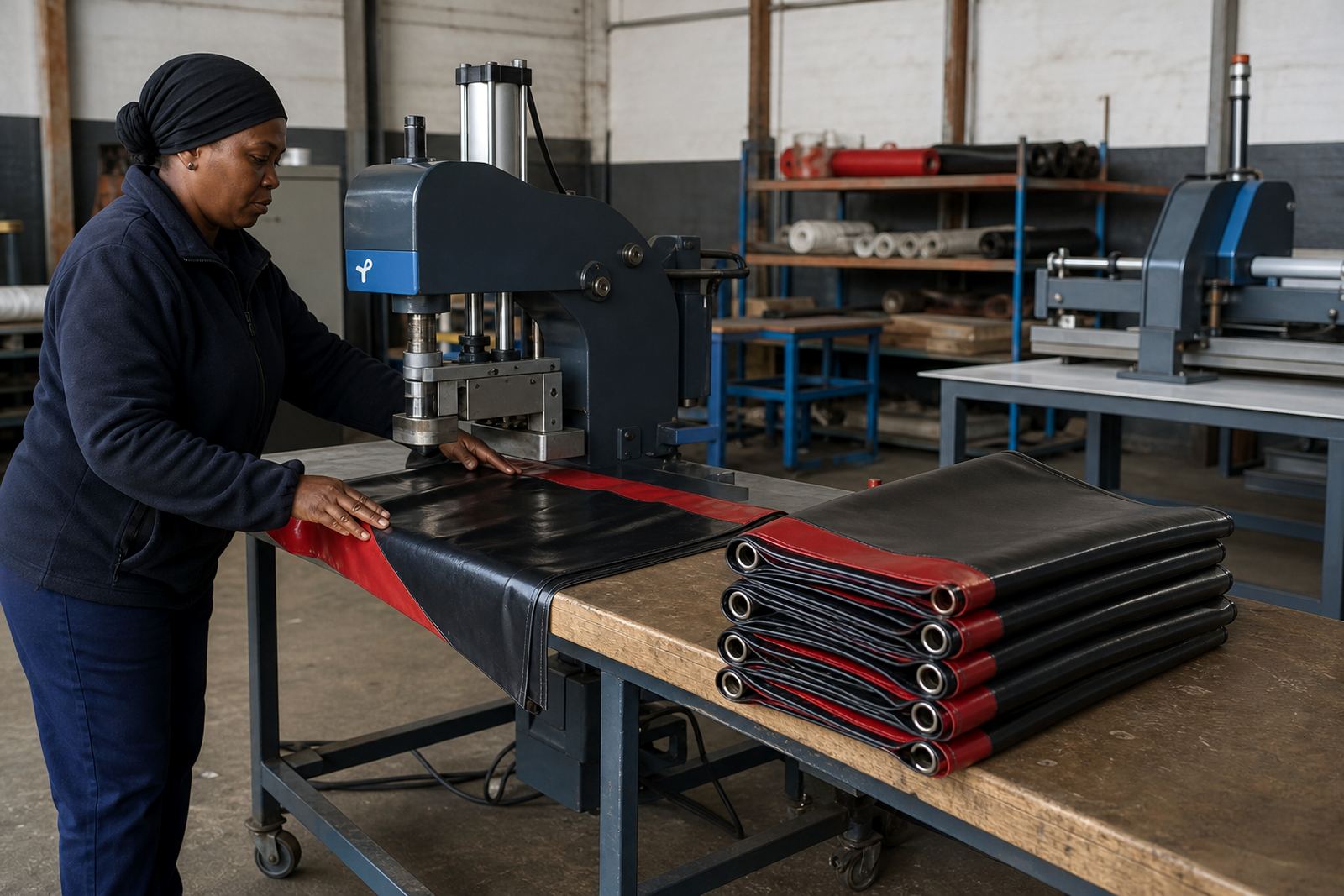
A practical setup for barrier skins does not need a large production floor, but it does need the right tooling and repeatable settings. Operators usually work with flat tables, cutting guides, corner templates and welding heads suited to narrow seams and short runs. Where eyelets or strap points are included, the fixing holes and reinforcement patches need to be placed consistently so the skin hangs evenly.
- High-frequency welder for sealed PVC seams and sleeve work
- Hot-air or hot-wedge machine for hems, long edges and reinforcement
- Cutting and trimming tools for clean printed panels
- Eyelet press and alignment guides for fixing points
- Measuring jigs for repeatable sleeve width and end fold depth
For branded queue barriers, the print area must be planned around the weld lines. If the artwork runs too close to the edge, the fold can hide part of the logo or leave a busy print right at the seam where it looks untidy.
Planning the skin around the frame
Good planning starts with the frame dimensions, post spacing and the way the barrier will be used on site. Some venues want a tight sleeve that grips the support pole, while others prefer a looser fit for quick fitting and removal. Indoor venues in Johannesburg and Pretoria often ask for a crisper presentation, while coastal work in Durban or Cape Town may need fabrics and finishes that cope better with moisture and frequent cleaning.
It helps to decide early whether the job needs a full printed wrap, a partial panel, or a simple branded strip across the face. That choice affects the weld layout, the amount of material used and the number of corners or joins. If the skin will be swapped between promotions, the ends should be finished so they can be handled often without fraying at the hem or stretching at the sleeve.
Seam details that show in the final result
Queue barrier skins are small, but the seam details are easy to see. Clean hemmed ends stop the panel from curling. Narrow, straight sleeve welds keep the skin from sliding around the post. If the job calls for a keder edge, the channel must be formed evenly so it feeds properly into the track or profile. Eyelet work must line up with the design so the barrier sits level and the tension is even across the face.
- Use the correct seam width for the weight of the fabric
- Keep print away from folds where the colour may crack or hide
- Test one sample before running the full batch
- Check the sleeve size against the actual frame, not just the drawing
- Trim weld flash carefully so the finish stays neat
A common mistake is to rush the first set-up and assume every unit after that will match. On a queue barrier run, even a few millimetres out on the sleeve or hem can show up at once when the panel is hung in a line.
Operator safety and machine care
High-frequency and thermal welding equipment needs proper guarding, clean work surfaces and trained handling. Operators should keep hands clear of the welding zone, check cooling and pressure settings before each run, and make sure the tooling is aligned before power is applied. With machines used daily for narrow seams and short cycles, small faults can become expensive if they are ignored.
Preventive servicing is part of keeping barrier work consistent. Electrode refurbishment, roller replacement, tooling alignment and seam testing all help reduce weak joins, burnt edges and uneven finish. In Germiston and across Ekurhuleni, many workshops also prefer scheduled site callouts when a machine starts to drift or the output changes from one shift to the next.
Budget ranges for queue barrier work
For budgeting, it helps to separate the machine from the job and the job from the ongoing support. A basic entry-level setup for narrow seam work is usually lower in cost than a larger high-frequency line with tooling for repeat production. Hot-air and hot-wedge equipment can sit in a different range again depending on the width capacity, control system and accessory set.
As a working guide in Rand, small workshop machines for light queue barrier production can start in the lower tens of thousands, while more capable production units with dedicated tooling, alignment aids and service support can move into the mid to higher tens of thousands or beyond. Installed systems, training, spare parts and service plans can add to the total, especially where the machine must be set up for regular use rather than occasional jobs.
- Small-volume skin production: lower tens of thousands of Rand
- Mid-range workshop equipment: higher tens of thousands of Rand
- Installed production setup with training and servicing: from the mid-range upward
Exact figures depend on seam width, output speed, tooling and the type of PVC-coated fabric being used. A queue barrier line for a busy signage workshop is not priced the same as a small event hire outfit with occasional replacement skins.