What mesh banner jobs ask of the weld line
Mesh banners are often used where wind load matters, such as road-facing signage, scaffold covers and fence wraps. The material needs enough open area to let air pass through, but the finished banner still has to hang straight, take eyelets cleanly and stay put at the edges. That is where weld choice matters. A heavy weld can pull the mesh out of shape, while a weak seam can open at the first hard pull or flap badly in a coastal breeze.
For these jobs, fabric makers usually look for a stable hem, a clean pocket for a pole or rope edge, and enough grip around the eyelets or reinforcement strips. High-frequency welding suits PVC-coated fabrics where a flat, controlled seam is needed. Hot-air and hot-wedge systems are also common where longer runs, hems and lap joints need steady heat control and straightforward handling. The right choice depends on the coating, thickness and how often the finished banner will be rolled, folded or re-used.
Machines that suit hems, pockets and long seams
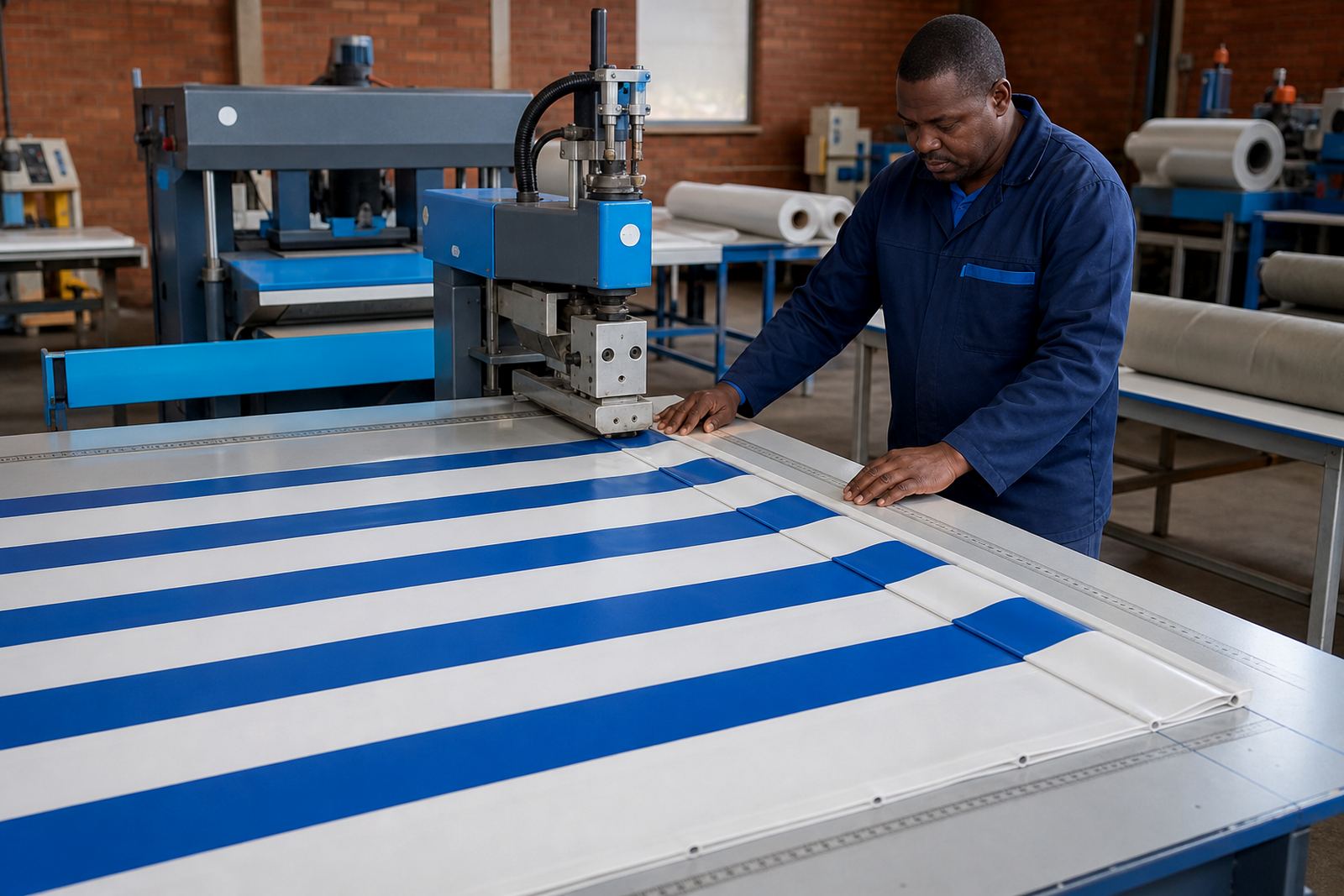
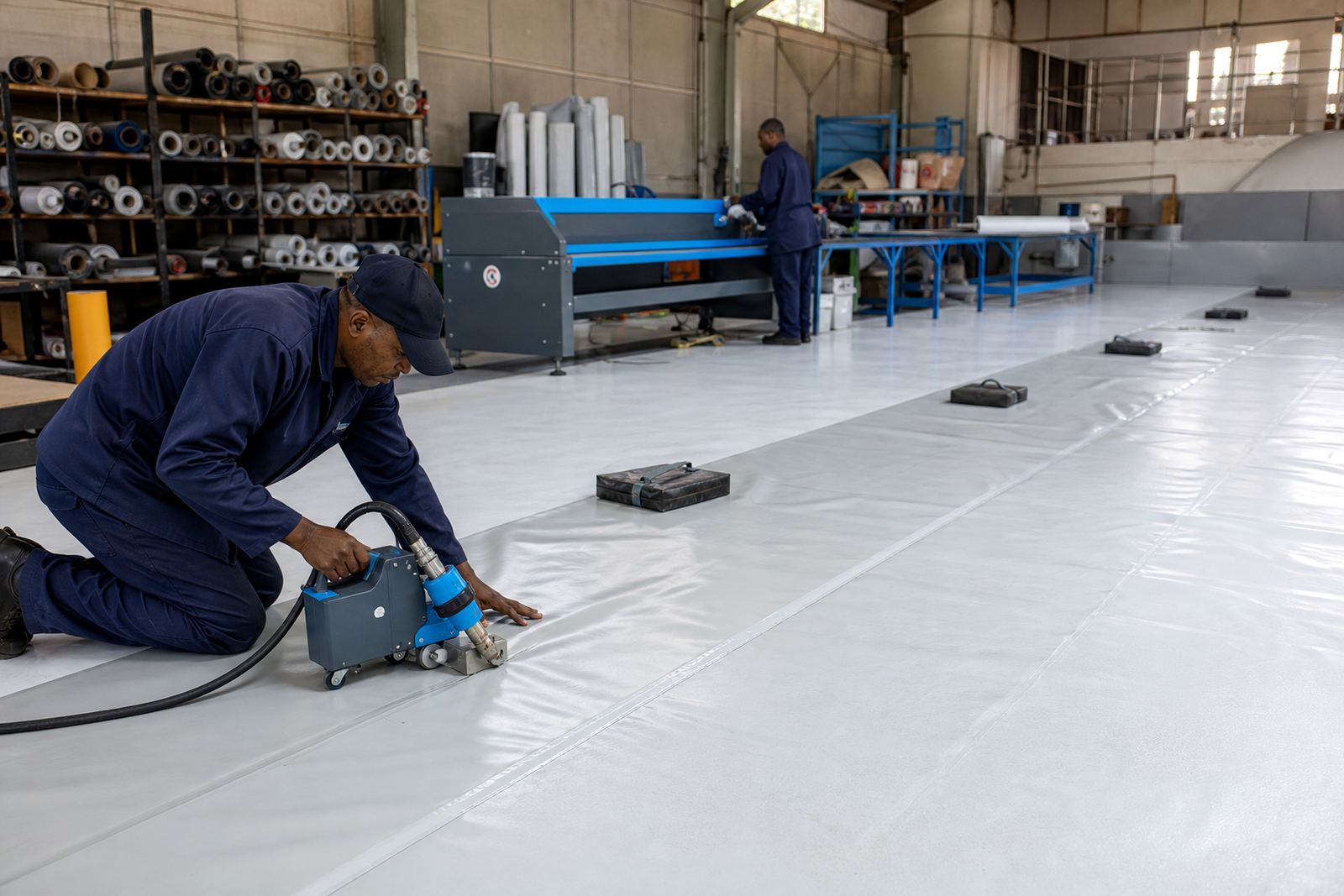
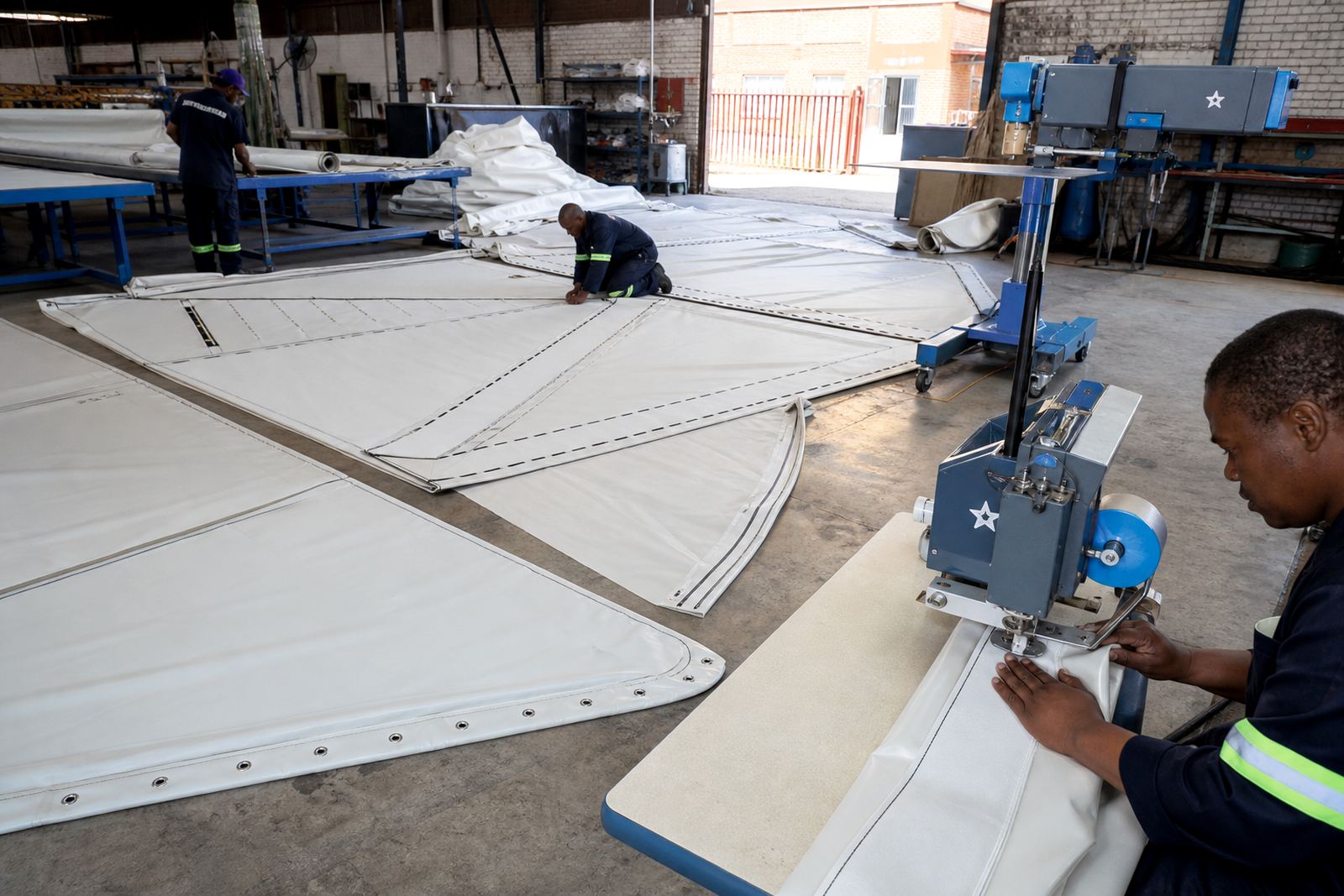
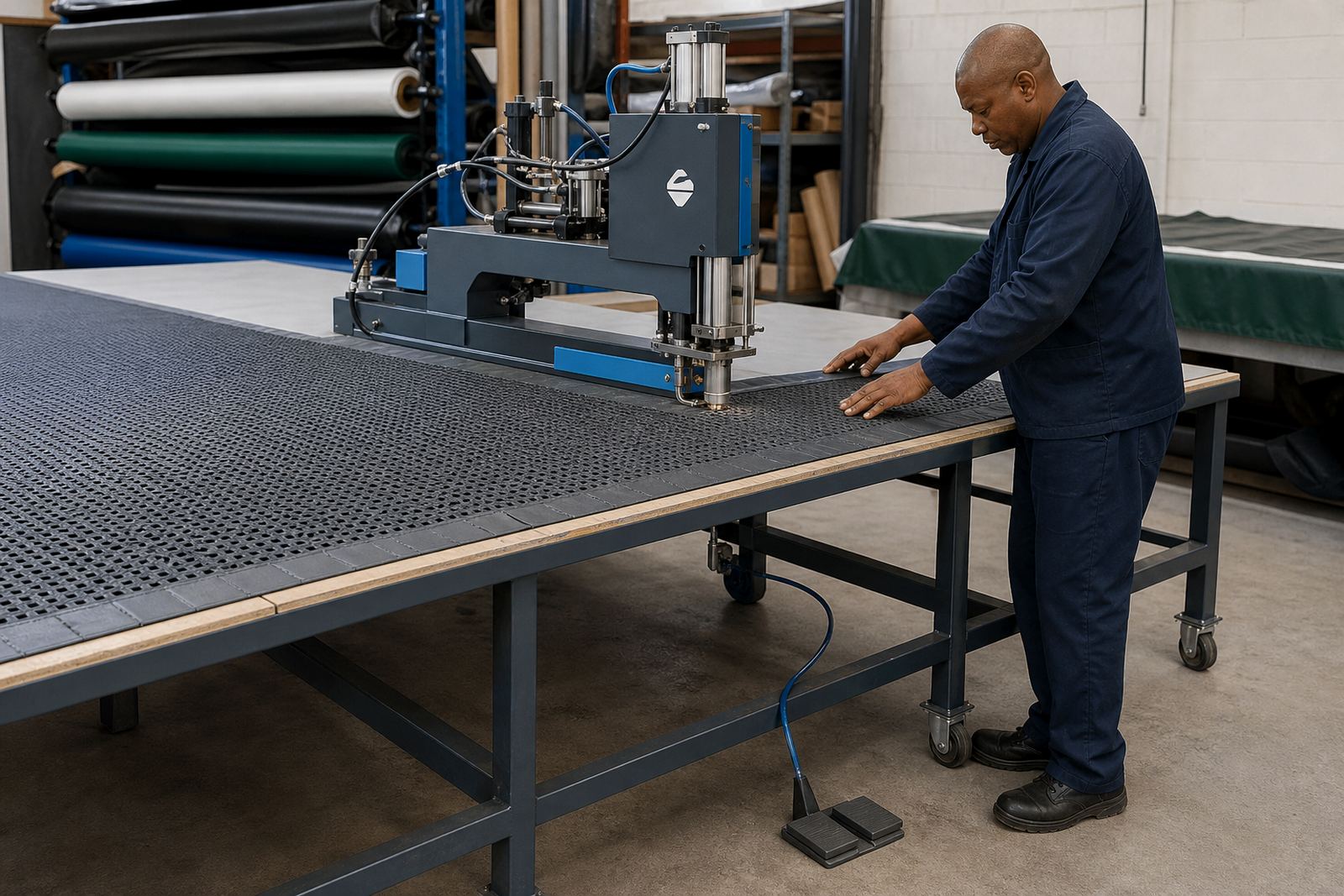
A typical mesh banner workshop may run a mix of high-frequency and hot-air or hot-wedge welders, plus cutting, punching and fitting tools. High-frequency machines are useful for precise seam work on coated PVC where repeatable pressure and alignment matter. Hot-air and hot-wedge machines are often chosen for long hems, lap seams and pocket work because they move well along the fabric and suit larger panels.
- High-frequency welder for seam lines, patches and controlled joins
- Hot-air or hot-wedge unit for hems, sleeves and long banner edges
- Eyelet press or punch station for fixing points and finishing holes
- Cutting table, straightedge and marking tools for layout accuracy
- Roller, guide and alignment tooling for consistent feed on wider panels
When the machine set is matched to the job, the operator spends less time fighting wrinkles and skew. That is important on larger mesh panels where even a small error can show up once the banner is stretched between poles or tied to a fence.
Layout planning before the first weld
Good planning saves material and prevents rework. On mesh banners the first decision is usually where the load will sit. If the banner is going onto a fence or scaffolding, the edge reinforcement needs to match the fixing pattern. If it is going onto a frame, the hem width and pocket size have to suit the support bar and allow for easy fitting on site. Around Durban, where humidity and salt in the air can affect handling and storage, firms often prefer a finish that keeps edges from curling or picking up dirt too quickly.
It helps to mark the full panel before welding and to confirm seam allowance, eyelet spacing and the position of any keder strip or pocket. Many problems start when the print or mesh is cut first and only then measured for finishing. By then the offcut is gone and the banner may be too tight or too loose at the fixing points.
- Allow for shrinkage and the pull from tensioned corners
- Match eyelet spacing to wind load and fixing hardware
- Keep hems consistent so the banner hangs flat
- Test one corner before running the full seam on a new material batch
Common mistakes on mesh banner production
One of the most common faults is overheating the coating. That can harden the seam, distort the hole pattern and make the edge look uneven. Another problem is underheating, where the weld looks fine at the bench but starts lifting after the banner has been tensioned for a day or two. On eyelet work, poor reinforcement or a dull punch can tear the fabric instead of forming a clean opening.
Operators also lose time when the feed rollers are not aligned or the guide pressure changes across a long run. On wide banners this shows up as a wandering seam, uneven hems or a pocket that twists when the pole is inserted. If the machine is not serviced, the issues tend to pile up fast, especially in workshops that run a lot of repeating jobs for events, signage and site screening.
- Wrong heat setting for the fabric weight or coating type
- Poor seam alignment on long runs
- Eyelets set too close to an edge
- Dirty rollers or worn tooling causing slip and skew
Budget ranges that make sense in Rand
For mesh banner operations, budget usually splits into machine purchase, tooling and ongoing servicing. A smaller workshop that only needs one finishing line may plan for a basic hot-air setup plus manual eyelet tools. A larger shop handling repeated panels and wider widths may need a more specialised high-frequency unit, stronger guidance and extra tooling for keder or reinforced pocket work. In South African terms, the gap between entry-level and production equipment is wide, so it pays to price the whole setup, not only the machine body.
As a practical guide, a modest finishing station can sit in the lower Rand range, while a more complete production setup with high-frequency welding, alignment tooling, installation and operator training can move much higher. Preventive servicing, spare parts and roller replacement also need to be allowed for, because a machine that is down during a busy print run costs more than the repair itself. For workshops in Johannesburg, Pretoria and Cape Town, service access and parts support can matter just as much as the purchase price.
- Entry finishing station: lower tens of thousands of Rand
- Mid-range workshop line: higher tens of thousands to low hundreds of thousands
- Production welding setup with tooling and commissioning: can move well into the hundreds of thousands
Servicing that keeps banner output steady
Mesh banner work puts steady demand on welders, cutters and press tools. Dust, glue residue and fabric fibres build up around the rollers and guides, so routine cleaning is not optional. Electrode condition, roller wear and alignment all affect seam quality. If the machine starts leaving marks, running hot in one spot or missing the edge of a pocket, it is usually cheaper to check the tooling early than to scrap a run of finished panels.
Our Germiston base supports banner and tarpaulin makers across South Africa with machine installation, commissioning, operator training, preventive servicing, fault finding, tooling alignment, electrode refurbishment, roller replacement, parts supply, seam testing, site callouts and service plans. That work suits workshops from Boksburg and Benoni through to Durban, Cape Town, Pretoria and Bloemfontein, where different job types and operating conditions call for different upkeep schedules.
A practical fit for South African sign shops
Mesh banners are rarely just about print. The finishing must suit transport, installation and repeated handling, especially on jobs that are taken down and re-used. A good weld line holds the banner together without making it stiff or hard to roll. With the right machine set and a sensible layout plan, the workshop gets cleaner hems, firmer pockets and fewer call-backs for loose edges or torn eyelets.
For producers working on signage, events and site screening, the best result usually comes from pairing the right weld method with careful measuring and proper maintenance. That approach keeps the banner neat in the factory and dependable on site, where wind, sun and handling are less forgiving.