Where tent roof work usually gets difficult
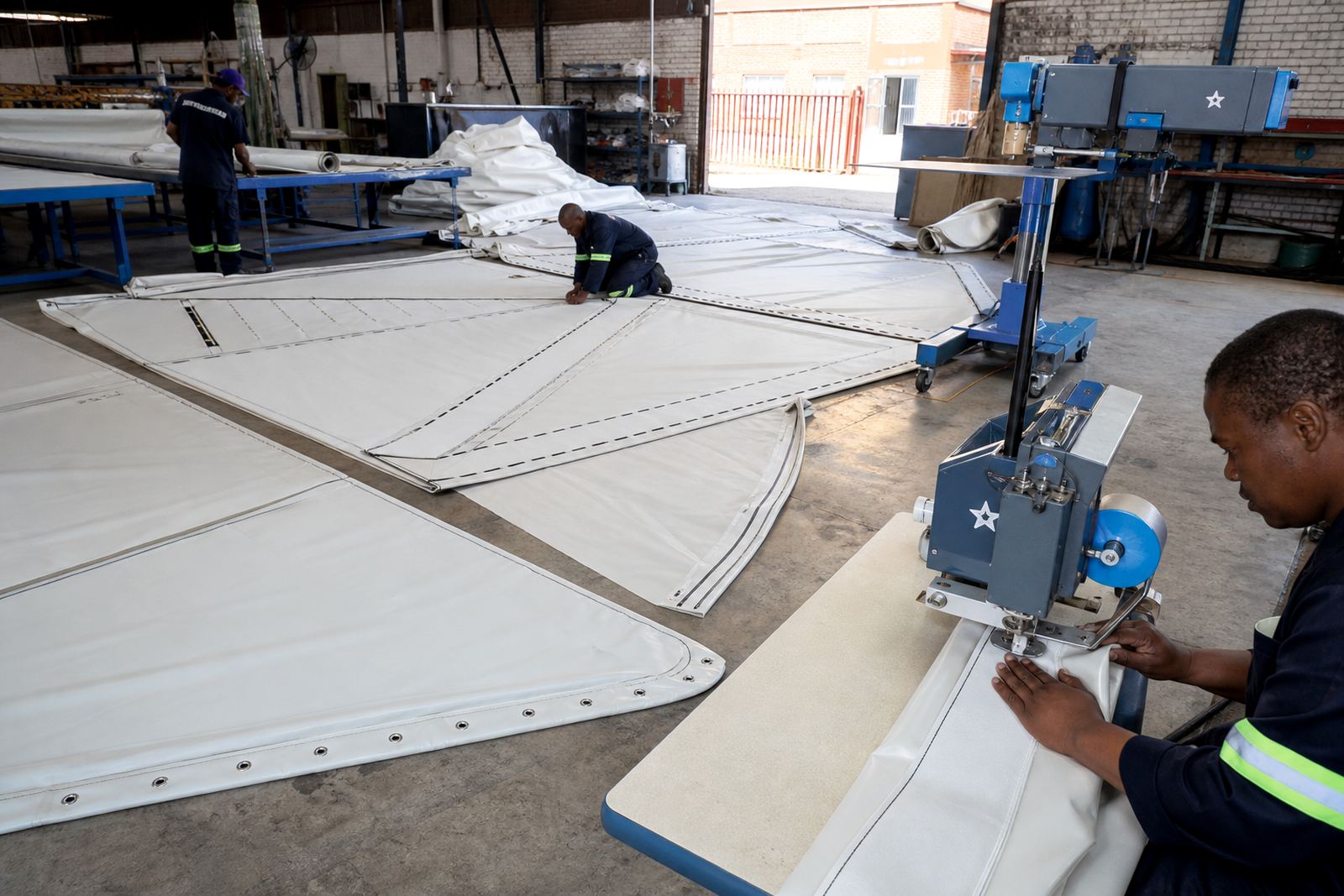
Tent roof fabrication is not only about joining two sheets of material. The roof line has long seams, tapered panels, ridge joins, edge reinforcement and fixing points that must all line up properly or the finished cover sits crooked. In humid coastal areas like Durban, the fabric can also behave differently from the drier inland conditions around Pretoria, so heat control and seam consistency matter from the first panel to the last.
For tent makers, the usual pressure points are the corners, the ridge, the rain run-off line and any area where an eyelet or keder bead has to carry load. If the weld is uneven, the seam can curl, the hem can pull, or water can track into a weak edge. That is why tent roof work suits equipment that can hold temperature and pressure steady over long lengths, without forcing the operator to fight the machine.
Machine set-ups that suit roof panels and edge work
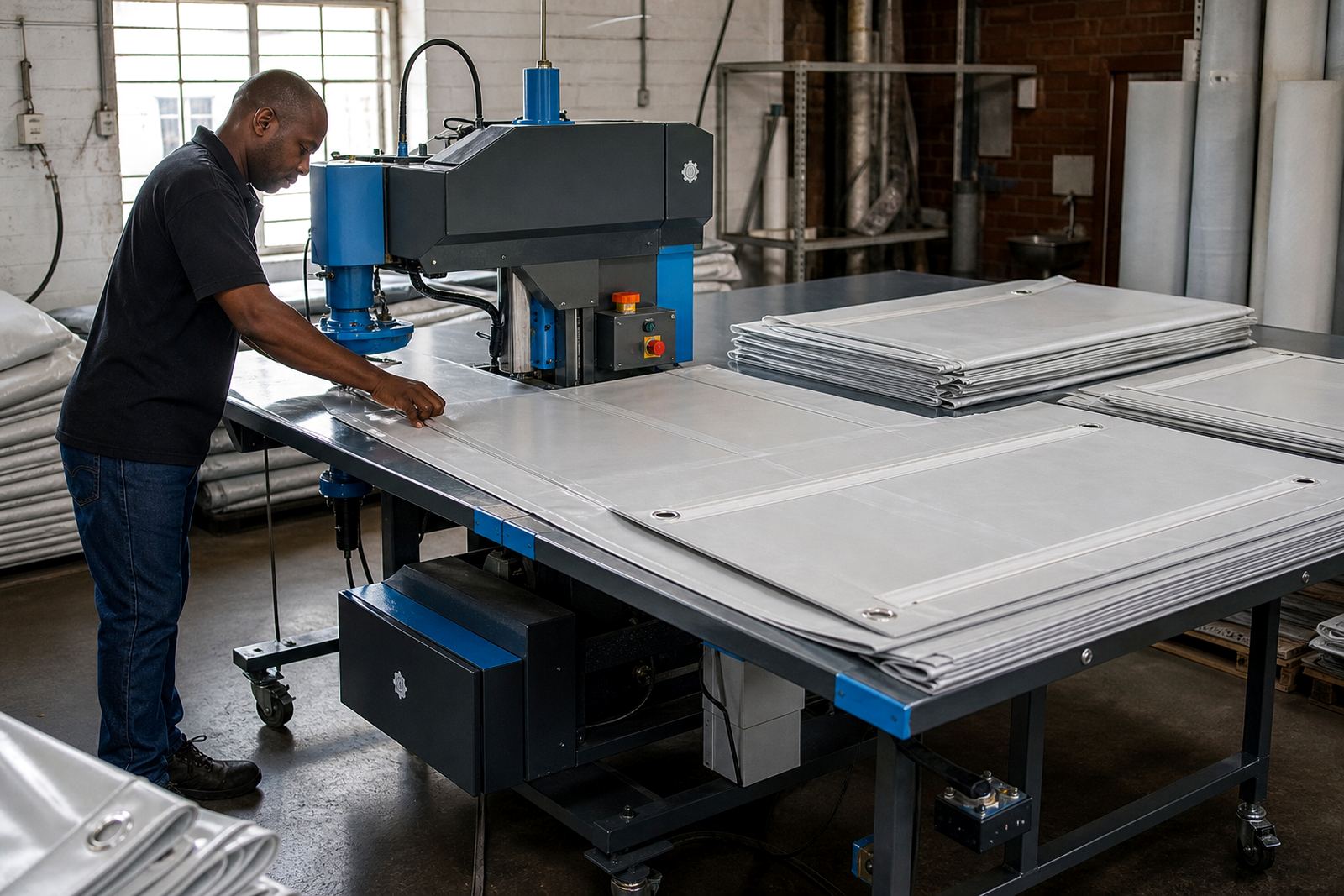
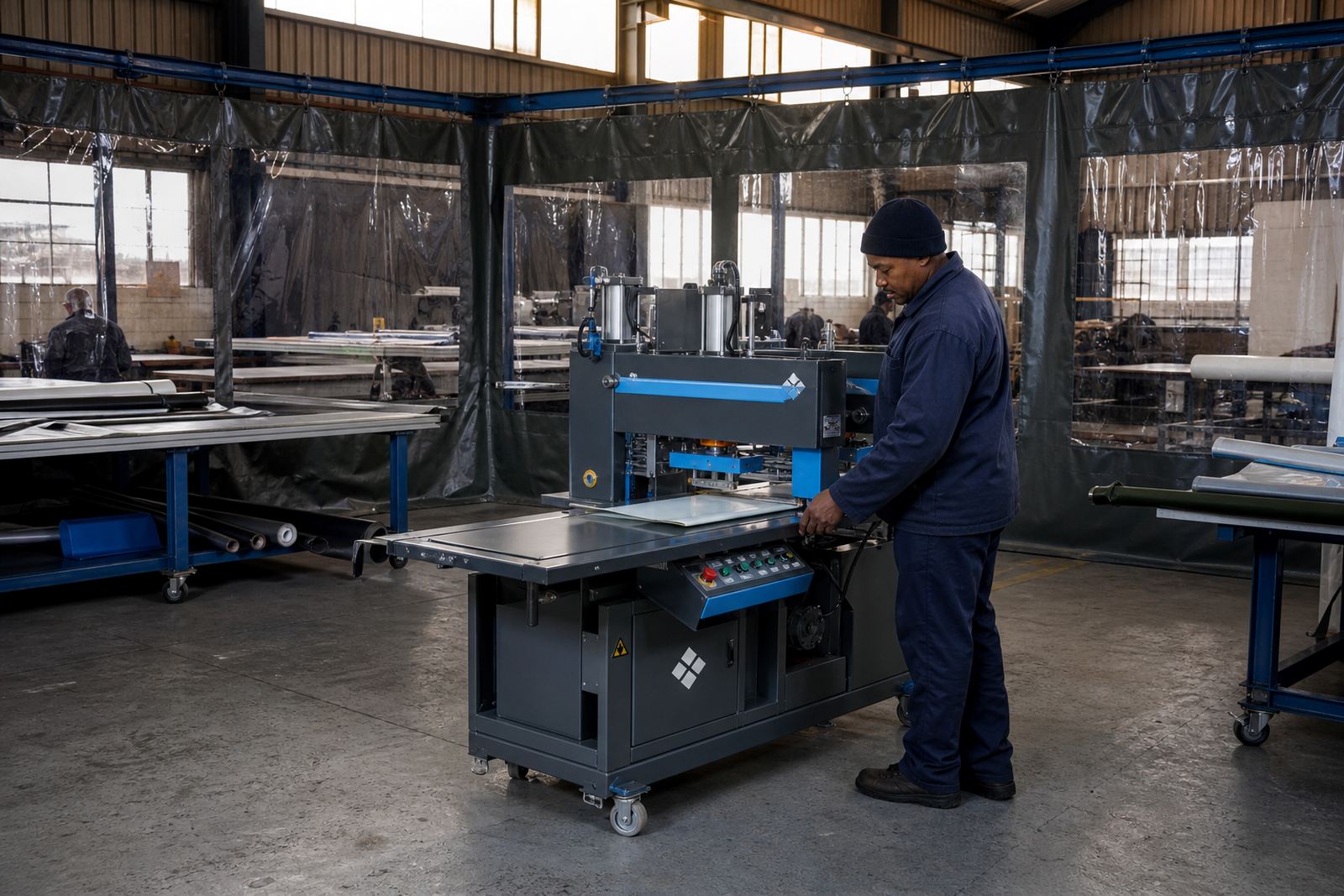
Most tent roof shops use a mix of high-frequency welding and hot-air or hot-wedge welding, depending on the fabric, seam type and panel size. High-frequency equipment is commonly used for straight, repeatable seams in PVC-coated fabrics, while hot-air and hot-wedge units are often used for hems, repairs, keder attachment and detail work where access or panel shape calls for more flexibility.
- High-frequency welders for long, clean seams on compatible PVC fabrics
- Hot-air welders for hems, patching and shaped detailing
- Hot-wedge welders for continuous seam runs on heavier roof sections
- Cutting and welding tables for accurate panel layup
- Guides, rollers and alignment tools for keder tracks and edge folds
On tent roof jobs, the set-up should suit the way the shop actually works. A small operation in Germiston may need a single machine with changeover tooling, while a larger production line in Johannesburg or Cape Town may need separate stations for panel welding, edge finishing and eyelet preparation. The point is to keep the fabric moving in a straight, controlled flow, not to overcomplicate the line.
Planning the layout before the first weld
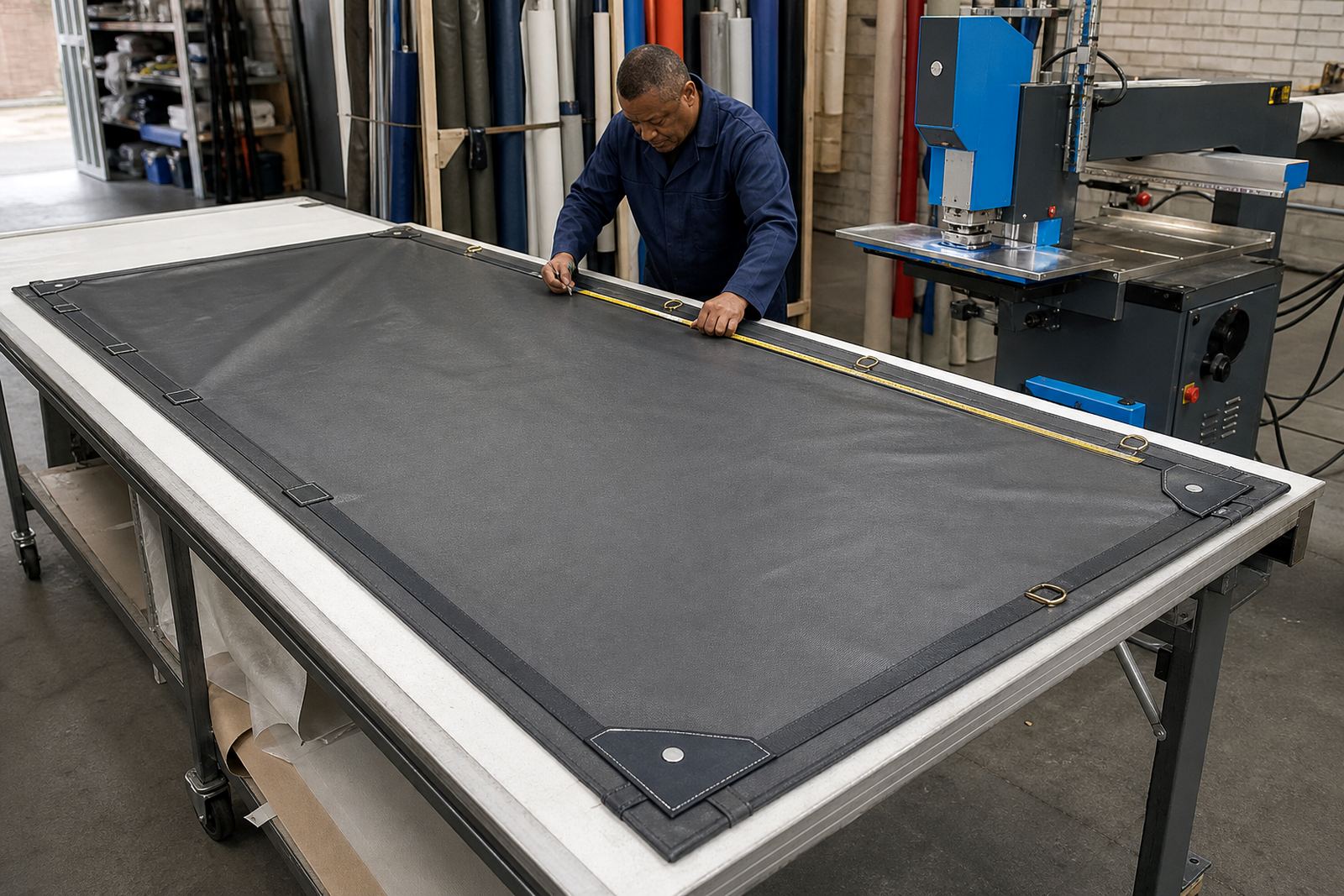
Good tent roof output starts with layout planning. Panel dimensions must allow for weld allowances, overlap widths, reinforcement strips and the final fixing points. If the roof has a pitch, any measurement error multiplies as the panels are joined, so the cutting table and welding station need to work from the same reference marks. That saves material and cuts down on rework, which is a big deal when a full roof set is already on the cutting bench.
Operators should also plan where the seams land in relation to the load path. A ridge seam may look neat but if it lands where the roof flexes hardest, the seam can fail earlier than expected. The same applies to eyelets and keder strips. Keep the weld path consistent, leave enough material for reinforcement and avoid sharp internal corners where stress can gather.
- Check panel orientation before welding, especially on tapered roof sections
- Mark seam allowances and reinforcement zones clearly
- Keep the weld path straight on long runs to avoid creeping edges
- Set aside space for finished panels so they do not pick up dirt or creases
- Allow for local handling conditions, especially on larger roofs moved between towns
Common mistakes that show up on tent roofs
One common mistake is chasing speed at the expense of temperature control. On PVC-coated fabrics, too much heat can glaze the surface or weaken the bond, while too little heat leaves a seam that looks joined but lifts under stress. Another issue is poor alignment. A seam that drifts by even a few millimetres over a long roof panel can throw off the full roof square and the attachment points no longer line up properly.
Eyelet work also gets rushed. If the reinforcement patch is too small, or the hole spacing is inconsistent, the roof edge may tear under tension. Keder work needs the bead to sit evenly along the length, otherwise the roof becomes difficult to slide into the track. We see similar problems when rollers are worn or the tooling is out of line. The machine may still run, but the seam tells the truth.
In many shops the fix is not a full replacement. Often it is tool alignment, electrode refurbishment, roller replacement or a proper service on the welding station. That is why preventive servicing matters for tent roof production, especially where deadlines are tight and the material cost is already high.
Budget ranges for tent roof welding equipment
Budget depends on the size of the roof work, the fabric thickness and whether the shop needs one versatile machine or a line of equipment. Smaller operations handling repairs, short runs and occasional roof jobs may look at entry-level hot-air units and compact welding stations in the lower Rand range. A production shop making full tent roofs, sidewalls and large banner panels will usually need heavier-duty equipment and more tooling, which pushes the budget higher.
As a working guide, tent roof fabrication setups can range from about R45 000 to R180 000 for compact to mid-range equipment, while larger production systems with installation, commissioning and operator training can sit from around R180 000 to R500 000 and beyond depending on capacity. Servicing, spare parts and tooling are part of the real cost as well, so it helps to plan for preventive maintenance rather than only the purchase price.
For businesses in Durban or Cape Town, corrosion resistance and humidity control are worth considering. In inland areas, dust and heat control matter more. The right budget is the one that matches the work rate and the roof sizes you actually cut week by week, not only the biggest job on the quote sheet.
Support for shops working across South Africa
PVCWelder supports tent makers from Germiston, Ekurhuleni and supplies and services businesses in Johannesburg, Pretoria, Durban, Cape Town and Bloemfontein. The team handles machine installation, commissioning, operator training, preventive servicing, fault finding, tooling alignment, electrode refurbishment, roller replacement, parts supply, seam testing, site callouts and service plans. For roof fabrication, that support helps keep the machines aligned and the seams repeatable from job to job.
The team includes Mandla Mnisi as Managing Director, Alicia van der Merwe in Sales, Sibusiso Abrahams on service, Johan Mkhabela on installation, Thandi Mokoka on training and Lebo Motsepe on parts and support. Branch support is also available for Germiston, Johannesburg, Pretoria, Durban, Cape Town, Bloemfontein, Boksburg and Benoni. The practical value is simple: when a tent roof line is running, the shop needs the welding station, tooling and service back-up to keep pace with production.
- Installation and commissioning for new welding equipment
- Operator training for seam quality and safe handling
- Preventive servicing to reduce downtime on roof production
- Parts supply for wear items and tooling replacements
- Site callouts for troubleshooting and alignment checks