Where shade side panels go wrong first
Side panels for shade structures are not just cut-and-sew items. They are handled at the edges first, pulled tight on site, and often stored rolled up between events. If the weld line is off, or the hem is too light for the load at the corners, the panel starts to twist, flap or tear out around the fixings.
For tarpaulin makers, banner workshops and tent suppliers, the usual brief is a panel that fits the frame cleanly and still gives a tidy finish at ground level. In Durban and other coastal areas, moisture and salt in the air can also make poor joins show up sooner, especially where dirt collects along the lower edge. Around Johannesburg and Pretoria, the bigger issue is often repeated handling and fast turnaround from one site to the next.
- Panels that are too long at the drop line catch wind and pull on the welds.
- Loose hems make the side panel look uneven once it is tensioned.
- Weak tie-down points can rip before the main sheet shows any wear.
- Incorrect keder sizing causes the edge to jam in the rail or sit slack.
What a proper workshop set-up usually includes
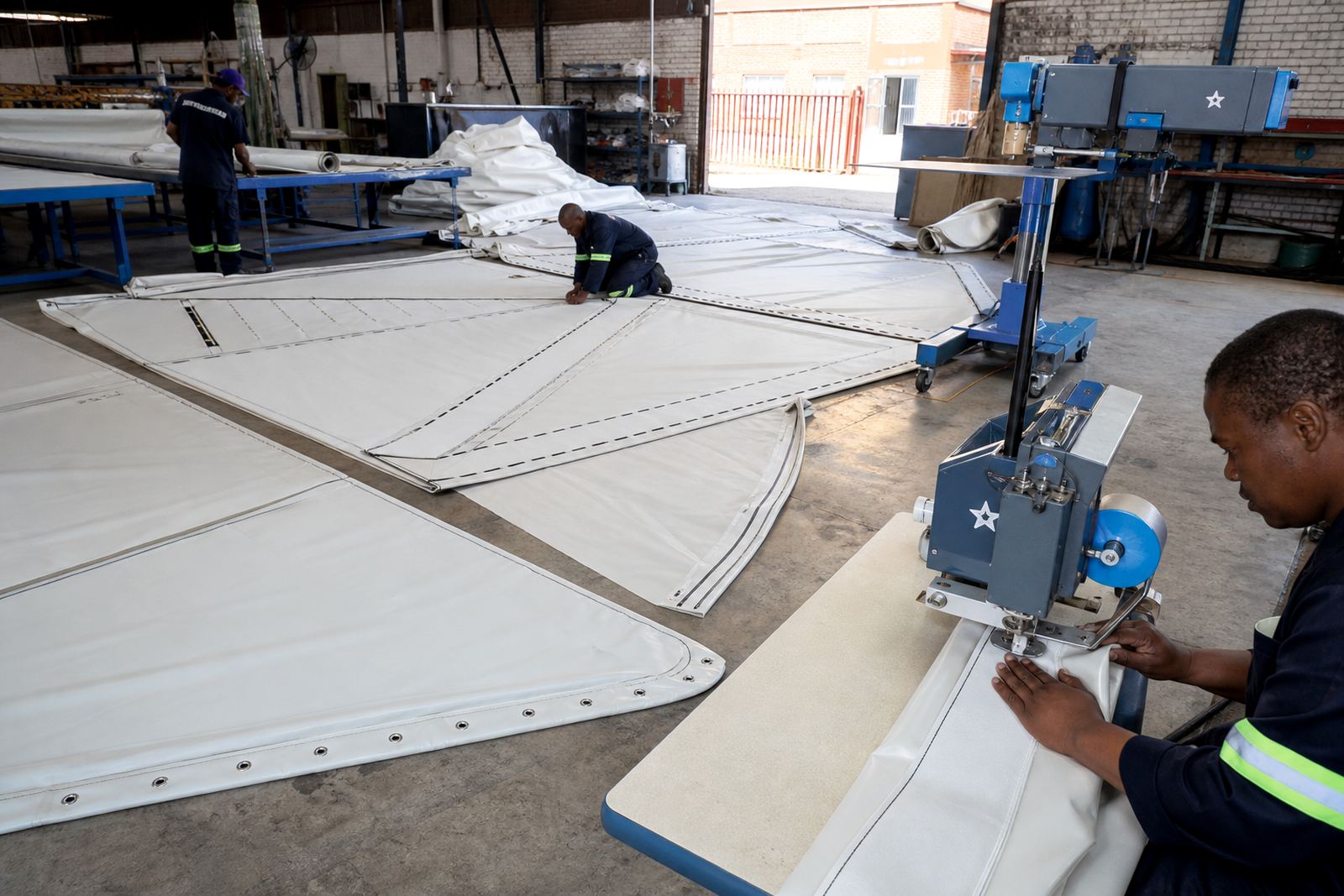
For PVC-coated fabrics, a workshop will normally use high-frequency welding for straight, repeatable seams on compatible materials, and hot-air or hot-wedge welding where the job calls for controlled heat along longer joins. The choice depends on the fabric type, seam shape and how the finished panel will be fitted.
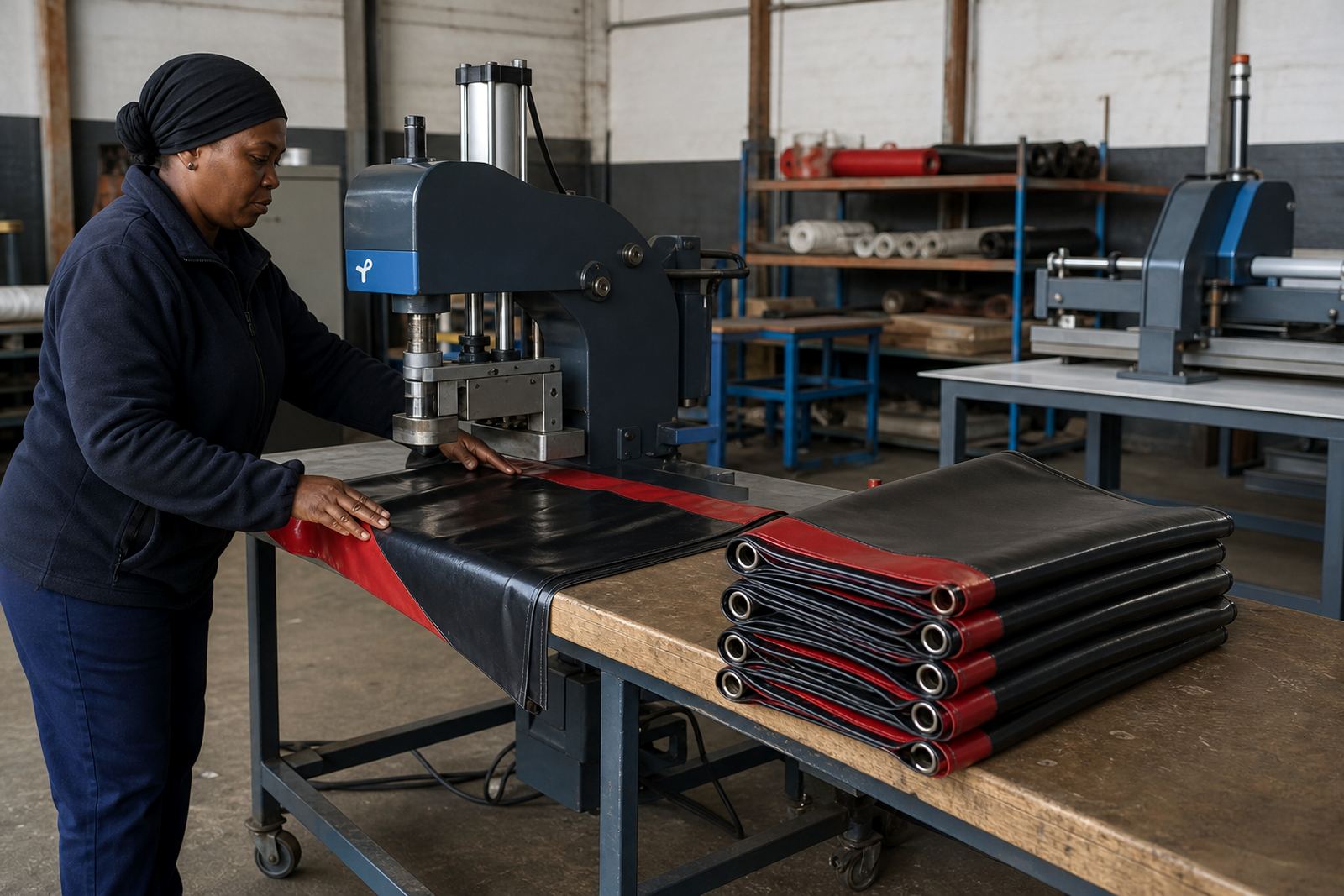
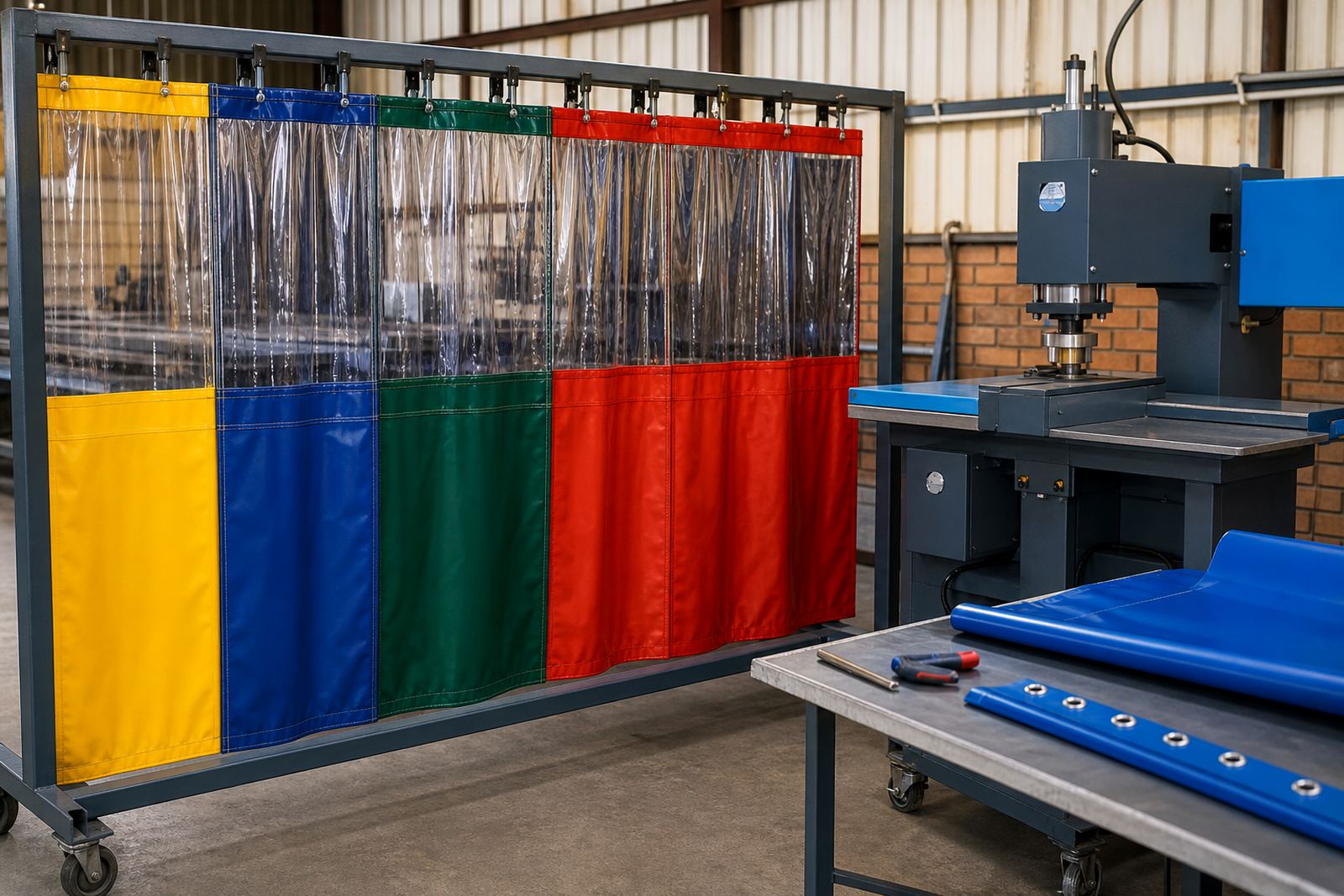
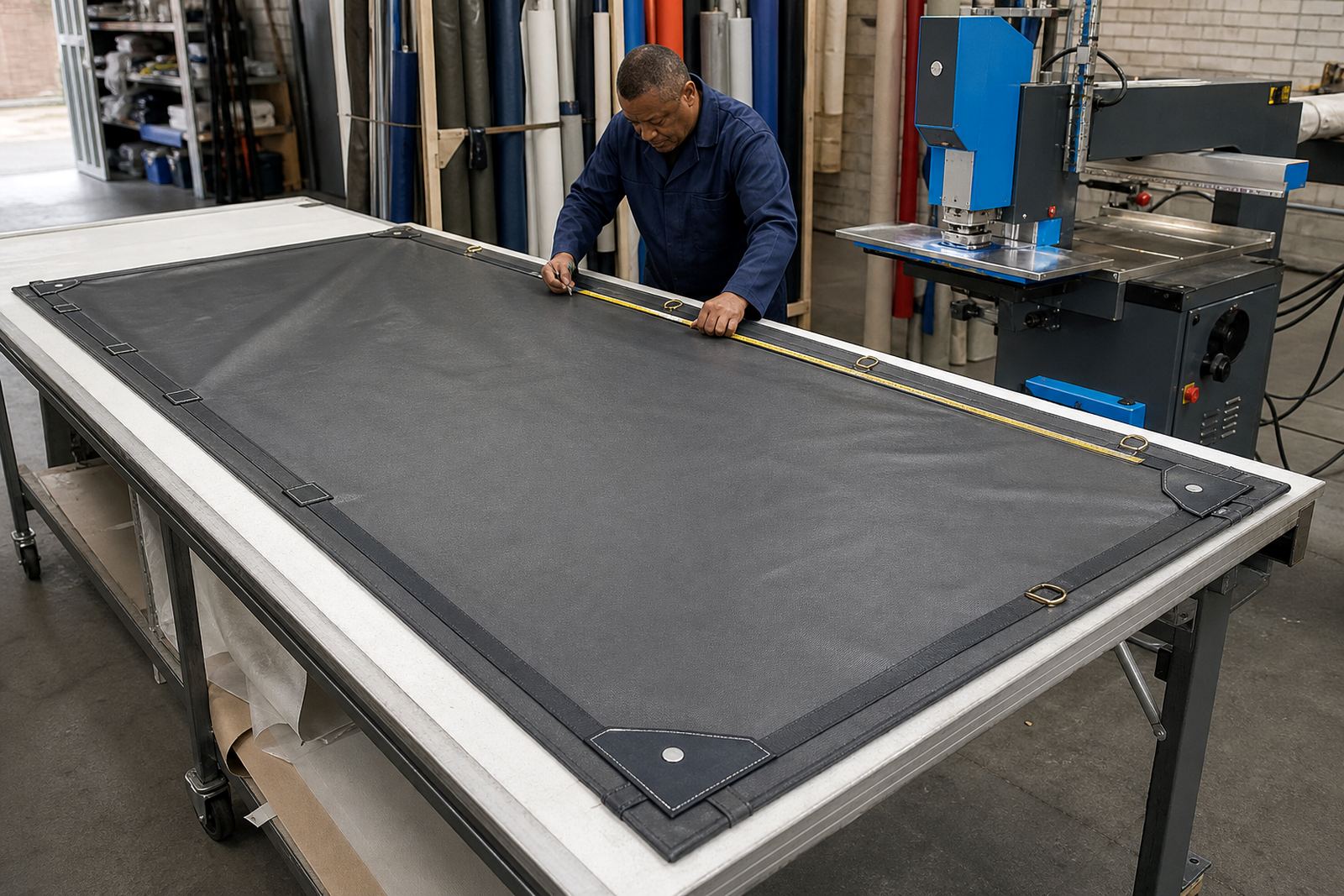
A typical set-up for shade side panels includes a flat welding table, guides for repeat lengths, tooling for hems and keder, and cutting tools that keep edges square. Many shops also keep eyelet pressing equipment on hand for tie-down points, plus testing tools for checking seam integrity before a panel leaves the floor. Where the work is repetitive, correct tooling alignment matters as much as the machine itself.
- High-frequency welding for clean, consistent joins on suitable PVC-coated fabric.
- Hot-air or hot-wedge systems for long seams, hems and overlap work.
- Keder attachment tooling for rail-fed side panels and enclosure strips.
- Eyelet and reinforcement station for corner points and tie-down zones.
- Cutting and layout bench for matching panel sizes across a set.
At Germiston, our work often centres on supplying, installing and servicing this kind of equipment for businesses that make side walls, banner skirts, tent panels and fitted covers. Mandla Mnisi leads the business, with support from Alicia van der Merwe, Sibusiso Abrahams, Johan Mkhabela, Thandi Mokoka and Lebo Motsepe across sales, service, installation, training and parts support.
Layout details that save time on the floor
A shade side panel should be planned from the fixing points back to the sheet size, not the other way round. That means checking the rail or rope track, the overlap at the corner, the amount of drop needed and where reinforcement must sit. If the keder runs too close to a corner bend, the panel can wrinkle. If the hem allowance is too narrow, the edge may not hold its shape after a few installs.
Good layout practice also makes welding faster. Straight panels can be run in batches with the same seam width, while angled ends and door openings need separate marking. For event tents and shade systems, the workshop usually benefits from a repeatable pattern for the top edge, with the lower hem adjusted for slope and site clearance.
- Measure the finished opening, then add proper allowance for hems and folds.
- Keep keder runs straight and allow for corner relief where needed.
- Use reinforced patches under eyelets, straps or tie-down loops.
- Mark panel sets clearly so left and right sides do not get mixed up.
Common faults we see in side panel welding
Most service calls on side panels trace back to a small number of mistakes. Some are welding related, such as over-heated seams that go brittle or under-heated joins that peel under tension. Others are mechanical, like roller pressure set too light, worn electrodes or poor alignment on the guide system. On hot-air and hot-wedge machines, dirty contact areas and badly adjusted speed settings can leave the seam looking neat but weak under load.
Eyelets and corner reinforcements are another trouble spot. If the patch size is too small, or the fixing point sits too close to the panel edge, the stress spreads into the main fabric. That is a common reason side panels fail at the first windy install, especially on larger spans in Pretoria, Bloemfontein and open sites outside the cities.
Operator safety matters too. Heat heads, pinch points and moving rollers need proper guarding and clear handling procedures. A trained operator works faster and makes fewer scrap pieces, but only if the machine is set up correctly and serviced before wear becomes a fault.
Servicing that keeps the weld line dependable
For shops that run daily, preventive servicing is usually cheaper than waiting for a breakdown. Hot-air and high-frequency machines both need inspection of consumable parts, drive components and settings that affect seam quality. Electrode refurbishment, roller replacement, tooling alignment and seam testing all help keep the output steady.
Site callouts are often needed when a machine starts drifting on seam width, makes poor edge fusion or will not hold a repeat setting from one job to the next. In Germiston and across Ekurhuleni, we also handle parts supply and service plans for workshops that cannot afford long stoppages during busy banner or tent runs.
- Check rollers, electrodes and pressure surfaces before the wear becomes visible on the seam.
- Keep heat channels, guides and cutting paths free of adhesive build-up.
- Test sample seams on the same fabric before starting a production batch.
- Review operator set-up after tooling changes or machine movement.
Budget ranges for shade side panels work
Budgeting depends on whether you are buying a new machine, fitting out a workshop, or servicing an existing line. For side panel production, small operators often look at entry-level hot-air welding equipment and basic eyelet tooling, while larger shops may need high-frequency welders, keder systems and more precise alignment equipment.
As a working guide, workshop owners might plan for a modest setup from around R45 000 to R120 000, depending on the level of automation and the tooling package. A more complete production line can move into the R180 000 to R450 000 range when installation, training, alignment and service items are included. Ongoing servicing, spare parts and consumables should also be allowed for, because a missed roller or worn guide can affect every panel that leaves the floor.
For shade structure side panels, the best value is usually the setup that matches the actual product mix. If your work is mostly hems, keder and tie-down strips, the machine package should reflect that. If you also run banners, tent walls and longer coated-fabric seams, the equipment needs to handle that variation without constant adjustment.
From Germiston to the working floor
PVCWelder works from Germiston, Ekurhuleni and supports workshops across Johannesburg, Durban, Cape Town, Pretoria and Bloemfontein, with support coverage also extending through Boksburg and Benoni. The day-to-day work covers machine installation, commissioning, operator training, preventive servicing, fault finding, tooling alignment, electrode refurbishment, roller replacement, parts supply, seam testing, site callouts and service plans.
For shade side panels, that usually means helping a workshop match the machine to the panel type, then keeping the weld quality steady once the job moves into production. Clients reach the team through the enquiry form on the contact page when they need equipment support, servicing or parts for PVC welding work.