What side curtain work asks of a welder
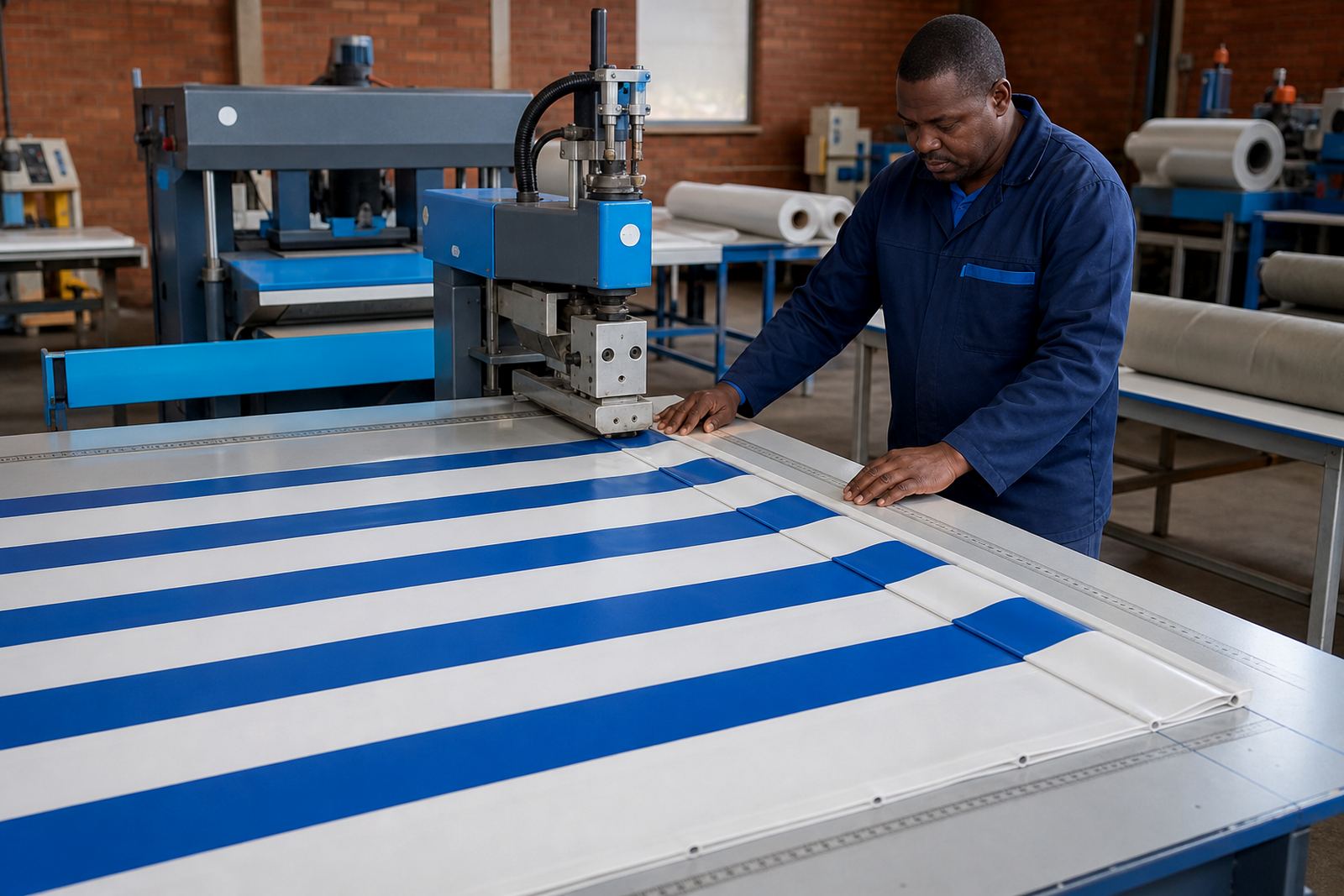
Transport curtain jobs are not forgiving. A curtain that runs on a truck body has to stay flat, track cleanly along the guide system and take repeated opening and closing without the seam drifting. That puts pressure on the machine set-up as much as on the operator. High-frequency welding suits PVC-coated fabric where clean, even seams are needed, while hot-air and hot-wedge units are often used for longer runs, hems and overlap joints on larger curtain panels.
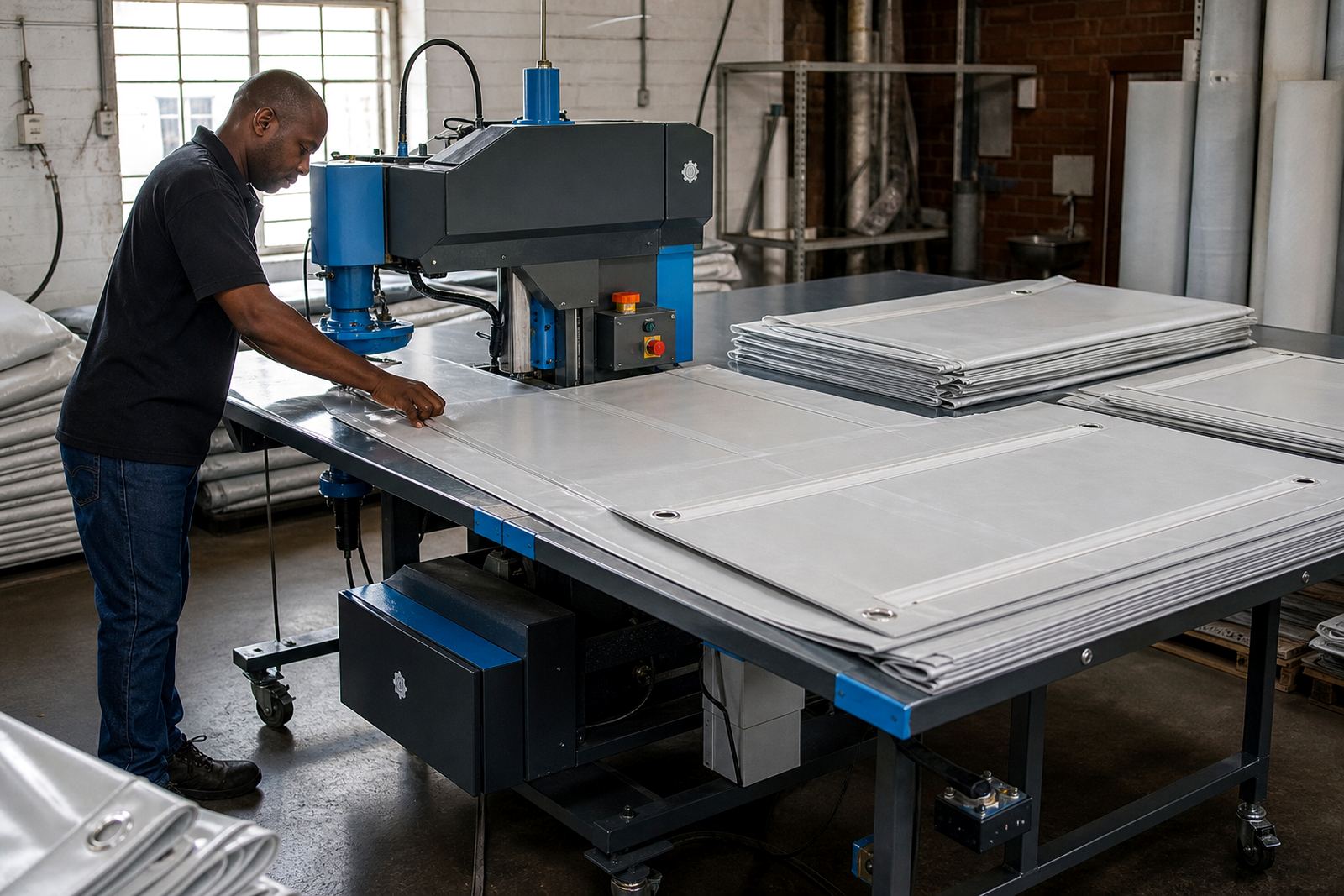
In practice, side curtain work usually means long panels, welded pockets, edge reinforcement and attachment points that must line up every time. If the seam width wanders, the curtain can buckle or wear early at the fold line. Coastal humidity in Durban and Cape Town can also affect stored fabric and finished work, so consistent heat control and material handling matter from the first cut to the final eyelet.
Machine set-ups used on curtain and tarpaulin lines
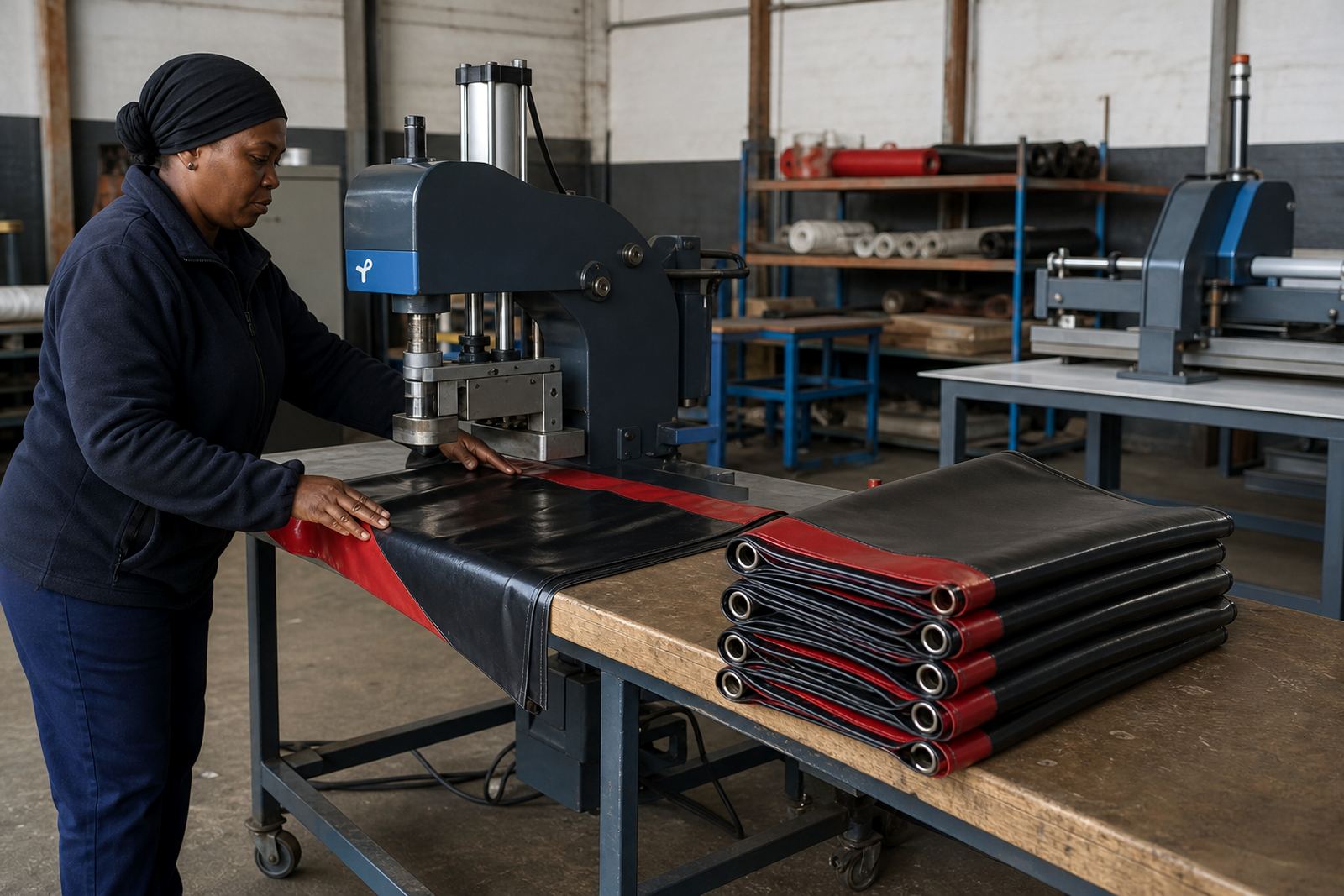
Different workshops use different combinations depending on volume and fabric weight. A typical curtain line may include a high-frequency welder for seam sections that need a strong bond and repeatable alignment, plus a hot-air or hot-wedge welder for long side seams, hems and repair work. Eyelet presses, keder welding tools and cutting tables often sit alongside the main machine so the operator does not keep moving heavy panels around the workshop.
- High-frequency welding for straight seams, lap joints and fitted reinforcement zones
- Hot-air or hot-wedge welding for long continuous seams and hems
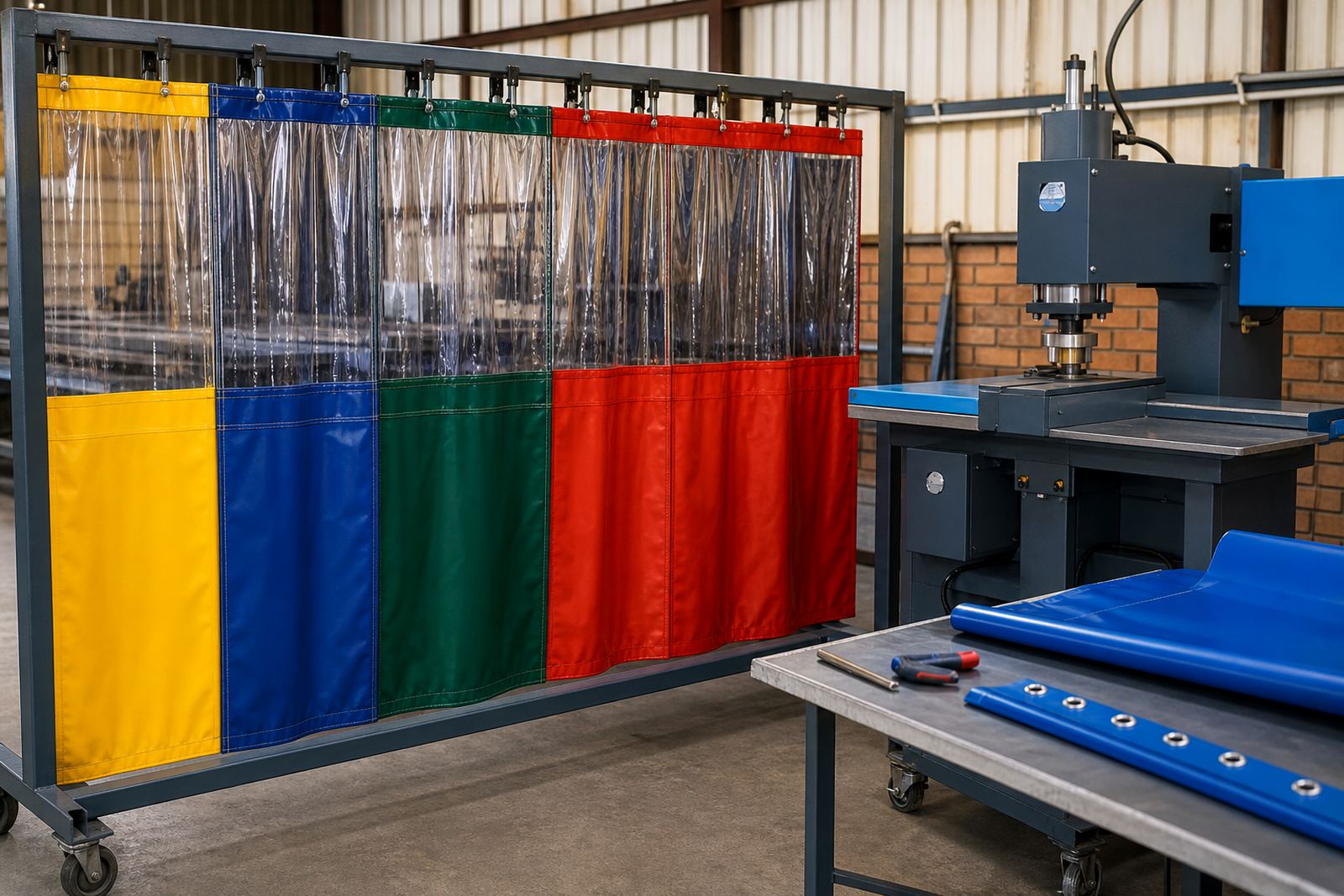
- Keder attachment for curtain track systems and sliding side panels
- Eyelet work for tie-down points, lashing lines and service access
- Tooling alignment and roller condition checks for steady seam width
For shops in Johannesburg, Pretoria and Germiston, the layout usually needs enough floor space for a long infeed and outfeed path. If fabric is cramped around the machine, the seam suffers and the operator spends too much time correcting the run.
Planning the workshop before the first curtain panel goes through
Side curtain work runs best when the workshop is organised around the length of the job, not only the machine footprint. Curtains for trucks and trailers can be awkward to handle, especially when the panels are wide and the reinforcement tape must stay in the correct position. A good layout keeps cutting, welding, inspection and eyelet work close enough for movement, but not so close that the material gets tangled.
It helps to mark out standard offsets for hems, keder pockets and eyelet spacing on the table or floor guides. That way the same measurements are used across repeat jobs. For businesses working from Boksburg, Benoni or Germiston, a clean storage area for rolls, offcuts and finished panels also cuts down on contamination from dust and grinding residue.
- Allow enough straight run for panels longer than the machine bed
- Separate clean fabric storage from welding and trimming areas
- Keep measuring jigs, rulers and corner stops close to the operator
- Plan a safe path for lifting heavy rolls and finished curtains
Common mistakes that show up on the road
Most side curtain faults start before the curtain is fitted. A seam that is too hot can distort the coating, while a seam that is too cold can lift later at the fold. Poor tension control gives a wavy edge, and if the reinforcement is set too close to the edge it tears out when the curtain is used hard. Another common error is inconsistent eyelet spacing, which causes the load to pull unevenly on the side of the trailer.
Operators also run into trouble when they mix materials without checking compatibility. Not every PVC-coated fabric responds the same way. Some lighter banners weld differently from heavier transport curtain stock, so the machine settings, pressure and dwell time need to be matched to the job. On busy sites in Durban or Cape Town, dust and salt air can also show up as surface contamination if panels are left open during handling.
- Uneven seam width from poor guide alignment
- Wrinkled hems from loose panel tension
- Eyelets set too close to the welded edge
- Dirty weld surfaces causing weak bonding
Safety habits that matter around high-frequency and heat welding
Welding PVC-coated fabrics is routine work in many shops, but the equipment still needs proper care. High-frequency machines use electrical energy at the weld zone, so guarding, earthing checks and correct operator positioning are important. Hot-air and hot-wedge units bring their own hazards because the weld head and adjacent parts stay hot for longer than many operators expect. Gloves, eye protection and clear handling routines reduce the chance of injury.
Good safety practice also means keeping scrap clear of the floor, checking that cable routes do not cross walkways and making sure the operator can reach the controls without stretching across moving parts. A clean bench and a stable feed path are not just neat, they reduce mistakes. In larger installations, training should cover seam testing, emergency stop use and how to recognise worn rollers or damaged electrodes before the fault spreads through the rest of the job.
Servicing that keeps side curtain output steady
Machine servicing matters because curtain work is repetitive. Once the seam drifts, every panel after that carries the same error. Preventive servicing usually covers tooling alignment, electrode refurbishment, roller replacement, seam testing and fault finding. For hot-air and hot-wedge equipment, clean heating components and smooth feed rollers help the seam stay straight over long lengths.
For transport curtain workshops, service planning should fit the production rhythm rather than wait for a breakdown. That is especially true where a small fault can stop a whole batch of side curtains, hems or keder runs. Service plans are often more practical than emergency callouts because they let the operator keep working with predictable machine condition and fewer scrap panels.
- Check roller wear before long production runs
- Test seam strength on offcuts before starting full panels
- Keep spare parts for the wear items used most often
- Review machine settings after any tooling change
Budget ranges for curtain and banner welding set-ups
Budgets depend on whether the workshop needs a single machine, a mixed set-up or a full line for high output. A smaller workshop handling occasional side curtain repairs and short runs may start with a practical entry-level machine set-up and essential tooling. A busier operation making full curtain sets, keder systems and repeated eyelet work will usually need more than one machine and a stronger handling layout. Installation, commissioning and operator training also need to be included in the budget, not treated as extras at the end.
For South African businesses, it is sensible to budget in Rand for the machine, transport, installation, training, spare wear items and the first servicing cycle. A light repair setup will sit in a lower range than a full curtain production line with dedicated hot-air or high-frequency equipment, alignment tools and finishing stations. The best spend is usually the one that matches the fabric thickness, seam length and daily volume instead of overbuying machinery that never gets used properly.