Where marquee panels ask for more than a straight seam
Marquee panels sit under constant handling, folding and weather exposure, so the weld has to hold its shape and still look neat from a few steps away. That applies to side walls, entrance flaps, clear window surrounds, valance strips and roof-edge reinforcements where the panel is pulled, tensioned and re-tensioned on site.
For this work, many shops use radio frequency welding for PVC coated fabrics where the material suits the process, and hot-air or hot-wedge welding where long seams, hems or joining runs are better handled with a continuous heat source. The right choice depends on fabric thickness, the coating type, the seam detail and how much handling the panel will take in Durban humidity, Pretoria dry air, or coastal storage in Cape Town.
Typical machine set-up for panel production
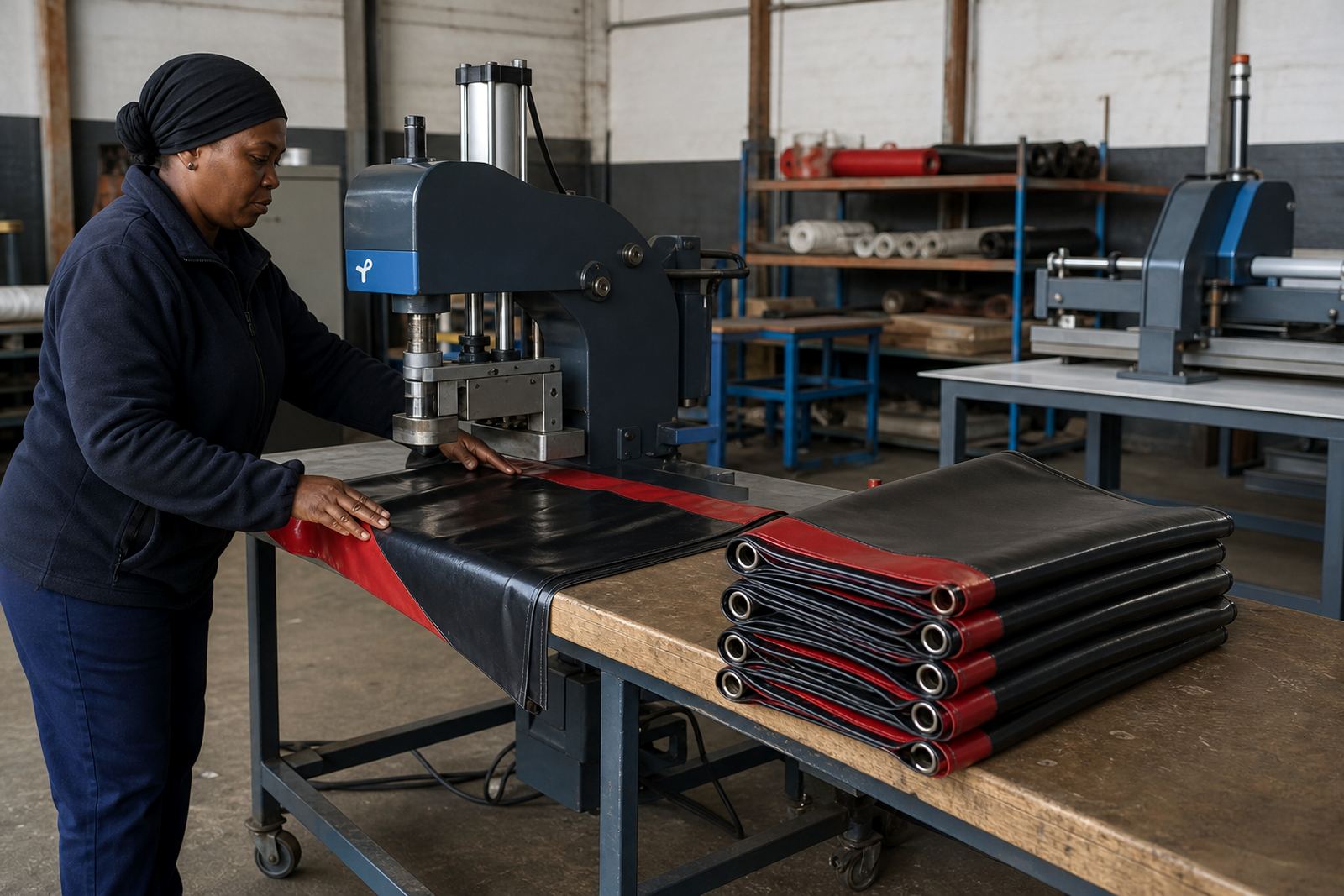
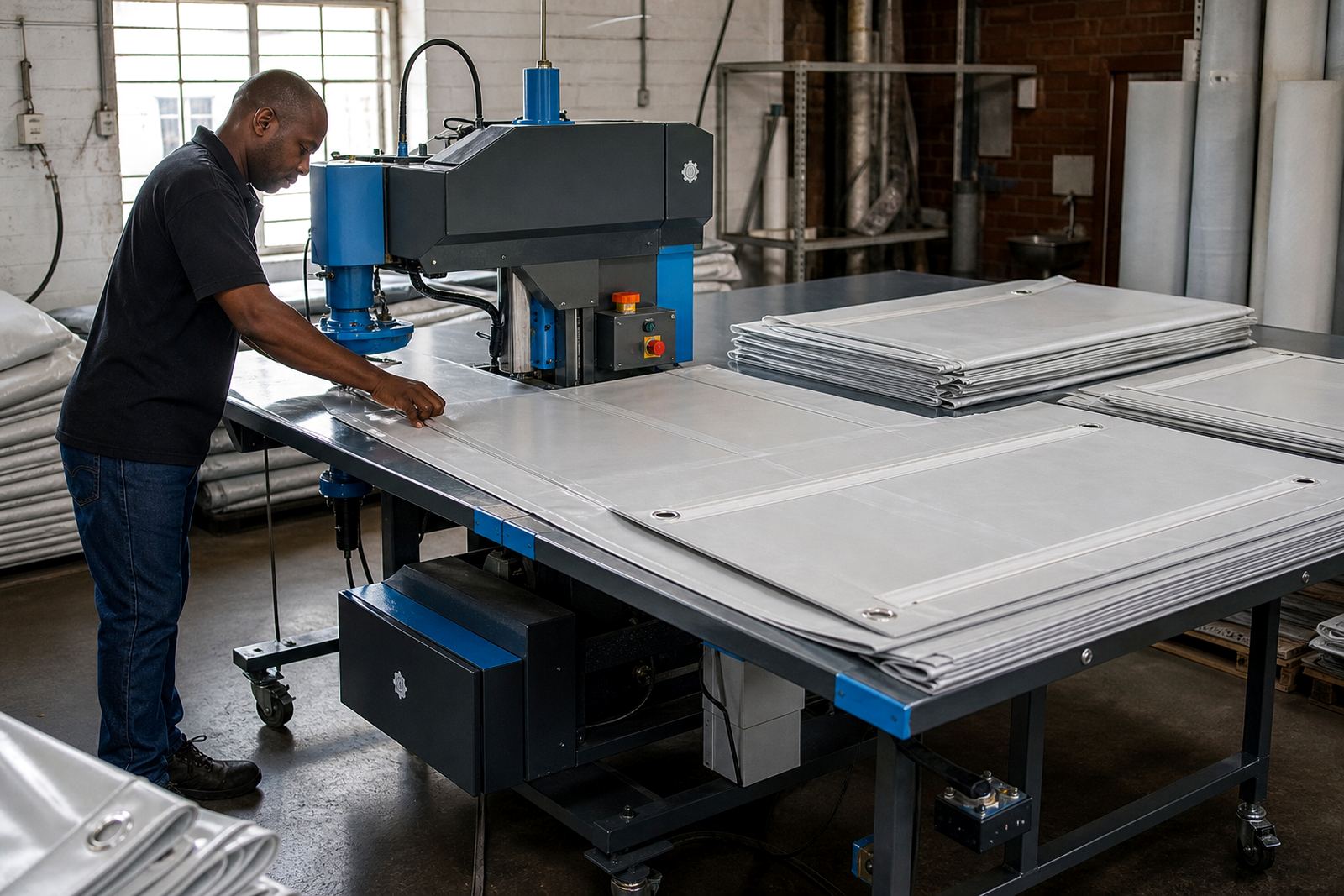
A practical marquee line usually combines a main welding machine with cutting, measuring and finishing stations. Shops handling mixed work often need more than one tool path, because a long panel body and a smaller eyelet strip do not ask for the same settings or pressure. Good feed control matters, along with stable guides so the seam stays true over metres of work.
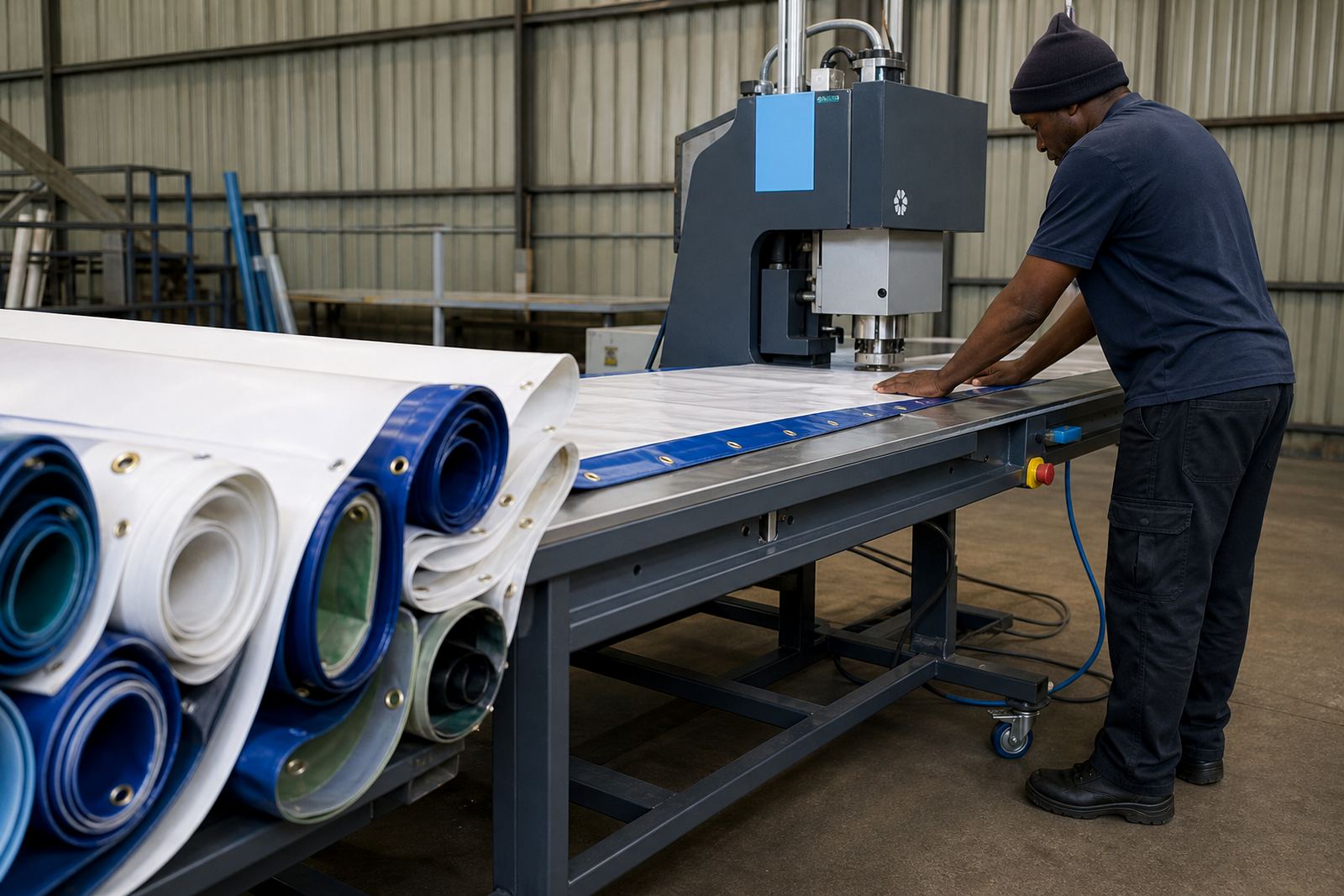
- Radio frequency welders for PVC coated banner and tarpaulin panels where clean seam definition is needed
- Hot-air or hot-wedge welders for hems, joins and extended straight runs
- Cutting tables, edge guides and measuring stops for repeat panel sizes
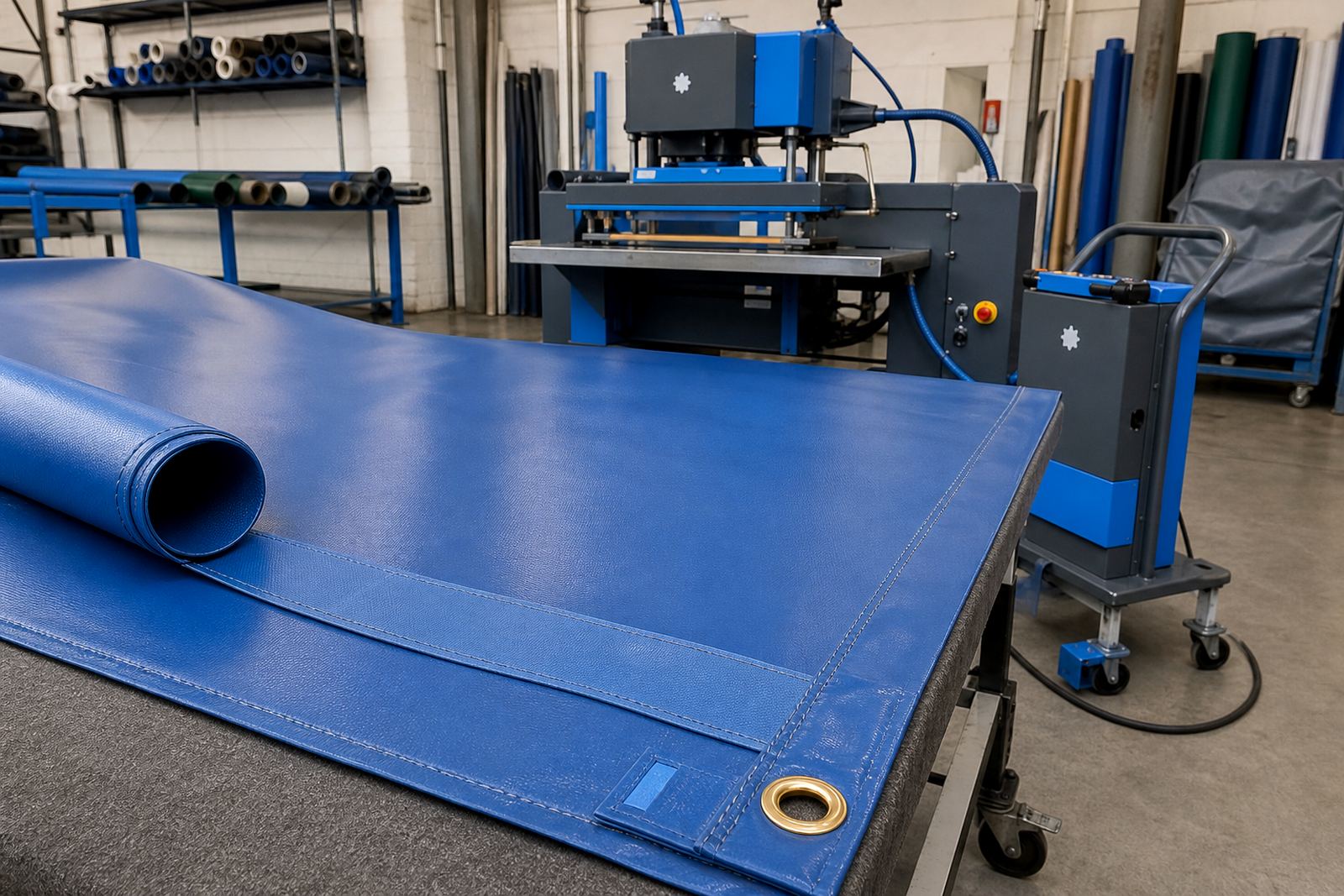
- Eyelet pressing tools for tie-down points and perimeter fixings
- Keder attachment tooling for track-fed marquee edges and side curtains
In Germiston and Boksburg workshops, space planning also matters. A machine that is easy to load, align and unload saves time during changeovers, especially where one job uses narrow side panels and the next uses wide roof sections.
Layout planning for a cleaner production flow
Before ordering equipment, map the full path of the panel through the shop. Mark where the fabric is cut, where hems are formed, where keder is added and where eyelets are punched. That order affects both output and seam quality. If the work moves back and forth across the floor, edges start to curl, measurements drift and the final panels can pull out of square.
For marquee panel production, the best layouts usually keep long seams on one side of the room and finishing on the other, with enough flat space to lay out banner sections without creasing. In humid coastal areas, fabric storage should stay dry and off the floor so the coating does not pick up dirt before welding. In winter, cold material can behave stiffly, so a controlled prep area helps keep the seam even.
Common mistakes that show up on the finished marquee
Most faults on marquee panels come from speed without checks. A seam can look acceptable at first, then open at stress points once the panel is tensioned on site. The trouble usually starts with poor alignment, dirty material, worn tooling or heat settings that were left where they worked on a previous batch.
- Uneven overlap, which leaves one edge weak and visually untidy
- Dirty or dusty coating surfaces that reduce bond quality
- Heat that is too high, causing shrink, gloss marks or hard ridges
- Heat that is too low, leading to weak peel strength
- Worn rollers or electrodes that leave an inconsistent seam track
- Eyelets placed too close to the edge, especially on load-bearing corners
Fault finding usually starts with the seam itself, then the rollers, guides and pressure settings. If a panel line produces the same fault every few metres, the machine or tooling is often the first place to inspect.
Budget ranges for marquee panel equipment in Rand
Budget depends on whether you are replacing one welding station or setting up a full panel line. Smaller shops that mainly produce banners, side walls and repair work may need only one main welder plus finishing tools. Larger operations that turn out marquee walls, keder edges and repeated long runs often need a more complete set-up with spares and servicing support.
As a rough working guide, entry-level finishing tools and attachments can sit in the lower tens of thousands of Rand, while dedicated welding machines, alignment gear and site-ready support equipment can move into the mid to higher five-figure range. A full production set-up with installation, operator training, preventive servicing and spare parts planning can sit well above that depending on job size and throughput. It is better to match spend to the panels you actually make, not just the biggest order you hope to land.
Servicing that keeps the seam line steady
Marquee work puts repeated wear on rollers, electrodes, heaters, guides and feed surfaces. If those parts drift out of alignment, seam quality changes before the operator notices. Regular servicing helps keep the machine steady, especially where the same shop handles banner hems in the morning and heavy panel joins later in the day.
Our Germiston support team works with machine installation, commissioning, operator training, preventive servicing, fault finding, tooling alignment, electrode refurbishment, roller replacement, parts supply, seam testing, site callouts and service plans. For shops across Johannesburg, Pretoria, Durban, Cape Town and Bloemfontein, that support helps keep panel output consistent when deadlines are tight and the material stack changes from job to job.
What a good marquee panel run should feel like
When the process is set correctly, the panel feeds evenly, the seam sits flat and the finished edge looks clean enough for front-of-house use as well as back-of-house support work. That matters on marquee walls, entrance panels and branded display sections where people will notice the finish before they notice the structure.
For many fabricators, the best result comes from steady planning, correct tooling and a machine that is serviced before it starts showing trouble. If the panel line is neat, repeatable and easy to train on, the whole job becomes easier to schedule and easier to hand over between operators.