Banner work that has to hang straight the first time
Event banners are usually handled on a tight schedule, often with last-minute artwork changes, different mounting points and a mix of indoor and outdoor use. The welding machine has to form even seams on PVC-coated fabrics, keep hems straight, and leave enough consistency for eyelets or keder to sit where the installer expects. If the seam wanders or the heat is uneven, the banner can twist at the corners or ripple once it is tensioned.
For this kind of work, many workshops use high-frequency welding for long, tidy seams on compatible PVC-coated materials, and hot-air or hot-wedge welding where the fabric build-up, shape or access calls for it. The right choice depends on panel size, material thickness and how the finished banner will be fixed on frame, pole or rope. On event work, a small error in layout can waste time and material very quickly.
Typical set-up in a banner workshop
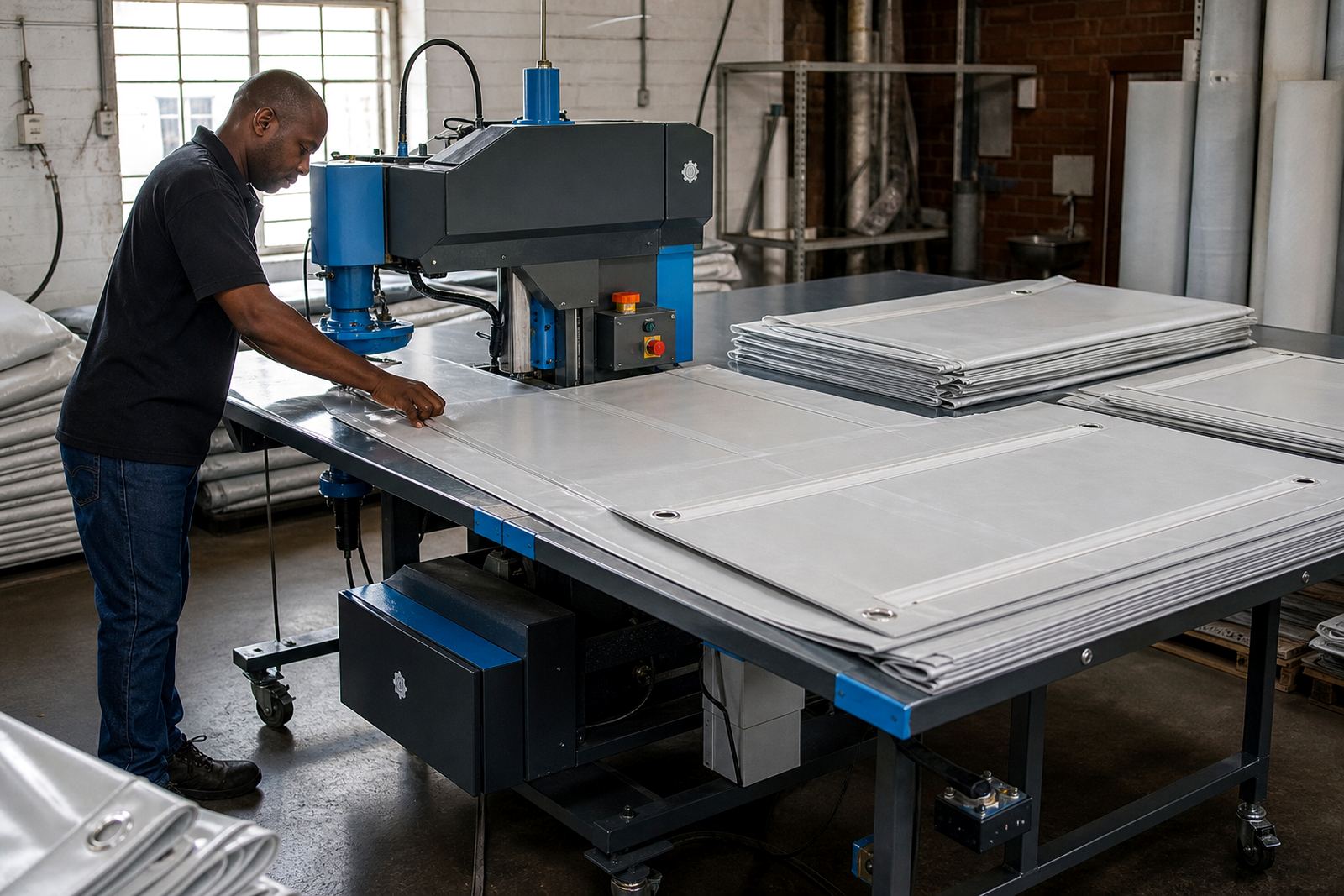
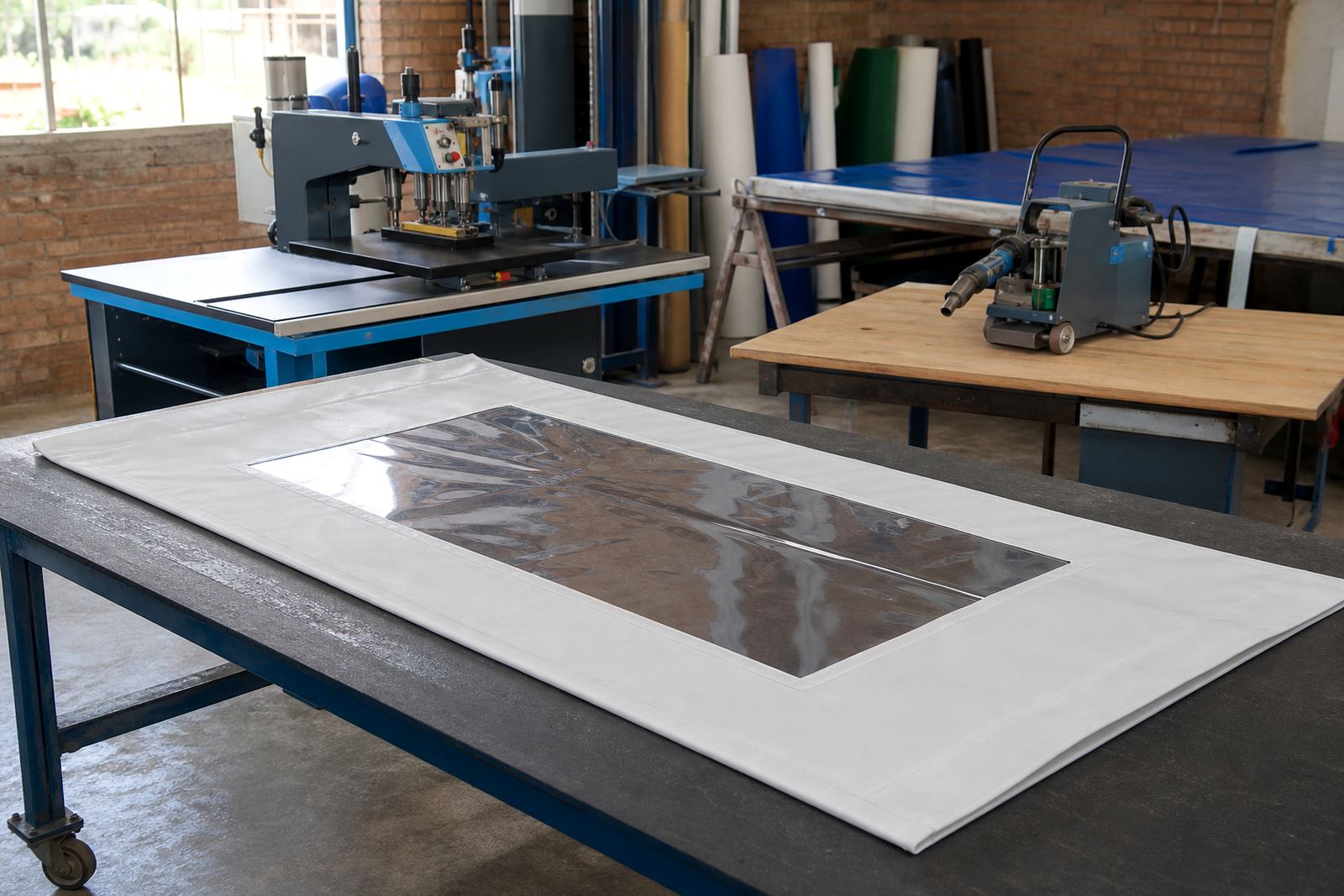
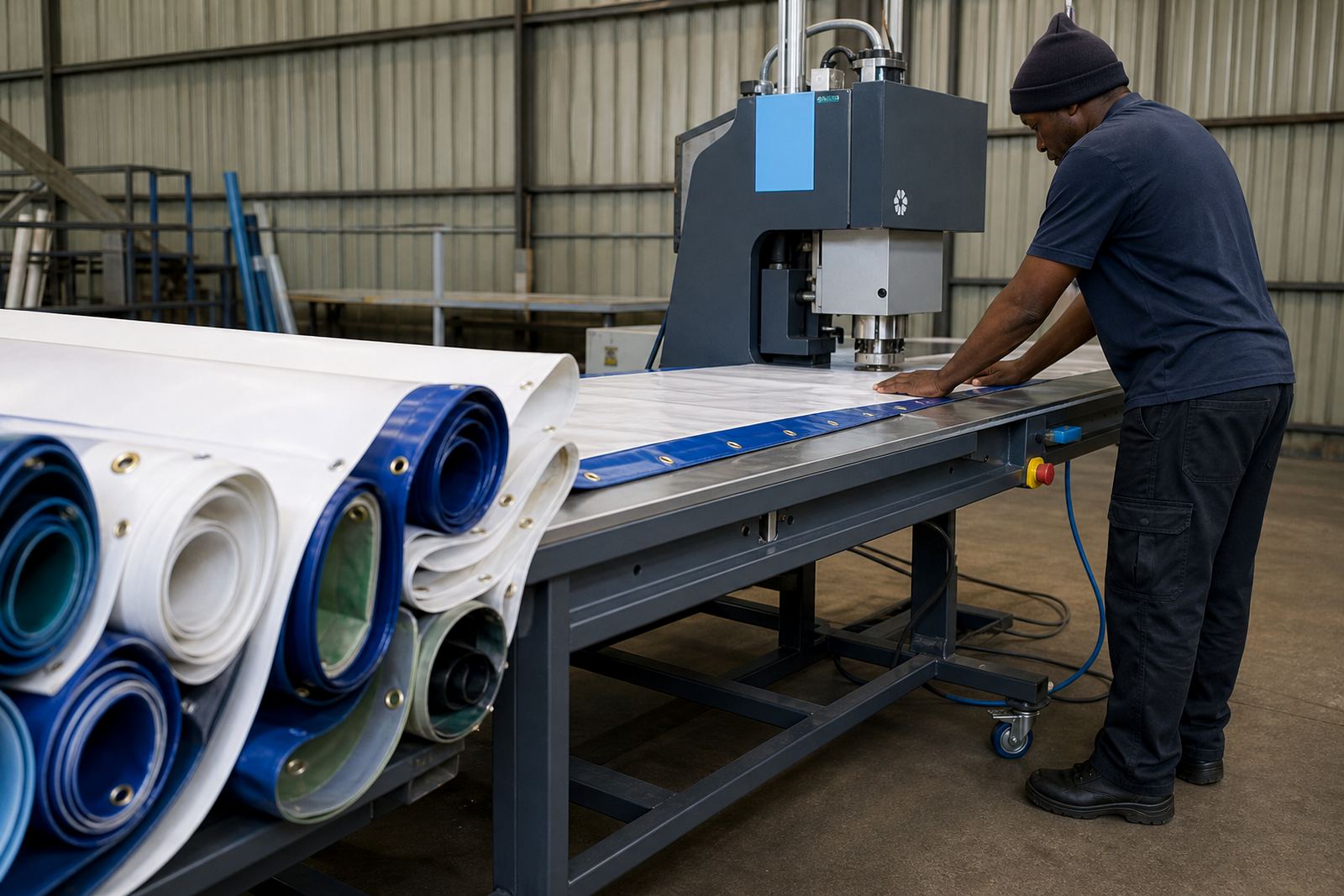
A practical banner line usually starts with a cutting table, measuring marks, a welding machine suited to the material and a finishing area for eyelets, keder or rope pockets. Larger jobs may need feed guides, stops, alignment marks and a clean flat area so panels do not creep while the operator is welding. In humid coastal areas like Durban or Cape Town, fabric handling and storage matter as much as the machine setting because moisture, dust and rolled stock can affect the finish.
- High-frequency welder for long seams and repeatable joins on suitable PVC-coated fabric
- Hot-air or hot-wedge unit for hems, sleeves and awkward shapes
- Eyelet press or punch station with spacing guides
- Keder attachment tooling for track-mounted event systems
- Cutting and squaring area for panels, gussets and corner reinforcement
When the layout is organised, the welding operator can move from edge hem to pocket to reinforcement without reworking the same panel twice.
Hems, pole pockets, keder and eyelets need different handling
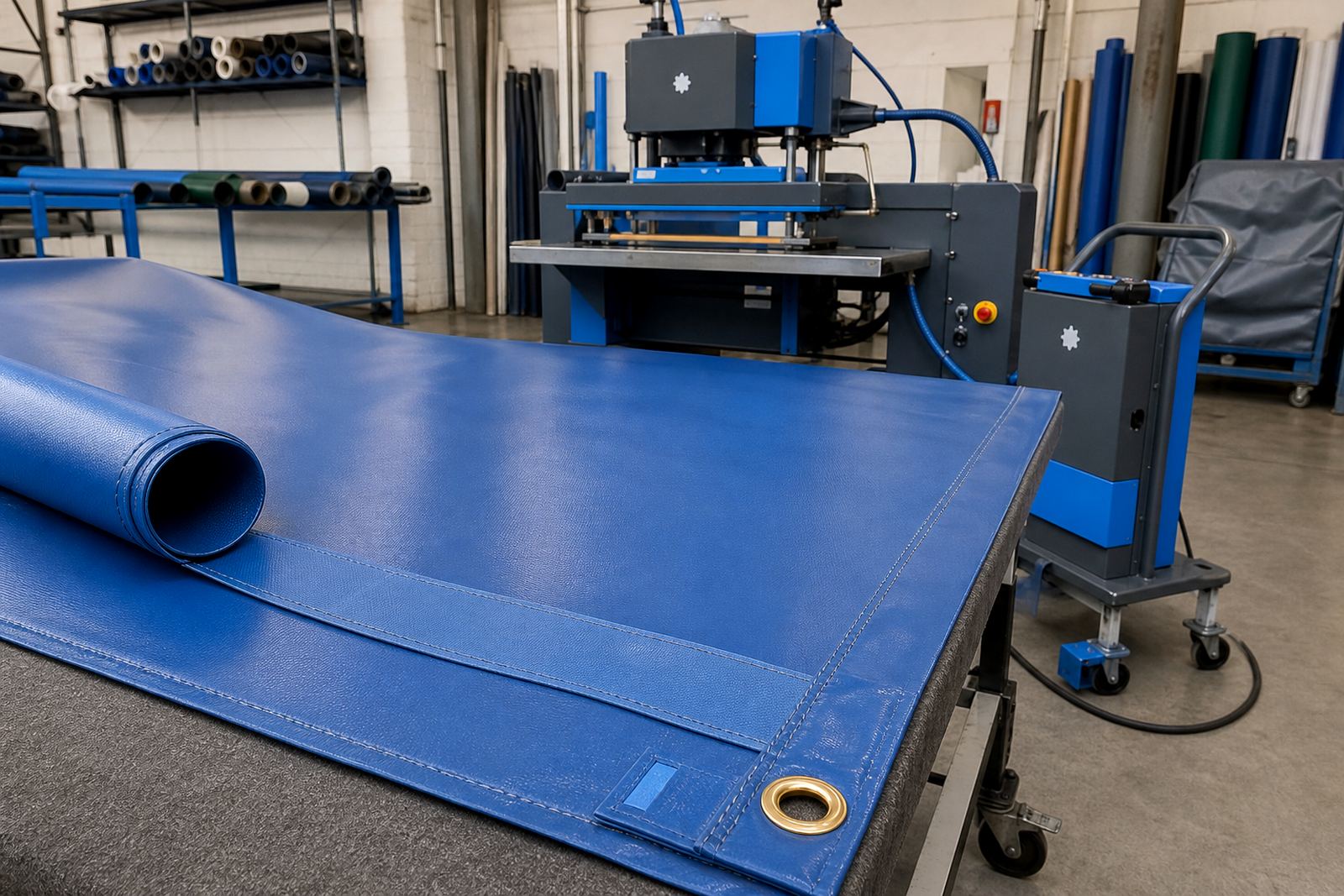
Event banners often use a mix of finishing methods on one job. A top edge may need a pole pocket, the sides may need hems, and the corners may need extra patches or welded reinforcements. Eyelets must sit at even centres so the banner pulls neatly and does not tear at one side under tension. Keder work calls for accurate feed and clean edge control, especially where the banner slides into a channel or frame.
On smaller signage jobs, the shop may weld hems first and punch eyelets later. On larger event panels, it can be better to plan the full fixing pattern before welding begins, so the operator can keep seam allowance, eyelet spacing and corner build-up in the same measurement chain. That saves time and prevents a banner from hanging off-centre at the venue.
- Use wider hems where banners are repeatedly moved and re-tensioned
- Keep eyelets away from seam edges, corners and stress points
- Plan pole pockets for the exact pole diameter and insert length
- Check that keder sits straight with no twist along the length
Layout planning that avoids expensive rework
Good planning starts before the machine is switched on. The operator should confirm banner size, finished edge allowance, fixing method and panel direction. If the artwork includes large colour blocks or welded joins, it helps to mark the weld path on the material before cutting. This is especially useful on long event runs where several banners must match and the same setup is repeated many times.
In workshops serving Johannesburg, Pretoria, Bloemfontein and other inland centres, the main pressure is often speed and volume. On coastal projects, the added issue can be handling fabric that has been stored in warm, damp conditions. Either way, the seam line must stay true, because even a few millimetres off on each panel can leave a row of banners looking uneven when fitted at the venue.
Common planning faults include under-allowing for hems, forgetting the added width of a folded pocket, and placing eyelets too close to welded corners. Another common issue is not checking the banner against the actual pole, frame or hanging point before final welding. That is where a short test piece can save a full sheet of material.
Common faults on event banner runs
When a banner does not finish properly, the problem is often in setup rather than the fabric itself. Dirty electrodes, uneven pressure, worn rollers or poor alignment can all show up as weak seams, scorch marks or wrinkled edges. In hot-air work, incorrect temperature or travel speed can cause the material to shrink back, while hot-wedge setups need the wedge and pressure path kept clean and true.
- Weak seam lines from poor contact or incorrect setting
- Wrinkled hems from uneven feed or inconsistent tension
- Eyelets tearing because spacing is too close to the edge
- Keder pulling off line because the edge was not guided properly
- Scorching, gloss marks or distortion from excess heat
These faults are usually preventable with operator training, regular servicing and a proper seam test on sample material before the full batch is started. That is especially important where event timelines are tight and there is no room for a second run.
Practical budget ranges for banner welding equipment
Budget depends on output, material type and how much finishing the workshop does in-house. A compact hot-air unit for light banner and hem work sits in a different range from a larger high-frequency machine with controlled output and tooling for repeat jobs. Once keder work, eyelet stations and alignment aids are included, the total budget rises, especially for a workshop that wants to handle many banner sizes without constant changeover.
For South African workshops, entry-level equipment for smaller runs may fall in the lower tens of thousands of Rand, while more specialised machines for higher output, wider work or repeat production can move into a much higher bracket. Tooling, installation, operator training and preventive servicing should be part of the budget from the start, not added only after the first breakdown. The real cost of a machine is not only the purchase price, but the hours saved when seams stay consistent and the team can keep moving.
PVCWelder works from Germiston, Ekurhuleni and supports banner makers across Johannesburg, Pretoria, Durban, Cape Town and Bloemfontein, with service coverage also reaching Boksburg and Benoni. That includes machine installation, commissioning, operator training, preventive servicing, fault finding, tooling alignment, electrode refurbishment, roller replacement, parts supply, seam testing, site callouts and service plans.