When a workshop curtain has to take daily knocks
Industrial curtains are not just bigger versions of a banner. They often carry moving loads, forklift wash spray, dust, splash and frequent handling at the same opening, so the weld quality and edge finish matter from the first cut. In Germiston and the wider Ekurhuleni area, many makers work with broad PVC panels, clear vision strips for light, and reinforced top and bottom edges for tracks, rails or weighting.
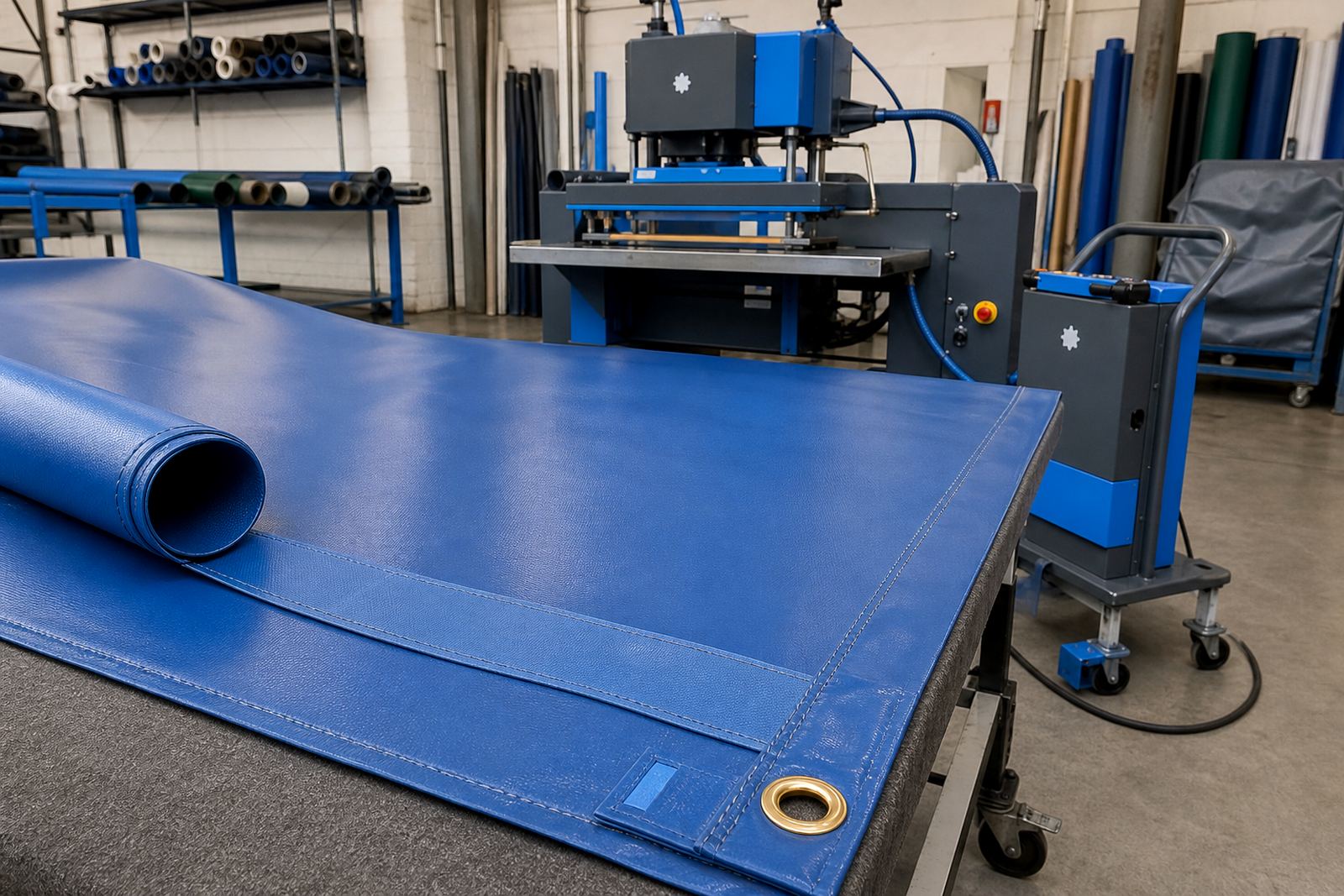
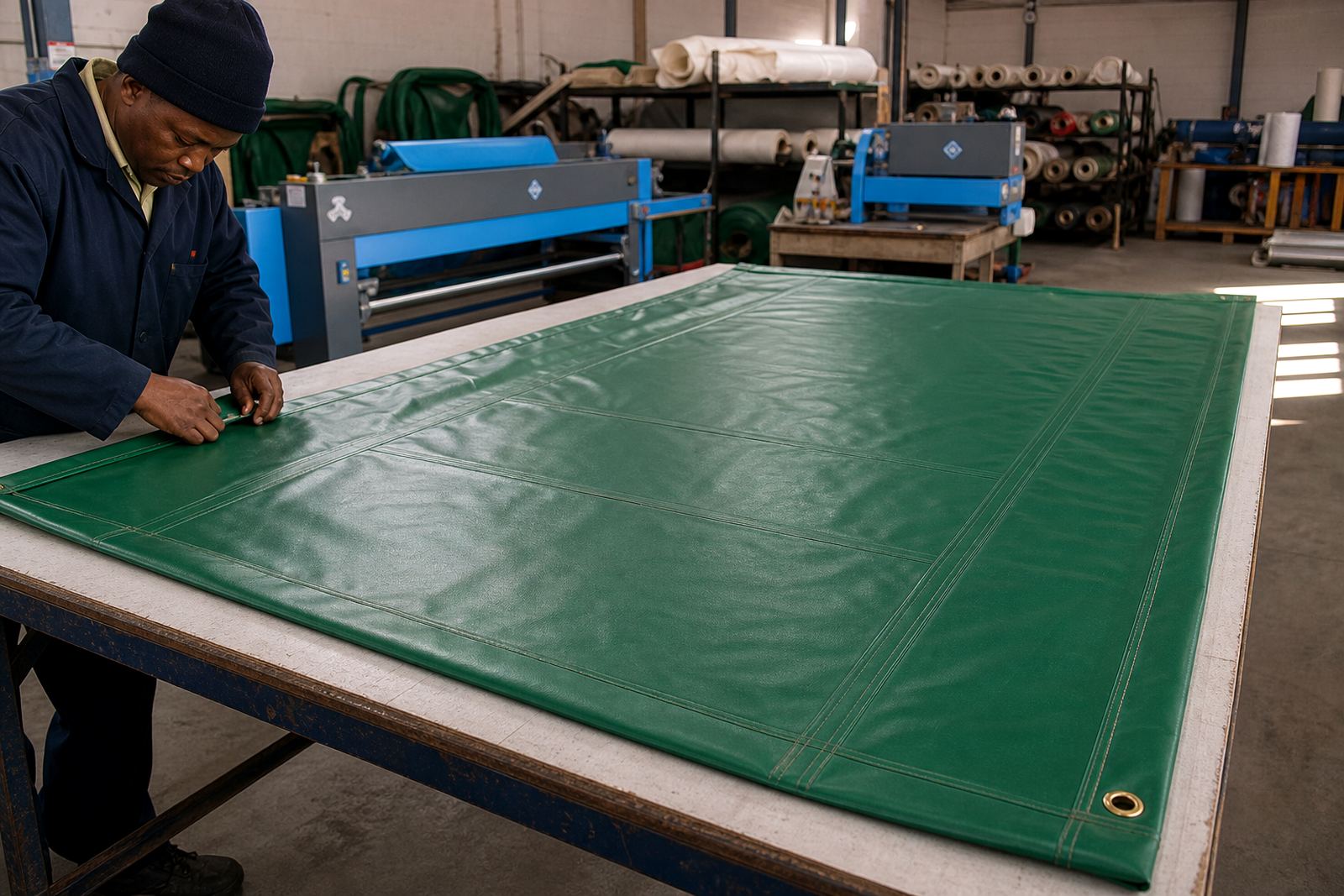
For curtain work, clients usually want straight seams, tidy hems, repeatable panel widths and a consistent finish across long runs. If the curtain is for a bay opening, it may need overlap flaps, window sections, pockets for battens, or welded reinforcement at stress points where the curtain is pulled every day.
Machines that suit curtain and screen work
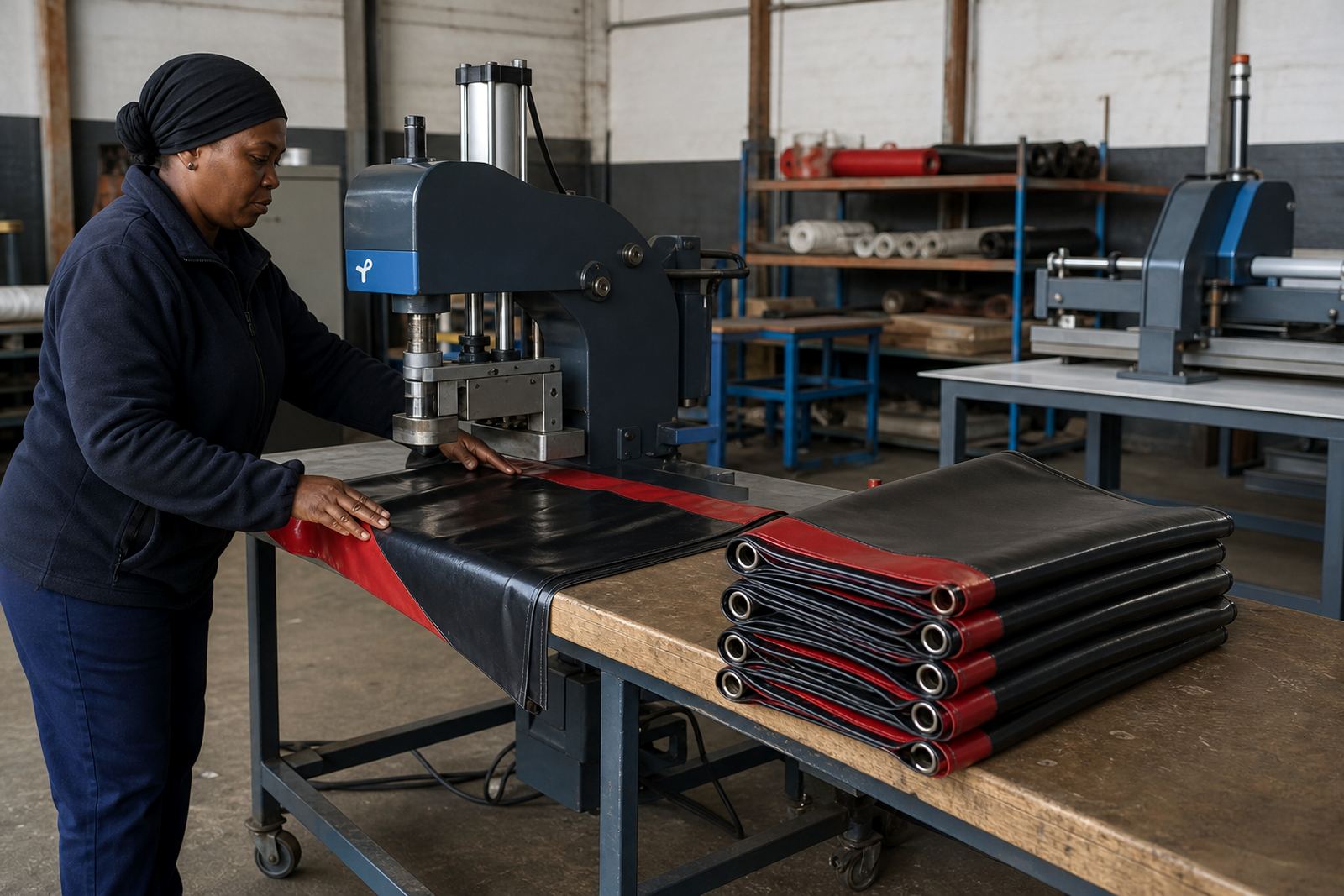
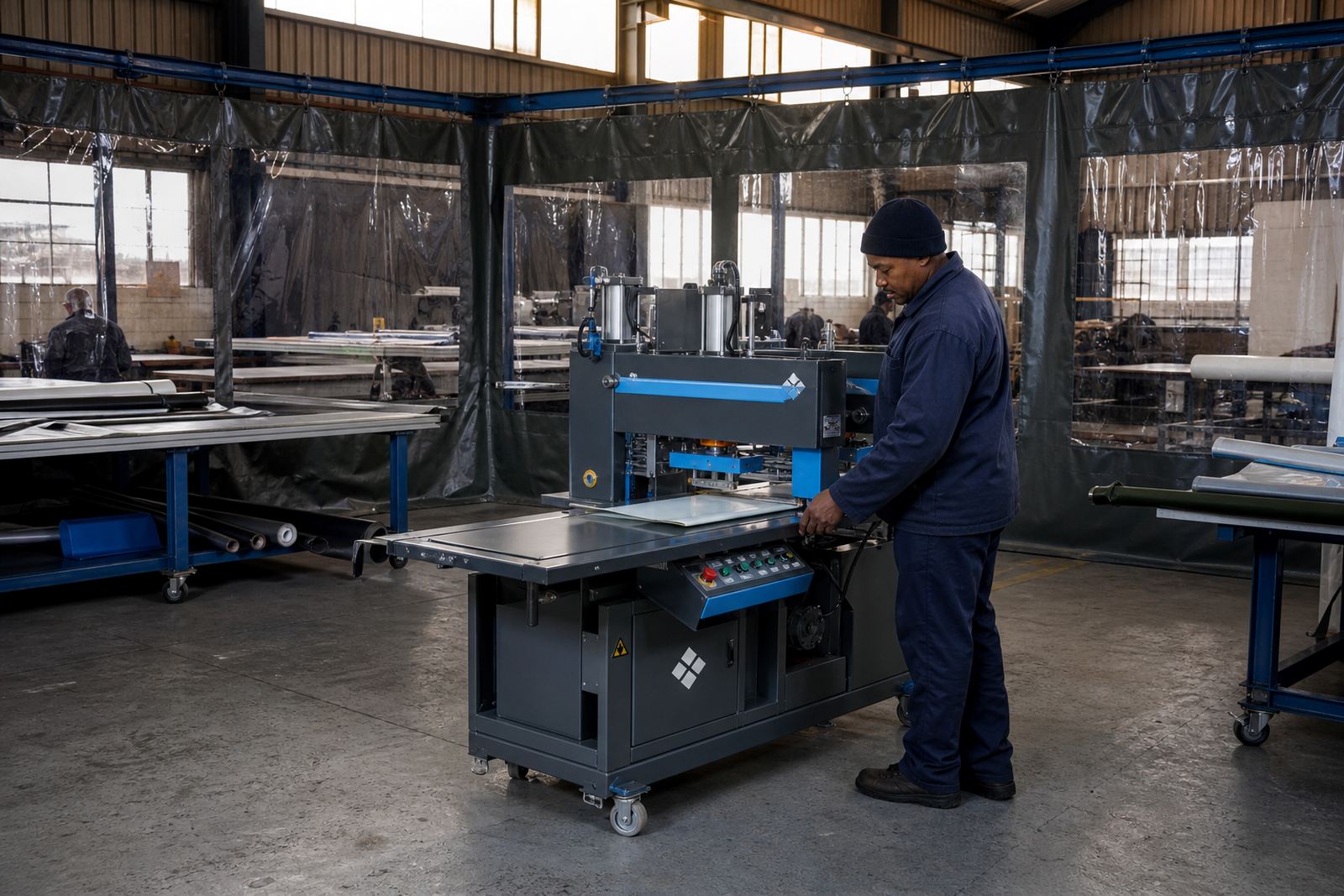
High-frequency welding is widely used where a clean, controlled seam is needed on compatible PVC coated materials. It suits long straight joins, shaped openings, window inserts and repeated seam patterns where consistency is important. Hot-air and hot-wedge welders are also used for longer hems, overlays and edge finishing, especially on larger sheets where the operator needs steady travel and even pressure.
For industrial curtain production, the usual equipment set includes a flatbed or long table arrangement, seam guides, cutting and trimming tools, measuring aids, and suitable tooling for hems, lap seams, pockets and reinforcement bands. Eyelet work is often done after welding, but the edge must be planned so the curtain can carry the hardware without tearing. In humid coastal areas such as Durban, fabric storage and handling also need attention because moisture and dirt can affect finish quality.
- High-frequency welders for precise PVC seam work
- Hot-air or hot-wedge units for long hems and overlays
- Alignment guides for repeatable panel size
- Eyelet and reinforcement planning for hanging points
Planning the curtain before the first weld
Good planning reduces wasted sheet offcuts and rework. The curtain maker needs the opening size, hanging method, overlap detail, vision panel position and whether the curtain will be pulled aside, rolled or fixed in sections. In Pretoria and Bloemfontein, we often see workshop openings where the measured size is correct but the final curtain fails because the client did not allow for top track hardware, bottom weights, or the extra return needed at the sides.
For bay curtains, the layout should show all weld lines, reinforcement patches, eyelet spacing and any access door or clear section. If the material is heavy gauge, the weld path should be chosen so the load is spread and the curtain does not pucker at the corners. A practical drawing on the cutting table saves time and helps the operator keep seam direction and panel grain consistent.
- Measure the opening at several points, not only at one side
- Allow for rails, weights, return folds and overlap margins
- Mark vision panels and access points before welding begins
- Keep panel direction consistent on long runs
Mistakes that shorten curtain life
The most common mistake is under sizing the reinforcement. A curtain can look neat in the workshop but fail at the hanging points if the top edge is too light or the eyelets are too close to the edge. Another error is welding over dirty or damp material, which can leave weak seams and a poor finish. Some makers also rush the heat settings, and that leads to scorching, brittle edges or a seam that opens when the curtain is tensioned.
Another issue is ignoring how the curtain will move in service. A bay curtain that folds back against itself needs a different edge treatment from a fixed screen. If the design includes vision sections, the joins around the clear material must be planned so there is no extra strain on the transparent panel. For sites near the coast, salt in the air can also be hard on hanging hardware, so the edge build needs to be sensible from the start.
Budget ranges for workshop and bay curtain jobs
Budget depends on curtain width, panel count, vision sections, hems, eyelets, reinforcements and the type of welding process being used. A small curtain maker starting with simple seam work may need a more modest equipment budget, while a fabricator producing long bay curtains, shaped screens and multiple repeats will usually need a larger setup with better alignment control and servicing support.
As a working guide, smaller bench based welding arrangements can start in the lower Rand hundreds of thousands, while more complete production setups with longer beds, tooling and support can move into the mid to higher Rand hundreds of thousands. Site installation, commissioning, operator training, preventive servicing and replacement tooling also need to be part of the plan, not added at the last minute. A curtain line that is easier to service usually costs less to keep running over time.
Service, training and machine care across South Africa
PVC curtain production puts regular strain on rollers, alignment parts, electrodes and cutting surfaces. Preventive servicing keeps output steadier, while fault finding and seam testing help catch problems before a batch is lost. In busy areas such as Johannesburg and Boksburg, shops often need support for tooling alignment, roller replacement and electrode refurbishment because production schedules leave little room for guesswork.
PVCWelder is based in Germiston, Ekurhuleni and supports makers in Johannesburg, Pretoria, Durban, Cape Town and Bloemfontein with machine installation, commissioning, operator training, site callouts, parts supply and service plans. For curtain work, the practical goal is simple: straight seams, safe handling, tidy edges and equipment that stays set up properly for the material being welded.