What a truck tarp workshop needs to handle
Truck cover work is usually heavier than banner or light tent jobs. The fabric is thicker, the seams are longer, and the finished sheet has to sit flat over a frame without puckering or pulling at the corners. In many Gauteng yards the same workshop handles side curtains, flat deck covers and loose tarpaulin repairs, so the welding set-up has to cope with different widths, folds and edge reinforcements.
High-frequency welding is often used where a neat, repeatable bond is needed on PVC-coated fabric. Hot-air and hot-wedge welding suit long straight seams, hems and joined panel runs where speed matters. For truck tarps, the real test is not only seam strength but also how the weld behaves after folding, strapping and regular exposure to sun, dust and roadside moisture.
Equipment set-up for tarpaulin panel work
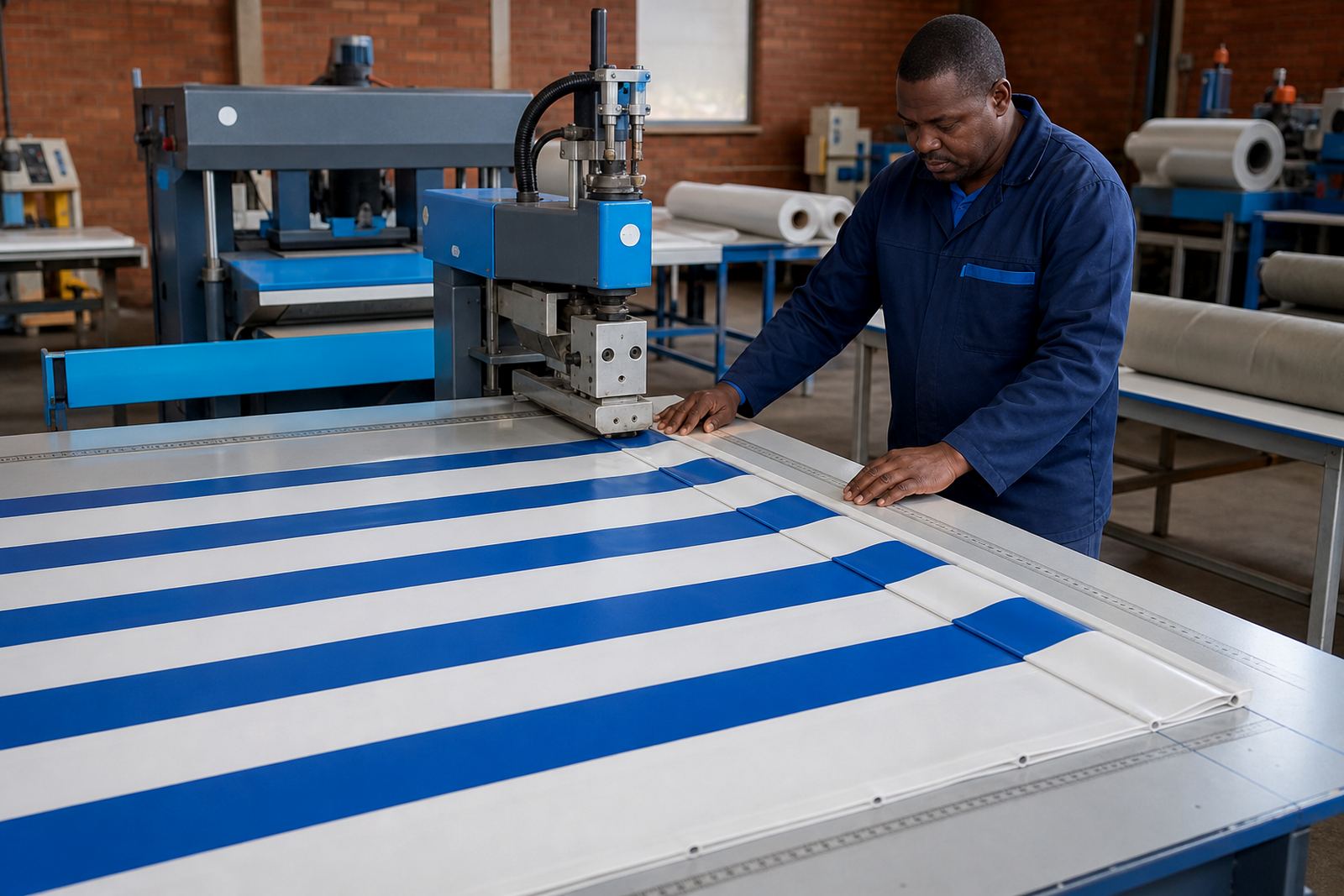
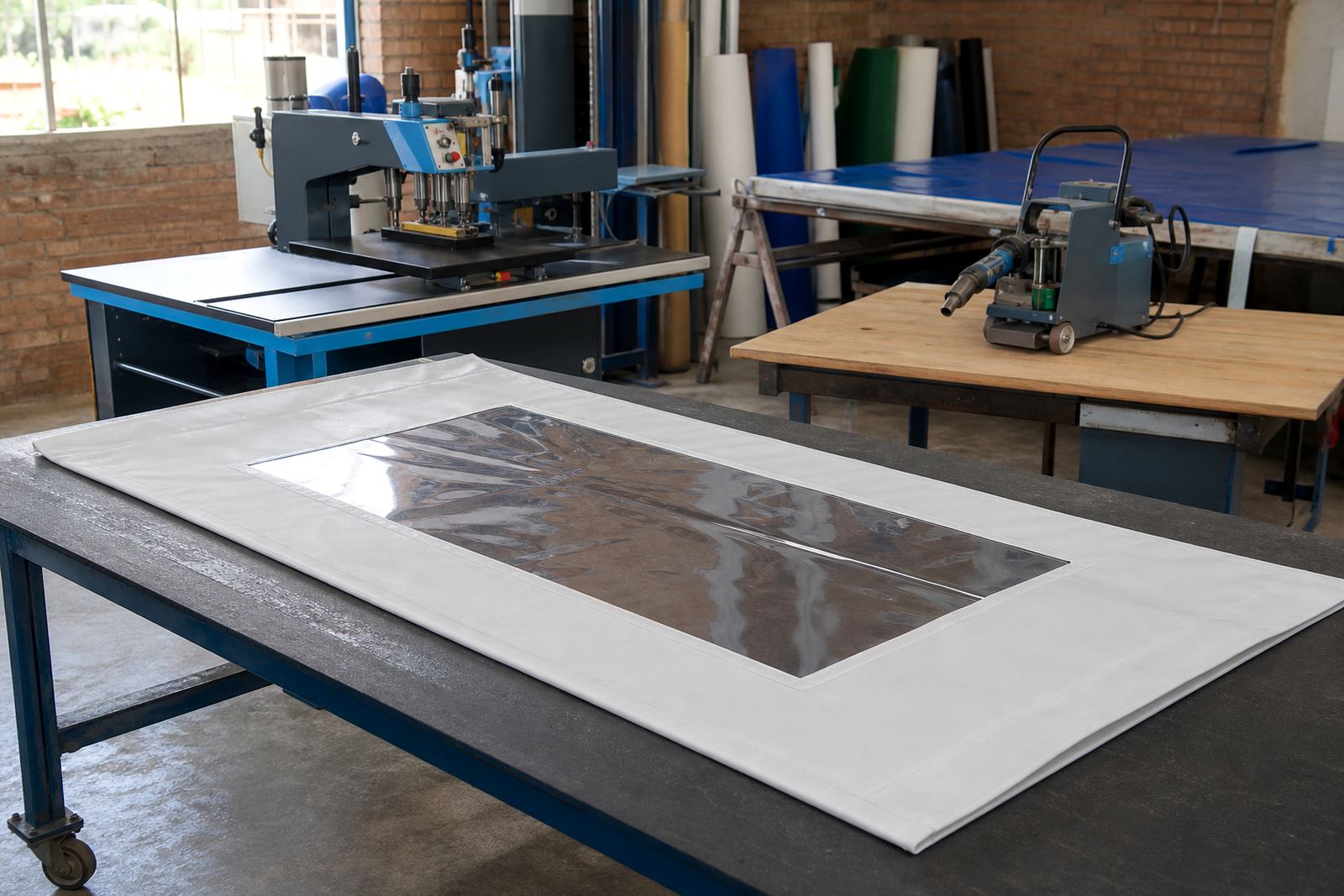
A practical tarpaulin line usually includes a high-frequency welder for pressed seam areas and a hot-air or hot-wedge machine for long joins, hems and folded edges. Operators also need cutting and marking tools, lay-flat tables, measuring guides and fixtures that keep panels square while the weld is made. If the work includes rope pockets, keder and eyelet strips, the machine layout should allow for those add-ons without moving fabric around too much.
- High-frequency welding for sealed overlap seams and shaped junctions
- Hot-air or hot-wedge welding for long panels, hems and reinforcement strips
- Cutting tables that keep 2.5 m to 3 m sheets aligned
- Alignment guides for keder, hem folds and eyelet bands
- Press tooling or rollers suited to the fabric thickness
In humid coastal towns such as Durban, materials may need a bit more care in storage and handling. In dry inland workshops around Pretoria or Bloemfontein, static, dust and heat can affect panel placement and surface cleanliness before welding, so the work area must stay tidy.
Seam layout that holds on the road
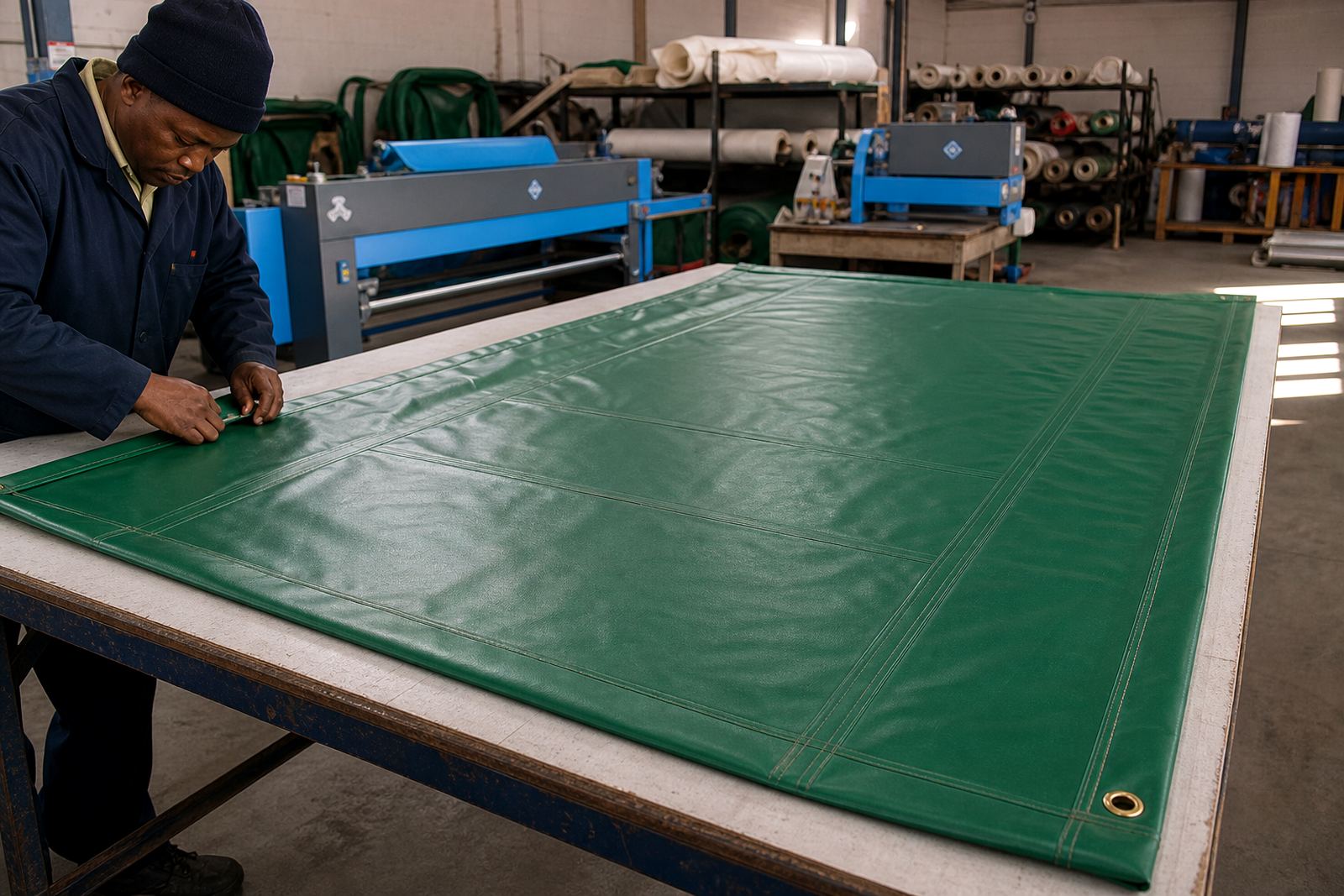
Truck tarpaulins usually need wide overlap seams, corner patches, reinforced hems and neat edge finishing. A good layout keeps the main load path away from weak points, especially where the sheet is tied down or tensioned over hoops. On larger covers, planning the seam direction before cutting can reduce waste and stop a weld line from ending up where water will pool.
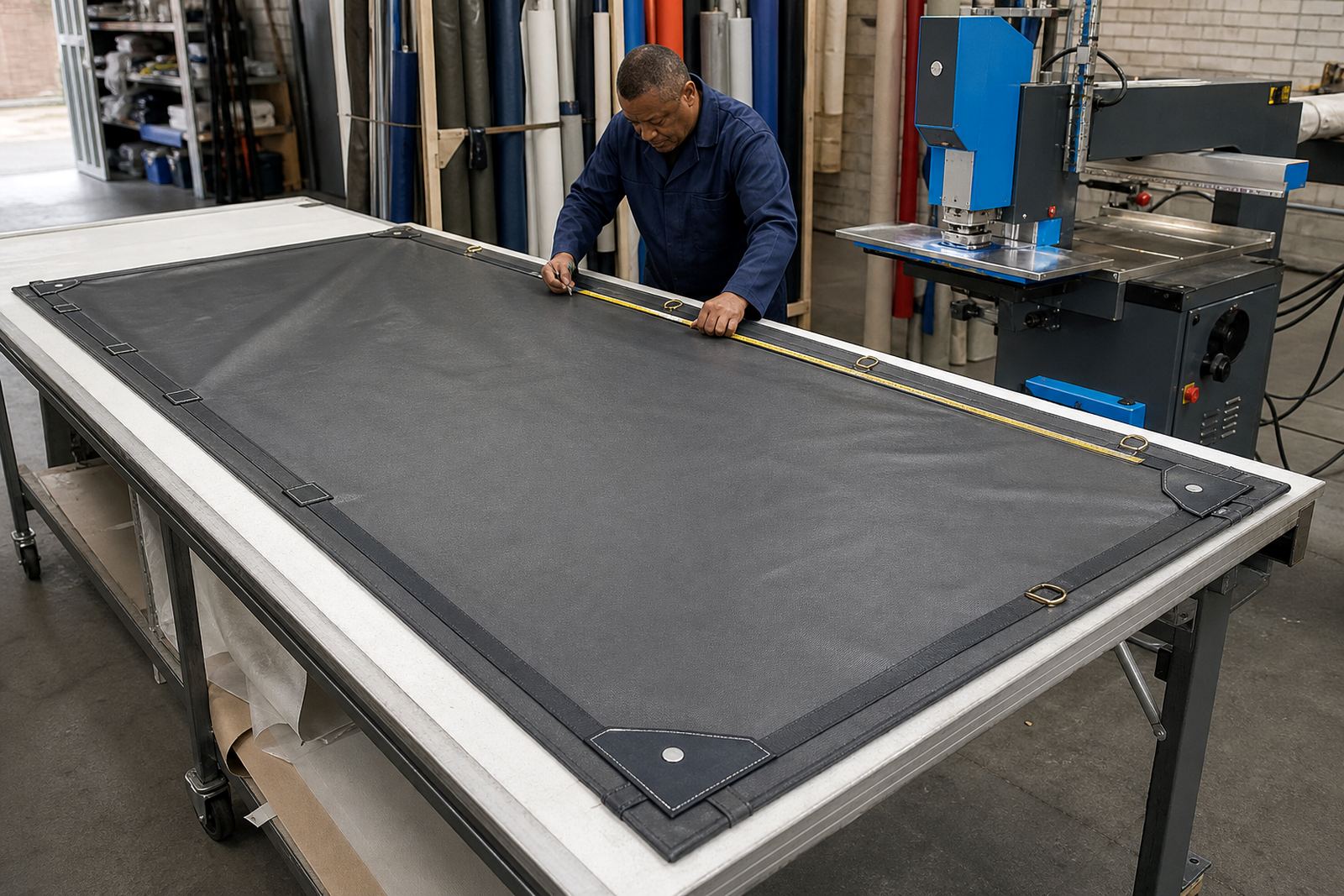
For many workshops the best order is panel join first, then reinforcement strips, then hems, then keder or eyelet work. Eyelets should sit in reinforced zones, not directly on a thin single layer. Where the tarp uses curtain systems or sliding rails, the keder pocket must stay even along the full length so the cover tracks properly and does not bind.
- Keep seam runs straight and easy to inspect
- Place eyelets in reinforced bands with consistent spacing
- Use wider hems on edges that take repeated tying or clamping
- Allow extra fabric for folds at corners and stress points
- Test one corner section before running a full batch
Common mistakes in truck tarpaulin welding
The most common fault is rushing the set-up. If the panel is not square at the table, the error gets pulled through every seam and the finished cover sits skew. Another frequent issue is incorrect heat or pressure, which can either burn the PVC coating or leave a weak bond that lifts at the fold. Dirty fabric causes its own trouble too, especially after storage in dusty sheds or on open yards.
Eyelet zones and hems are often underbuilt. A tarp may look fine on the welding table, then fail at the corners once it is tightened on the truck. Service work also shows problems with worn rollers, dirty electrodes, poor alignment and heaters that are not holding temperature properly. Those faults waste material and force a second pass, which is costly on large sheets.
- Panels cut out of square
- Heat settings left too high for thin or coated fabric
- Overlapping edges that are too narrow
- Worn tooling that leaves an uneven weld face
- Eyelet strips fixed without enough reinforcement
Servicing and operator safety on the workshop floor
Machines used for tarpaulin welding need regular cleaning, alignment checks and servicing of rollers, electrodes and heating components. A site callout can help when a machine starts drifting off line, marking the fabric or leaving patchy welds. Preventive servicing is worth keeping on a service plan because truck cover work usually runs to schedule and a machine fault can hold up a full order.
Operator safety matters just as much. Heated tooling, pressing parts and moving rollers can cause injury if guards, stops and operating procedures are ignored. Staff should know how to handle warm components, where to keep hands during feeding, and how to inspect seams without touching live or hot surfaces. Good training also reduces waste, because the operator spots a faulty fold or misfeed before the whole panel is welded.
Budget ranges for truck tarp welding lines
Budgets depend on whether the workshop needs one machine for repair work or a full production line for new truck covers. A smaller repair set-up with a hot-air unit, basic tables and hand tools will cost less than a line that includes high-frequency welding, longer beds, tooling sets and installation. Commissioning, operator training and initial parts stock should be included from the start, because a machine that arrives but is not set up correctly can create more problems than it solves.
As a working guide, many workshops plan in bands rather than fixed figures. Entry-level repair equipment may sit in the tens of thousands of Rand, while more complete production equipment can move into the low to mid hundreds of thousands depending on size, tooling and control features. Larger custom lines for heavy tarpaulin output cost more again, especially where site layout, electrical fitment and alignment work are involved.
- Machine installation and commissioning
- Operator training for seam control and safe handling
- Preventive servicing and fault finding
- Tooling alignment and electrode refurbishment
- Parts supply for rollers, seals and wear items
Support from Germiston into the main freight corridors
PVCWelder works from Germiston, Ekurhuleni and supports tarpaulin makers in Johannesburg, Pretoria, Durban, Cape Town and Bloemfontein, with local support coverage also arranged for Boksburg and Benoni. The team includes Mandla Mnisi, Alicia van der Merwe, Sibusiso Abrahams, Johan Mkhabela, Thandi Mokoka and Lebo Motsepe, covering sales, installation, training, servicing and parts support for workshops that build truck covers and related PVC fabric products.
Clients contact the team through the enquiry form on the contact page. That suits workshop managers who need machine advice, site work, seam testing or a parts list matched to the tarpaulin work they do. The right set-up depends on fabric weight, sheet size and the seam type in use, so the discussion starts with the job at hand, not a generic machine spec.