Backdrop panels that stay flat under lights
Stage work is unforgiving. Once a backdrop is hung, every ripple, crooked seam and uneven hem shows in front of the audience and under bright wash lighting. For that reason many makers prefer welded PVC-coated fabric over stitched joins, especially where the panel must hang flat and stay tidy across repeated installs.
For printed drops, plain black masking, branded stage skirts and event walls, the weld line needs to stay even from end to end. High-frequency welding suits controlled seam work on suitable PVC-coated materials, while hot-air or hot-wedge methods are often used where the job calls for longer runs, hems, reinforcement strips or on-site adjustments.
Typical equipment set for backdrop production
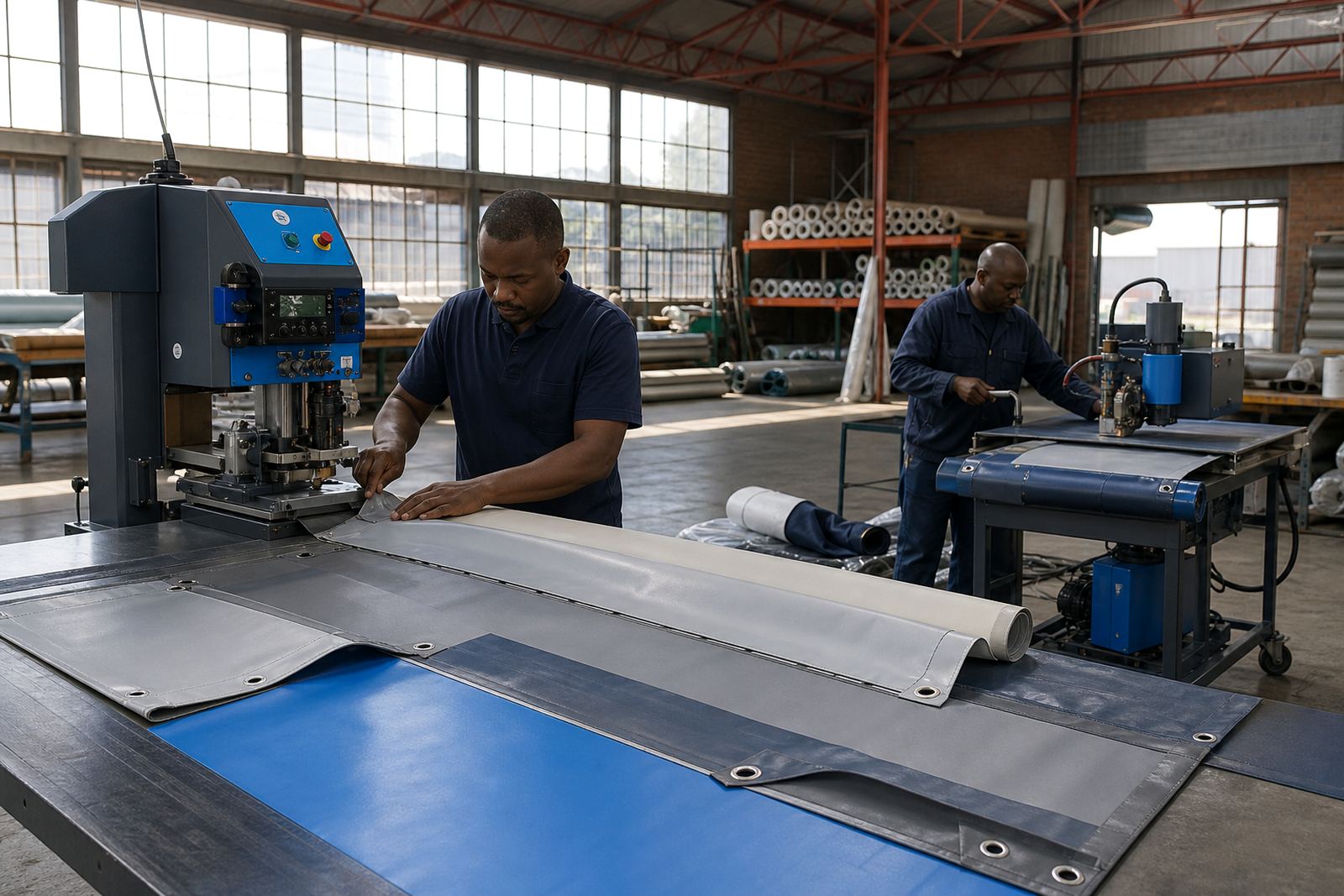
A backdrop workshop normally needs a mix of welding and finishing equipment rather than one machine doing everything. The right setup depends on panel size, material weight and whether the job is for a theatre venue, expo stand or touring production that gets packed up often.
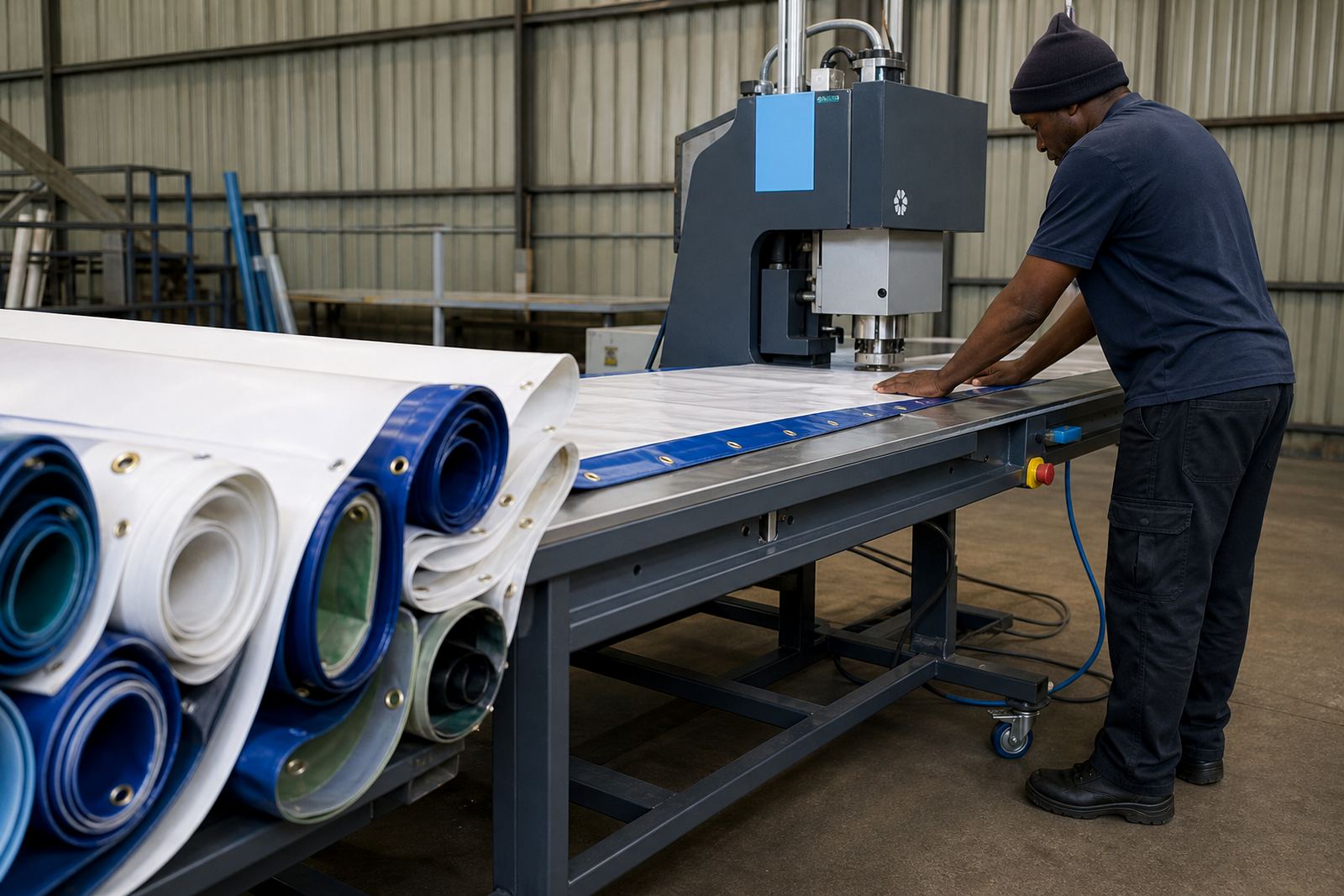
- High-frequency welding machine for straight seams, pocket work and shaped joins on compatible PVC-coated fabrics
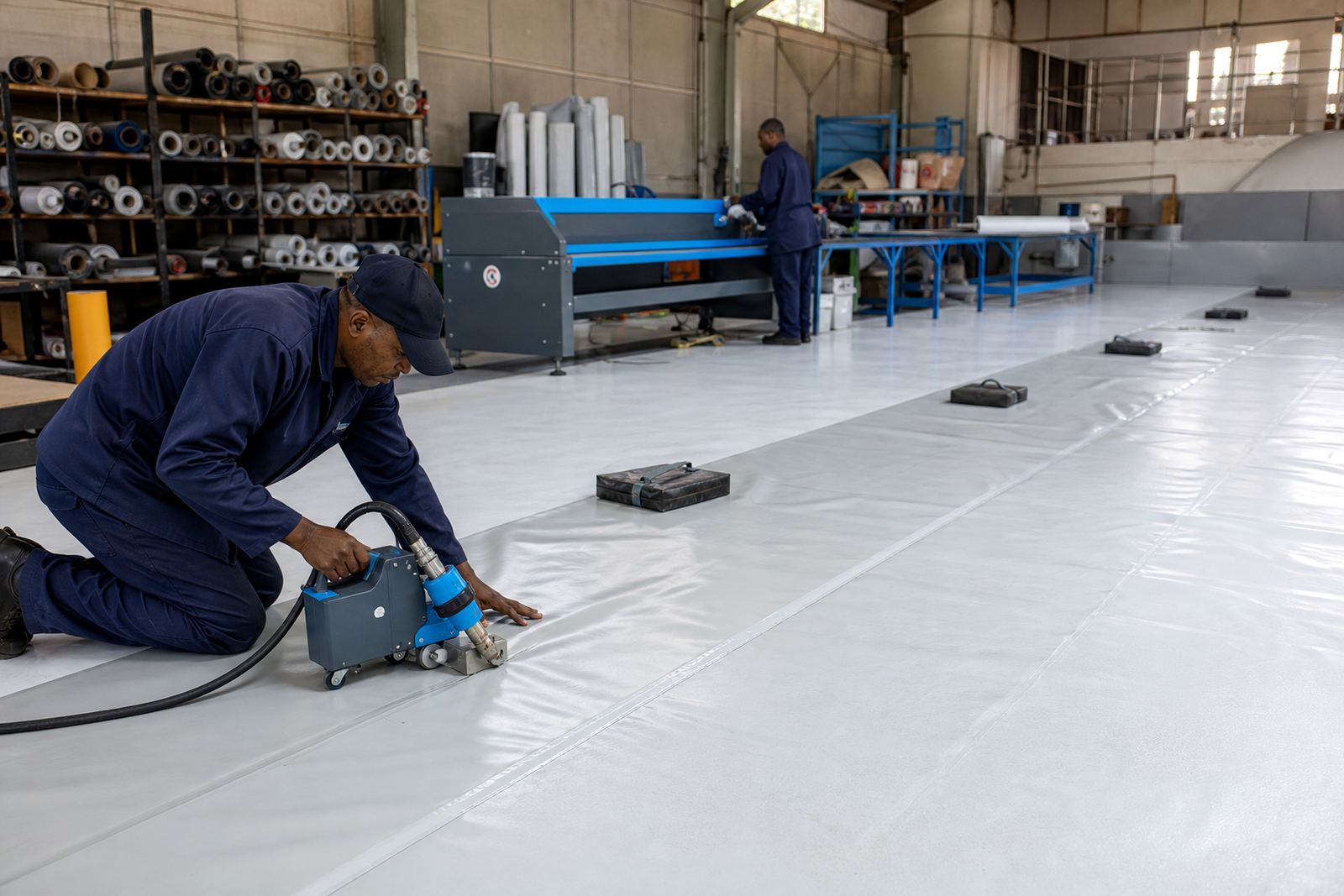
- Hot-air or hot-wedge welder for hems, reinforcements and longer continuous seams
- Cutting tables, measuring guides and marking tools for square layout
- Keder welding or attachment tooling where track-fed hanging is used
- Eyelet setting tools for tie-down points and temporary rigging
- Trimming and inspection tools to check seam finish before dispatch
In Germiston and other busy industrial areas, space planning matters as much as the machine list. A clean feed path and enough lay-flat room reduce handling marks and help keep panel edges aligned before welding starts.
Layout choices that make hanging easier
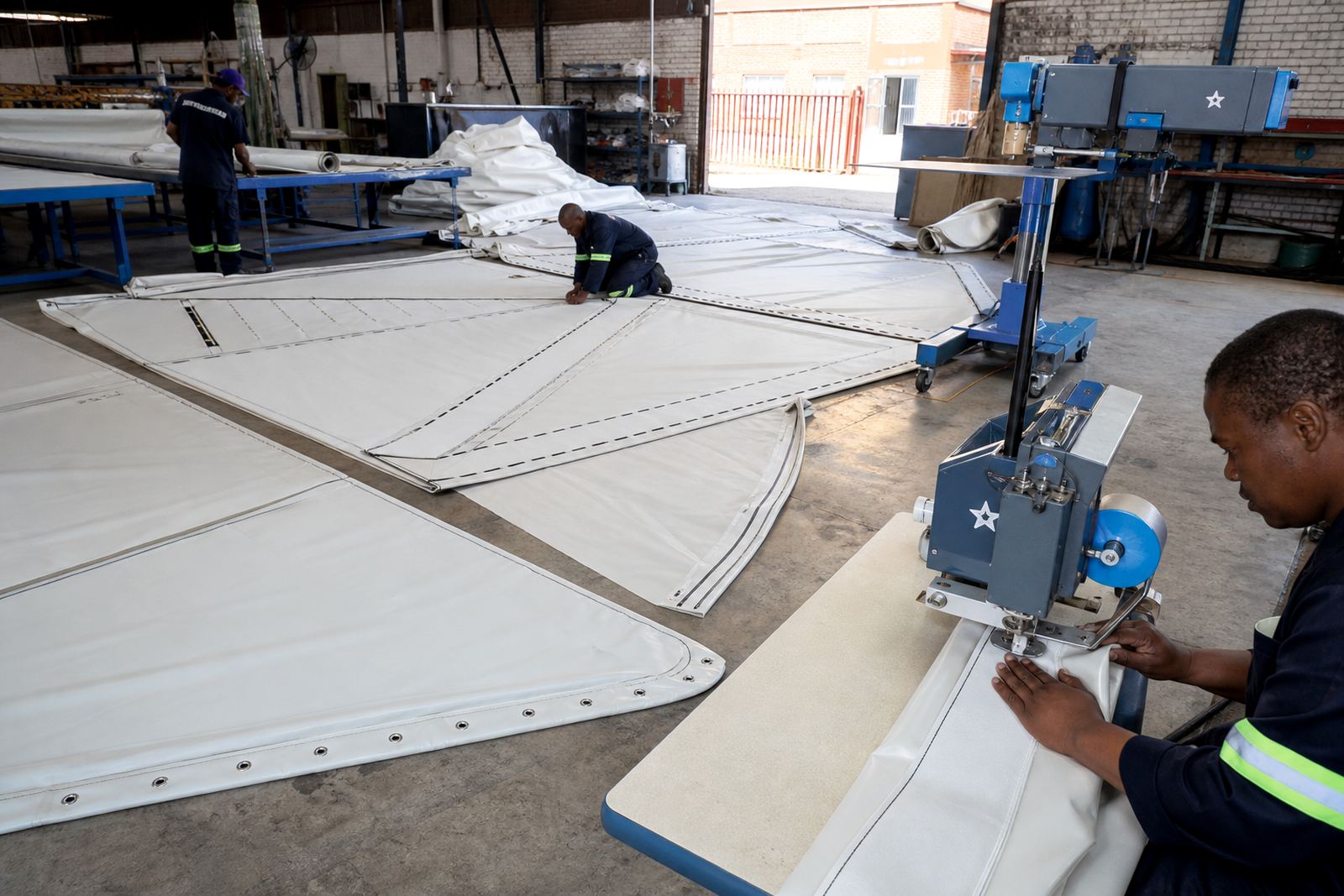
Backdrop jobs often fail at the planning stage, not the welding stage. A wide panel may need to be split into transport-friendly sections with matched seam positions so it folds well, loads into a van and still hangs straight on the venue frame. Keder edges are useful where the backdrop slides into a channel, while reinforced hems with eyelets can suit tie-on installations and temporary truss work.
Good layout starts with how the piece will be used. A curtain for a stage school in Pretoria may need quick changeover points and light handling, while a touring event wall moving between Durban and Bloemfontein may need stronger reinforcements at corners and lifting points. Keeping seam direction consistent also helps the face stay flat and reduces visual distortion where print panels meet.
Where the common mistakes creep in
Many workshop problems are avoidable. A few millimetres off at the cut line can shift an entire panel out of square, and that becomes obvious once the backdrop is tensioned. Another common issue is using the wrong weld settings for the fabric weight, which can leave weak seams or scorching at the edge.
These are the errors that show up often in stage work:
- Panels cut without checking final hanging height and side return allowances
- Hems made too narrow for repeated folding and transport
- Eyelets placed too close to the edge, leading to tear-out under load
- Keder attached without proper alignment, causing feed problems in the track
- Uneven seam pressure, which leaves a visible line under strong lighting
Operators also need to watch for contamination on the weld area. Dust, loose print powder and moisture can upset the finish, especially in coastal conditions where Cape Town and Durban workshops often deal with damp mornings and salt in the air.
Operator safety and machine servicing on the floor
High-frequency equipment and hot-air systems both need proper handling. Guarding, correct hand placement, dry work areas and sensible lead management are part of daily use. For RF welding, trained operators should understand heat build-up, electrode contact and the effect of dwell time on the seam. For hot-air and hot-wedge units, temperature control, nozzle condition and roller pressure all need checking before production starts.
Preventive servicing keeps output consistent. Typical service work includes fault finding, tooling alignment, electrode refurbishment, roller replacement, seam testing and parts supply. On busy sites in Johannesburg or Pretoria, a machine that is slightly out of line can waste fabric fast, so small adjustments matter. Service plans are useful where a workshop runs repeat backdrop jobs for theatres, schools, hire companies and event crews.
Budget ranges for stage backdrop shops
Budgets vary with machine size, output volume and the type of seams needed. A small workshop doing occasional stage backdrops may look at entry-level equipment and basic tooling, while a busy production room making large printed drops, hanging pockets and keder panels will need heavier-duty machines and better handling support. As a working range, smaller setups can start from about R80 000 to R180 000, while more complete production systems can move into the R250 000 to R600 000 range depending on tooling, installation and training needs.
It also helps to budget for setup beyond the machine. Installation, commissioning, operator training, spare rollers, consumables, seam tests and preventive servicing should sit alongside the purchase price. For makers in Ekurhuleni, Boksburg, Benoni and across South Africa, that planning often matters more than chasing the lowest upfront figure.
When the backdrop has to arrive folded, hang flat and pack away without damage, the welding process is doing more than joining fabric. It is shaping how the whole job performs on site.