Start with the tarpaulin construction you actually make
Before comparing machines, look at the jobs on your floor. A light banner, a truck curtain and a tent wall may all be PVC-coated, but they do not behave the same under heat, pressure and handling. Material weight, coating thickness and the width of each panel change how much control you need at the seam.
For smaller sign shops, consistency matters more than speed alone. For a tarpaulin maker handling wide sheets, frequent overlaps and reinforcement patches, the machine must hold alignment on long runs without drifting. That is where high-frequency welding is often chosen for clean, repeatable seams, while hot-air or hot-wedge welding is often used where the job needs more flexibility on site or on shaped sections.
- Check the heaviest PVC-coated fabric you use regularly
- Measure the widest panel you need to weld in one pass
- List the seam types you produce most often
- Note whether you work mainly in workshop conditions or on large assemblies
Match the machine to seam type, hems and edge finishing
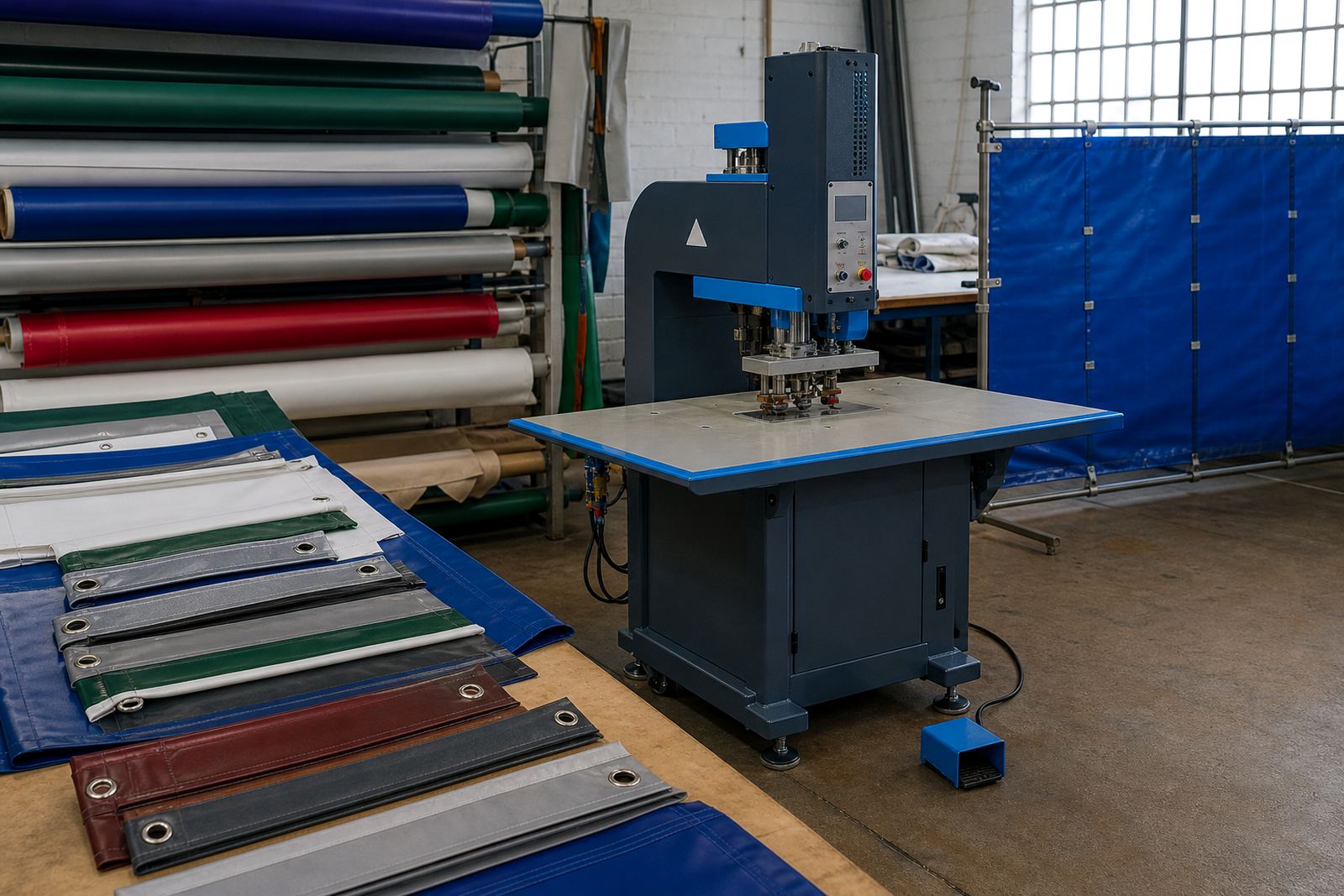
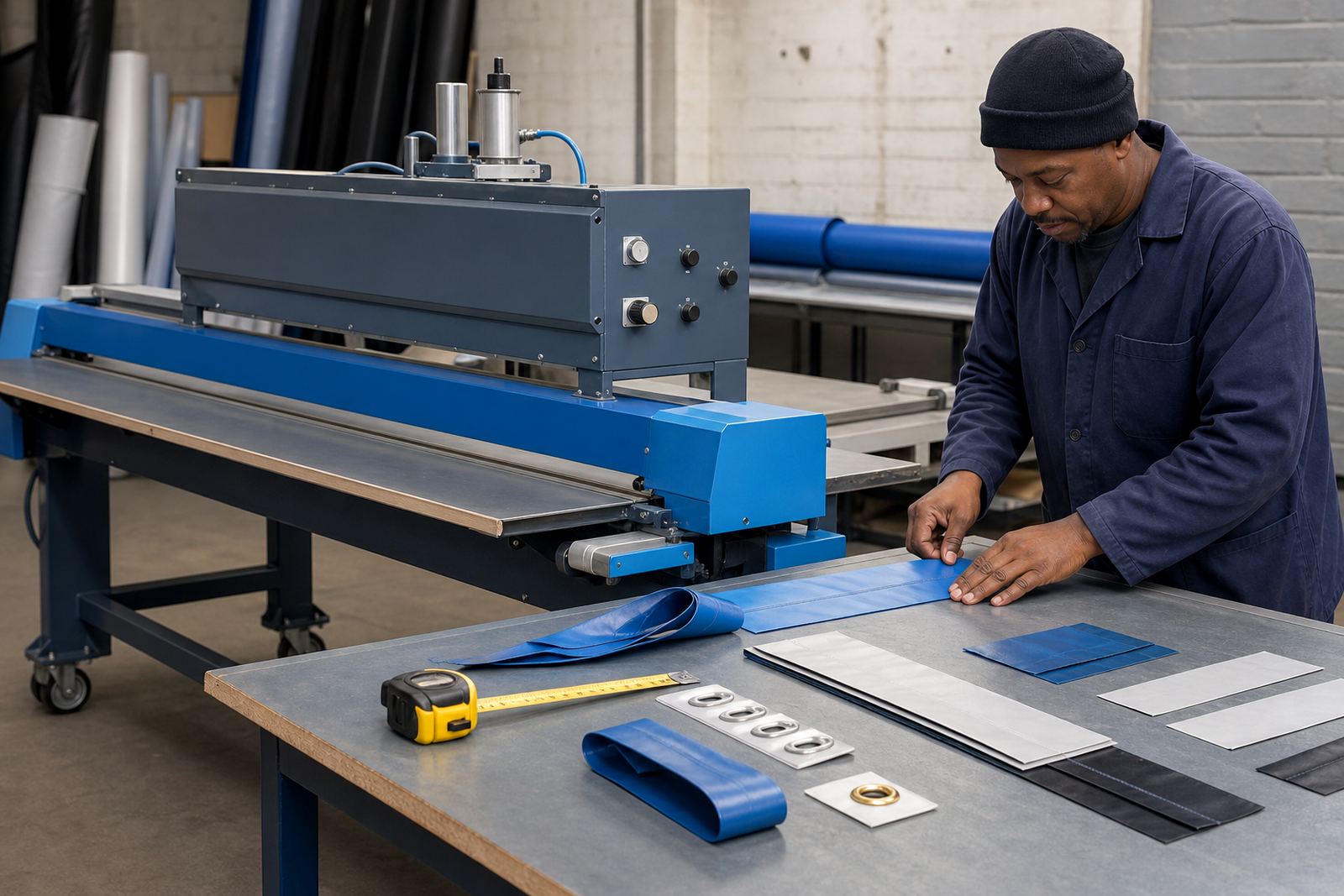
Tarpaulin shops usually need more than one weld detail. Straight lap seams are common, but hems, keder edges and reinforced borders need stable control. Eyelet work also depends on clean edge preparation so the reinforcement sits flat and the finished edge does not pucker.
High-frequency welding is useful where the job calls for neat, sealed seams on compatible PVC-coated fabrics. Hot-air and hot-wedge systems suit long hems, joining shaped panels and finishing edges where the operator needs to guide the material steadily through the process. The better choice is the one that matches your cutting, reinforcement and finishing routine, not just the machine size.
- Lap seams for general tarpaulins and banners
- Double hems for exposed edges and added strength
- Keder welding for rails and track systems
- Eyelet reinforcement zones for tensioned fixing points
- Patch welding for repairs and local strengthening
Size the worktable and throat opening for panel handling
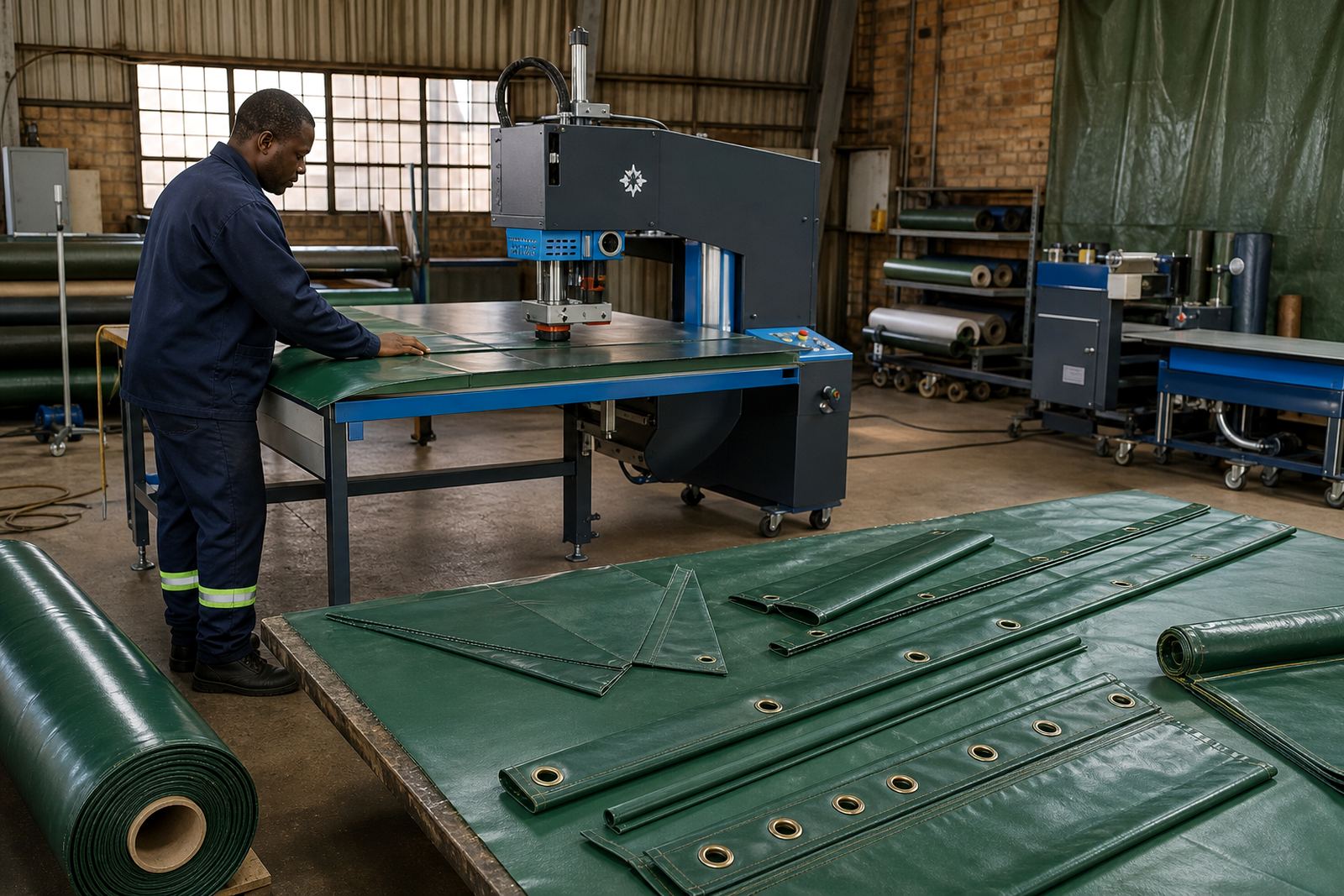
Large tarpaulin panels need room. If the table is too small, operators waste time folding and repositioning the sheet, and the seam line can wander. A proper work area should allow the fabric to lie flat, with enough support on both sides of the welding line. That is especially important for broad banners, truck covers and tent sections with reinforcement strips.
Ask how the machine feeds, how the rollers track, and whether the table layout suits your largest common job. If you handle long runs, even small inconsistencies show up at the end of the panel. In humid coastal areas such as Durban or Cape Town, keeping material clean and dry before welding also helps the seam stay even.
- Confirm the maximum panel width your team can handle safely
- Check roller access for long straight seams
- Look at how easily the operator can turn corner sections
- Allow space for cut pieces, reinforcements and finished stock
Build in safety, control and operator comfort
High-frequency and heated welding equipment needs proper guarding, correct operator posture and clear controls. The operator should be able to reach the controls without leaning over the weld area, and the seam path should remain visible throughout the job. Good airflow around heated equipment also helps in busy workshop spaces.
Training matters as much as the machine. Staff need to understand temperature control, pressure setting, dwell time and the correct sequence for seam starts and stops. If the team is doing eyelets, hemming and repair work in the same machine area, the changeover process should be clear so nobody wastes time searching for tooling or handling hot parts carelessly.
- Check emergency stop function and guard placement
- Keep cables, tools and offcuts clear of walkways
- Use the right protective gloves for heat handling
- Train operators on seam starts, overlap control and safe shutdown
Plan for servicing before the machine slows you down
Tarpaulin work is production work, and the machine needs routine attention. Roller wear, electrode condition, alignment drift and dirty tooling can all affect seam quality. A small fault can show up first as a weak edge, a crooked hem or a patch that lifts at the corners. Preventive servicing keeps the weld consistent and reduces the chance of scrap on a busy run.
In Germiston and across Ekurhuleni, many shops run hard on tight schedules, so a sensible service plan helps. That includes fault finding, tooling alignment, electrode refurbishment, roller replacement and seam testing. Parts supply matters too, because a machine sitting idle over one worn component can hold up an entire batch.
What to check before ordering your PVC welder
Use the job list in your workshop to narrow the choice. The right machine is the one that suits your fabric weights, panel sizes and finishing methods, while leaving room for growth if your output increases. If you make tarpaulins, banners and tent components, you may need a mix of welding methods rather than one machine for every task.
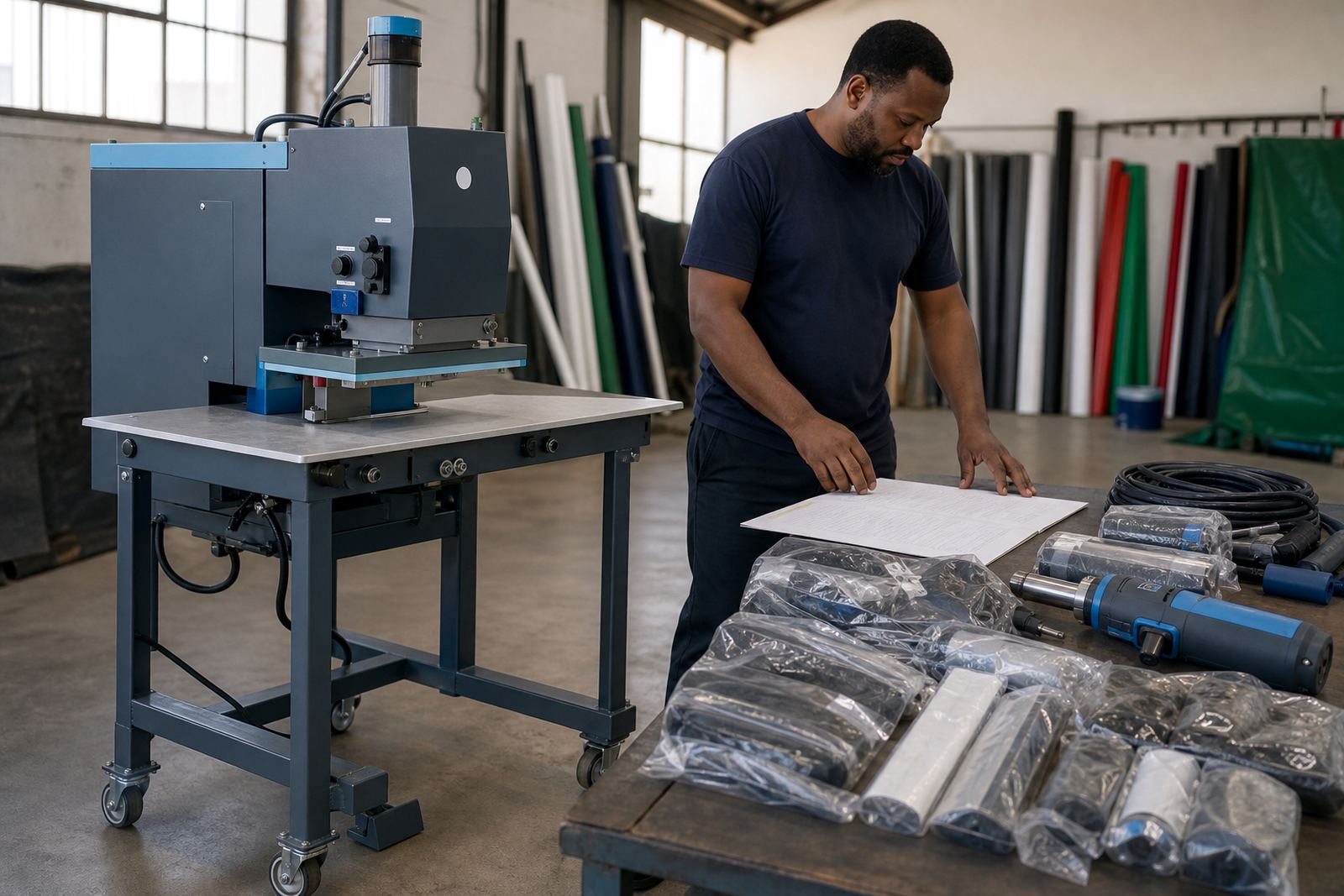
A practical check at buying stage saves time later, especially when you service customers in Johannesburg, Pretoria, Durban, Cape Town and Bloemfontein. Ask about installation, commissioning, operator training and how the machine will be supported after setup so your team can keep working with less interruption.
- What fabric weights will be welded most often?
- Which seams are needed most: lap, hem, keder or repair work?
- How large are the panels and finished assemblies?
- Will one machine cover both workshop and site callout work?