When a hired machine makes practical sense
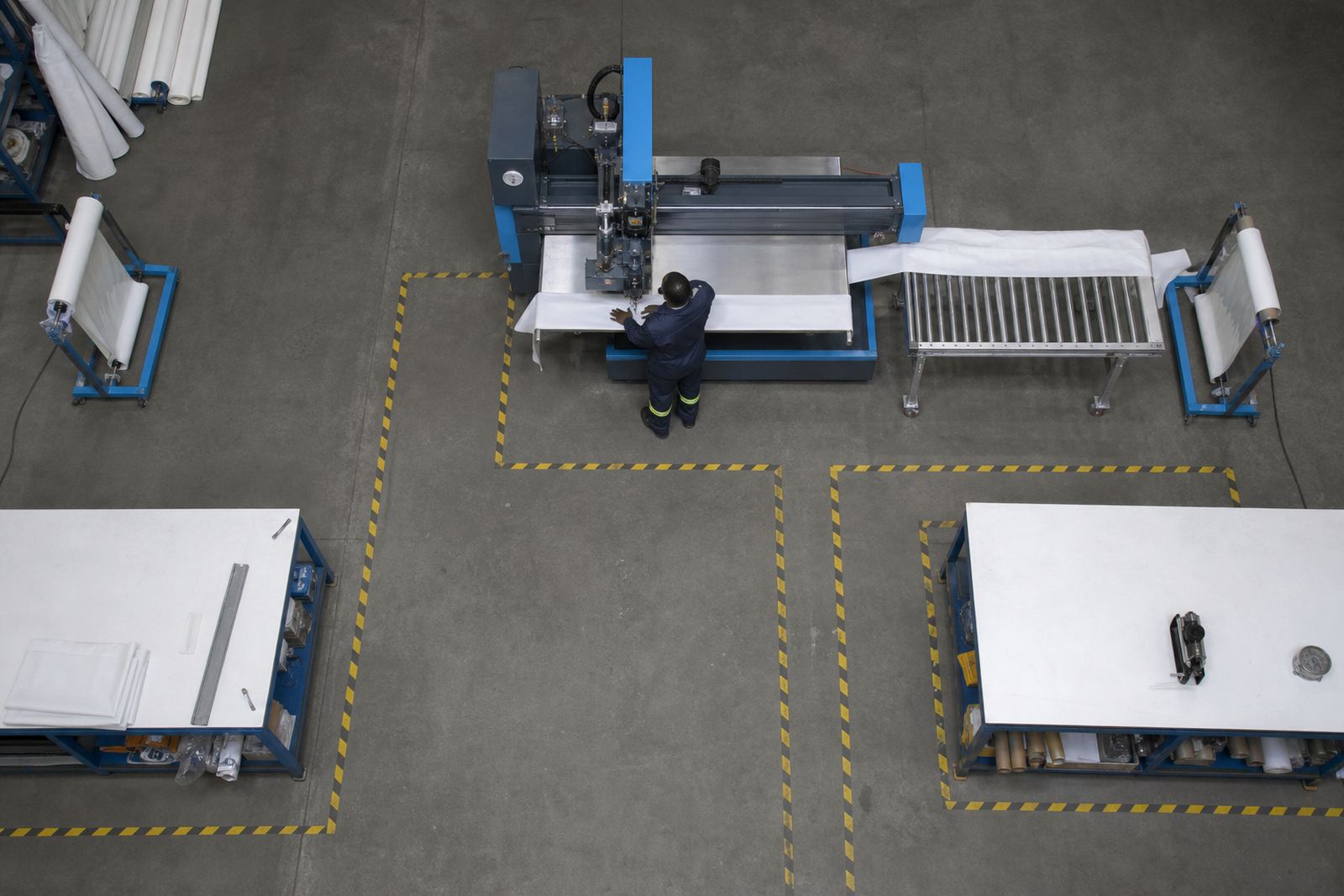
Hiring can suit overflow work, a short production run or a test on radio frequency and hot-air welding before you commit to a bigger line. It also helps when you have a spike from event work, municipal tenders or seasonal demand for covers and signage in Johannesburg, Durban, Cape Town, Pretoria or Bloemfontein.
If your present machine is tied up, a hire unit can keep cutting tables moving and reduce bottlenecks on hems, joins and eyelet work. It is also useful when you want to compare seam performance on lighter banner material and heavier PVC-coated fabrics without changing your permanent setup.
- Overflow during busy weeks
- Trial production on a new fabric type
- Short-term contract work with fixed deadlines
- Backup while a machine is serviced
Buying new when output must stay steady
A new machine makes more sense when your weld schedule is regular and the same team uses the equipment every day. If you are building a repeat line for tarpaulins, truck side curtains, tents or display panels, ownership gives you fixed tooling, consistent settings and full control over maintenance.
For many workshops, the decision comes down to seam width, bed size and the type of work handled most often. A unit set up for hems and straight seams may not suit keder welding or reinforced corners, while a machine with the right tooling can reduce rework and keep the finish neat.
- Regular monthly output
- Repeat jobs with the same seam spec
- Need for custom tooling or alignment
- Long-term control over servicing and spares
Match the process to the fabric and seam
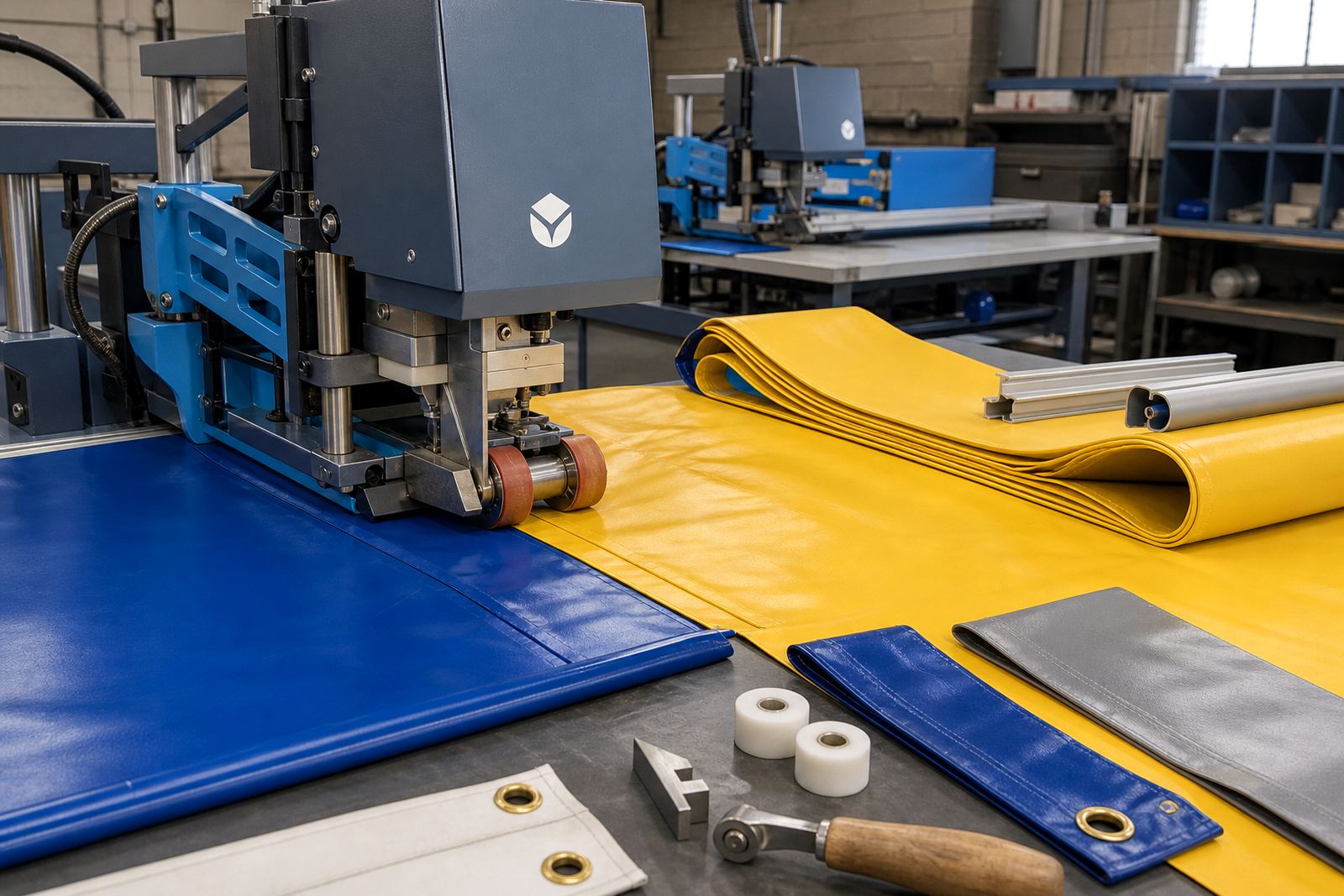
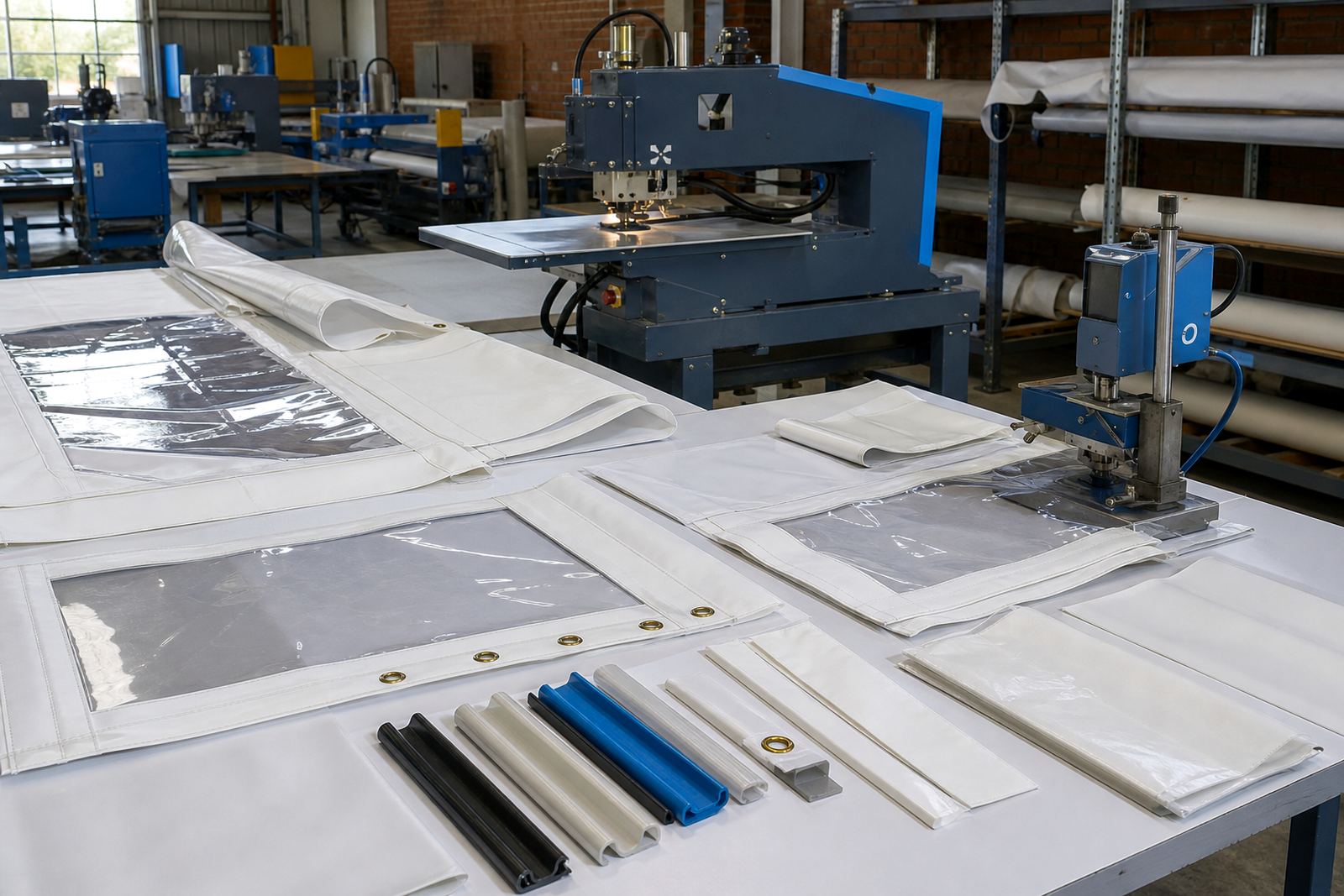
High-frequency welding suits PVC-coated materials where a strong, even seam is needed. It is often used for long straight joins, hems, pocket work, keder attachment and sealed panels on tarpaulins and banners. Hot-air and hot-wedge welding are more common where the work is longer, wider or better handled with continuous heat and pressure.
Before hiring or buying, check the seam style you need. A clean overlap join is not the same as a folded hem, and an eyelet strip needs different handling from a keder edge. In coastal towns such as Durban and Cape Town, good seam finish matters even more because humidity can affect how materials sit during production.
- Overlaps for standard sheet joining
- Hems for edge strength and neat finish
- Keder for track-fed systems and tent edges
- Eyelet reinforcement for tie-down and fixing points
What to inspect before you commit
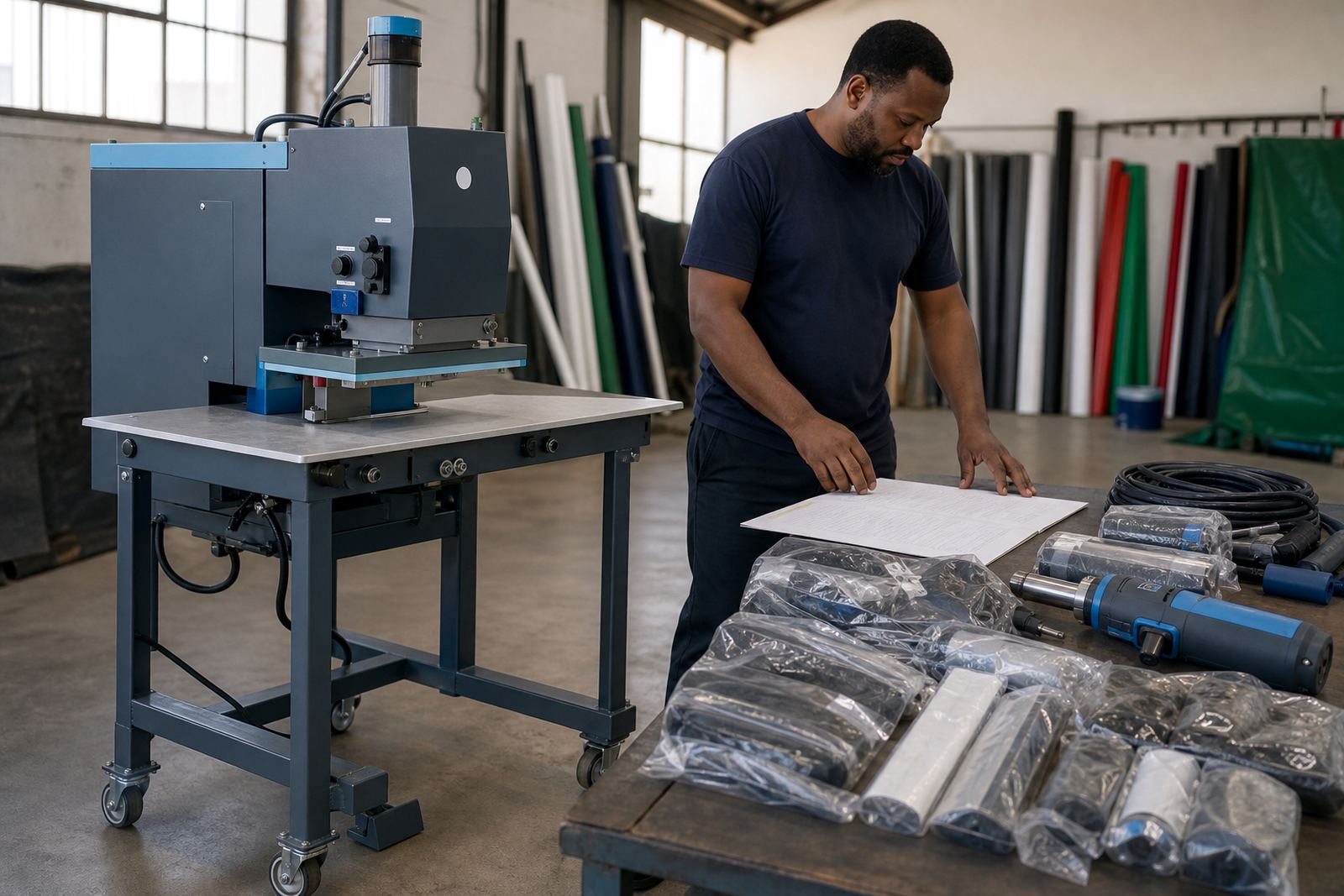
Whether you are hiring or purchasing, inspect the machine under working conditions, not only at idle speed. Check electrode alignment, pressure consistency, roller wear, table condition and the accuracy of the guides. Ask how the machine handles narrow strips, corner work and repeated starts and stops, because that is where weak settings show up.
Also look at the support side. A machine is only useful if the operator can run it safely and the workshop can keep it in line. For sites in Germiston and the wider Ekurhuleni area, on-site checks can help confirm that the machine fits your layout, your material widths and your handling routine.
- Seam test on your own material
- Check for even pressure and heat distribution
- Confirm operator access and safe hand placement
- Review spare parts, tooling and service access
Training, safety and workshop discipline
Good output depends on more than the machine alone. Operators need to understand clamp timing, heat control, seam overlap and how to avoid scorching or weak bonds. A tidy station, proper gloves where needed and careful material handling all help reduce mistakes and burns.
Training should also cover fault signs such as uneven seams, sticking, wandering edges and marks left by worn rollers. In busy shops, a quick daily check can catch small issues before they turn into scrap. It is worth keeping the area clear of offcuts and loose tools, especially where long sheets are fed through the machine.
- Correct start-up and shut-down routine
- Safe handling around hot surfaces
- Daily visual checks before production
- Clear reporting of seam faults or unusual wear
Servicing that keeps the line moving
Machines used for tarpaulin and banner work need regular attention to stay accurate. Preventive servicing, tooling alignment, electrode refurbishment, roller replacement and seam testing all help protect output quality. If the machine is due for a site callout, it is often better to deal with drift early than wait for a failed job.
For workshops across South Africa, support can include parts supply, installation, commissioning and service plans. That helps when you are balancing multiple jobs and cannot afford a machine that drifts off spec in the middle of a run. Good servicing also helps extend the life of the weld head and keeps the finish more consistent across operators.
- Scheduled maintenance rather than fault-chasing
- Tooling checks after heavy use
- Roller and electrode condition monitored regularly
- Seam testing after repairs or adjustments