Start With the Machine, Then Add Working Room
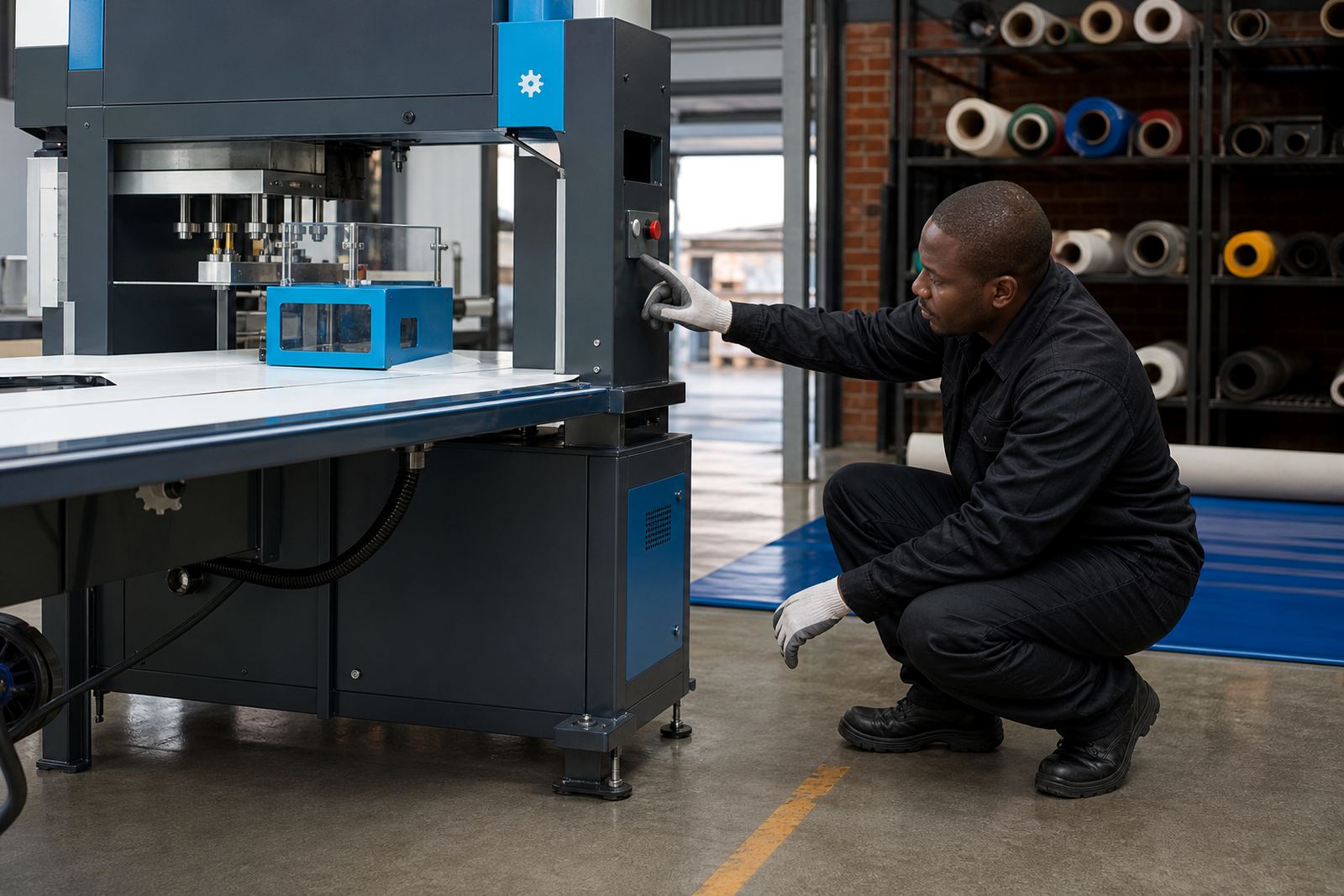
A high-frequency or hot-air PVC welder may not take up much floor space on its own, but the work around it does. Leave room for the operator to stand square to the table, move material without snagging corners, and open machine covers for servicing. If the welder sits too close to a wall or another bench, routine tasks such as electrode checks, roller changes and alignment work become awkward fast.
As a practical guide, measure the machine footprint, then add clear access around the front, feed side and service side. For many workshops, the first mistake is planning only for the frame size and forgetting the movement area needed for long banner panels or wide tarpaulin sections. That extra space matters more on long welds and when handling heavy PVC-coated fabric in humid coastal conditions where material can feel softer and less easy to control.
- Measure the full footprint, including controls and feed arms.
- Leave working space for the operator and a helper if large sheets are handled.
- Allow access for servicing panels, rollers and electrical checks.
- Keep the floor around the machine clear of offcuts and packing material.
Make Room for Support Tables and Straight Runs
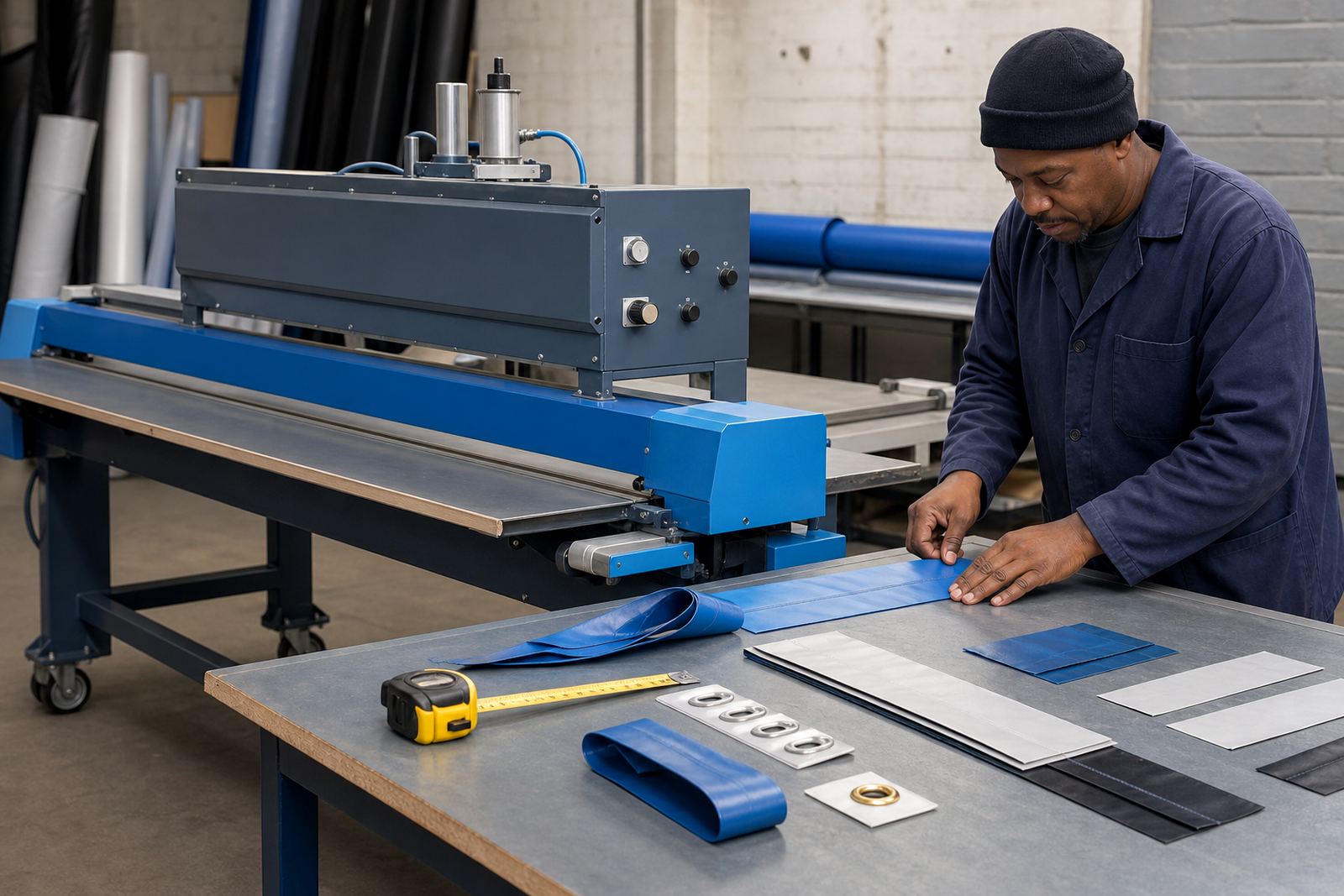
Support tables are not a luxury in tarp, banner and tent work, they are part of the process. A good table keeps hems straight, supports long seams and helps prevent drag when welding wide panels. For keder work, edge control is just as important as heat control, because the corded edge must feed evenly without twisting. If the table is too short or too narrow, staff spend time fighting the material instead of finishing the seam cleanly.
Plan the layout around your longest common job, not your smallest one. A workshop that mostly handles signage and display banners needs a different arrangement from one that makes truck covers or marquee panels. In both cases, the machine and table should work together as one line, with enough flat space to stage panels before and after welding.
- Keep a long straight edge available for hem and lap work.
- Provide enough table depth to support wide sheets without overhang sagging.
- Allow space for keder feeding, eyelet setting and trimming at the end of the line.
- Use a table surface that stays level and easy to clean.
Plan the Material Path From Roll to Finished Piece
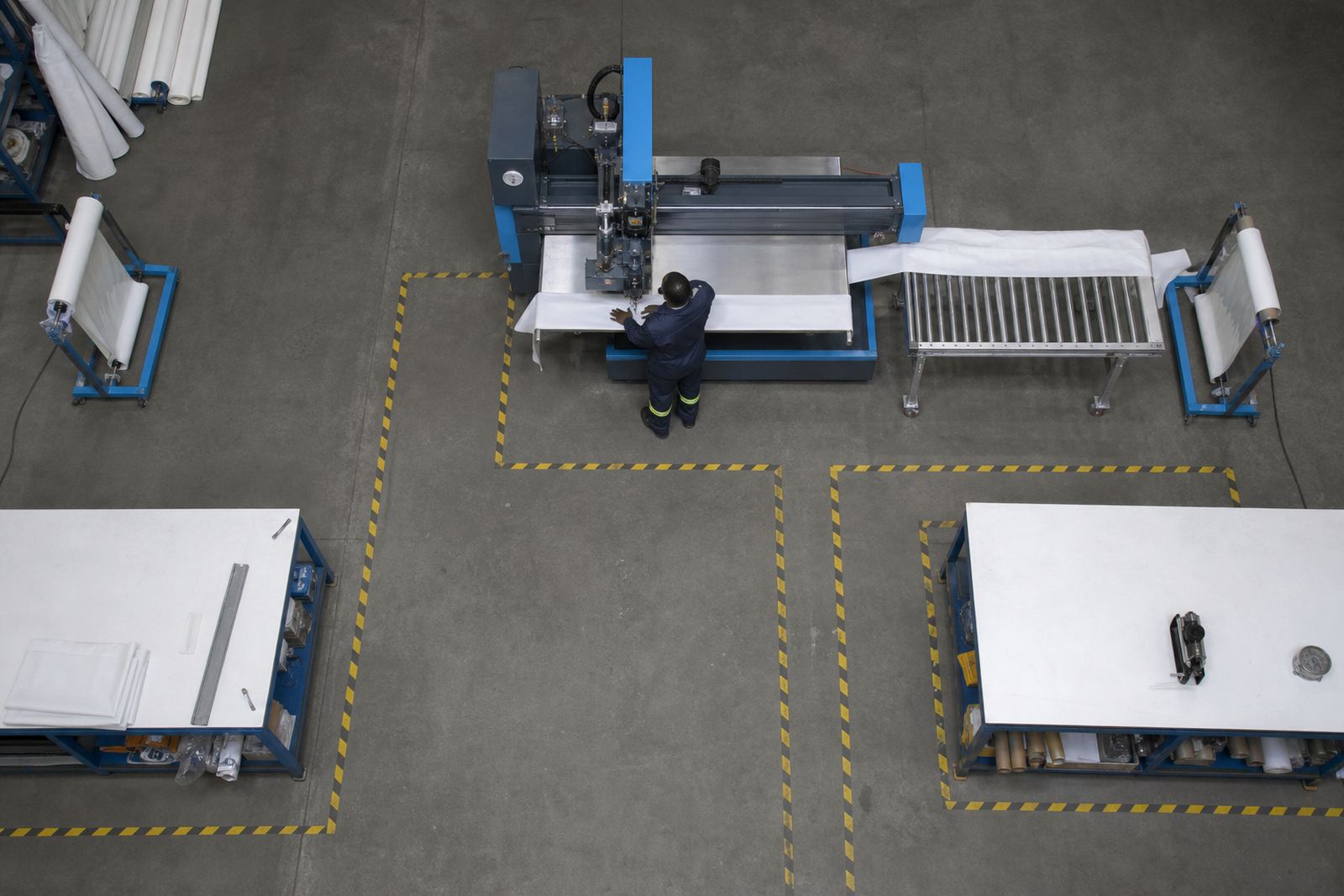
Good material flow saves more time than people expect. PVC-coated fabric should move in one direction where possible, from receiving and storage to cutting, welding, inspection and packing. If rolls need to be turned around several times, the workshop becomes crowded and the chance of surface marks or edge damage rises. This is especially important where heavy tarpaulin is stored in bulk, or where multiple jobs are open at once.
A clear path also helps with seam quality. Operators need space to align overlap seams, hem folds, pocket welds and reinforcement patches without rushing. For hot-air or hot-wedge welding, the path should stay free of loose cords, tape and scrap that could interfere with the weld line. For high-frequency welding, keep the area organised so material is placed accurately the first time, which reduces rework.
- Store rolls so they can be lifted or moved without blocking the work line.
- Separate cutting, welding and finishing zones where possible.
- Keep completed work away from dust, dirt and sharp tools.
- Leave a staging area for jobs waiting for eyelets, hems or final checks.
Allow Space for Safe Operation and Inspection
Workshop size affects safety just as much as output. Operators need room to move without stepping around cables, offcuts or loose packaging. With high-frequency welding, there should be enough clearance to work safely around the machine controls, moving parts and inspection area. With hot-air or hot-wedge equipment, the heated zone needs extra care so hands, leads and fabric edges stay clear while the seam is being formed.
Good lighting matters too. Seam lines, weld finish and eyelet spacing are easier to inspect when the whole work area is bright and even. Ventilation should also be planned properly, especially where the workshop handles frequent hot-air work or where the space closes up in winter. A cramped room can make even a good machine hard to use properly.
- Keep walkways wide enough for carrying rolls and finished panels.
- Place fire equipment and first-aid points where staff can reach them quickly.
- Provide strong lighting over the weld line and inspection zone.
- Separate operator movement from storage piles and packing materials.
Think Ahead to Servicing and Parts Access
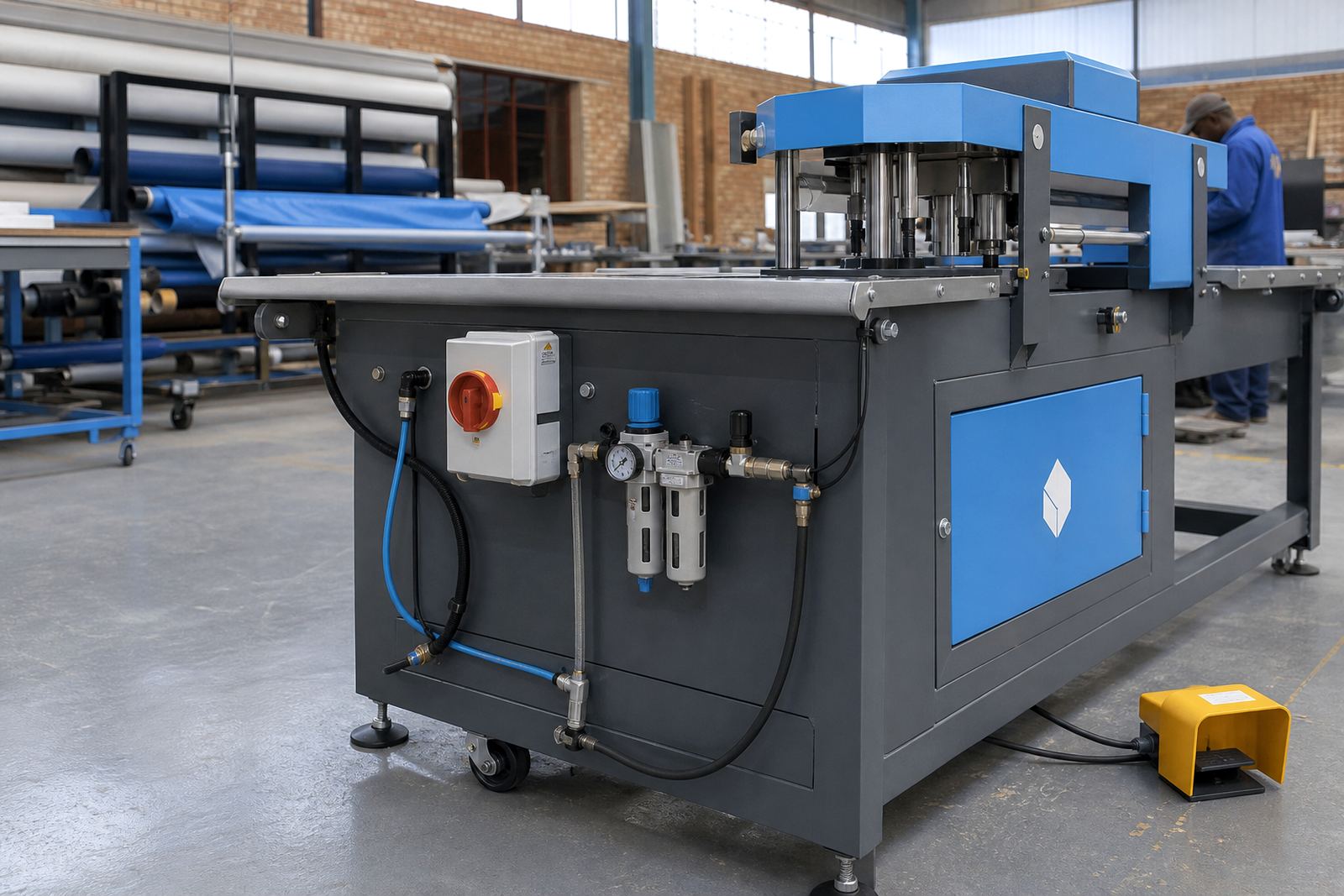
Servicing space is easy to overlook during planning, then becomes a daily nuisance later. Machines need access for preventive servicing, roller replacement, tooling alignment and fault finding. If the unit is boxed in by walls or fixed benches, even small work can take longer than it should. A bit of clear side access now can save repeated disruption later.
It helps to leave room for a technician to open panels, reach moving assemblies and test the machine without shifting half the workshop. The same applies to spare tooling, electrodes, nozzles, rollers and commonly used parts. Keep them dry, labelled and close enough to the production area that staff do not waste time searching for fittings when a job is mid-flow.
- Leave service access on at least one side of the machine.
- Reserve a clean place for parts, service kits and small tools.
- Keep maintenance notes near the machine so checks are not forgotten.
- Plan a space for test seams and inspection after servicing.
A Practical Sizing Check Before You Buy or Rework the Floor
Before any machine move or workshop rearrangement, map the room on paper or with a tape measure on the floor. Mark the machine position, table line, roll storage, scrap bin, packing space and the route for bringing in material. Then walk the route with a long panel in mind. If the path has a tight corner or a blocked doorway, it will cause trouble later.
A useful rule is to size the workshop around the biggest regular job, not the smallest emergency one. Banner makers often need long handling space, while tent and tarpaulin work usually needs stronger support and more room for bulky finished pieces. If the layout feels tight on the drawing, it will feel tighter once rolls, tables and offcuts are in place.
- Check doorway widths and turning space for rolls and panels.
- Mark storage, machine and finishing zones before moving equipment.
- Test the route from receiving to welding to dispatch.
- Leave spare space for job peaks, repairs and training sessions.