Start With a Clean, Clear Weld Bay
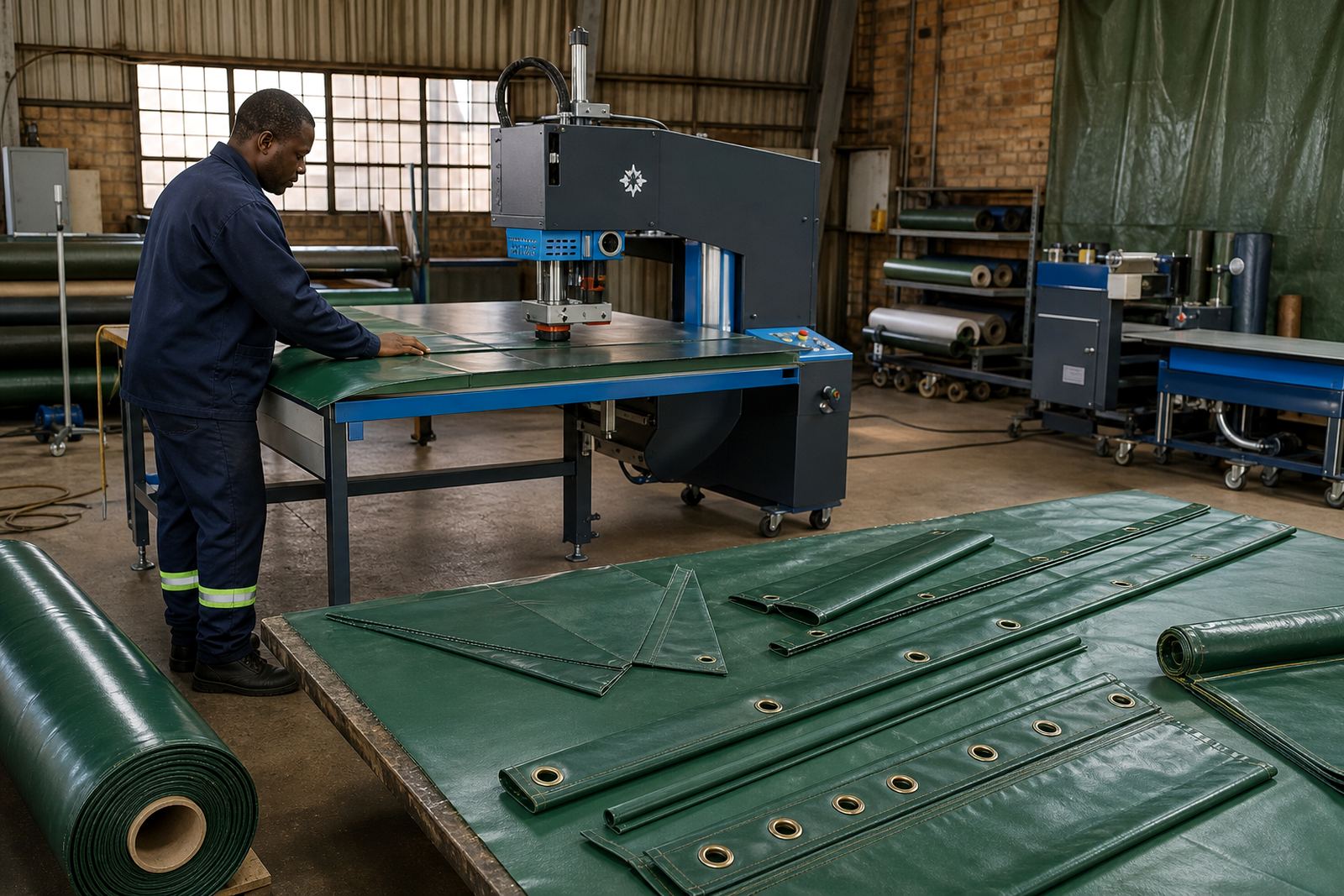
A PVC welding bay works best when offcuts, packaging straps, loose tools and scrap eyelets are kept out of the path of the material. Slips happen fast around long banner sheets and heavy tarpaulin panels, especially when a second pair of hands is feeding the work through the machine. Keep the floor dry, sweep up loose trimmings and make sure cable runs do not cross walking routes.
Good housekeeping also helps the weld stay consistent. Dirt, dust and adhesive residue can affect seam quality, so the operator should check the table, guides and contact surfaces before starting. In coastal areas like Durban and Cape Town, moisture and grit can build up quickly, so a wipe-down at the start of the shift is worth the time.
- Remove loose scrap before loading the next panel.
- Keep hand tools in a fixed place, not on the feed area.
- Check that the table surface is level and clear.
- Dry any spilled water or cleaning liquid before work resumes.
Guarding That Should Never Be Bypassed
High-frequency and hot-air or hot-wedge welders use heat, pressure and moving parts. Guards, shields and covers are there for a reason, and they need to stay in place during normal production. A machine that is running without the correct guarding leaves hands, sleeves and loose clothing too close to the weld zone.
Operators should keep fingers away from rollers, heated elements and pinch points, even during small adjustments. If a guard has been removed for servicing, the machine should stay out of use until it is correctly refitted. That rule matters just as much on a small banner shop floor as it does in a busy tent making line.
- Check that all fixed guards are secure before switch-on.
- Never override an interlock or bypass a safety cover.
- Keep jewellery, ties and loose cuffs away from the machine.
- Use the correct hand positions when feeding material through.
Handling PVC-Coated Fabric Without Strain or Damage
Tarpaulin, banner cloth and tent fabric can be awkward to lift, fold and align. Poor handling leads to back strain, torn edges and crooked seams. Two people should handle long lengths where needed, with one person feeding and the other guiding the lead edge straight into the weld path.
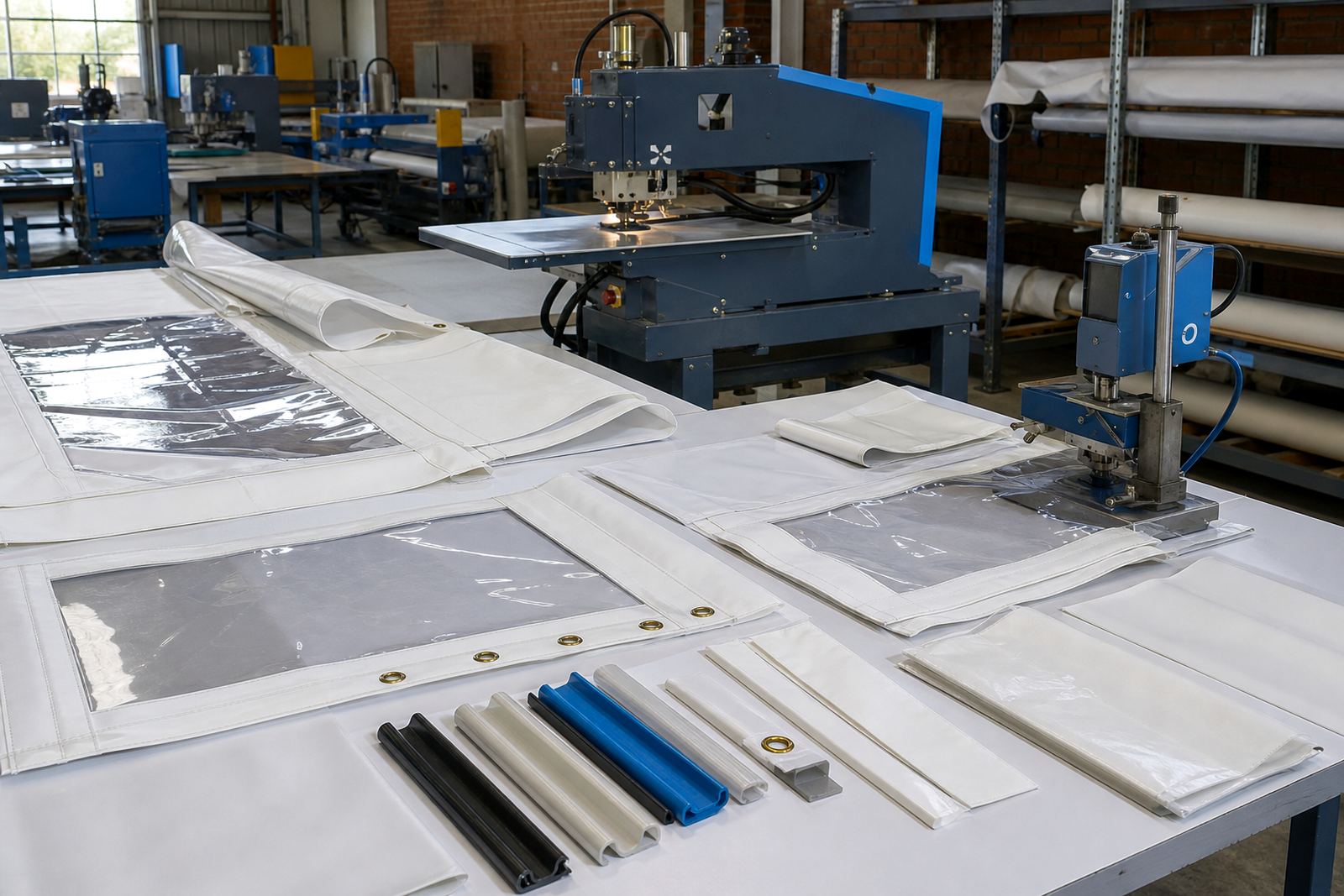
Keep a steady pace and avoid sudden pulls on the fabric. For hems, keder channels and eyelet strips, alignment matters from the start. If the material is skewed at the entry point, the weld line will wander and the finished piece may need rework. A short pause to square the panel is better than forcing it through and correcting later.
Safe Habits for Radio Frequency and Hot-Air Work
Radio frequency welding and hot-air or hot-wedge welding each have their own hazards. With radio frequency equipment, the operator must follow the set-up exactly and keep the work clamped as intended. With hot-air and hot-wedge units, the main risks are heat burns, hot surfaces and poor fume control if the material is overheated. Both types need calm, repetitive habits rather than rushed handling.
Use the correct setting for the material thickness and seam type, and do not chase speed at the expense of control. If a seam starts to look glossy, thin or uneven, stop and check the settings before continuing. For signage, display work and tent panels, the quality of the seam is tied directly to the discipline of the operator. A small slip at the start can show up later as a weak edge or lifted hem.
Daily Checks Before the First Weld
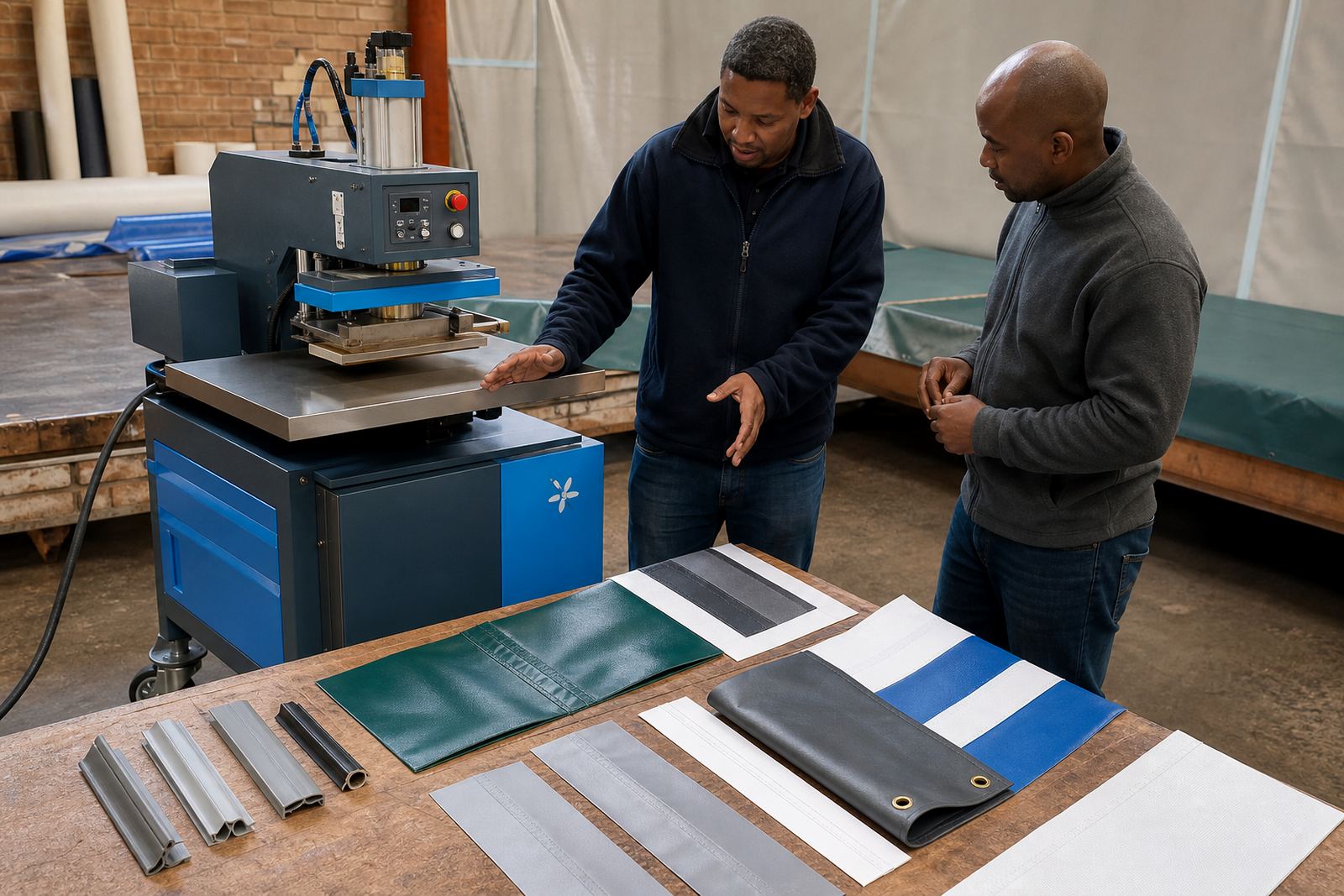
A short pre-use check catches many problems before they become downtime. Look at cables, switches, rollers, guides, clamps and the condition of the tooling. If the machine has been moved for installation or a site callout, check that it is level and that all fixings are tight. A loose roller or out-of-line guide can cause uneven pressure and poor seam width.
Operators should also check the work area for safe access, correct lighting and enough space to stage large sheets. In workshops around Germiston, Johannesburg and Pretoria, space often gets tight when jobs overlap. That is when mistakes happen, so the machine bay should never be crowded with offcuts, pallets or stacked stock.
- Inspect power leads and plugs for damage or loose fitment.
- Check rollers, electrodes or wedges for wear and alignment.
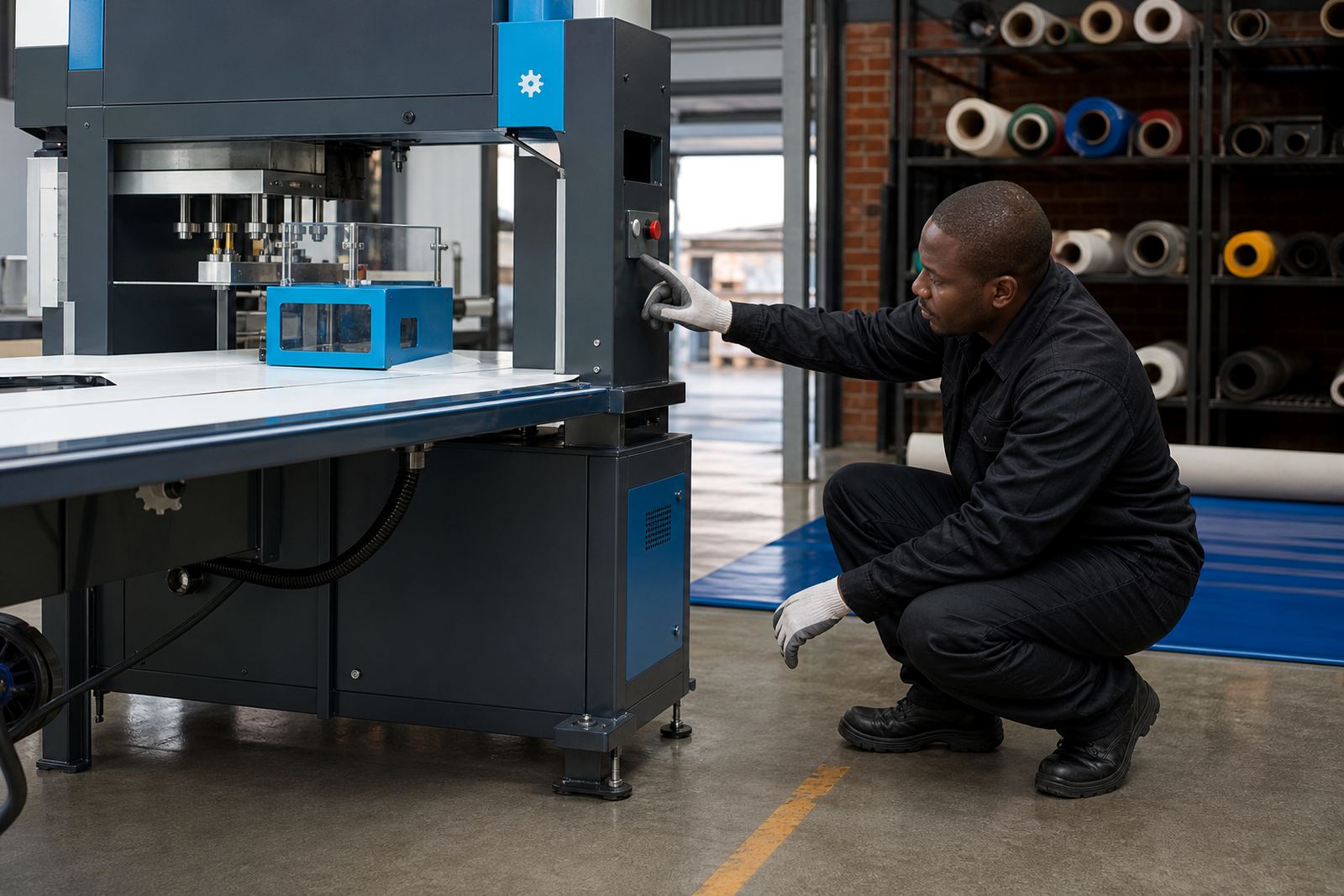
- Confirm the emergency stop works and is easy to reach.
- Make sure the operator knows the job sequence before loading material.
When the Machine Needs Attention
Some faults are obvious, others start quietly. A change in noise, heat, pressure or weld finish can mean the machine needs servicing. Do not keep running a unit that is skipping, arcing, sticking, overheating or leaving patchy seams. Fault finding is easier when the machine is stopped early, before a small issue spreads into damaged tooling or wasted material.
Preventive servicing helps keep the machine safe and predictable. That includes checking alignment, cleaning contact points, replacing worn rollers, refurbishing electrodes where required and testing the finished seam after any adjustment. If the machine is used daily for banners, tarpaulins or tent sections, these checks should be routine and not left until failure appears.
A Short End-of-Shift Safety Close-Out
At the end of the shift, switch off correctly, let heated parts cool and return tools to their storage place. Clean the table, remove scrap and check that the next operator starts with a safe, tidy station. If the machine has any wear, noise or intermittent fault, note it before the next job rather than leaving it to memory. That small habit saves time and prevents rushed starts in the morning.
For workshops in Durban humidity, Bloemfontein dust or the heavier daily pace of the East Rand, the pattern is the same: clear the bay, protect the tooling and keep the machine in known working condition. Safe use is built from repeatable steps, not guesswork.