Start with the material you weld every day
Before you compare machine frames or control panels, look at the PVC-coated fabrics on your cutting table. Banner stock, truck tarpaulin, marquee walling and tent panels do not all behave the same under heat and pressure. The coating thickness, base cloth weight and weave count all influence how cleanly a seam closes and how much pressure the machine must apply.
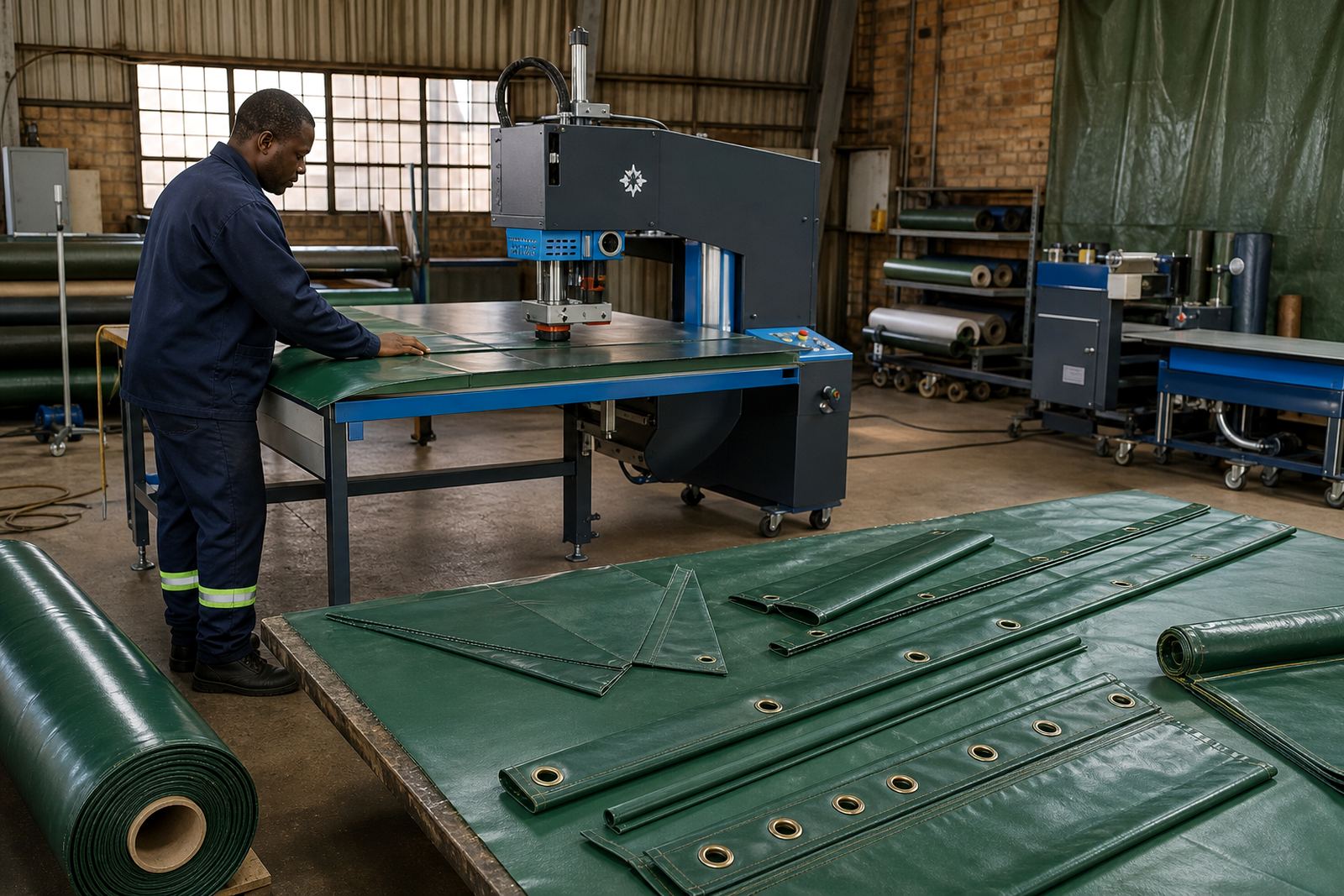
For lighter banner work, a narrower weld head and finer control of timing may be enough. For heavier tarpaulins used on trucks, trailers or site covers, the weld needs proper pressure distribution and steady heat control so the coating fuses without scorching the face. In humid coastal areas such as Durban and Cape Town, material storage matters too because damp stock can shift during feeding and affect edge alignment.
- Check the fabric weight and coating thickness used most often.
- Confirm whether your work is mainly flat seams, hems, sleeves or reinforcement strips.
- Note if you weld PVC-coated fabric, mesh-backed material or mixed jobs across the week.
- Measure the widest panel you need to handle on the machine bed.
Match the weld type to the finished job
High-frequency welding is well suited to neat, repeatable seams on PVC-coated fabrics. It is often chosen where a bonded finish must look tidy and hold up under handling, tension and weather exposure. Hot-air and hot-wedge machines are also used in banner and tarpaulin production, especially where longer continuous seams, hems or wide overlap joins are part of the job. The best machine depends on the seam profile, the cloth and the way your operators work.
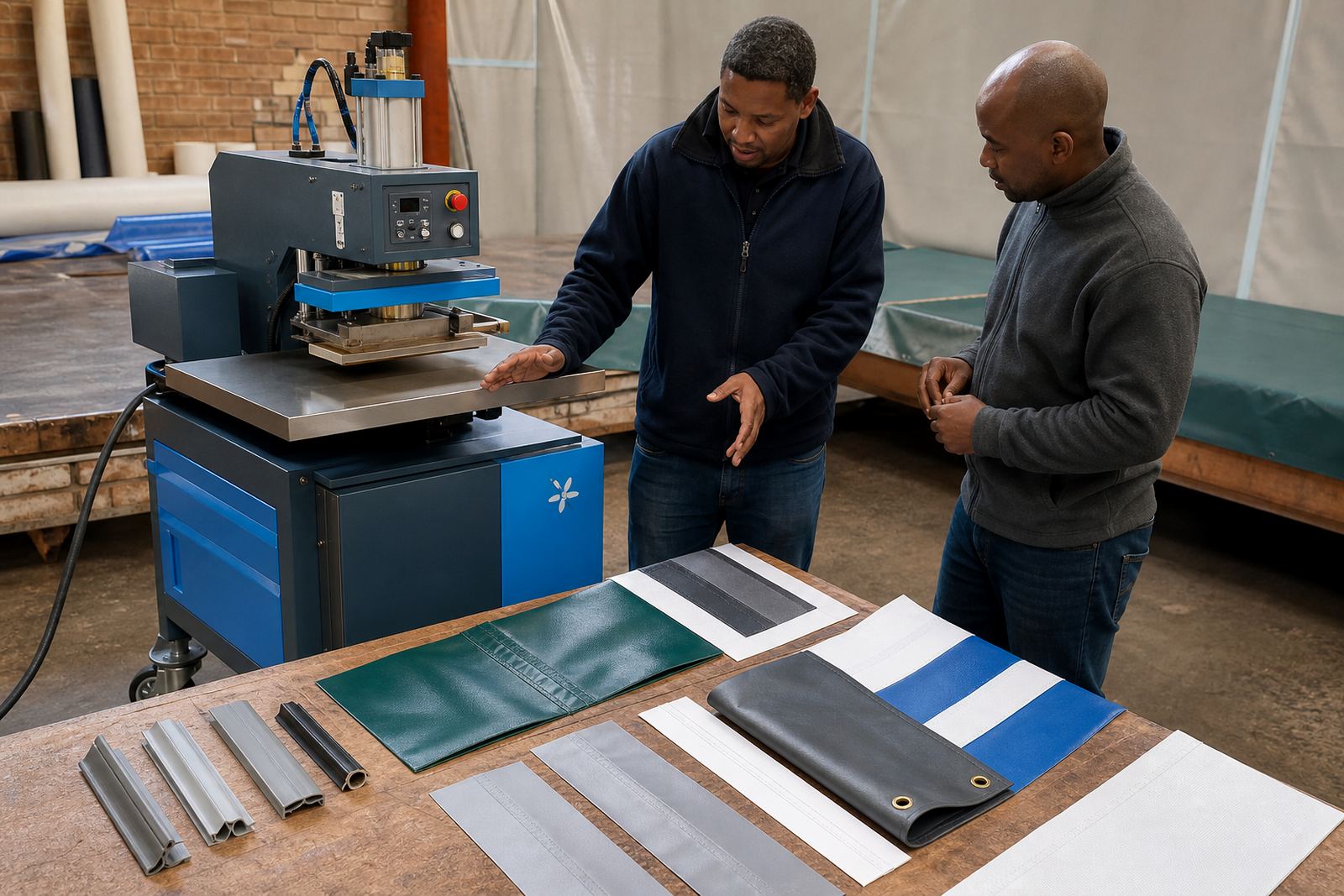
For signage, hems and pocketed edges, a stable guide system helps keep the fold even. For tarpaulins, keder strips, eyelet reinforcement and attachment points, you need reliable alignment and enough space to position the work without pulling it off square. If your team handles custom tent panels, check whether the machine can manage straight seams, corner returns and reinforcement patches without constant re-setting.
- Flat seams for joined panels.
- Hems for edges that need a clean finish.
- Keder welding for track systems and tent profiles.
- Eyelet work with reinforcement patches around stress points.
Choose output speed against control, not speed alone
A machine that runs fast but gives uneven pressure can waste more time than it saves. In banner and tarpaulin production, consistency matters more than a top speed figure on paper. Look for stable movement, accurate temperature control and repeatable timing so the first metre and the last metre match. That keeps offcuts down and reduces rework, which becomes expensive on larger jobs.
If your workshop handles short runs, custom sizes and frequent changeovers, a machine with easy setting adjustments will usually serve you better than one that is difficult to reset. For higher throughput, you need a machine that can keep working for long shifts without drifting in alignment or heat. Tooling should be easy to set, with parts that can be checked quickly when a seam starts to look uneven.
- Ask how quickly the machine can switch between seam widths or tooling sizes.
- Check whether pressure, dwell time and heat settings are easy to repeat.
- Look for smooth feeding so operators do not fight the fabric.
- Make sure the machine can handle the longest runs in your production schedule.
Operator safety and workshop discipline
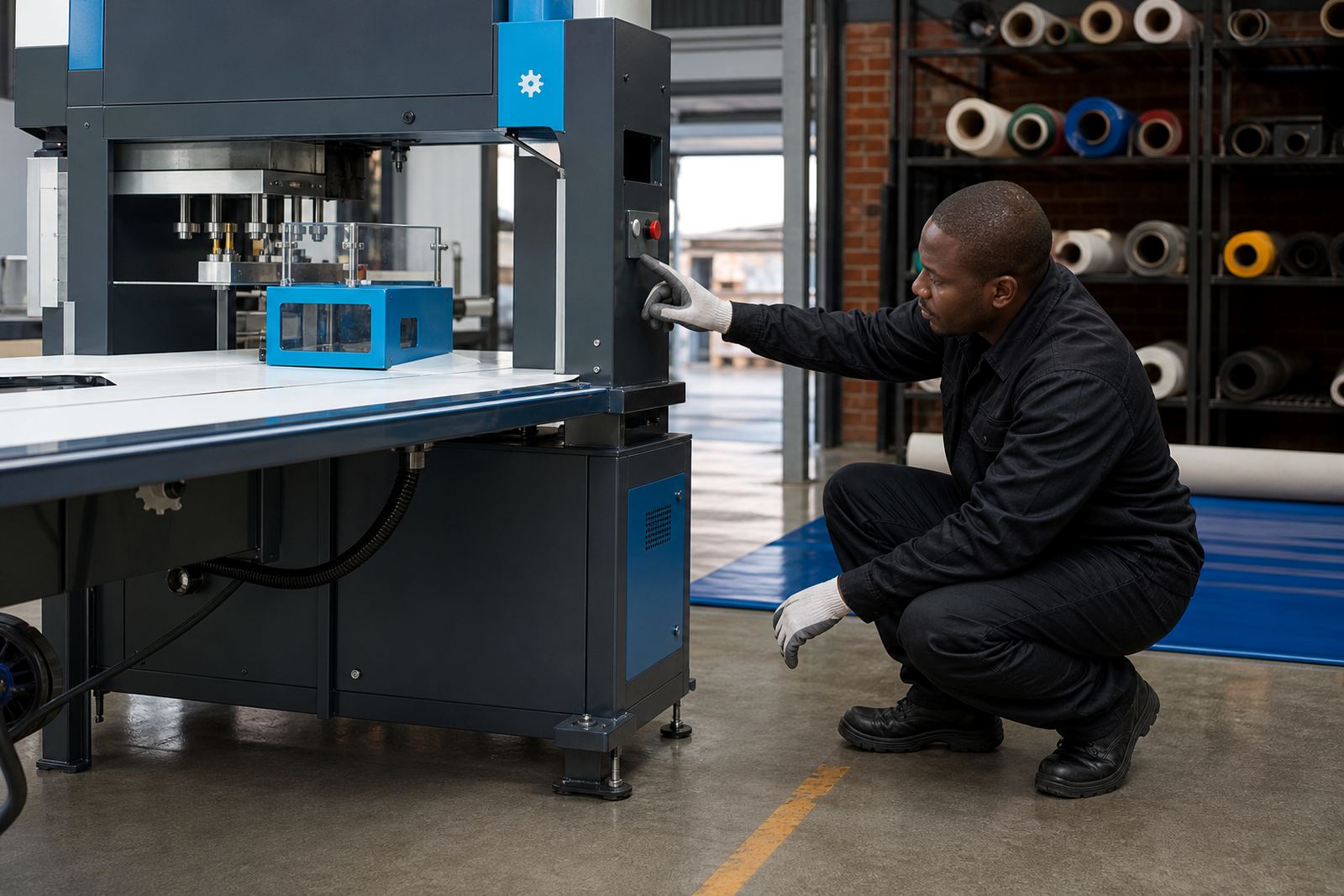
Any welding machine needs careful handling, especially where hot surfaces, moving parts and clamping pressure are involved. A good setup should support safe feeding, clear guarding and control access that suits the operator's position. Cable routing, pedal placement and work height all matter in a busy workshop where several people may share the machine across the day.
Training should cover safe start-up, correct material placement, what to do when the fabric shifts and how to stop the machine quickly if needed. Operators also need to know the warning signs of a poor weld, such as burn marks, weak corners or a seam that opens at the edge. Small habits make a big difference, and a tidy bay is easier to manage than a crowded one.
- Keep hands clear of the weld zone and moving rollers.
- Use correct feeding positions for hems, sleeves and reinforcement pieces.
- Check guards, switches and stops before each shift.
- Separate finished stock, scrap and work-in-progress so panels do not get mixed up.
Servicing that keeps the seam line steady
Even a well chosen welder needs regular servicing to stay accurate. Electrodes, rollers, guides and alignment tooling wear over time, especially in workshops that run every weekday. If the seam starts to vary in width, if the finish becomes patchy or if the machine needs extra pressure to close the join, it is time to inspect the working surfaces and settings. A small fault left too long can turn into rework across several jobs.
Preventive servicing is useful for workshops in Germiston, Boksburg, Benoni and across Gauteng where machines are pushed hard. The same applies in coastal service areas where humidity and airborne dust can affect parts and finishes. Regular checks on roller condition, tooling alignment and seam testing keep production more predictable. Parts supply matters too, because a machine can sit idle while a worn component is tracked down, which is a nuisance no workshop needs.
An HF machine shortlist for South African tarpaulin workshops
Use a clear checklist before you sign off on a machine. Focus on the work you do now, then allow for the larger tarpaulins, banners or tent panels you expect to take on next. It helps to test real material samples, not just look at sample seams in a showroom. If the fabric is the wrong thickness or the guide setup is awkward, the machine may look fine but work badly in your own bay.
For buyers in Johannesburg, Pretoria, Durban, Cape Town, Bloemfontein and surrounding industrial areas, local servicing and installation support can matter as much as the machine itself. Installation, commissioning, operator training and site callouts all play a role in whether the machine performs the way the workshop needs. A short checklist keeps the decision grounded in daily use, not sales talk, and it saves time later on.
- Confirm the main fabrics, seam widths and attachment details you produce.
- Test hems, keder, eyelet reinforcement and long straight seams.
- Check access for servicing, parts replacement and tooling adjustment.
- Ask how the machine will be installed and how operators will be trained.
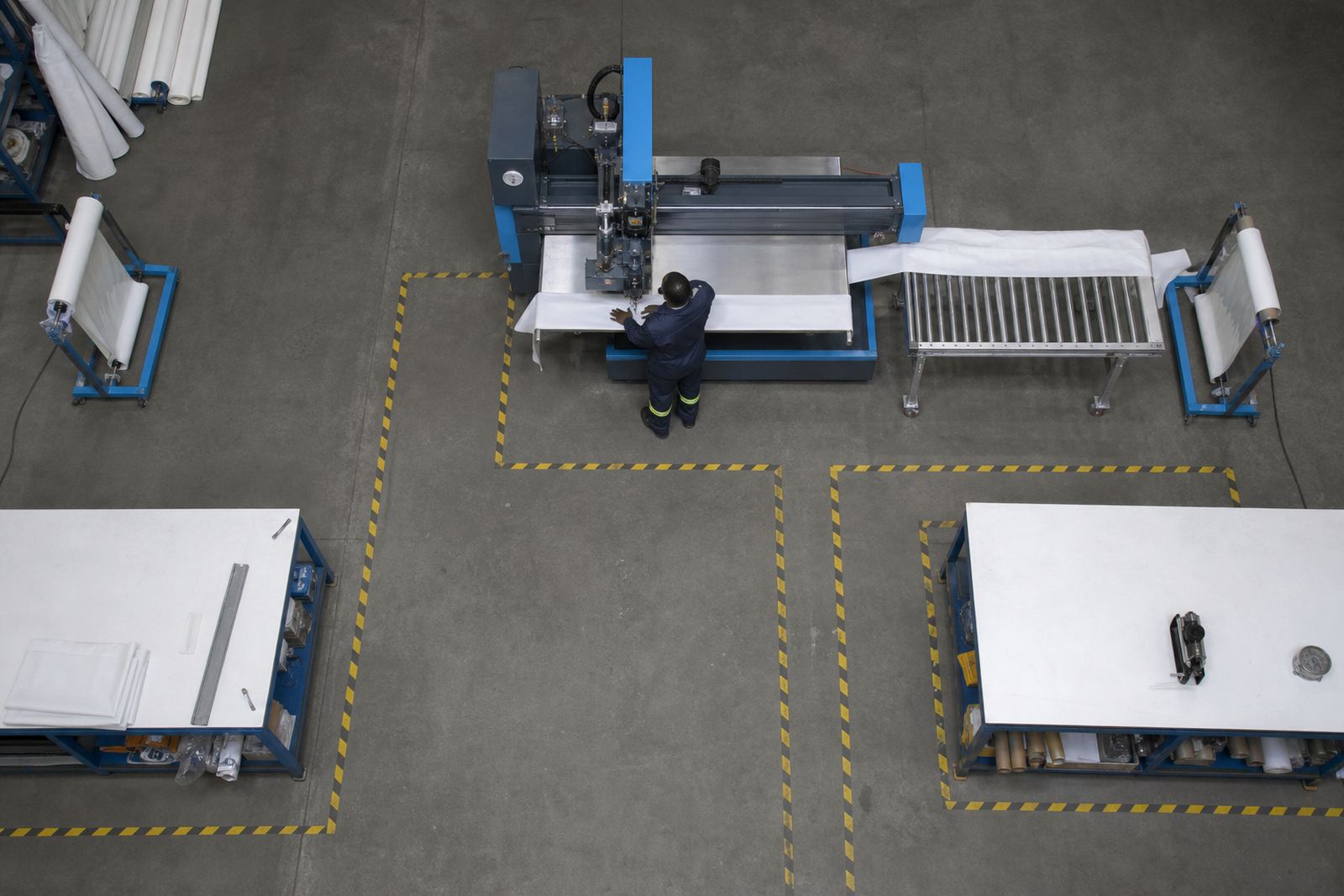
- Make sure the workshop layout allows safe feeding and smooth material flow.
For practical guidance on machine selection, service plans, preventive servicing and site support, use the enquiry form on our contact page. PVCWelder works from Germiston, Ekurhuleni and supports tarpaulin, banner and tent makers across South Africa.