Start with the banner finish, not the machine name
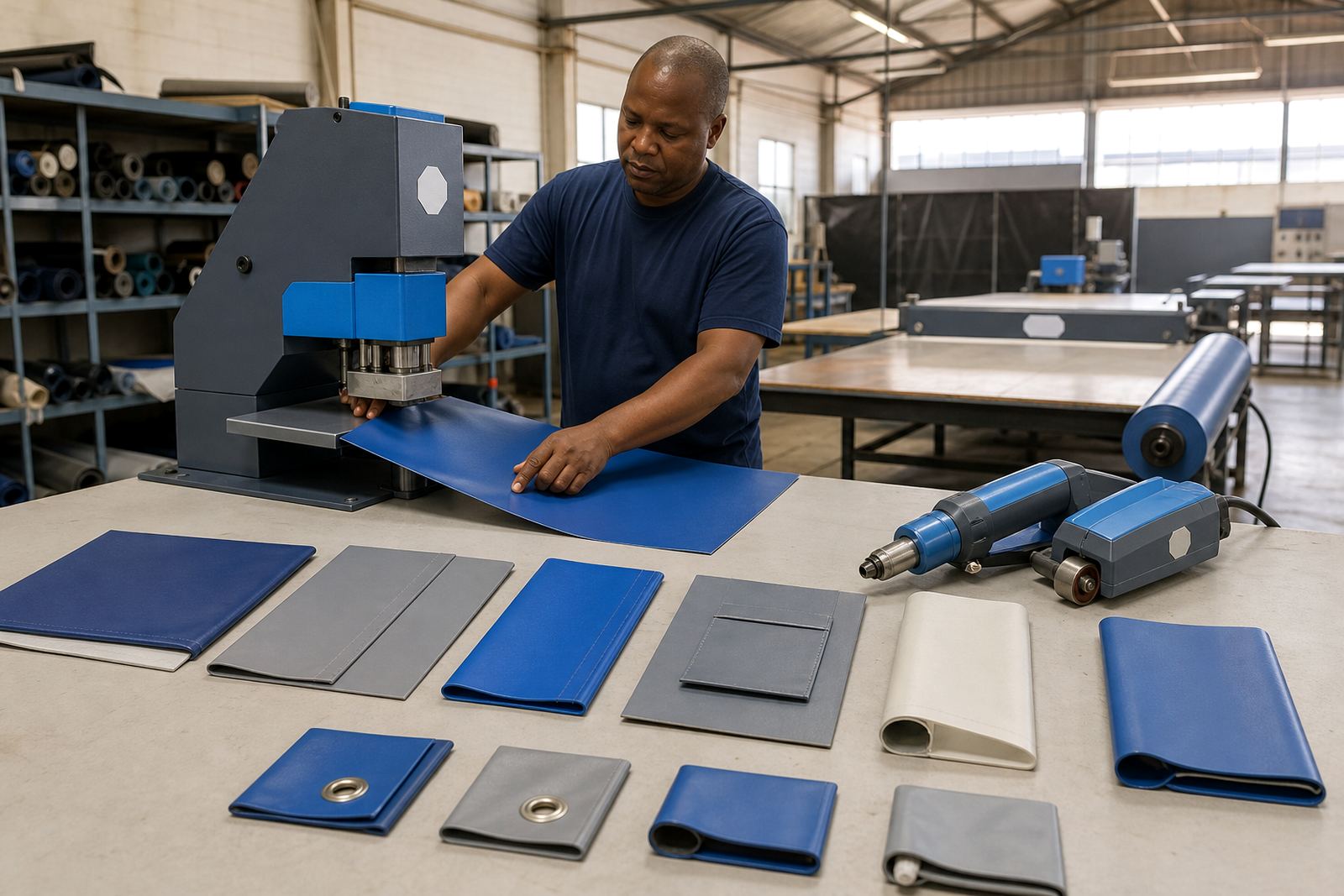
Before choosing a welder, map the jobs you make most often. A promo banner with a folded hem and eyelets needs different handling from a wall graphic sleeve, a windscreen banner, or a large site banner with keder sewn or welded into the edge. PVC coated fabrics behave differently once heat and pressure are applied, so the machine should suit the seam style you need every day.
High-frequency welding, also called radio frequency welding, is commonly used where a neat, consistent bond is needed on compatible PVC coated material. Hot-air and hot-wedge machines are often used for hems, sleeves and longer straight seams, especially where speed and panel length matter. If you do a mix of signage, display and tent work, the buying decision should start with the seam type first, then the sheet size.
Match seam style to the work you sell
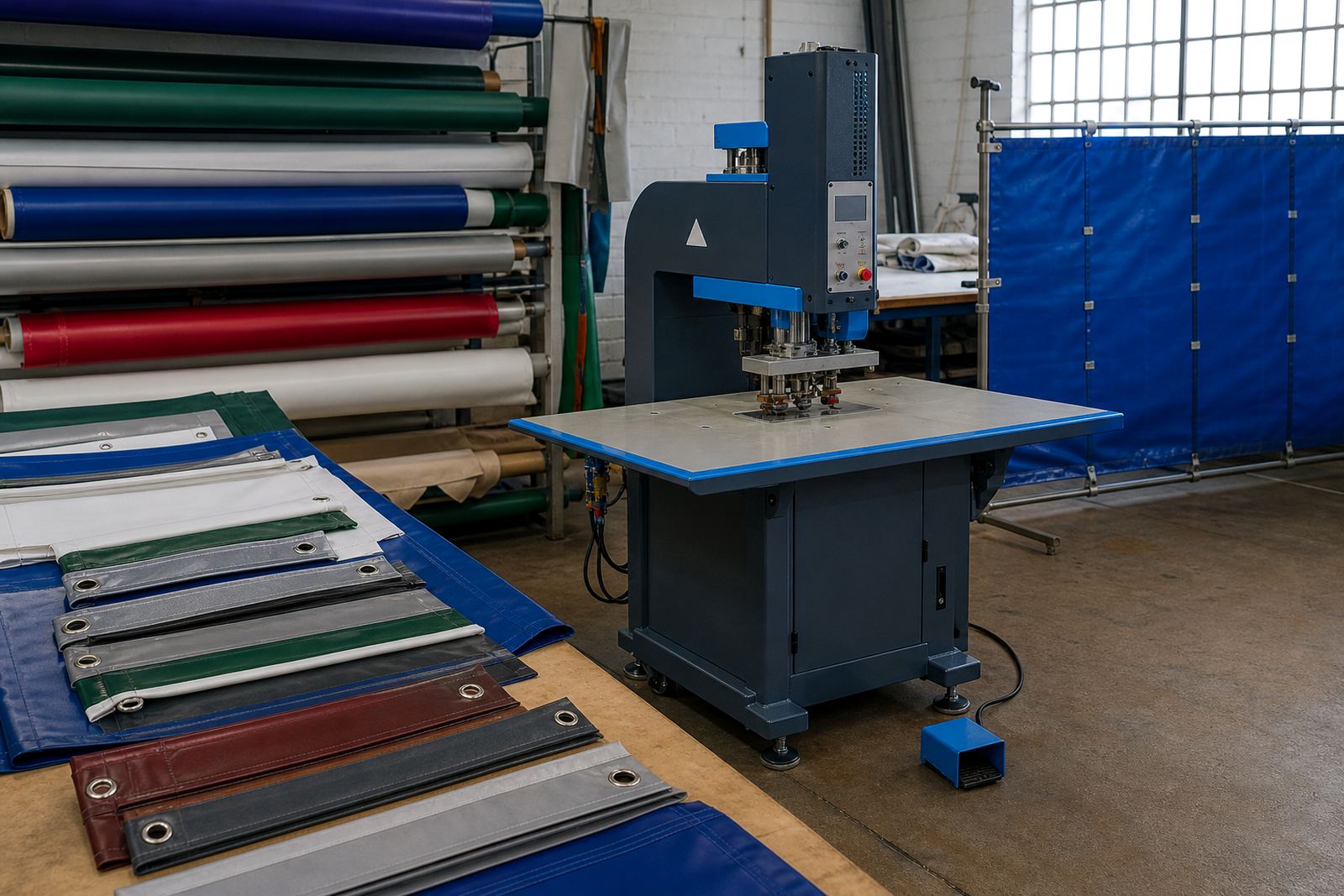
Banner makers in Johannesburg, Pretoria, Durban, Cape Town and Bloemfontein often carry more than one product line. The machine has to handle the seam style without forcing operators to fight the material. For example, hems on lightweight banners need even feed and controlled heat. Sleeves need a true fold and a stable guide. Keder work needs accurate edge positioning so the profile sits straight along the full length. Eyelet reinforcement usually comes after the weld or hem, so space around the worktable also matters.
- Flat hemmed banners for wall drops and fence screens
- Sleeved banners for poles, frames and hanging displays
- Keder edges for track systems, tents and modular displays
- Reinforced corners for eyelets and tie points
- Long seam joins for wider panels and stitched assemblies
If your jobs change from day to day, look for a machine with simple setting control, clear guides and repeatable pressure. That makes it easier to hold seam width steady even when the material lot changes a bit.
Width, length and daily output should decide the table size
A banner shop can lose time when the worktable is too short for the panel size. Large-format banners need enough support so the material does not drag or skew while the seam is formed. Hot-air and hot-wedge machines are easier to use when the panel can travel smoothly and stay flat. If the banner curls or lifts, the finish suffers and the edge can wander.
Think about the widest jobs you handle, not only the average one. A machine that suits 1,2 metre work may feel cramped on a long run for a stadium banner or a tent panel. In coastal towns like Durban or Cape Town, humidity and salt air can also affect stored material and machine condition, so a stable setup and proper storage are worth planning for, especially if rolls sit near the production floor.
- Check the widest banner you make regularly
- Allow room for feed-in and take-up on both sides
- Match table length to your longest straight seam
- Choose control access that suits seated and standing work
- Leave working space for eyelet, cutting and finishing stations
High-frequency or hot-air: choose by material and finish
High-frequency welding is useful where you want a controlled bond on suitable PVC coated fabrics. It is often chosen for seams that must stay tidy and strong on display products, tarpaulins and certain tent components. Hot-air and hot-wedge welding are more common for long hems and wide banner edges because they handle continuous seams well and can suit higher output on straight runs.
There is no single best option for every workshop. A shop producing short promotional runs may value one setup, while a tent maker with large panels may want another. If the crew works on mixed material thicknesses, ask how the machine handles temperature consistency, pressure control and edge tracking. A good machine should help the operator keep the seam even without constant correction, not make every job a guess.
Operator safety and daily handling on the floor
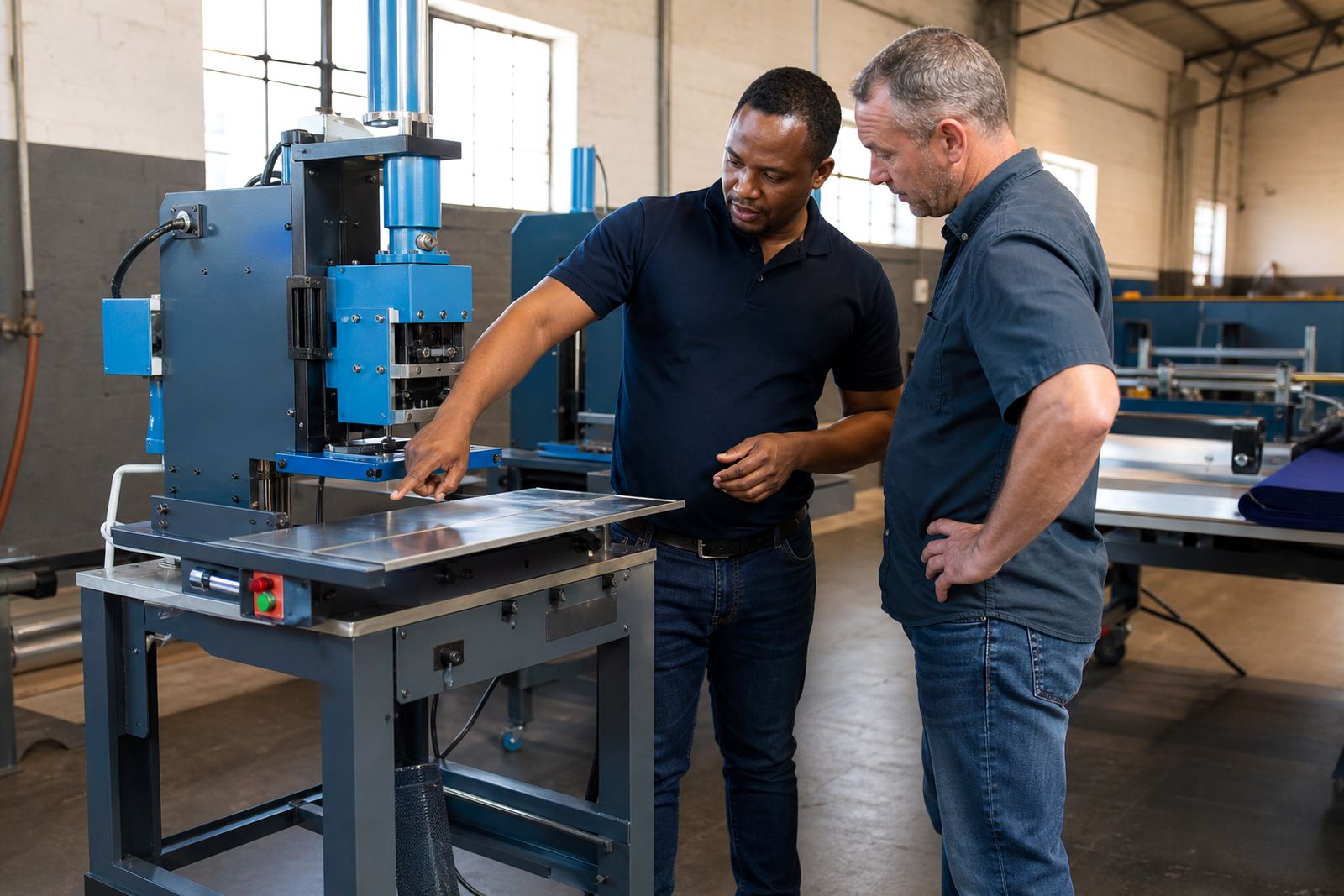
Good banner equipment should support safe handling as much as seam quality. Heated parts, moving rollers and pinch points need clear guarding and sensible control layout. The operator should be able to feed material, guide the edge and stop the machine without stretching awkwardly across the work area. That matters on long shifts where fatigue can lead to crooked hems or a missed join.
Training should cover material handling, start-up checks and safe cooling before cleaning or adjustment. It also helps to set a routine for offcuts, eyelet tools and finished rolls so the floor stays clear. A tidy station reduces damage to banner edges and keeps the team moving without unnecessary lifting.
- Check guards and stops before each run
- Keep hands clear of rollers and heated zones
- Use the correct guide for hems, sleeves and keder
- Let the machine cool before cleaning or servicing
- Store rolls off the floor and away from dust
Servicing, tooling and spare parts keep output steady
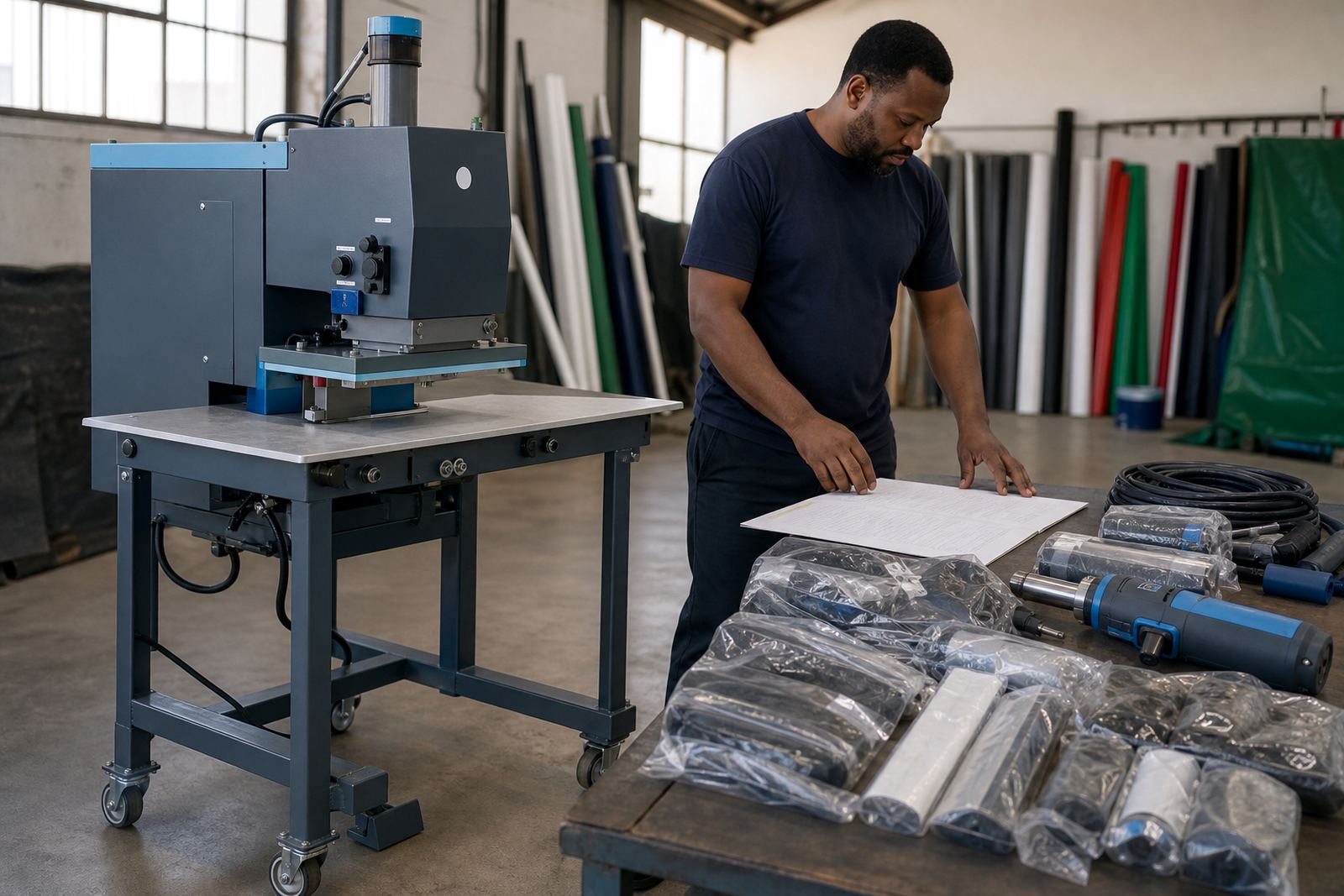
Banner production depends on machines that stay in alignment. If the seam drifts, the edge guide is worn, or the rollers no longer pull evenly, the finish will show it straight away. Preventive servicing helps with fault finding before a breakdown turns into missed delivery. For workshops in Germiston, Boksburg and Benoni, that often means checking alignment, roller condition, electrodes where fitted, and the wear on guides and tooling.
Hot-air and high-frequency machines both need regular attention. Worn rollers can mark material, loose tooling can shift the seam line, and poor calibration can lead to weak joins. Keep a record of the jobs that show trouble, such as narrow hems pulling open or sleeves running off square, because that usually points to a machine setting or wear issue rather than the fabric itself.
A buying checklist for banner shops
Use a short checklist before choosing equipment for banner production. It helps you compare machines on practical points rather than features that do not affect daily work. A good fit is the one that matches your seams, your space and your crew’s pace.
- What seam types do you make most often
- What is the widest banner or panel you handle
- Do you need hems, sleeves, keder or eyelet prep
- Will operators need quick changeovers between jobs
- Is servicing available for installation, training and parts support
- Can the machine handle the output your workshop needs each week
When those points are clear, the choice becomes easier. The right welder should make banners easier to finish cleanly, with less rework and better consistency from the first panel to the last.