Match the seam to the job before you strike an arc
High-frequency welding, also called radio frequency welding, is well suited to PVC-coated fabrics that need a clean, even bond along controlled seam lines. Hot-air and hot-wedge welding are also used across the trade, especially where panels are large, shaped or handled on longer runs. The best choice depends on the cloth weight, the edge finish needed and how much pulling the finished item will take in service.
For signs, side curtains, tents and covers, the seam is not only a join. It also controls appearance, water run-off, edge strength and how easy the item is to install on site. A neat seam at the workshop saves a lot of trimming and repair later, especially where banners flap in coastal wind or a cover is folded and reopened often.
Overlap seams for strength and size control
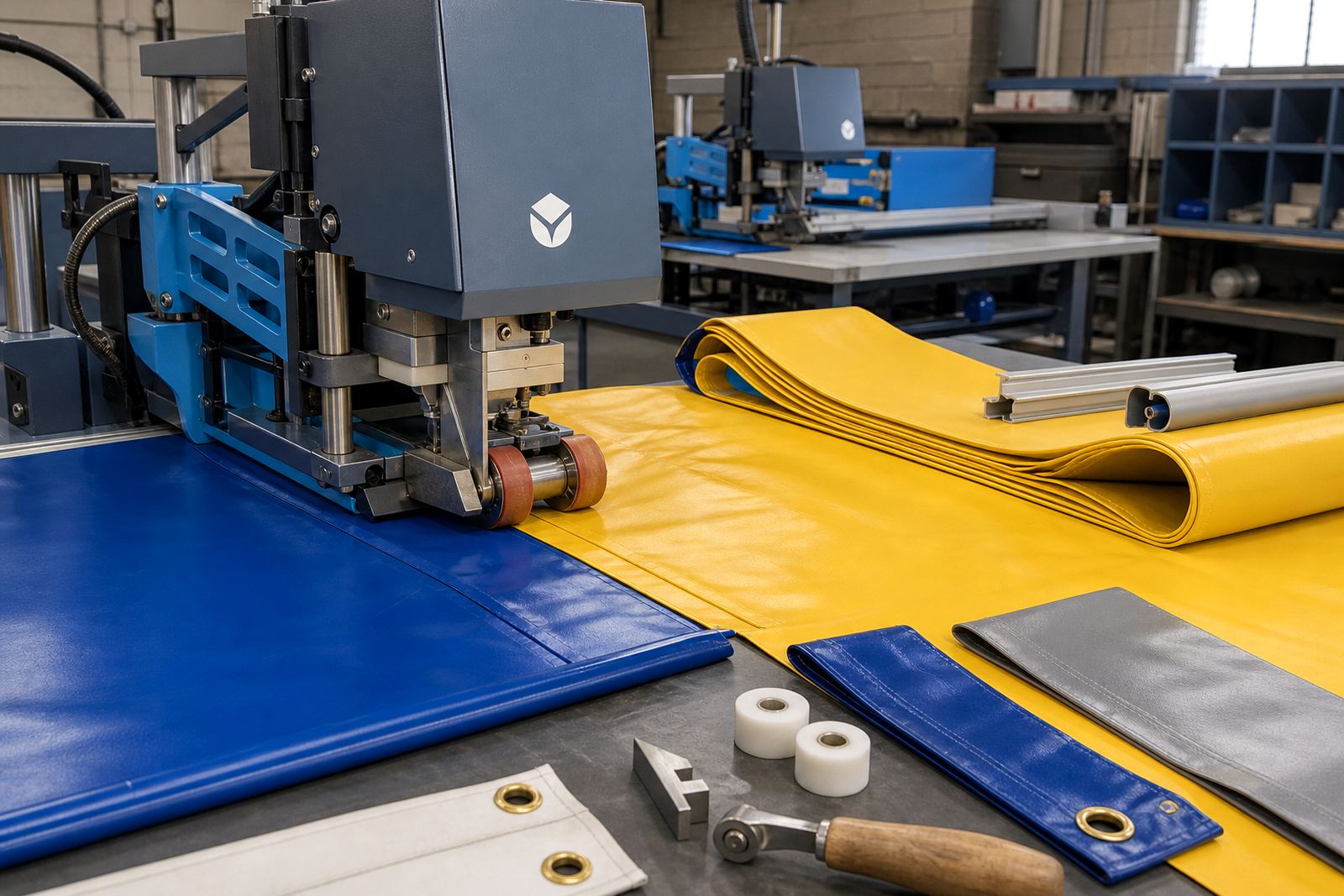
An overlap seam is the standard choice where two panels must meet with a wide, even weld area. It gives good holding power and keeps the join easy to inspect. On high-frequency machines the overlap width is usually kept consistent so the bond is uniform from end to end. With hot-air or hot-wedge welding, steady feed and correct pressure matter just as much as heat.
- Keep the overlap width even along the full length.
- Remove dust, chalk and loose film before welding.
- Check that the panels sit flat with no puckering at the edge.
- Test the first seam section before starting a full run.
Overlap seams work well on tarpaulins and billboard banners where the finished piece must stay square. If the job will be eyeletted later, allow enough edge margin so the weld line does not sit too close to the punched holes.
Hems and pockets for edges that take handling
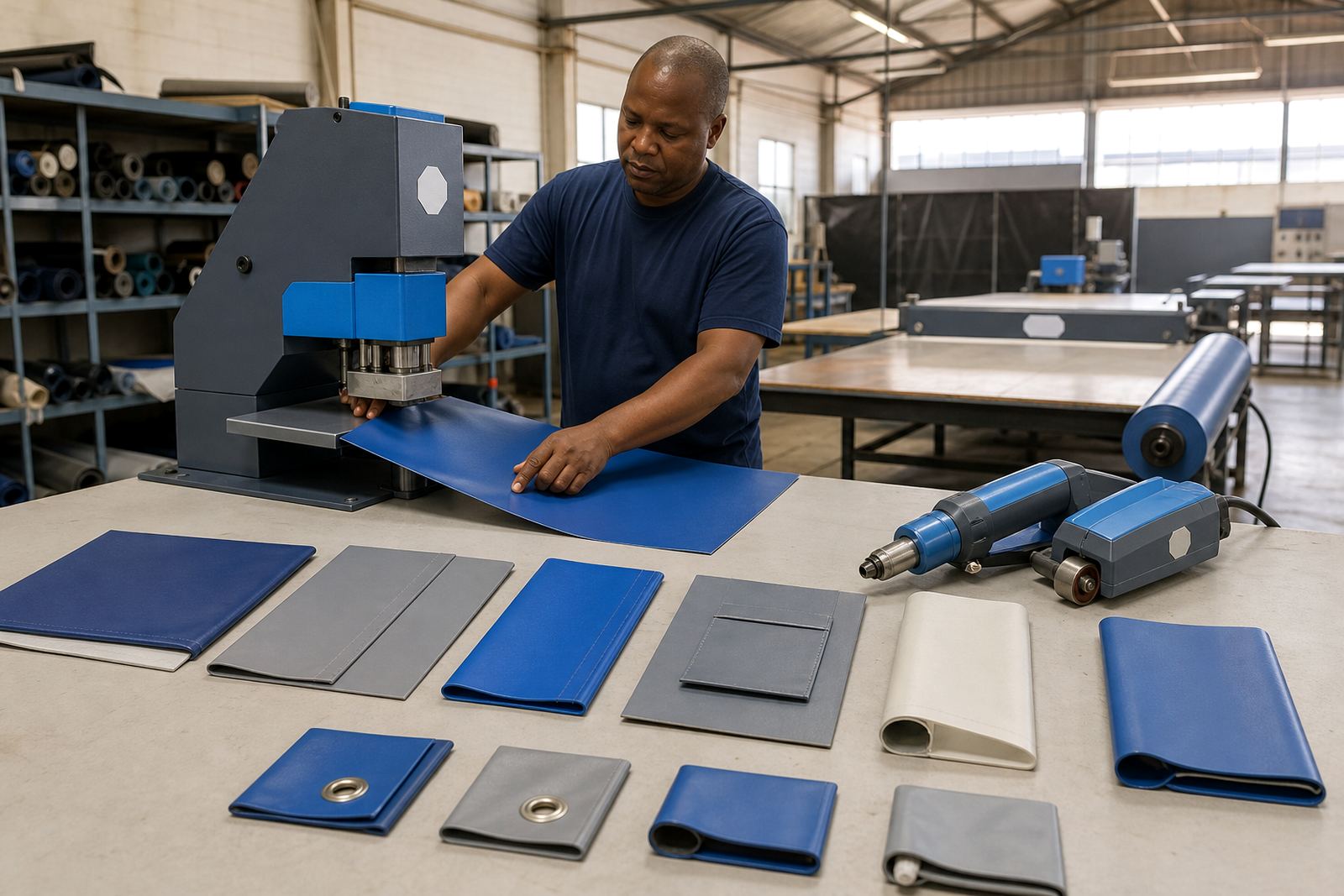
Hems are used where an edge needs a folded finish and extra body. They are common on banners, dust covers and curtain-style products. A double fold gives a cleaner look and can help protect the cut edge from wear, while a single fold may be enough on lighter work. Pockets are formed when a sleeve is needed for a tube, batten or weight bar.
These edge forms need careful alignment. If the fold drifts, the finished width can change and the item may hang unevenly. On larger jobs a small marking error becomes visible fast, so the fold line should be checked before any weld is made.
- Use the same fold allowance across the full panel.
- Keep corners square before sealing the hem.
- Confirm the pocket opening size against the tube or insert.
- Allow for shrink or pull on long hot-air runs.
Keder attachment when the panel must slide or lock in place
Keder is used when a flexible bead or strip must be welded to the edge of a PVC panel so it can slot into a rail or track. This finish is common on tents, display walls and some industrial covers. The weld has to hold the bead evenly without twisting it, otherwise the panel becomes hard to feed through the track.
Radio frequency welding gives a tidy result on many keder jobs because the seam line is controlled and the bond is repeatable. Hot-air and hot-wedge methods are also used where the fabric shape or length makes them more practical. The important point is keeping the bead straight, the feed speed steady and the heat suited to the material thickness.
Eyelets, reinforcements and the pull points that matter
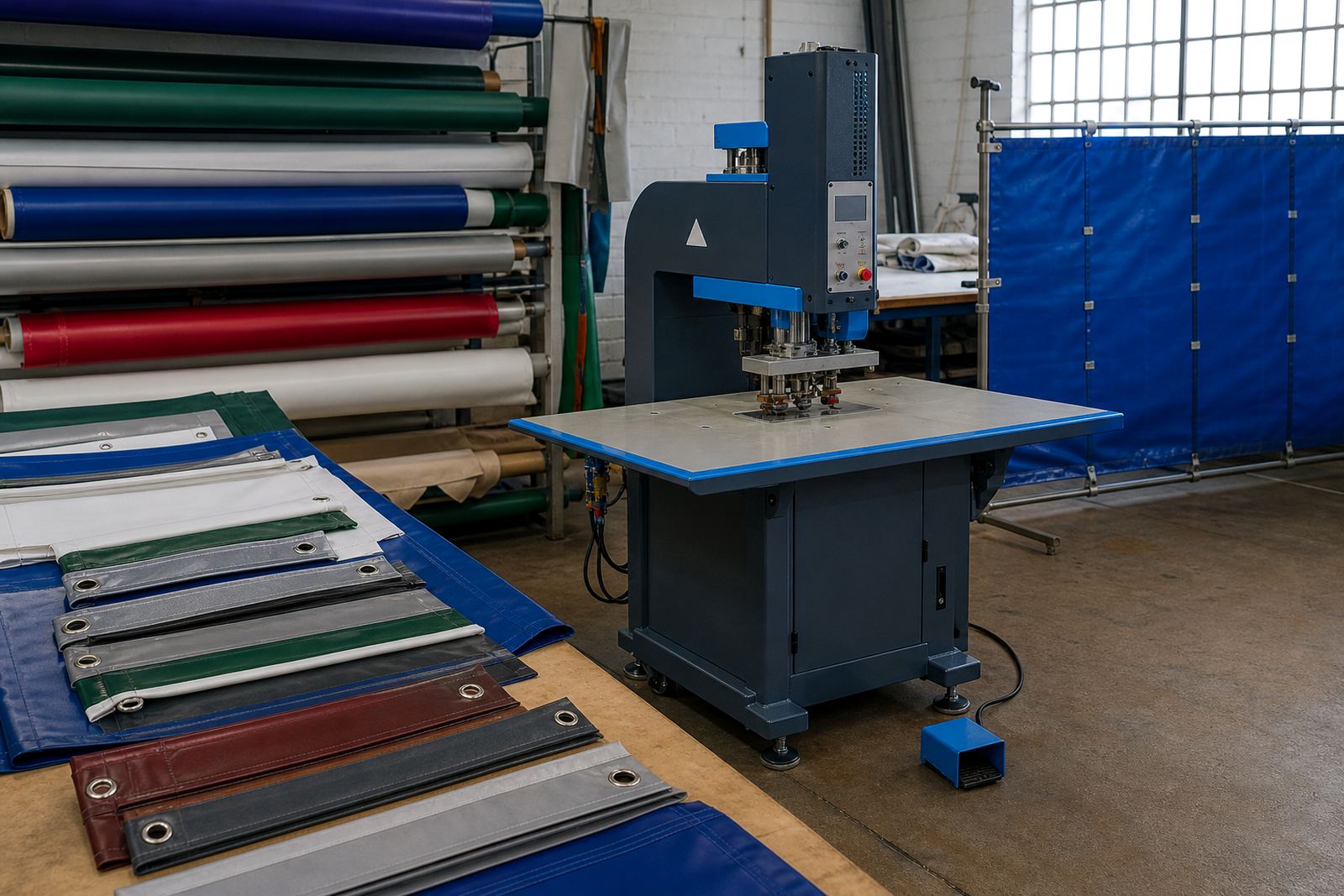
Eyelets are only as good as the reinforcement behind them. For banners and covers, a welded hem or patch often sits behind the hole so the load spreads out instead of tearing at one point. If the edge is too narrow, the fabric can creep or split when wind load or repeated tying puts strain on it.
Before eyeleting, check the seam line, the fold direction and the spacing from the edge. On coastal jobs in places like Durban and Cape Town, the fabric can work harder because of wind, salt air and frequent movement. Good reinforcement helps the item keep its shape and makes re-tensioning easier on site.
- Use a backing patch where the pull will be heavy.
- Keep eyelets clear of weld ridges and wrinkles.
- Space holes evenly so the load spreads out.
- Inspect for loose laminate or burnt edges before punching.
Safe setup and steady servicing on the workshop floor
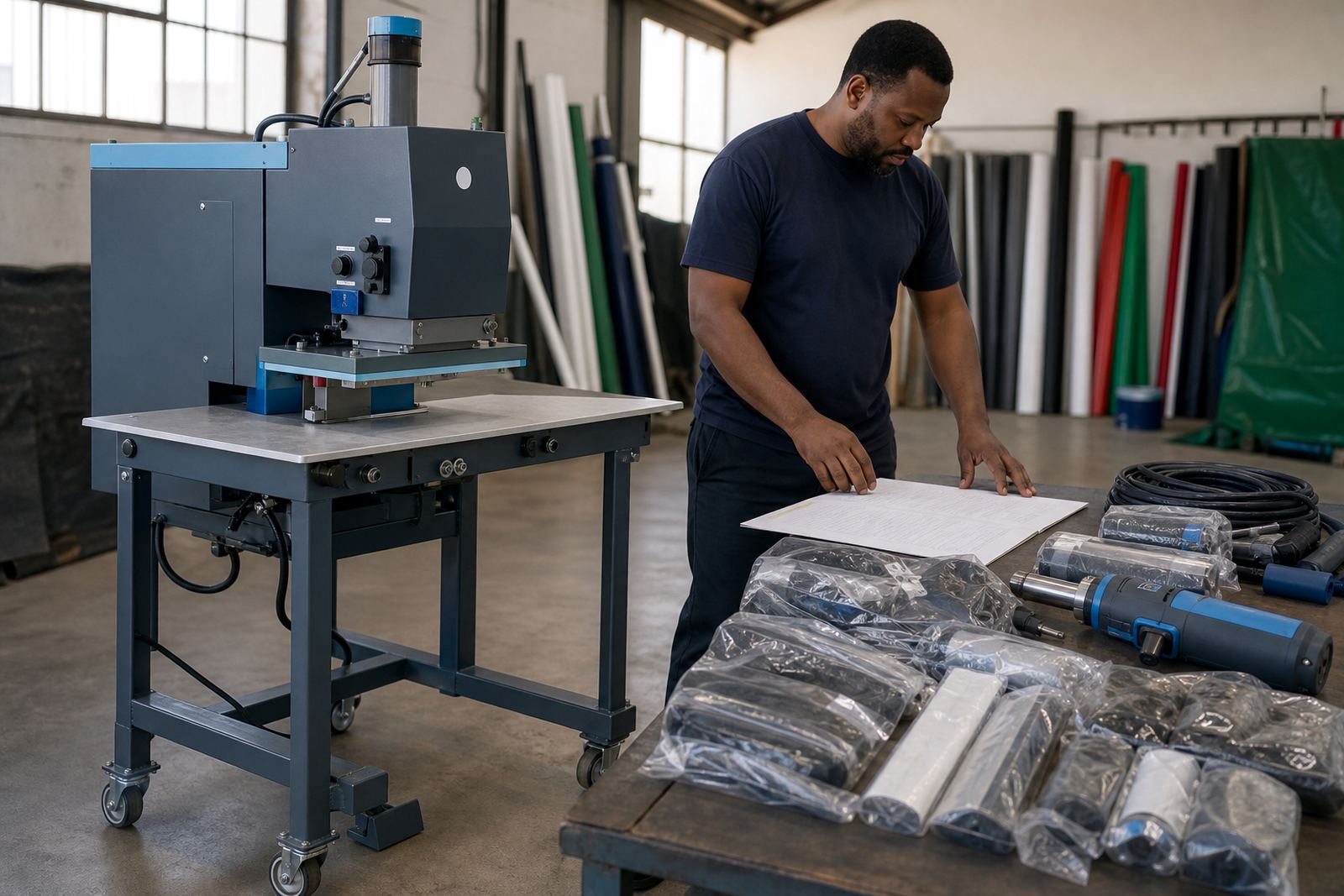
Operators need clear space, dry floors and proper guarding around moving parts and heated surfaces. Hot-air and hot-wedge units can burn an unprotected hand quickly, while radio frequency units need correct set-up, clean tooling and attention to alignment. A tidy workshop also helps reduce scrap because the material feeds straighter and there is less chance of contamination at the seam.
Routine machine servicing keeps weld quality consistent. That includes checking electrodes, rollers, guides, pressure settings and cable condition, then replacing worn parts before they mark the material. It also helps to test seam samples after any adjustment, so faults are found before a full batch is at risk.
- Keep tooling clean and free of adhesive build-up.
- Check roller pressure and track alignment before use.
- Run sample welds after servicing or tool changes.
- Store consumables where dust and moisture will not affect them.
A quick field check before you choose the seam
Use the job itself to guide the seam choice. A wide overlap may suit a tarpaulin that needs maximum holding power. A folded hem may be better for a banner that must hang straight. A pocket can save time on a battened edge, while keder is the practical answer where the panel must slide into a rail. The right finish is the one that matches the load, the fixing method and the way the product will be used.
If you are planning a new job, a sample seam is worth doing before the full run. Measure the overlap, test the pull at the edge and check that the finish sits square. Small checks at the start often prevent a costly rework later.