What Bloemfontein workshops usually need on the floor
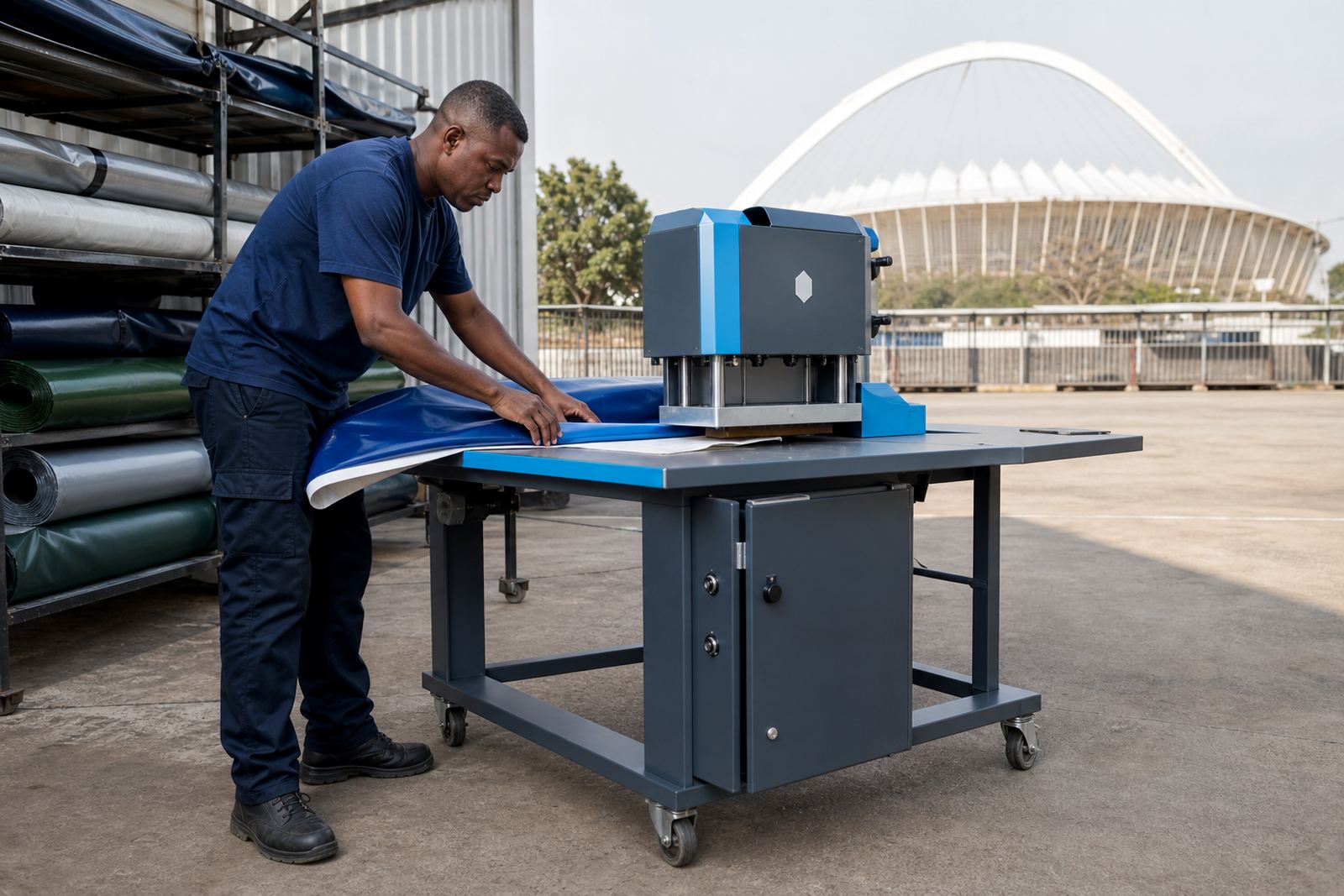
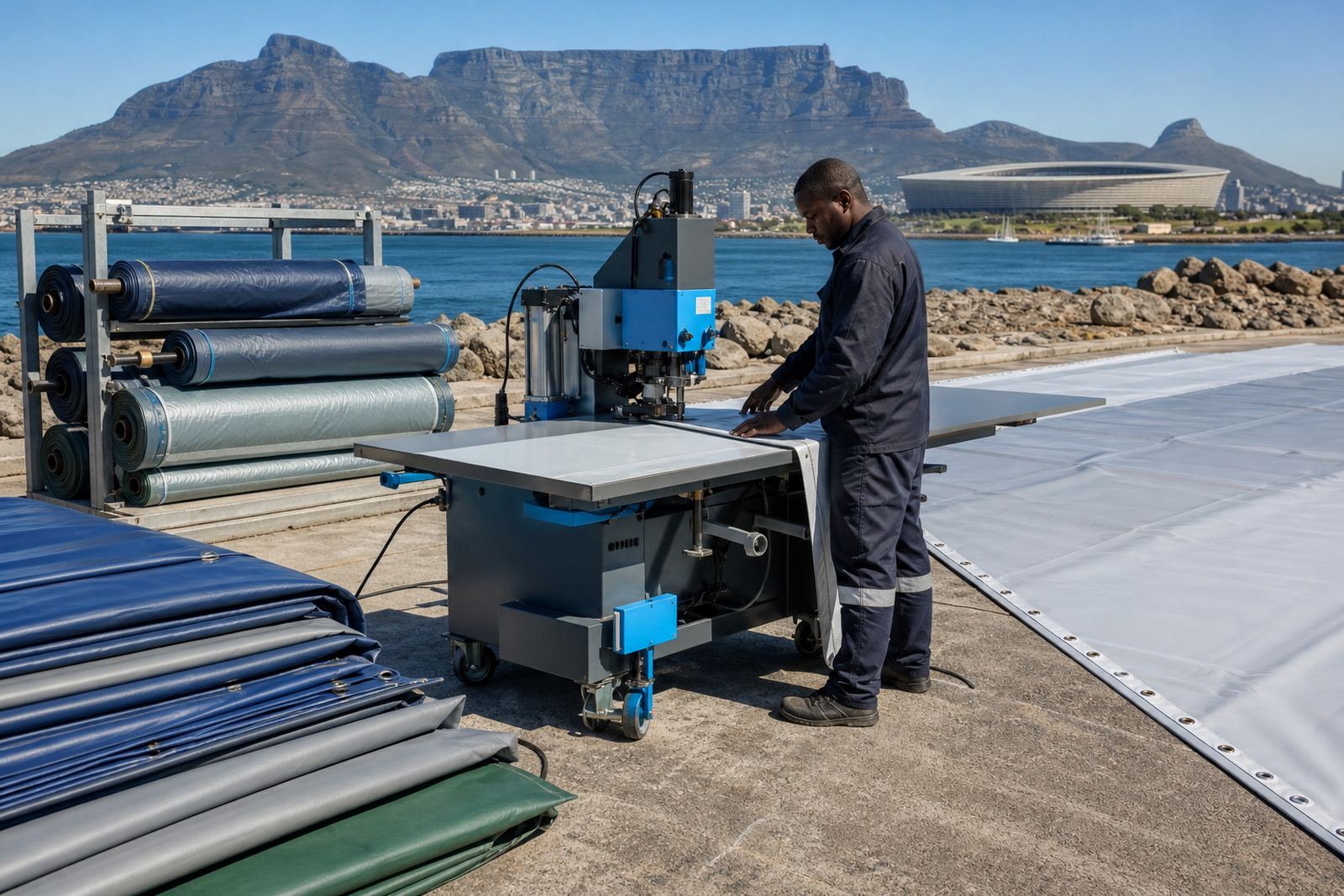
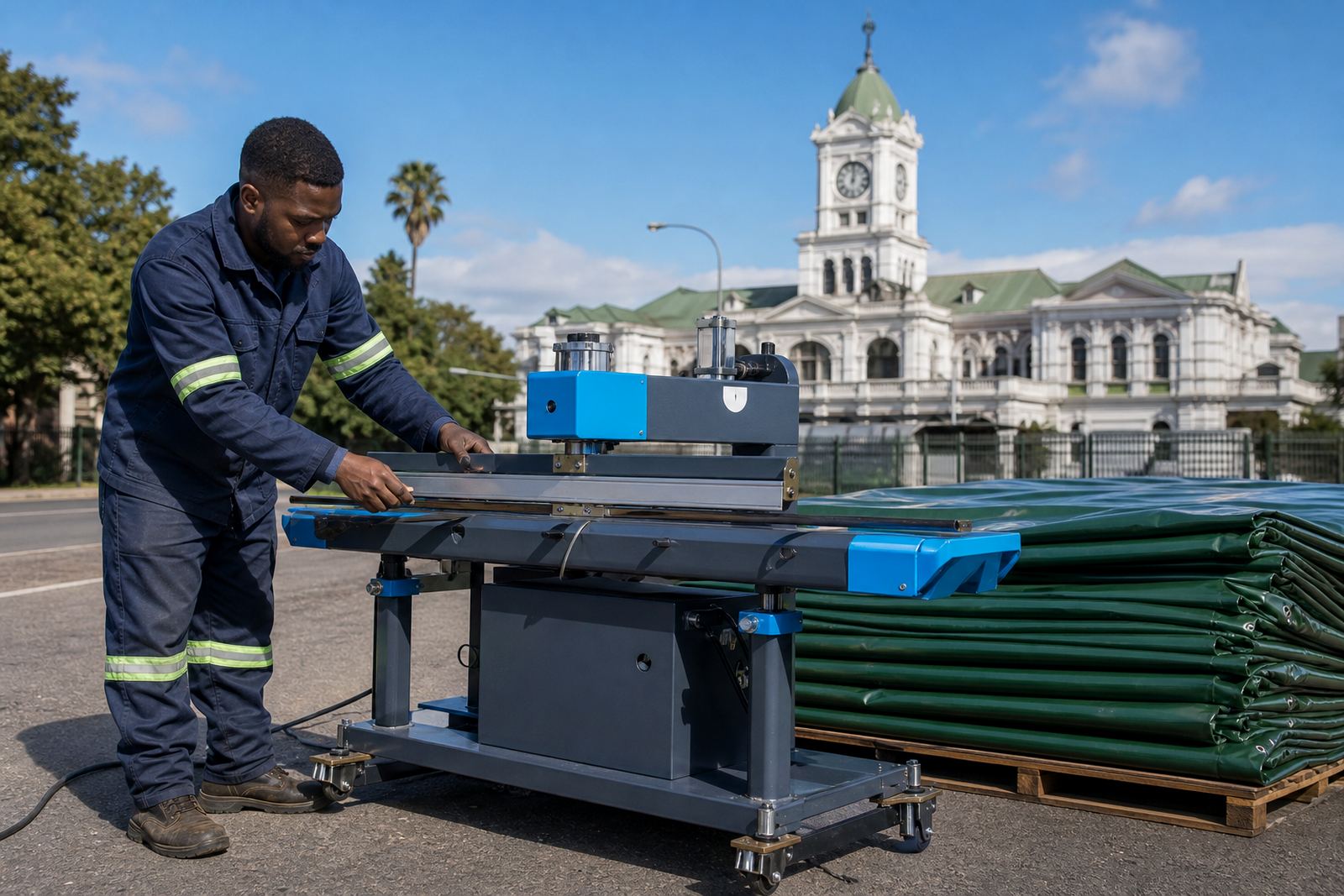
In Bloemfontein, production teams often work with PVC-coated fabrics for tarpaulins, banners, truck covers, tent panels and storm protection. The support call is usually about getting cleaner seams, reducing scrap and setting the machine up to suit the material thickness, coating type and output volume. On some jobs the priority is a straight hem, on others it is a strong lap seam, welded pocket, keder run or neat eyelet reinforcement before dispatch.
We help with practical setup advice that fits a real workshop, not a textbook bench. That includes checking the weld width, heat balance, pressure, speed and tooling condition on high-frequency welders, as well as the right nozzle, roller and wedge setup for hot-air and hot-wedge work. Small changes can make a big difference where a team is welding in dustier conditions, or where the fabric changes through the day and the operator needs a repeatable setting.
- Tarpaulin seam lines and overlap widths
- Banners with welded hems and pockets
- Tent side walls, valances and tension points
- Keder inserts for track systems
- Eyelet prep and reinforcement areas
Travel into the Free State and site callouts
Bloemfontein is well placed for servicing work across the central Free State, and travel is usually planned around machine type, fault severity and the parts likely to be needed on site. If a machine is producing weak seams, tracking poorly or heating unevenly, a callout may be arranged with the right tooling and spares packed in advance. That cuts down on repeat visits and keeps the job moving with less disruption to production.
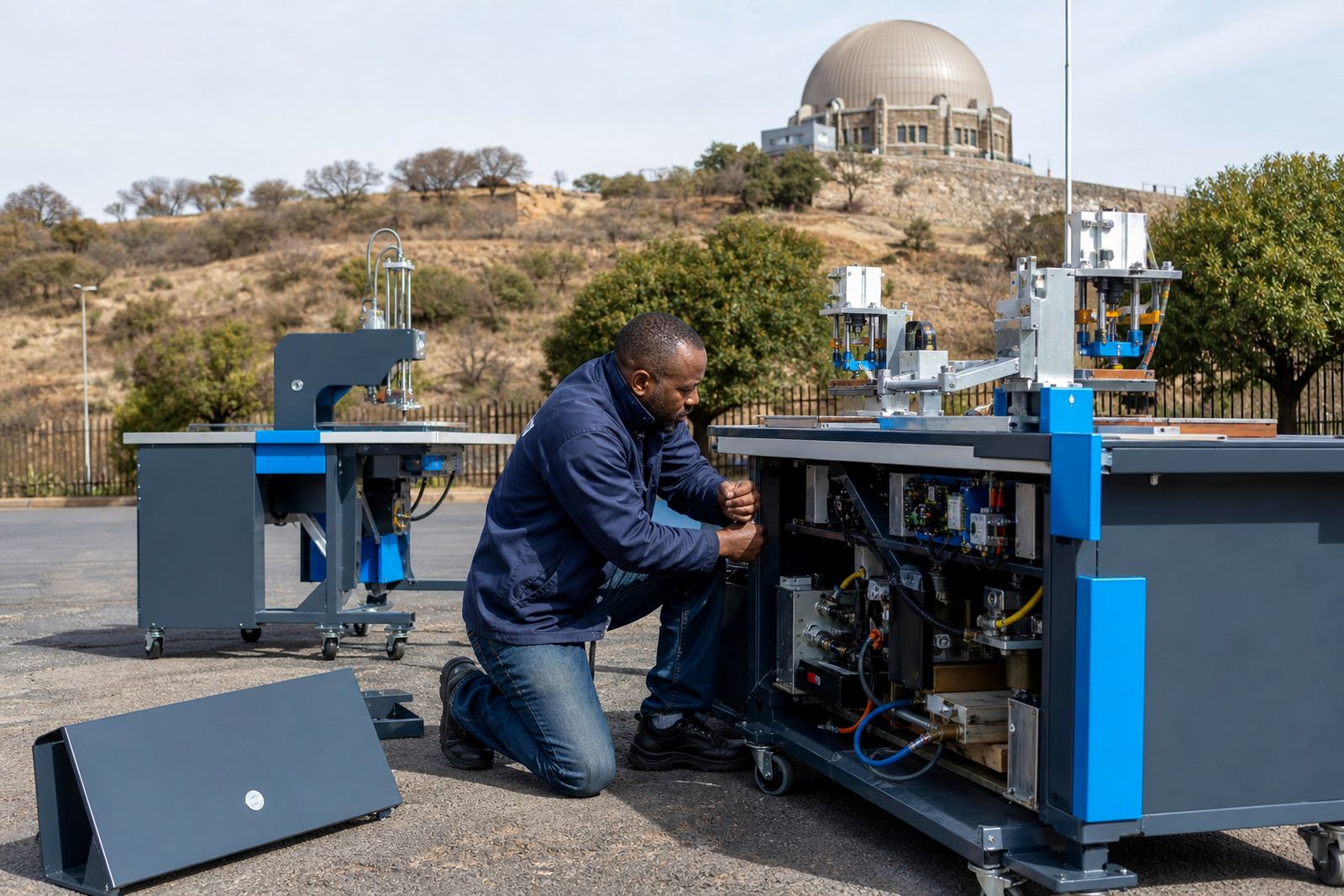
We also support workshops outside the city where the machine room is shared with cutting, printing or finishing. In those spaces, the service plan has to be pratical: enough time for testing, space for safe access around the weld head, and a clear handover so the team knows which settings were used. For transportable equipment or floor-mounted machines, careful handling matters because alignment can shift after moving or after long use on heavy PVC work.
Seam testing that matches local work orders
Many Bloemfontein clients ask for help with seam testing after installation or after a machine has been serviced. That can mean checking peel strength, looking for burnt edges, testing seal consistency across the full seam width, or confirming that hems and pockets hold their shape under normal use. For banner and tarpaulin work, the finish has to look tidy as well as hold under tension.
High-frequency welding and hot-air or hot-wedge welding each suit different production needs. Radio frequency equipment is often used where precise, repeatable bonding on compatible PVC-coated fabrics is required. Hot-air and hot-wedge units are common where flexibility on seam length, panel shape and onsite repair work is needed. We cover both types, along with the tooling that sits around them, including rollers, guides, cutters and alignment parts.
- Weld consistency checks across long panels
- Heat and pressure adjustment for different fabric weights
- Edge finishing for hems and pockets
- Repeat testing after servicing or tooling changes
Parts we keep moving for the Free State market
Keeping a line running is often about a small part rather than a full machine fault. We stock and supply commonly used wear items and service parts for welders used in tarpaulin, banner and tent production. That includes items linked to tooling alignment, roller wear, electrode condition, heating components and control wear. Where a machine has been in daily use, the signs are usually clear: uneven seams, slower output, marked material or an operator having to compensate at every pass.
Bloemfontein workshops also need parts support for machine servicing where the unit is older, has been moved, or has worked through long production runs. We check the likely fault path first, then match the part to the machine condition and the style of work. That approach helps avoid buying the wrong item when the real issue is alignment, pressure or operator handling rather than the part itself.
- Electrode refurbishment and replacement items
- Rollers and guide components
- Cutting and trimming accessories
- Control and timing related spares
- Seam test consumables for workshop checks
Operator safety and sensible machine care
Good welding results depend on more than heat and pressure. Operators need clear guarding, safe handling around hot surfaces, sound electrical habits and a clean workspace around the machine bed. On high-frequency units, safe use also depends on the correct setup of the work area, proper clamping and consistent operating steps. Hot-air and hot-wedge machines bring their own safety points too, especially around heated parts, moving rollers and material feed paths.
Preventive servicing is most useful when it follows the way the workshop actually runs. That means checking moving parts before they loosen, keeping the machine aligned after long runs, and watching for wear from dust, offcuts and repeated loading. In Bloemfontein, where dry conditions can lift fine dust into the work area, routine cleaning and inspection help a lot. A machine that is looked after properly is easier to train on, easier to service and less likely to give a surprise fault in the middle of a run.
Service planning for repeat production runs
For teams that handle steady orders, service planning makes the shop floor easier to manage. It helps to schedule inspections before a busy run, rather than waiting for a breakdown to force a stop. We support service plans that cover machine checks, tooling alignment, roller replacement, seam testing, operator coaching and the parts most likely to wear out under constant use.
This is useful for tarp makers, sign shops and event fabricators that need repeatable output across different jobs. One week the work may be truck covers, the next it may be stage banners or tent side walls. The machine settings and the finish required can change quickly, so support has to be geared to the actual production mix. If a workshop in Bloemfontein needs help with installation, commissioning or a fault that keeps returning, we can work through the machine step by step and keep the fix grounded in the job at hand.
How to send a Bloemfontein support request
Please send enquiries through the contact page form. Include the machine type, the fabric being welded, the fault symptoms, and whether the job uses high-frequency, hot-air or hot-wedge equipment. If the issue concerns seam quality, keder, hems or eyelets, mention the area on the product where the problem appears so the right tools and parts can be prepared.
Bloemfontein clients often need direct answers about what can be checked on site and what should be brought into the workshop for testing. We keep the process practical and straight, with support aimed at getting the machine working properly again and the production line moving.