Boksburg Workrooms Need Clean, Even Seams
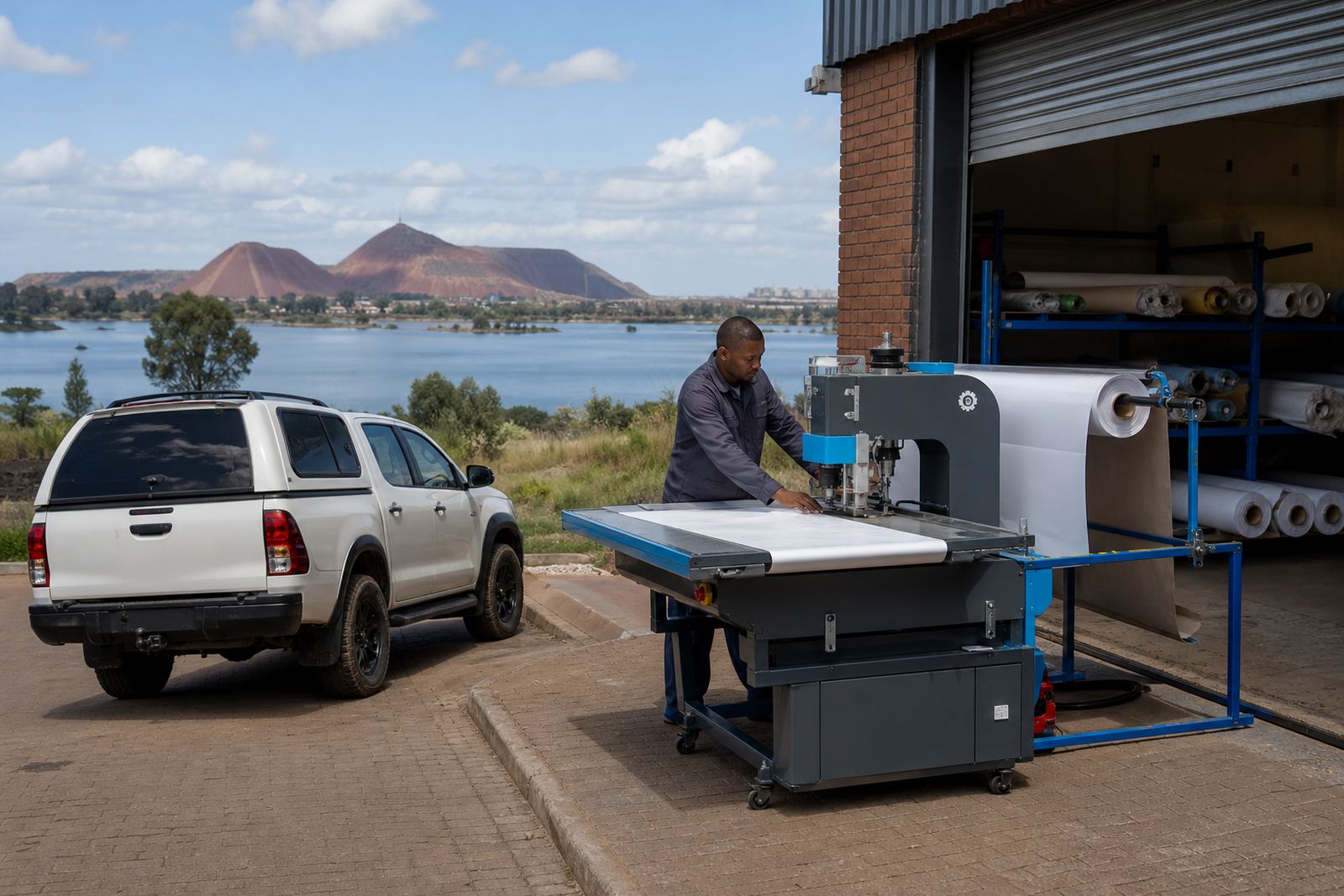
Boksburg sits close to a busy spread of fabrication yards, print shops and cover makers who work with PVC-coated fabrics in many thicknesses. The jobs are practical: tarpaulin seams, banner joins, reinforced hems, keder edges, eyelet strips and repair work where old welds have lifted or torn.
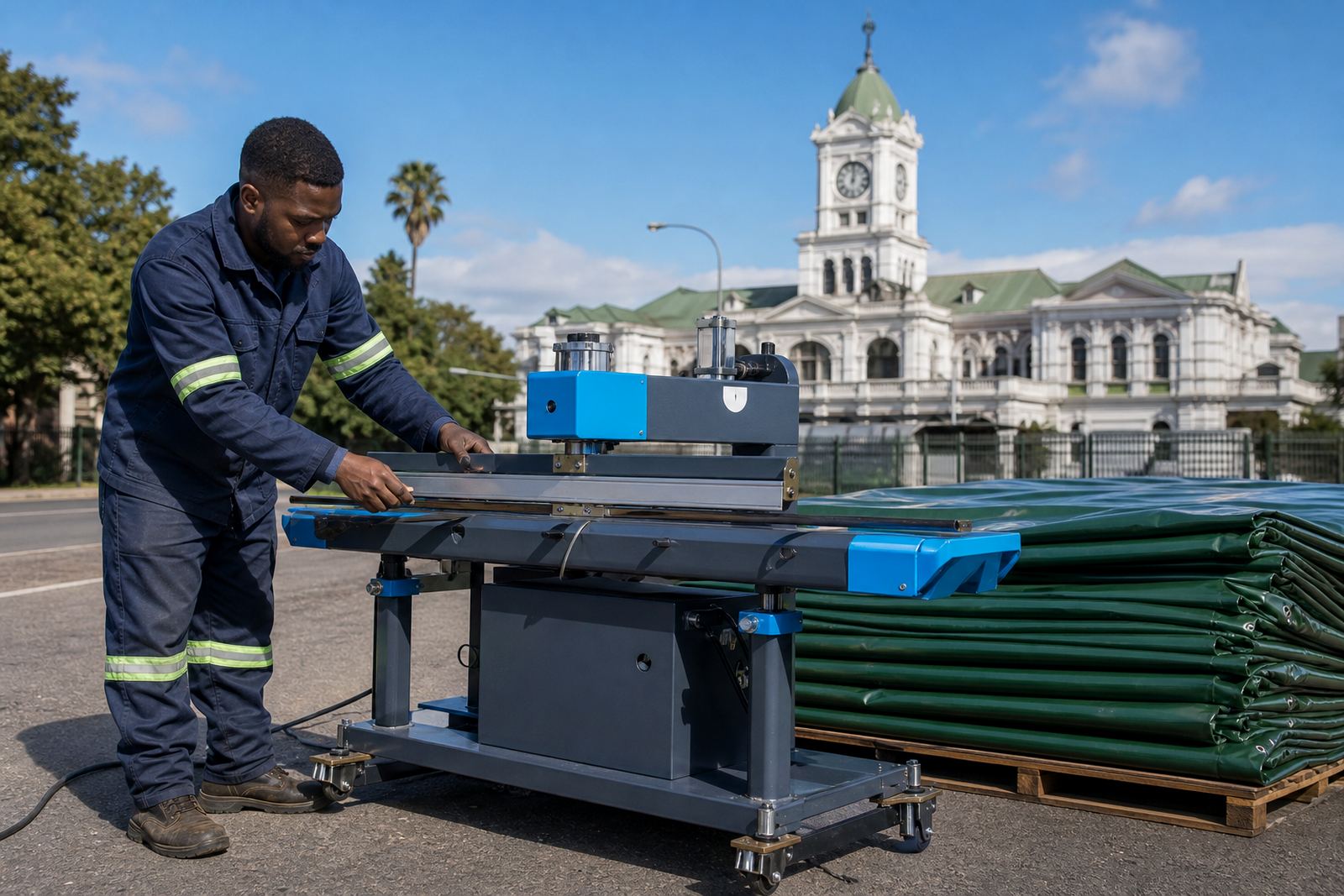
For that kind of work, the machine has to hold temperature, pressure and timing properly. High-frequency welding is used where a clean fused seam is needed on compatible PVC materials, while hot-air and hot-wedge welding are common for long straight seams on tarps, tents and wider covers. When a seam runs crooked or runs hot at one end and cold at the other, the end product shows it straight away.
Nearby Support For Installation And Setup
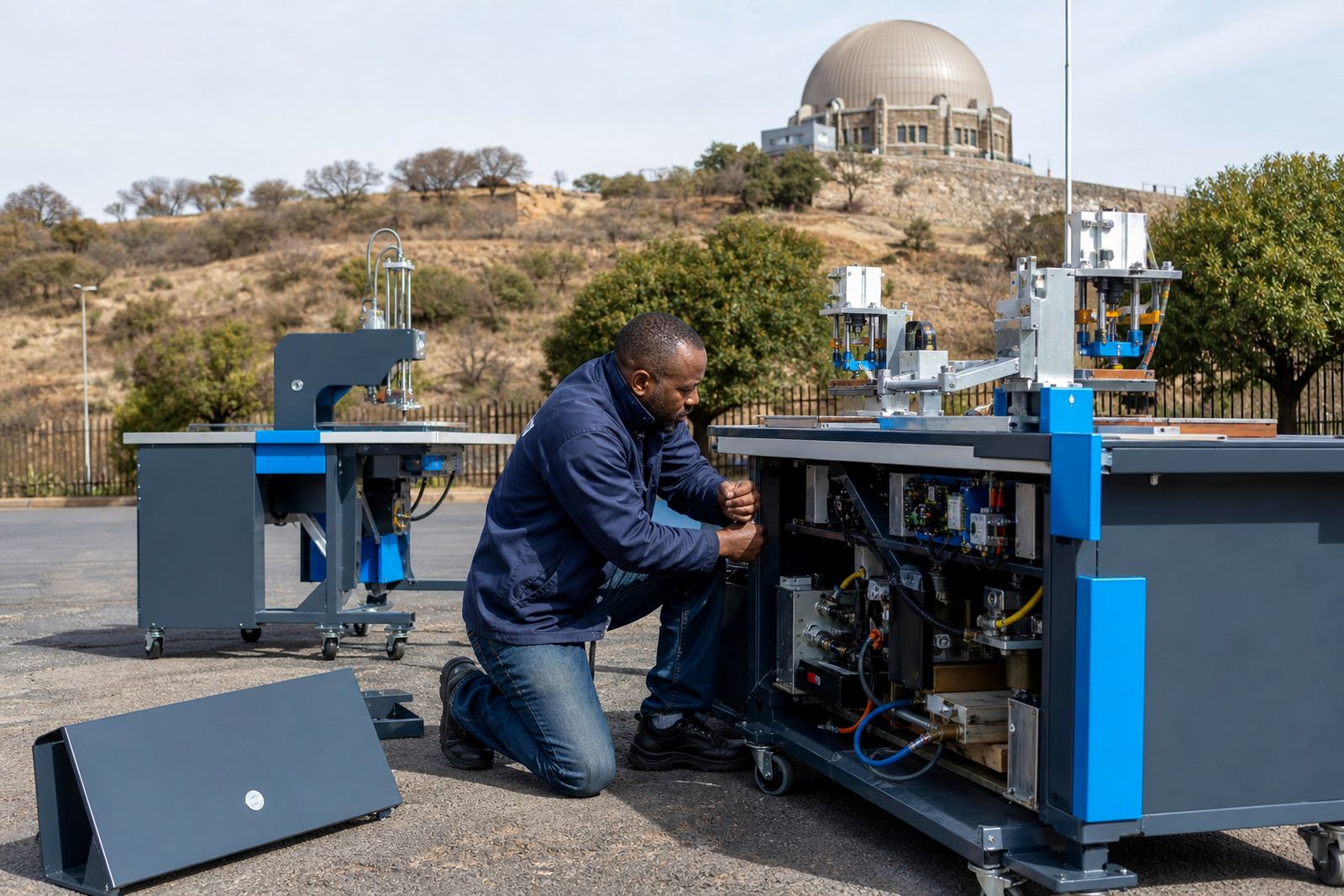
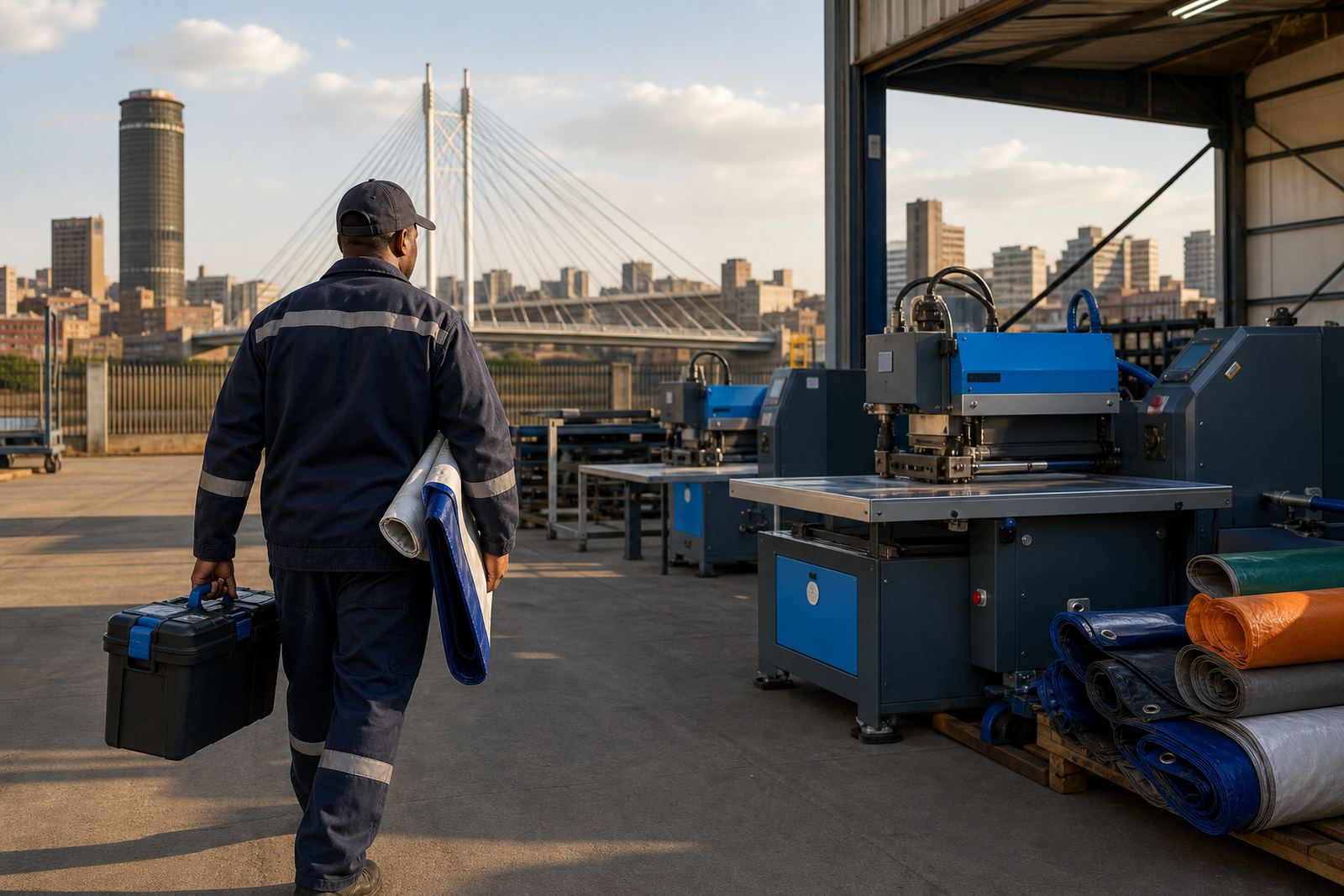
Our Germiston base keeps Boksburg within practical reach for machine installation, commissioning and site callouts. That matters when a workshop is setting up a new welder, changing over to different tooling, or sorting out table height, guide alignment and electrode spacing for a specific fabric weight.
We assist with the first run through of machine settings, seam testing and basic operator familiarisation so the team can work with the equipment in a tidy, repeatable way. If a machine has been moved, bumped, or has been left idle for a stretch, it is worth checking alignment before full production starts.
- Machine installation and commissioning
- Tooling alignment and setup checks
- Operator training for daily use
- Site callouts for practical troubleshooting
What We Cover For Tarpaulin, Banner And Tent Makers
Boksburg clients usually want equipment that can handle different seam styles without constant stopping and fiddling. That includes lap seams, hems, pocket folds, double folds, edge reinforcement, keder inserts and eyelet preparation. On larger tarps and tent panels, the weld line needs to stay straight even when the material is feeding under pressure and the room is busy.
We cover high-frequency welding machines for PVC-coated fabric work, plus hot-air and hot-wedge welders used on long seams and curved sections. Our support also extends to seam testing and fault finding on machines that are heating unevenly, tripping under load, or leaving weak spots at the ends of a weld.
- Tarpaulin side seams and corner reinforcement
- Banner hems and reinforced pockets
- Keder welding for track-fed systems
- Eyelet strip preparation and alignment
Local Conditions In Boksburg And Ekurhuleni
Boksburg workshops deal with dust, vibration and the usual stop-start pressure of production yards, and that takes a toll on guides, rollers and electrical connections. In this area, machine upkeep is not something to leave until a breakdown shows up. Small issues like worn rollers, a loose guide or a dirty electrode can affect seam quality well before the machine stops completely.
Where workshops are close to open yards or truck loading areas, keeping weld tables level and tooling clean makes a noticeable difference. On the east Rand, many fabricators also work with mixed orders that range from small repair jobs to larger batch runs, so a machine has to stay steady across different material widths and thicknesses.
Spare Parts And Servicing We Keep Moving
For Boksburg support we cover routine service work and practical parts supply for common wear items. That includes rollers, electrode refurbishing, heating and pressure related components, and the checks needed to keep machines within safe working condition. A machine that is serviced properly is easier to set, easier to teach on and less likely to waste fabric through poor welds.
We also handle preventive servicing plans for workshops that run steady production. That helps when several operators use the same machine during a week and settings drift over time. If the weld edge starts looking rough or the heat transfer becomes uneven, the problem often sits in alignment, contamination or wear rather than in the fabric itself.
- Roller replacement
- Electrode refurbishment
- Fault finding and seam testing
- Preventive servicing and service plans
Operator Safety And Cleaner Daily Runs
High-frequency and hot-air welding both need proper handling, because heat, pressure and moving parts can catch out a rushed operator. We work through the safer daily habits with teams in Boksburg, including guarding, correct hand placement, checking leads and keeping the work zone clear of loose offcuts and tools. That keeps the operator focused and reduces avoidable damage to the machine.
Training also helps new staff understand why seam pressure matters, how to test a weld before a full run, and when a machine needs attention. On busy days, a short training refresh can save hours of rework later. A steady operator usually gets better results than a speed-first approach, and that shows in the finished cover or banner.