Flat hold for cleaner seam setup
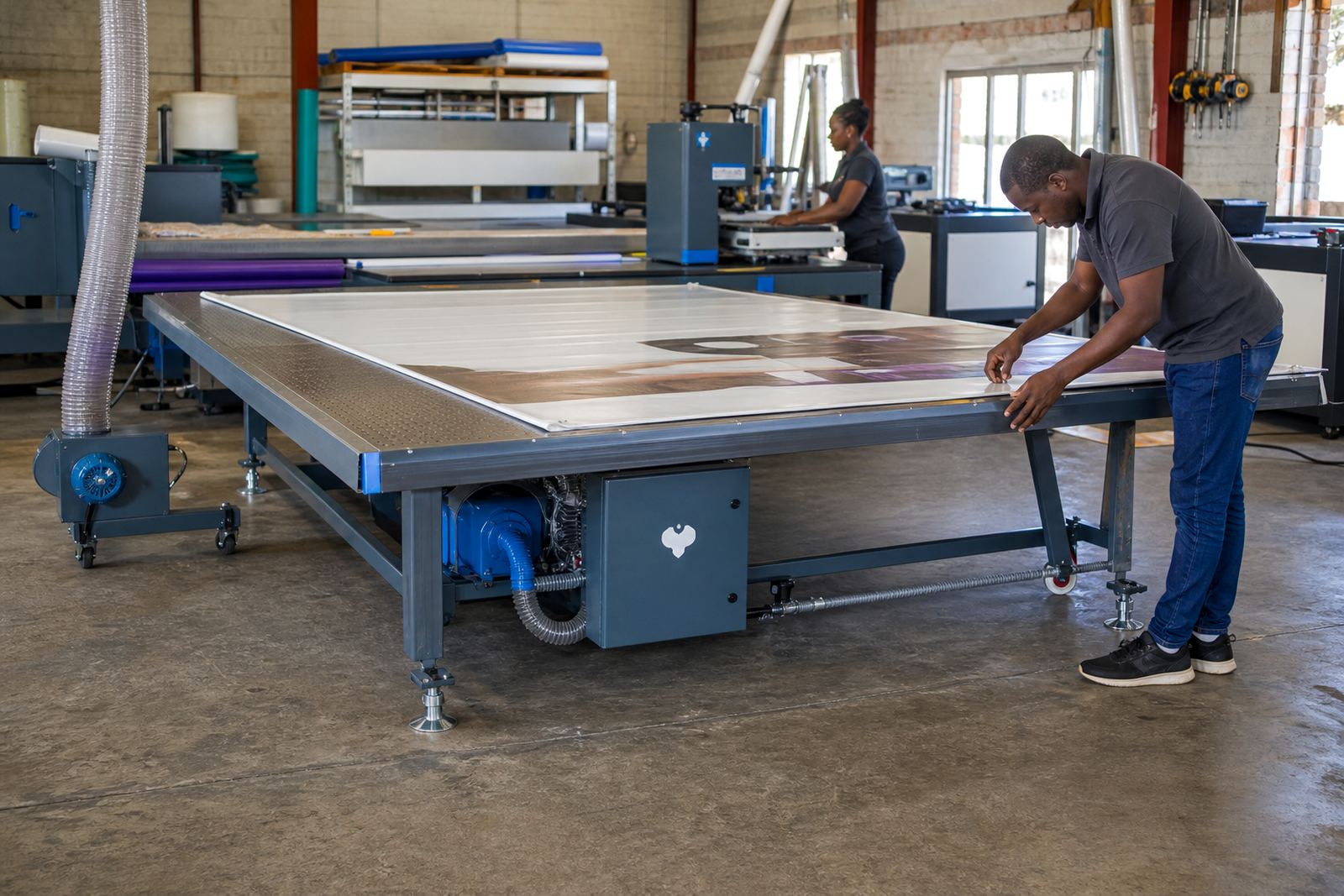
A vacuum table is a hold-down surface with suction zones that draw large PVC-coated sheets flat against the bed. It helps keep overlap lines straight, reduces creeping on the table and makes it easier to mark, trim and position material before welding. In a busy Germiston workshop, that means less hand holding and fewer adjustments when preparing tarpaulins, banners, tent sidewalls and fitted covers.
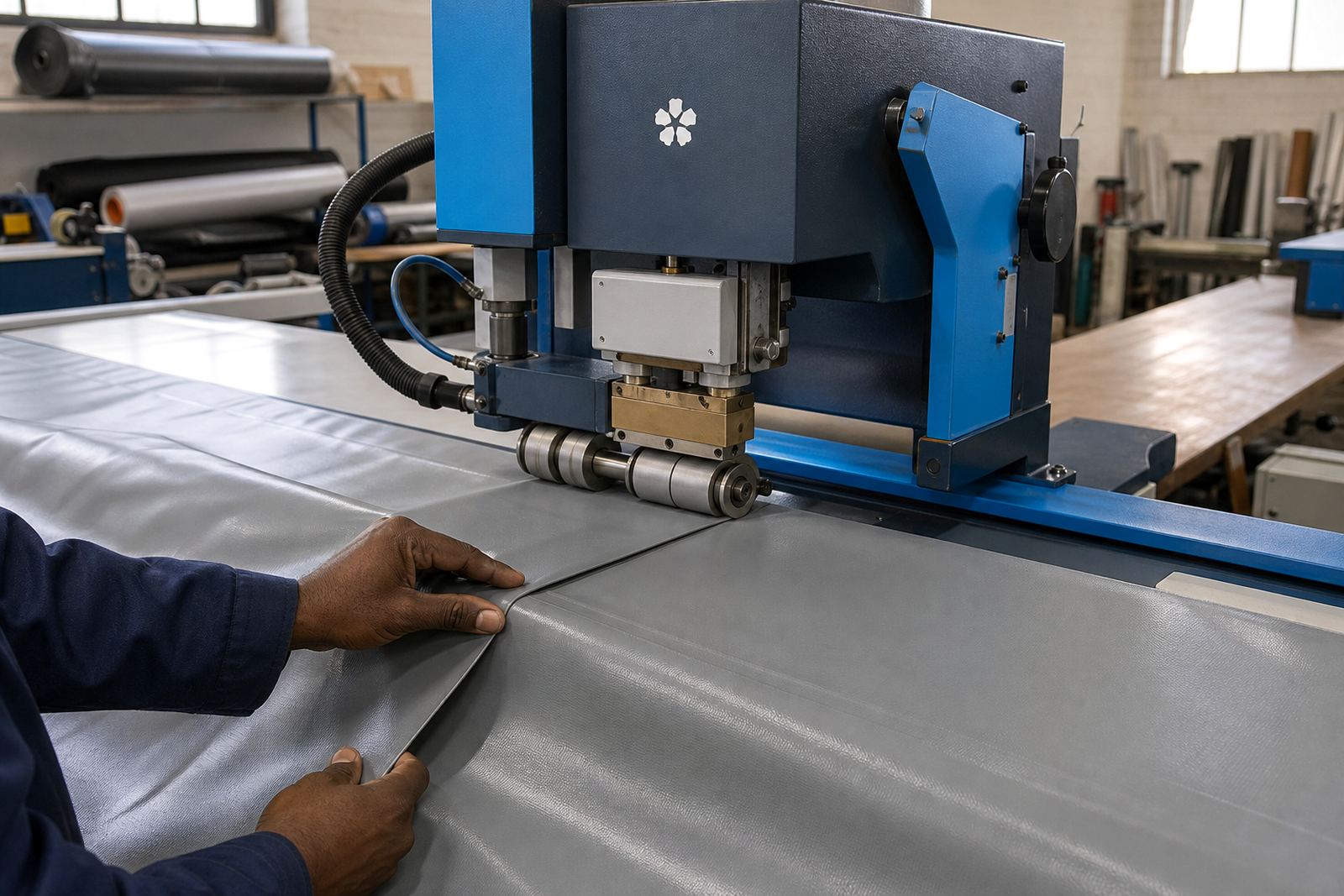
The table suits radio frequency welding, hot-air welding and hot-wedge work where seam position must stay true from one end of the panel to the other. It is also useful for jobs with printed panels, reinforced hems, keder strips and eyelet bands where even spacing matters. Coastal humidity in Durban or Cape Town can make some PVC-coated materials feel softer and more difficult to keep square, so a dependable hold-down surface helps keep the work under control.
Sizes and working layouts for local fabrication shops
Vacuum tables are normally chosen to match the largest sheet sizes handled in the workshop and the way panels are loaded. Common working widths can range from compact benches for smaller banner work to broad beds for full tarp sheets and tent components. Length can be set for short production runs or extended layouts where long seams need to be traced in one go.
- Table top sizes are often matched to the widest fabric panel used on site
- Perforated or slotted beds help spread suction evenly across the sheet
- Multi-zone control allows part of the table to be used for smaller pieces
- Height can be set to suit standing work and repeated loading
- Castors or fixed feet depend on whether the table stays in one bay or moves between stations
For operations in Johannesburg, Pretoria and Boksburg where throughput can be high, a larger bed with clearly marked alignment points helps keep the work flowing. In Bloemfontein or Benoni, a smaller table may suit a workshop that handles mixed orders and limited floor space.
Where the table fits into welding production
This equipment is not only for holding material still. It supports the full prep stage before welding, especially where accurate seam work is needed. A flat, steady surface helps with lap seams, butt seam positioning, double hems, pocket formation, keder edging and the placement of eyelets or reinforcement tabs. It is particularly useful where the edge must remain true before the welding head or hand tool is applied.
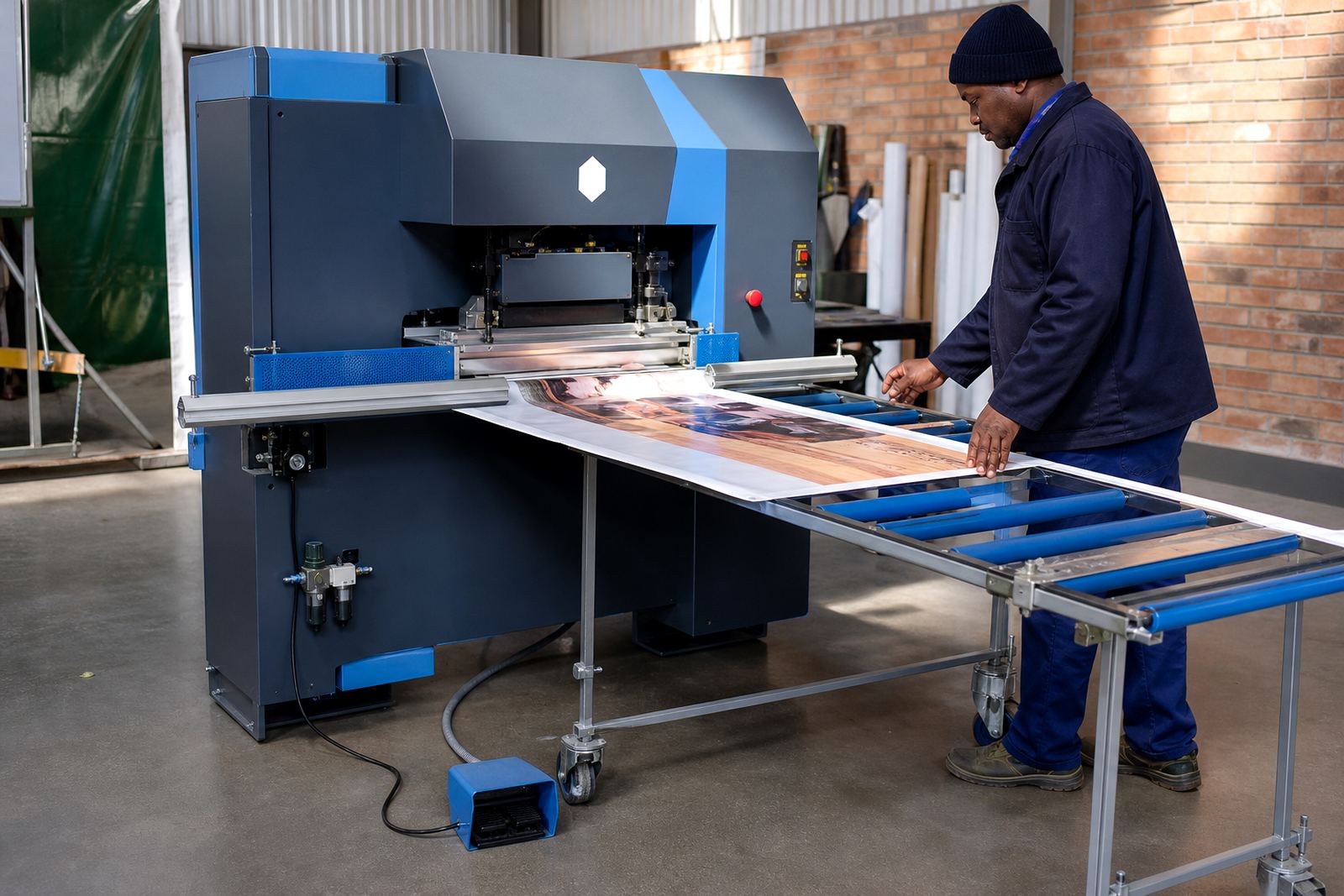
For banner makers, the table can help during trimming, overlap setting and finishing around pole pockets or hanging points. For tarpaulin and tent makers, it supports long runs of coated fabric, corner patches and load-bearing seams that must sit evenly. The table can be used with rulers, guides and clamps for repeat work, though the suction hold often does most of the job.
- Aligns lap seams before radio frequency or hot-air welding
- Supports hems, folded returns and edge reinforcements
- Helps position keder rope or beading before attachment
- Makes eyelet bands easier to set at even centres
- Useful for inspection and seam testing after welding
Installation, fitting and workshop setup
Vacuum tables normally need correct placement in the workshop so the bed is level, the suction system is accessible and the operator has room to move around large sheets. The fitting work may include levelling, hose routing, electrical connection where the unit uses a motorised vacuum system, and checking that the table surface is sealed properly. If the table is paired with welding equipment, the layout should allow a straight flow from cutting to alignment to welding without unnecessary lifting of heavy fabric.
For service teams working across South Africa, table setup is often planned alongside machine installation and operator training so the staff can use it safely from the first shift. In towns where dust build-up is common, such as workshop yards near transport routes, the intake and filter areas need sensible access for cleaning. A well set table also helps reduce strain on operators when handling wide tarpaulins or tent sections.
Care that keeps suction even
A vacuum table performs best when the bed remains clean, the perforations are open and the seals are kept in good order. Offcuts, dust and melted PVC residue can block suction points or leave marks on lighter fabrics. Routine cleaning should be done with suitable workshop methods that do not damage the surface or leave sharp edges on the bed. If the table uses a pump or fan unit, belts, hoses and filters should be checked during preventive servicing.
Common care tasks include watching for worn gaskets, checking hose joints, keeping the control valves free, and making sure the surface stays flat where heavy sheets are loaded repeatedly. If the table is used near hot-air welding stations, operators should avoid dragging hot tooling across the bed. A small nick or raised edge can affect both suction and the finish on the next panel.
- Clear dust and scrap from the perforated surface before each shift
- Inspect hoses, valves and seals for leaks or wear
- Keep the bed level so large sheets do not slide during loading
- Check suction zones before long seam runs or repeated jobs
- Schedule servicing with the welding equipment to reduce downtime
What to confirm before ordering
To match the table to the workshop, it helps to confirm the largest panel size, the type of material handled and the layout of the cutting and welding area. A tarpaulin shop working on long truck covers may need a different bed length to a banner workshop that handles shorter printed sheets. The details below are usually needed before supply or fitting is arranged.
- Maximum sheet width and working length
- Type of fabric handled, such as PVC-coated tarpaulin, banner material or tent fabric
- Preferred suction layout, single zone or multi-zone
- Power supply details for the vacuum system where applicable
- Whether the table must move between bays or remain fixed in one place
- Existing workshop dimensions, including access for loading large sheets
When the order is set correctly, the table becomes part of a smoother welding line and helps operators handle large work with less shifting and rechecking. That matters in Germiston and across the country where workshops need dependable prep equipment for daily production.
Support for tarpaulin and banner workshops nationwide
PVCWelder supplies and services high-frequency and hot-air PVC welding equipment for workshops in Germiston, Johannesburg, Pretoria, Durban, Cape Town and Bloemfontein, with support also available in Boksburg and Benoni. The vacuum table sits naturally alongside seam testing, tooling alignment, roller replacement, electrode refurbishment, parts supply and preventive servicing, especially where a shop works on several fabric widths and seam styles in the same week.
For operators, the real value is in control. A flat sheet is easier to align, easier to weld and easier to inspect afterwards. Whether the job is a banner with clean hems, a tarpaulin with reinforced corners or a tent panel with keder and eyelet work, a good vacuum table gives the workshop a steadier starting point.
Key facts
| Product type | Vacuum hold-down table for PVC-coated fabric preparation |
|---|---|
| Typical use | Alignment, trimming and welding prep for tarpaulins, banners and tent panels |
| Working surface | Perforated or zoned bed for even suction across large sheets |
| Layout options | Fixed or mobile workshop installation, single zone or multi-zone control |
| Compatible processes | Radio frequency welding, hot-air welding and hot-wedge welding |
| Common workshop features | Level bed, suction controls, hose access, alignment guides and easy-clean surface |