Turntable handling for repeating weld work
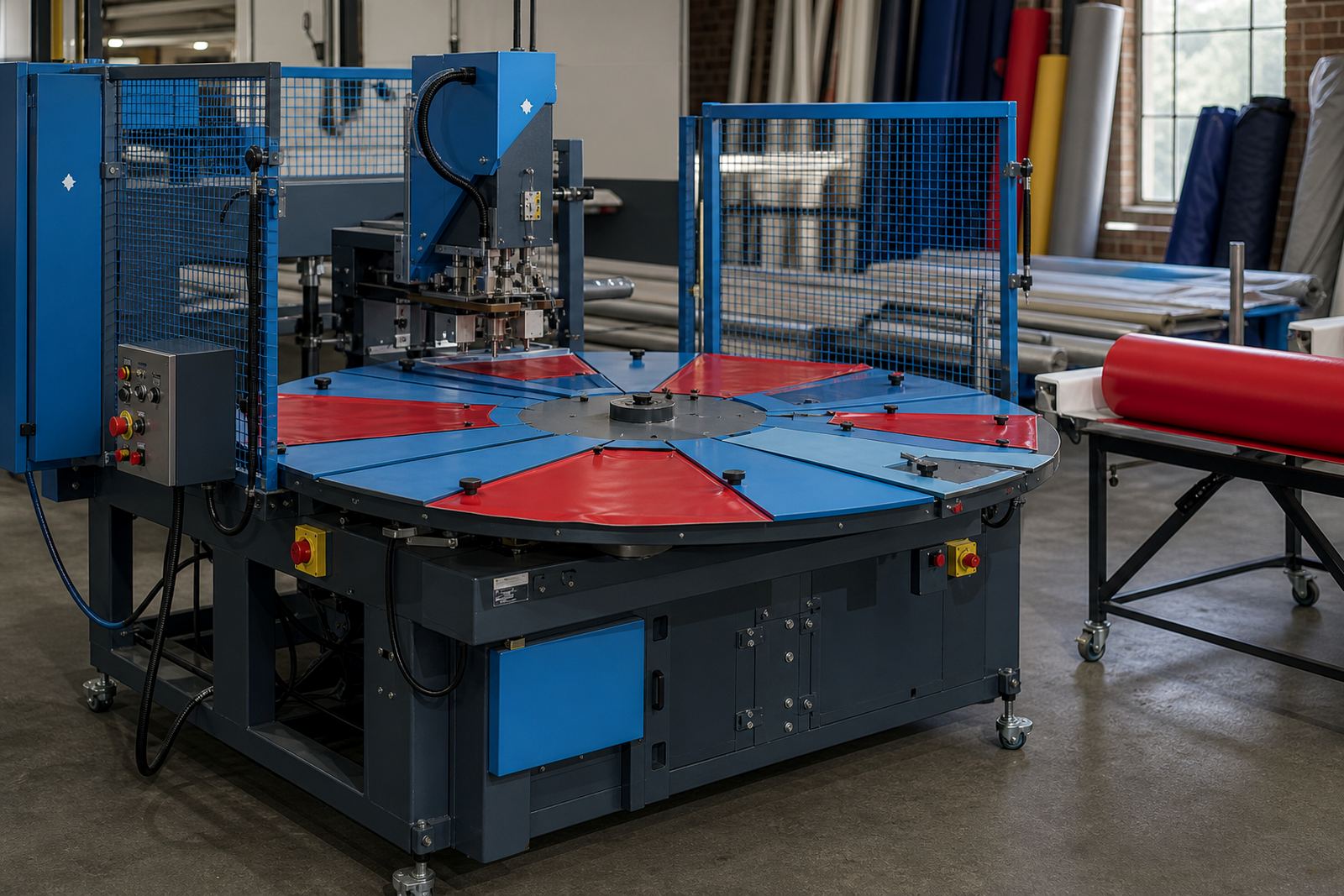
This machine uses a rotating table layout so one side can be loaded while the other side is welding, which helps keep a workshop moving when the same seam type is done all day. It is suited to radio frequency welding of PVC-coated fabrics where straight seams, overlap seams and reinforcement strips must line up cleanly and hold under tension.
In practical terms, the turntable arrangement suits signage panels, trailer tarps, tent walls and banner sections that need repeatable positioning. The operator can work with consistent panel placement and less handling between cycles, which is useful when finished work has to look neat on both the face and the reverse side.
Built for PVC-coated fabric joining
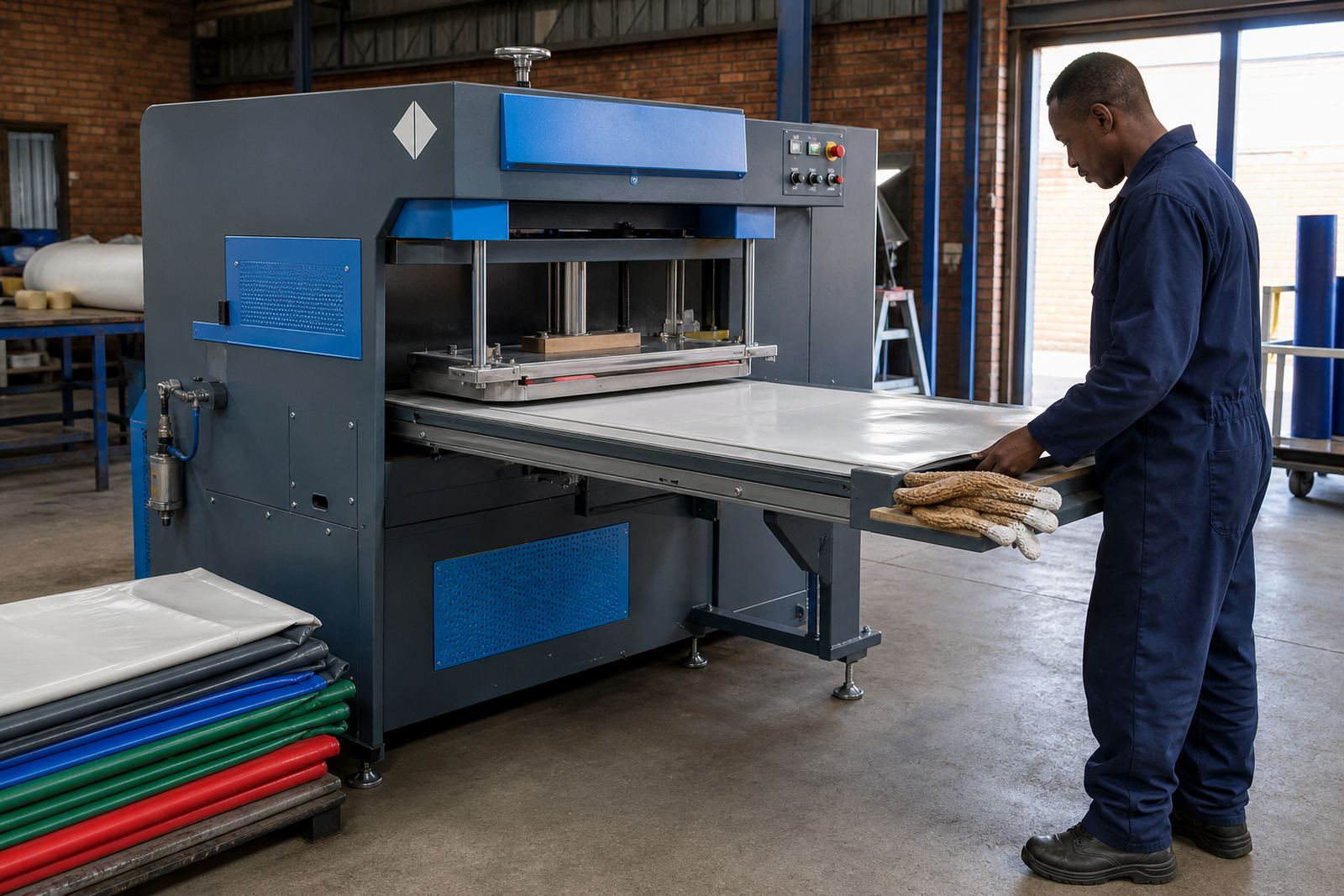
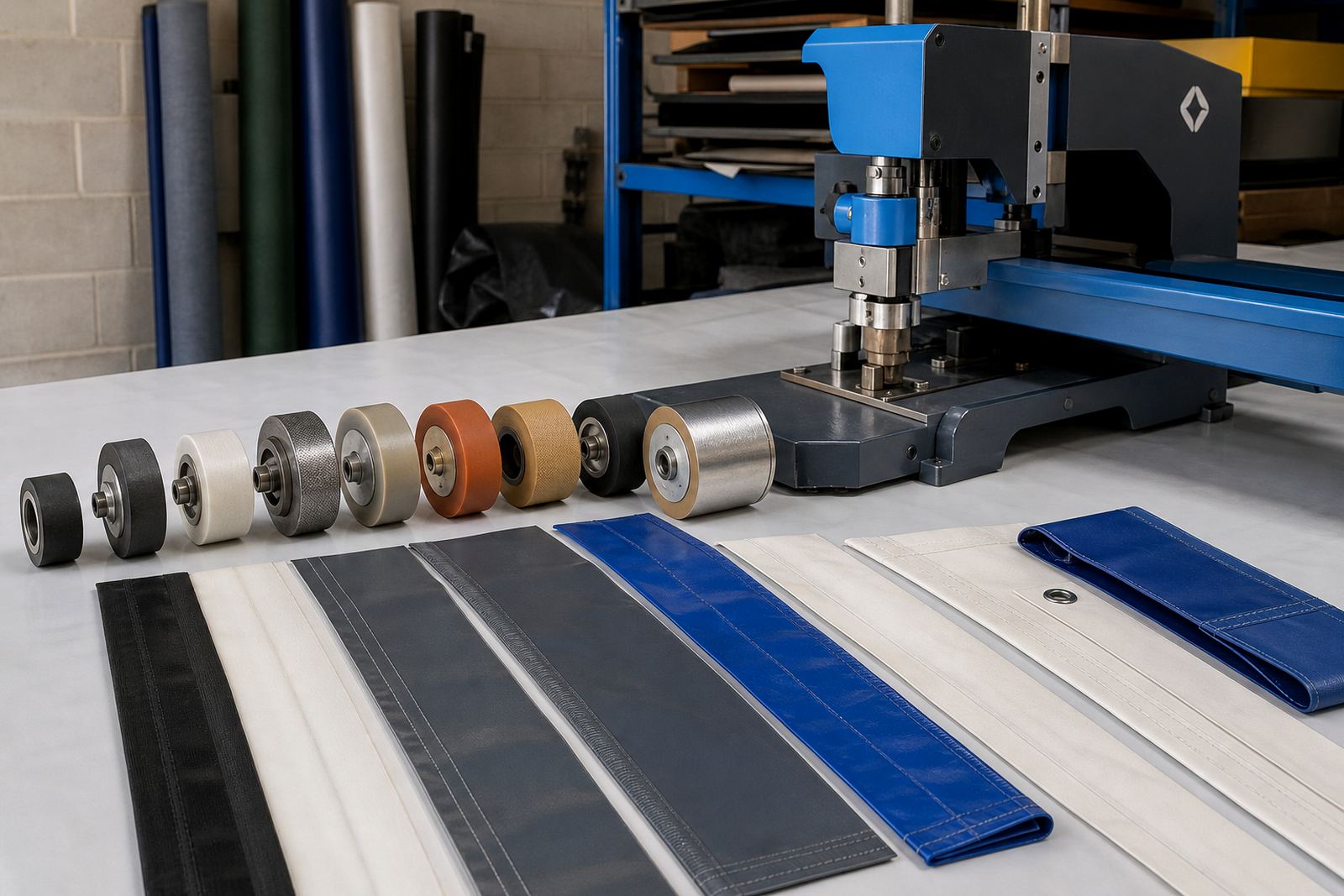
HF welding is commonly used where PVC-coated textiles need a sealed joint rather than stitched holes. On this type of machine the weld area is created with controlled pressure and frequency, making it suitable for seam strips, pocket welds, hems, keder tracks and eyelet reinforcement zones. It is also used where a cleaner edge is needed for display work.
Typical work includes:
- Long seam joins on tarpaulin sheets and truck side curtains
- Banner hems with folded edges for tensioning
- Keder insertion channels for track-fed installations
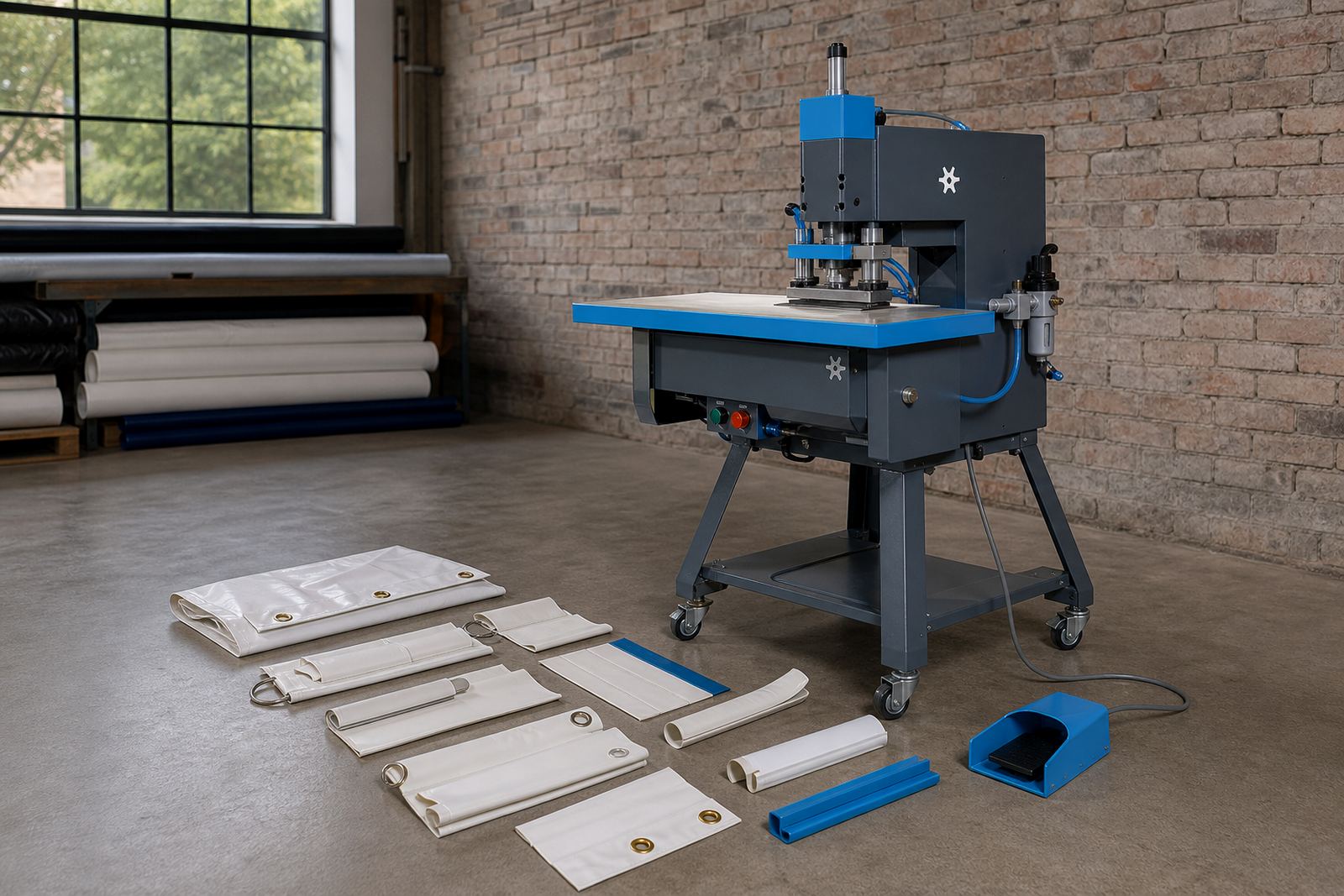
- Eyelet backing patches and corner reinforcements
- Overlap welds on tent skirts, valances and wall panels
For workshops doing mixed jobs, the same machine may be set up for different tooling widths and different panel sizes through the week, which keeps production moving without changing the whole work line.
Sizes, table layout and working options
HF turntable welders are normally specified by table size, weld head size and the type of tooling carried on the frame. The right layout depends on the width of the panels, the seam path and how often the operator must index or rotate the work. In a smaller shop a compact table can be enough, while larger curtain and tent makers may need a wider support area and longer travel for larger sheets.
Options often include:
- Single or dual station turntable layout
- Different electrode and platen widths for narrow hems or broader seams
- Adjustable pressure controls for light banners or heavier tarpaulin stock
- Guide systems for straight welds and repeat position work
- Tooling for keder, hems, tabs and eyelet patch work
When checking a machine size, it helps to measure the biggest panel handled in the workshop, the usual seam allowance and the space needed for loading rolls or cut sheets beside the table.
Where the machine suits local workshop work
This type of welder suits tarpaulin makers in Germiston and Ekurhuleni as well as signage, event and tent operations serving Johannesburg, Pretoria, Durban, Cape Town and Bloemfontein. It is useful where PVC-coated fabric work is repetitive and needs even seams across large batches. Coastal humidity in Durban and Cape Town can affect stored fabric and hardware, so a tidy covered work area and sensible maintenance routine help keep production consistent.
The machine is also practical where the work mix includes repairs and new builds. A shop making truck covers may need broad seams one day and narrow hems the next, while an event team may move between banner edging, pole sleeves and eyelet reinforcement. The turntable format helps with that variety because the operator can keep one station active while the other is being prepared.
Installation, alignment and workshop setup
Fitment needs to be planned around floor space, electrical supply, lifting access and the route for moving fabric rolls or cut sheets. HF equipment must be installed with correct positioning, earthing and operator access to the controls. If the machine includes a separate cooling arrangement or compressed air assisted parts, these must also be checked during commissioning. Good alignment matters because even a slight shift can affect seam placement on longer runs.
Before putting the machine into service, the tooling should be checked for level, pressure spread and repeatability across the table. Cable routing, safety guards and emergency stops must be accessible to the operator. A trained installer will also confirm that the machine sits square to the loading side, especially where panels are long and the weld path must stay straight over several metres.
Servicing, safety and ordering details
Routine care keeps welding quality steadier and reduces stoppages. Electrode faces, pressure points and moving parts should be inspected for wear, dirt and heat marks. Roller surfaces, guides and contact areas need cleaning on a regular schedule, and worn tooling should be replaced before it starts marking the fabric. If seam consistency changes, fault finding should include the control settings, table alignment and the condition of the working surfaces.
Operator safety matters on any HF workshop machine, so guards, clear walkways and correct training are part of normal use. The operator should know how to load fabric safely, how to stop the cycle quickly and how to handle hot parts after repeated welding. When ordering, confirm the following:
- Largest panel size and average seam length
- Fabric type, thickness and coating weight
- Seam style needed, such as overlap, hem, keder or eyelet reinforcement
- Preferred table layout and available floor space
- Electrical supply details at the installation point
- Whether tooling is needed for banner, tarpaulin or tent work
For machine installation, preventive servicing, parts supply or site callouts, clients reach the Germiston team through the enquiry form on the contact page.
Key facts
| Machine type | HF turntable welder for PVC-coated fabrics |
|---|---|
| Working method | Radio frequency welding with controlled pressure and indexed loading |
| Typical uses | Tarpaulins, banners, tent walls, hems, keder tracks and eyelet reinforcement |
| Table layout | Turntable format for alternating load and weld sequences |
| Setup support | Installation, commissioning, training and fault finding |
| Service areas | Germiston, Johannesburg, Pretoria, Durban, Cape Town, Bloemfontein and surrounding Ekurhuleni areas |